What counts for a fair comparison
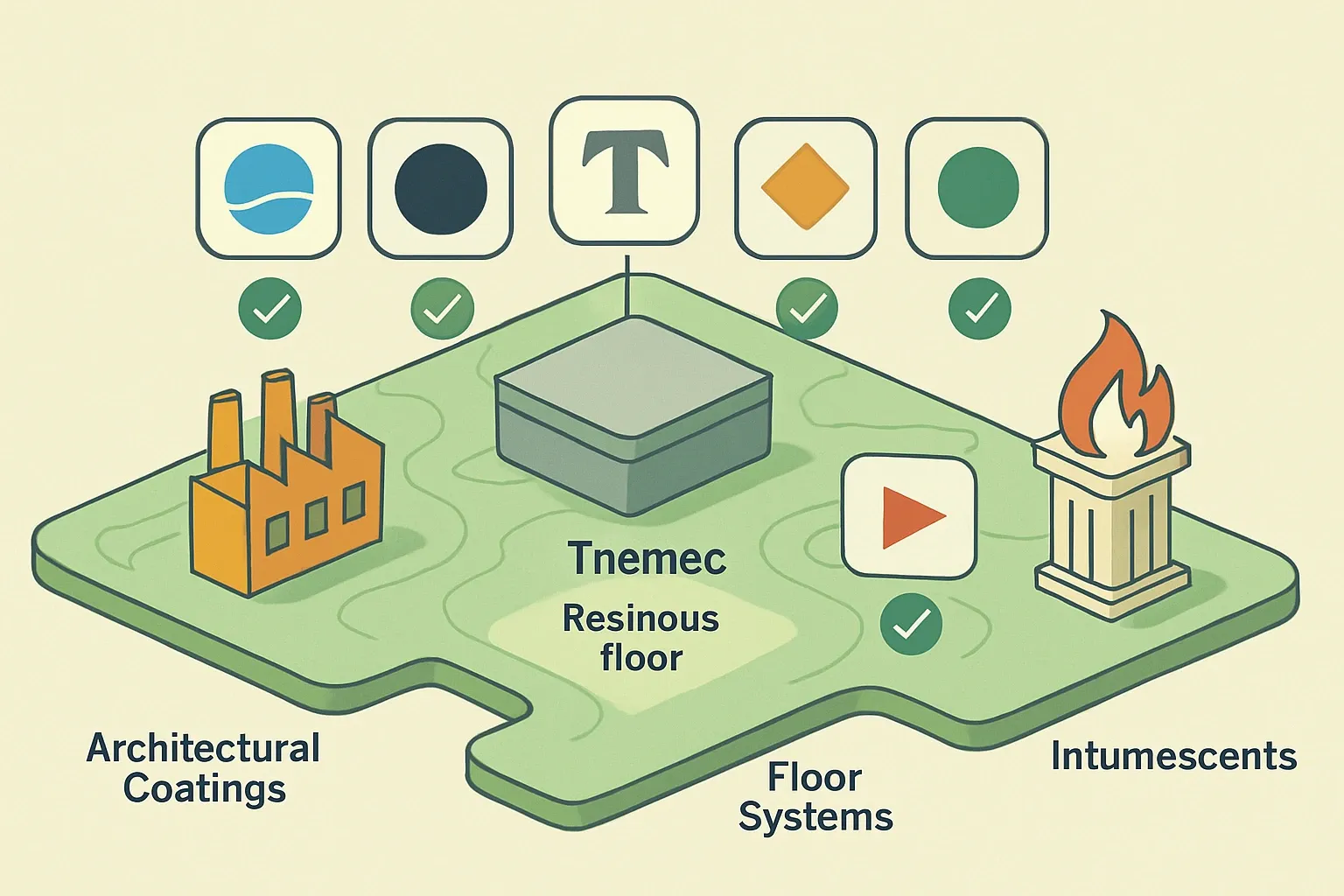
A PCR is the rulebook of Monopoly. Ignore it and the game falls apart. For coatings, you will most often see two lanes in play: Architectural Coatings and Resinous Floor Coatings. EPDs that sit under the same PCR are directly comparable on carbon and other impact categories.
EPDs usually remain valid for 5 years, so any current document buys you real runway with specifiers and procurement teams (NSF Program Operator, 2024).
Tnemec today
Tnemec has a focused set of current, product‑specific EPDs in resinous flooring. Examples include Series 247 EverThane, Series 248 EverThane, Series 256 ExcellaThane, Series 257 ExcellaThane SS, Series N222 Deco‑Tread, Series N224 Deco‑Fleck, and Series N242 Ultra‑Tread S. These are published under the Resinous Floor Coatings PCR with a North American program operator. That matters alot when you are bidding a food and beverage plant, a lab, or a transit concourse where owners ask for EPD-backed systems.
Carboline
Carboline’s catalog includes current EPDs across primers, epoxies, polyurethanes and select fireproofing systems. Representative lines you will see on submittals include Carboguard 635 VOC, Carbozinc 859, Carbothane 134 and 8812, Carbomastic 94, plus intumescents such as Thermo‑Lag and Firefilm. EPDs appear under Architectural Coatings and Spray‑Applied Fire‑Resistive Materials PCRs.
Sherwin‑Williams
Sherwin‑Williams publishes broadly in North America. Common EPD’d lines include Pro Industrial Waterbased Acrolon 100, Macropoxy 646‑100, ProMar 200 HP Zero VOC, A‑100 Exterior, SuperPaint Exterior, and Firetex intumescents. Most are Architectural Coatings EPDs verified by a U.S. program operator, with newer entries visible for facility, healthcare, and education use cases.
Curious how your EPDs stack up against competitors?
Follow us on LinkedIn for insights that help you stay competitive and win more tenders.
PPG
PPG shows a split portfolio. In the U.S. you will find Speedhide Zero, Pitt‑Glaze WB1, Copper Armor, Seal Grip Gripper and related primers with program operator verification familiar to U.S. GCs. In Europe and ANZ, the company also lists powder and decorative ranges under EPD International or national hubs tied to EN 15804, including Sigma, Seigneurie, and Dulux Powder Coatings.
Jotun
Jotun publishes at scale via EPD Norway, spanning industrial maintenance and floors. Typical sightings include Jotamastic 90, Penguard Express UHS, Baltoflake, Jotachar 1709, and Jotafloor systems. If your project team is comparing against offshore fabrication or maritime scopes, expect these documents to surface.
AkzoNobel (International Paint and Interpon)
Under Interpon and Dulux brands you will find powder coating EPDs and select decorative coatings verified through EPD International and UL. Interpon D1000 and related architectural series are the ones most likely to be requested by façade and window system partners.
Why coverage by PCR matters commercially
Specifiers do apples‑to‑apples when the PCR matches. If your resinous floor competes with EPD’d resinous floors, your sales team avoids the penalty of generic database factors. LEED v4.1 also rewards teams that assemble a roster of EPD’d products on a job, which is one reason large owners keep asking for them (USGBC LEED v4.1 BPDO EPD credit, 2024).
A simple playbook to close the gap
- Map your top‑revenue SKUs against competitor EPDs and note the PCR used. Prioritize high‑runner SKUs that show up most in bids.
- Pick the same PCR where it fits, so reviewers can compare impacts without footnotes. That keeps the conversation on performance, price, and lead time.
- Watch renewal windows. If a competitor document is nearing the end of its 5‑year validity, a fresh EPD can reframe the spec in your favor (NSF Program Operator, 2024).
Final take
Tnemec is well covered on resinous floor systems, while Carboline, Sherwin‑Williams, PPG, Jotun, and AkzoNobel show breadth across architectural coatings, industrial maintenance, and intumescents. If your line is missing an enviromental declaration in the head‑to‑head category, that is the first credential to secure. It shortens debates, protects margin, and keeps you in the spec when the project carbon accounting starts.