Why a product intelligence hub beats shared drives
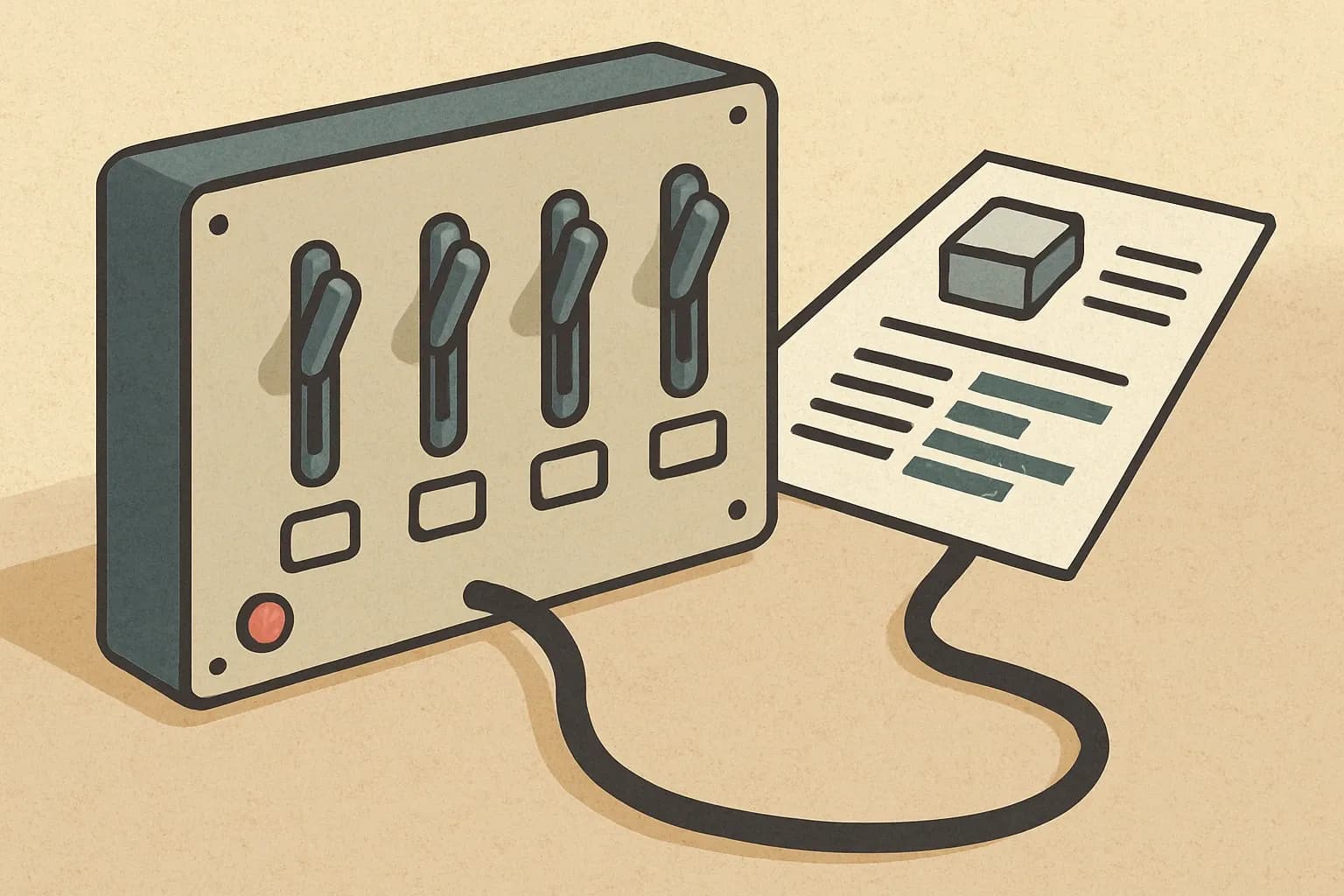
A hub is the backstage crew that makes every scene look effortless. It keeps sustainability documentation and technical data in step, then lets sales search it like a streaming service. Fewer swivel‑chair handoffs, fewer copy paste errors, more credible bids.
What belongs in the platform
Treat it as the canonical record for ingredients, processes, and proof.
- Safety Data Sheets that follow the 16 section format. OSHA codifies the headings and order, while noting sections 12 to 15 are not enforced by OSHA itself (OSHA HazCom Appendix D, 2025).
- Bills of materials tied to plants, batches, and revision history.
- LCA models and background data with source transparency.
- EPDs, verifiers, PCR versions, and the exact page or dataset citation used.
Governance that protects secrets and speeds bids
Role based access keeps proprietary formulations in a vault while exposing verified facts to customer facing teams. Segment by plant, product line, and geography so the right people see the right truth. Clean governance beats heroics when twenty RFQs arrive on a Thursday afternoon.
Want to streamline your EPD compliance process?
Follow us on LinkedIn for insights that help you win more projects and eliminate the hassle of managing sustainability documentation.
Make information queryable, not just stored
Natural language search should answer questions like a seasoned tech service lead. Ask for VOC content, recycled content, or the A1 to A3 footprint of a SKU, and get a sourced snippet plus the file anchor. Answers travel accross email, CRM, PLM, and bid tools through simple connectors.
Stay aligned with evolving rules
Most European construction EPDs now use EN 15804 A2, and IBU ended work on A1 in October 2022 for new or adapted declarations (IBU, 2025). In the International EPD System, the construction PCR 2019:14 version 1.3.4 sunset on 20 June 2025, and the publication window temporarily stretched from one to ten working days to handle volume (EPD International, 2025). Your hub should track PCR versions per product so teams see what is valid today, not last spring.
Renewal clocks and quality controls
EPD validity is typically five years, with an expectation to update within that window if a declared indicator worsens by more than ten percent (EPD International FAQ, 2025). IES also requires an annual internal follow up to confirm data remains current, which your platform can schedule and log against each declaration (EPD International, 2025). These two guardrails belong in your calendar and in automated alerts.
Evidence that buyers can reference
National databases shape expectations for traceable, machine readable sources. INIES lists 5,315 FDES and 1,512 PEP as of 8 February 2026, which signals what specifiers now expect to find and cite in tools they already use (INIES, 2026). The International EPD System reports dozens of fully digital EPDs in 2025, a sign that structured data is winning time over static PDFs (EPD International, 2025).
A simple operating model
- Inventory critical documents and map each to the product tree, plant, and market.
- Define a minimal metadata schema. Product, scope, version, verifier, PCR, validity date, dataset sources.
- Set role based access and create a vault space for sensitive plant and formulation data.
- Wire search to return answers plus their source anchor. No orphaned claims.
- Establish SLAs for updates tied to plant changes, PCR changes, and annual follow up.
Why this matters commercially
EPDs reduce friction where projects apply penalties to products without product specific declarations. When teams answer environmental and compliance questions in minutes with proof attached, they protect margin and shorten cycles. The platform is quiet infrastructure that turns sustainability paperwork into specification momentum, not an extra step.