Why confidentiality blocks otherwise easy EPDs
White‑label and private‑label deals thrive on secrecy. The hitch is that product‑specific EPDs depend on primary data. Suppliers worry thier formulations could leak, so they stall, sanitize too much, or walk away. That is a commercial problem when specifiers default to conservative carbon factors if a product lacks a verified EPD, which can push a product out of contention in tight bids.
The neutral‑partner firewall
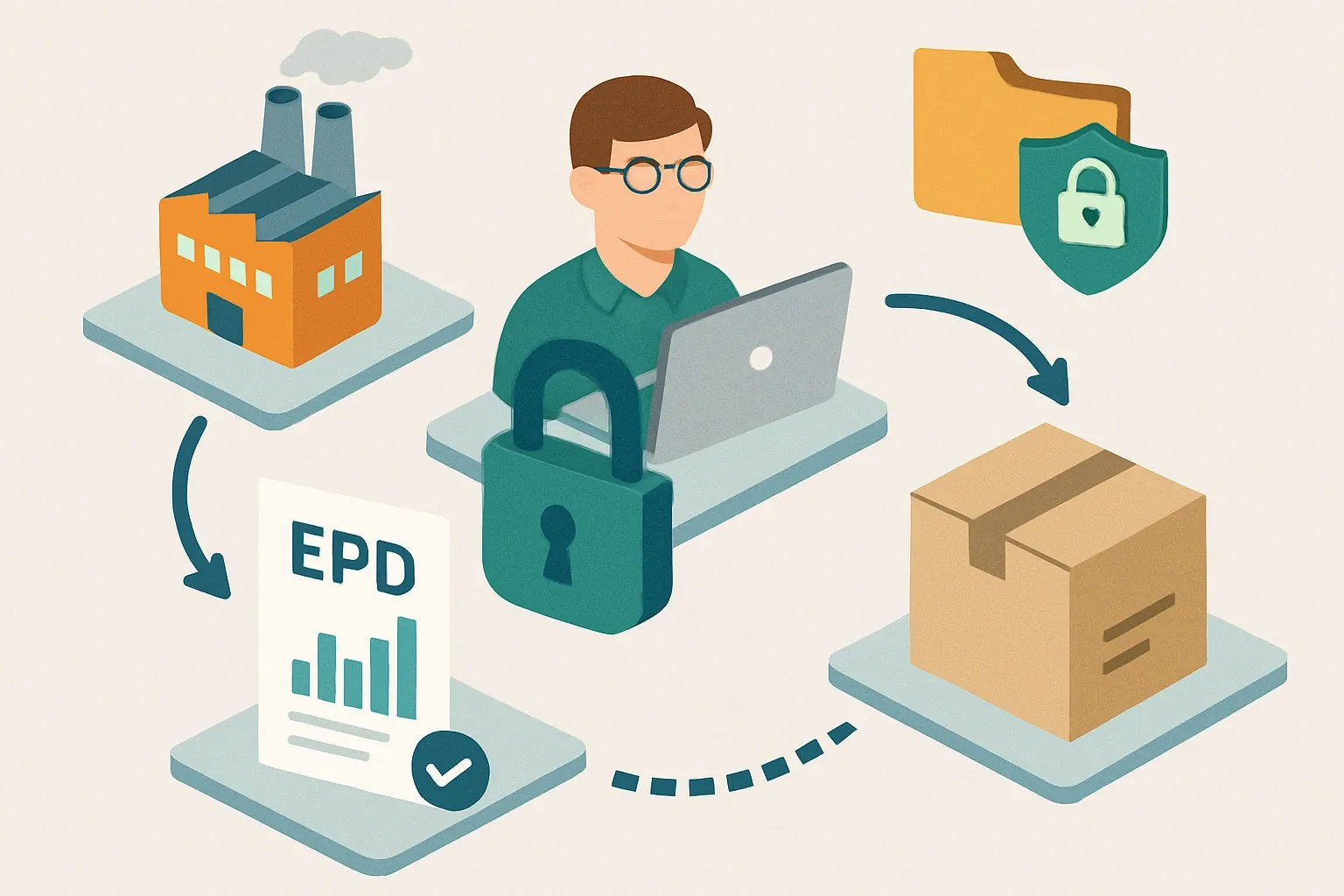
Treat the EPD partner like a firewall. The reseller funds the project. The OEM signs a separate NDA and data‑sharing agreement with the partner. All technical exchange happens on that private channel. The reseller only receives modeled results, justification notes, and the verified declaration.
Analogy: think of a double‑blind taste test. Judges know the scores, not the recipes. The recipes stay in the kitchen.
Who signs what, and why it matters
Set up two contracts. One between reseller and EPD partner that defines scope, timelines, and publication plan. One between OEM and EPD partner that governs confidential data, access to sites, and how evidence is stored. No direct OEM to reseller data flow. That clean boundary unlocks cooperation and speeds verification review because responsibilities are unambiguous.
What data actually moves
The OEM provides primary process data to the partner. Examples include energy use by unit, material inputs, scrap and yields, packaging, and transport routes. Sensitive details like full formulations and proprietary recipes stay confidential. The reseller receives aggregated inventories, impact results, and improvement insights that are scrubbed of trade secrets. Verifiers review the full confidential file under NDA as part of the program operator’s process.
Naming and attribution in the published EPD
Publication rules vary by program operator and PCR. Decide early how the EPD credits the product and facility. Common patterns include OEM listed as manufacturer with the reseller brand named in product identification, or a reseller‑as‑brand listing with manufacturer of record disclosed in the body. Align the label strategy with sales channels and with where the EPD will be searched by buyers.
Scaling across many private‑label lines
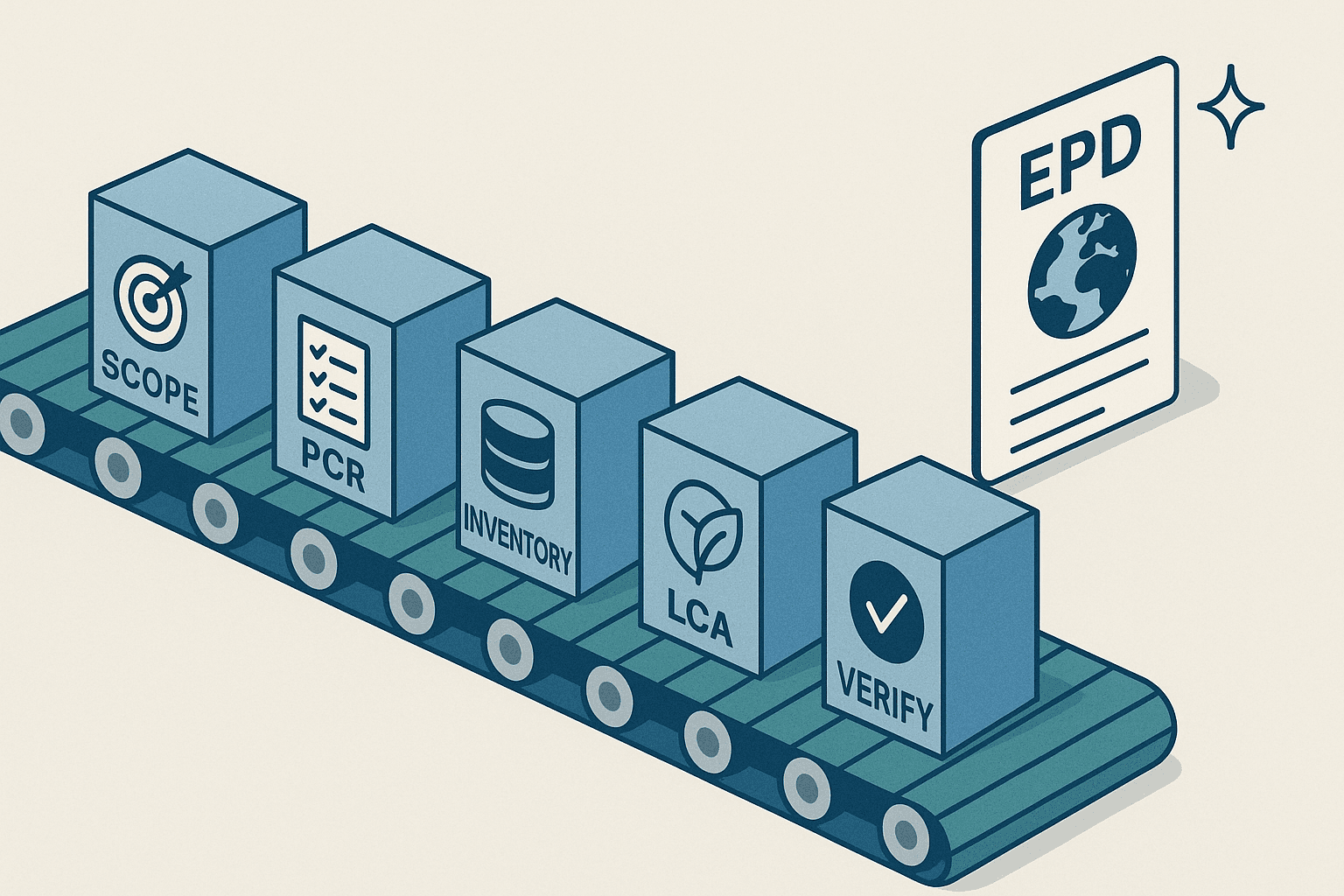
Start with a supplier onboarding kit that standardizes meters, units, and reference year. Build a reusable bill‑of‑process template so similar products only require deltas. Align reference years across lines to simplify updates. EPDs typically carry a five‑year validity window, which makes it practical to batch renewals instead of chasing one‑offs.
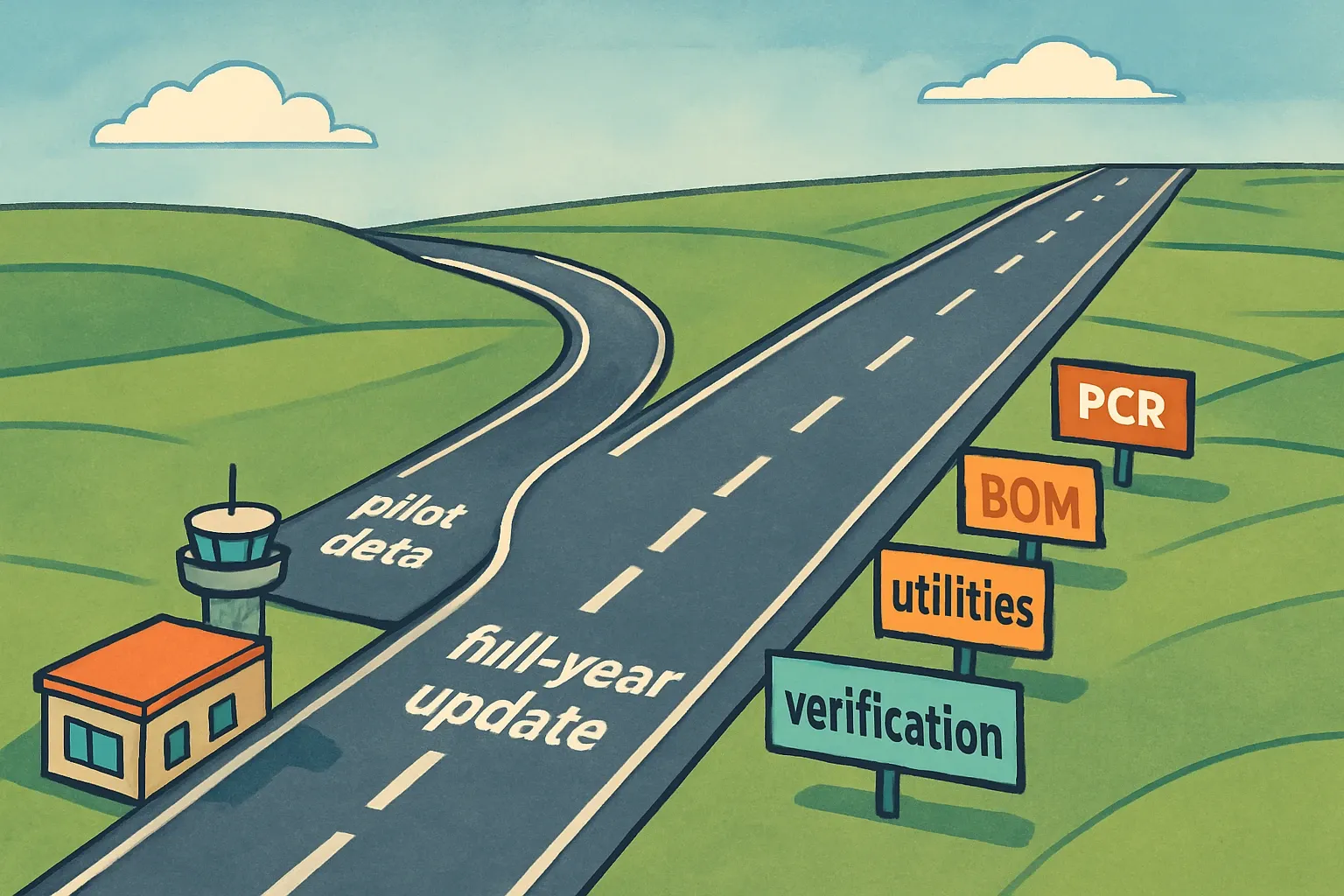
For brand‑new products that have begun production but lack a full year of data, consider a prospective EPD using an initial data set, then refresh once a full year is available.
Verification and trust without oversharing
Third‑party verification checks the confidential file and the public declaration. Program operators require evidence that the model reflects reality, not marketing. This preserves buyer trust while protecting IP. The result is a product‑specific, third‑party‑verified EPD that sales teams can place into bids with confidence.
Practical safeguards that keep everyone comfortable
- Define exactly which fields are confidential and how they are masked in any shared documents.
- Store raw evidence in a controlled repository with time‑bound access for verifiers.
- Use plant‑level data where it improves accuracy. Aggregate only when a PCR permits and it protects IP.
- Share improvement ideas in ranges or scenarios instead of absolute recipes.
- Keep a change log so repeating audits move faster next year.
Procurement signals worth tracking
Public and private buyers continue to prefer product‑specific EPDs because they replace default emission factors that are intentionally conservative. LEED v5 workstreams reinforce that trajectory by steering design teams toward transparent, product‑specific data rather than generic averages. If reliable cross‑market numbers exist for penalties applied to non‑EPD products, they are not consistently published, which is why teams should validate requirements bid by bid.
How to pick a partner for this model
Look for a partner that is comfortable running two‑track contracting, has a white‑glove data collection team, and can publish with multiple program operators. Ask for a sample onboarding kit, a verifier checklist, and a plan for multi‑product scaling. The less time your engineers spend wrangling data, the faster your catalog shows up with credible EPDs in the places that matter.
Bring white‑label into the EPD win column
A neutral‑partner firewall lets OEMs protect secrets and lets resellers compete on verified results. It prevents stalled projects, reduces audit churn, and turns private‑label breadth into a repeatable EPD engine. That is how confidentiality stops being a blocker and starts being good governance.