Quality, validity, defendability, in plain English
A high‑quality EPD is accurate, comparable, and current. Valid means it follows the right rulebook and sits within an active validity window. Defendable means your team can explain every choice, every dataset, every assumption, even when the buyer is in a hurry.
EPDs are not magic, they are math. The math must trace back to real plant data, not wishful modeling.
Start with the right rulebook (PCR fit)
A PCR is the rulebook of Monopoly, ignore it and the game falls apart. Pick the PCR most commonly used by credible competitors for the same product type, unless there is a materially better fit that buyers already accept. For construction products, the workhorse PCR has been updated across 2024 and 2025, with transition windows that matter for you (EPD International, 2024).
If a PCR expires during your project, your EPD can remain valid until its own end date, then you renew on the updated PCR. This avoids clock resets while keeping the market comparable (EPD International, 2025).
Scope that matches how buyers compare
Use a declared unit that mirrors how the product is specified, for example 1 m² of panel at a defined thickness. Make the scope at least cradle‑to‑gate for most building product credits, and clearly mark any modules beyond A1 to A3. Keep scenarios for A4 and A5 realistic and transparent where used.
Plant data that reflects a real year
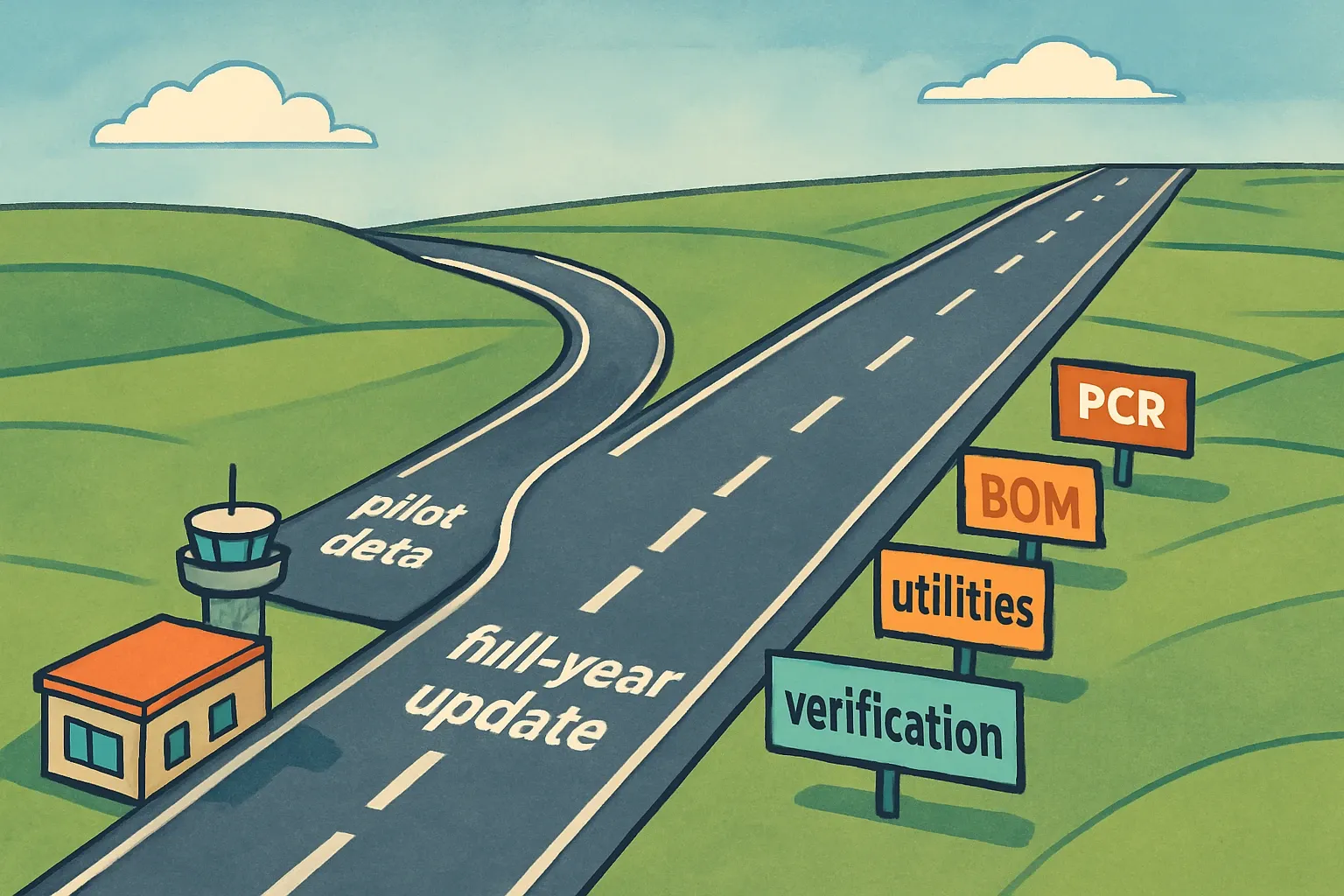
Anchor the model to a defined 12‑month reference year. Capture utilities, production volumes, yields, scrap, and waste routes for that period. For a brand‑new line, a prospective EPD using the first months of production can work, then you true‑up once a full year exists. Note any process changes that moved impacts by more than a small margin, then update.
Third‑party verification that actually verifies
Verification must be independent, competent, and traceable to the program operator’s rules. Provide reviewers with raw evidence, from utility bills to bills of materials, so the verification letter is more than a formality. If you can not show how a background dataset was chosen, assume the question will be asked in a bid meeting.
Ready to create defendable EPDs that win work?
Follow us on LinkedIn for essential insights that enhance your EPD process and boost your competitive edge.
Version control and validity windows
Quality EPDs disclose the exact PCR and GPI versions used, and the validity end date on the cover page. Under major program operators, an EPD’s validity is normally five years, with surveillance during that period when material changes occur (EPD International, 2025).
Be mindful of transitional rules for impact methods. For example, characterisation factors based on EF 3.0 were sunset for new publications after 2024‑09‑01, so EF 3.1 applies to new EPDs from that date (EPD International, 2024).
Data sources and assumptions, spelled out
State every background database version and cut‑off choice. Record transport distances, energy mixes, allocation rules, and end‑of‑life assumptions where applicable. If you estimate a value, label it as such, explain how you bounded it, and commit to refine it in the next update.
Comparability without the traps
Comparisons only hold when declared units, scopes, and PCRs align. Put a short “comparability note” in the EPD that tells a buyer when comparison is fair and when it is not. That note prevents apples‑to‑oranges misuse and protects your sales team from awkward calls.
Operator choice should be buyer‑friendly
Publish with reputable program operators used in your target markets. Program operator agnosticism is a strength because it lets you meet regional norms without rework. Keep templates, reviewer expectations, and listing processes in mind so your timeline stays predictable.
The white‑glove difference in practice
Most delays are not in modeling, they are in chasing data across plants and systems. A strong partner runs the project like a production order, gathers and cleans the inputs with your teams, and keeps leadership updated in short cycles. Pick someone who relieves R&D, product, and plant managers from spreadsheet duty, not someone who hands them a checklist and walks away.
Red flags that sink defendability
- Declared unit does not match how the product is sold.
- No written rationale for allocation, transport, or scrap assumptions.
- Background data versions missing or mixed.
- PCR used is uncommon for the category without a clear reason.
- Verification letter is present, but reviewer questions are not addressed in the LCA report.
What procurement will actually check
Buyers scan for scope, validity date, third‑party verification, and whether the EPD matches how they model whole‑building carbon. Many use LEED v5 aligned calculators that still reward product‑specific, third‑party verified EPDs in practice, and v5 was ratified in 2025 which is shaping how firms structure submittals now (USGBC, 2025).
Your quick, defendable EPD playbook
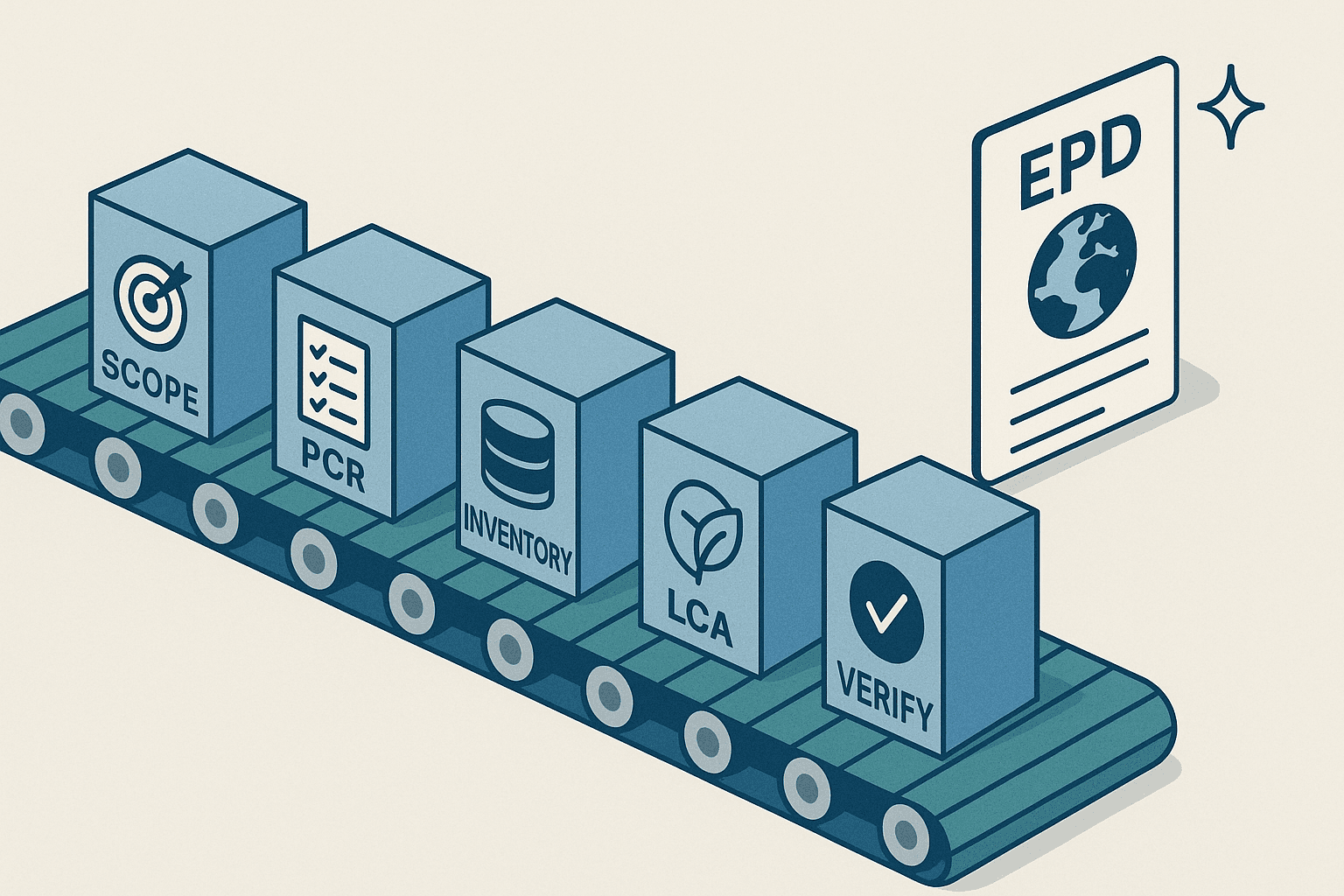
Choose the prevailing PCR for your category, confirm the validity window, lock a reference year, document every assumption, publish with an operator your market trusts, and set a cadence for surveillance updates. If any number can not be traced back to a meter, a weigh ticket, or a database version, fix it before publication. The result is an EPD that is easy to read, easy to defend, and easier to win specs with, even when timelines are tight and teams are busy. It’s not rocket science, it is rigour applied consistently.
EPD International, 2025
EPD International, 2024
EPD International, 2024