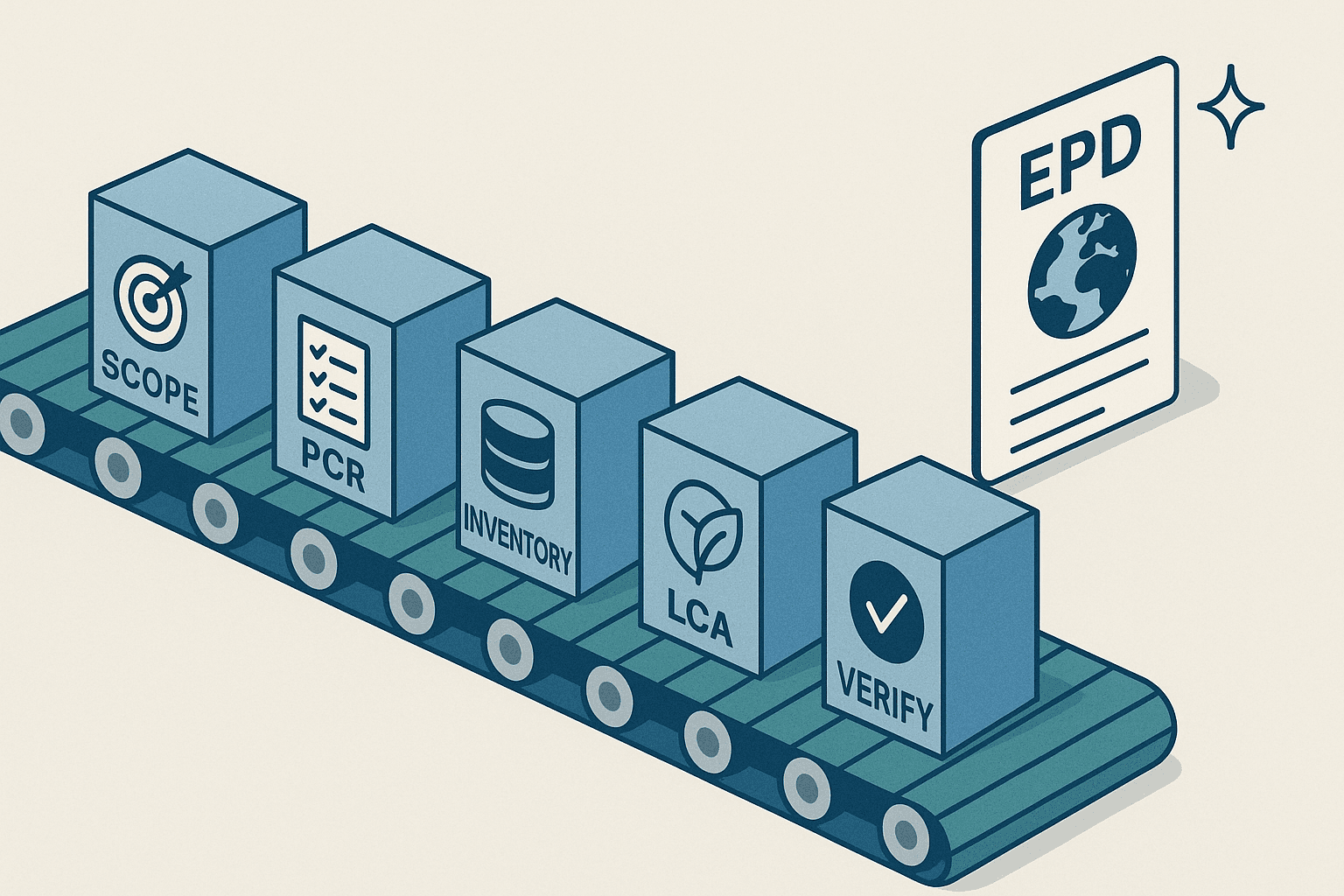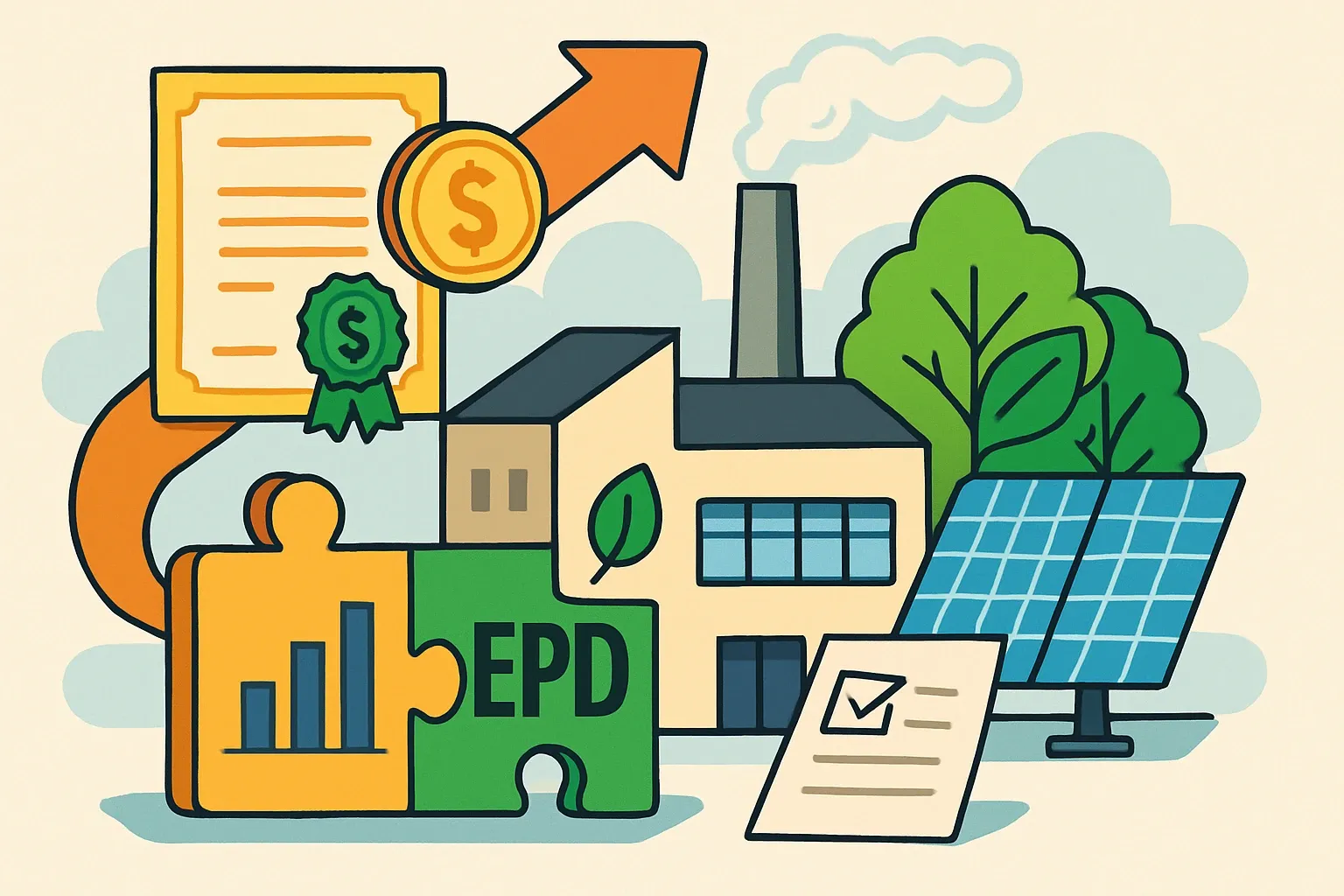
Start with the EPD, not the equipment
Grant ideas land faster when they answer a product question. Pick the target PCR, define system boundary and reference year, and sketch the indicators you want to move first. That turns “new compressor” into “minus X percent GWP in A1–A3 with a dated evidence trail.”
Map grant metrics to LCA metrics
Most applications ask for energy saved, fuel displaced, or waste reduced. Translate each to EPD language before you write a line. Electricity and fuel changes map to GWP. Scrap and yield map to resource use and waste. Logistics tweaks map to transport emissions. If a metric does not move an EPD indicator, either add the missing meter or pick a sharper project.
Prioritize the biggest A1–A3 levers
Electricity is usually the loudest line item in cradle to gate. The U.S. national average for delivered grid power is about 0.394 kg CO2 per kWh using 2022 eGRID factors with line losses (EPA, 2025) (EPA, 2025). Cut kWh and your next EPD will show it. Same logic for on‑site fuels, where combustion hits GWP directly.
Design M&V that verifiers actually trust
Write the measurement and verification plan to satisfy the grant reviewer and the EPD verifier in one shot. Meter the upgraded line, document operating hours, record model numbers and commissioning dates, and keep version‑controlled exports. Align the plant’s data roll‑up to the EPD reference year so the improvement shows cleanly in A1–A3 without guesswork.
Use procurement that counts twice
Long term green‑tariff or PPA backed electricity reduces bills and, when documented, lowers market‑based electricity impacts in many LCAs. Keep contract terms, supplier attestations, and tracking IDs together with utility invoices. When fuel switching, log energy content, feedstock, and emission factors in the same folder you use for the grant.
Build the timeline around validity and specs
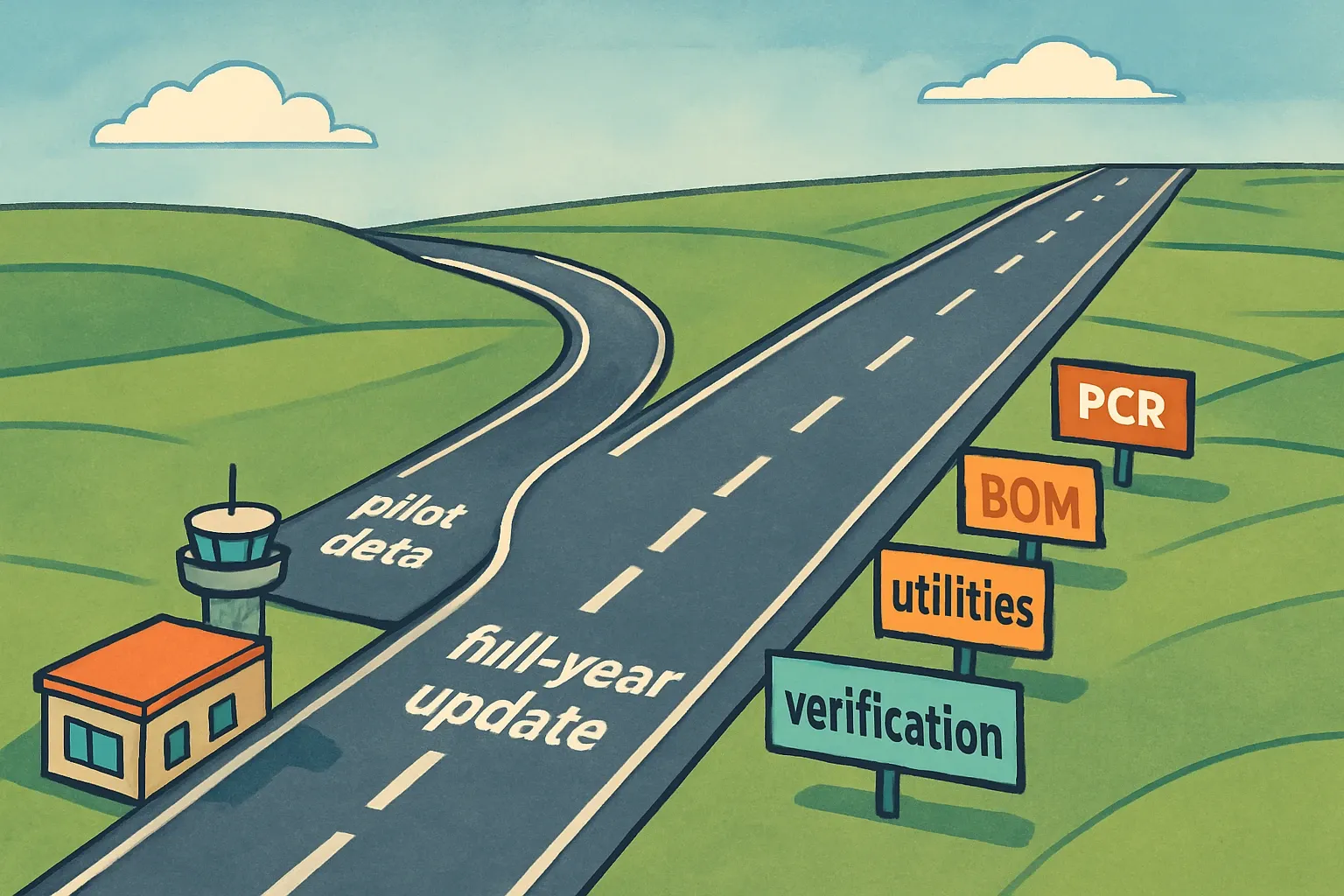
Most program operators set five year EPD validity, so time your refresh to land early in the cycle and avoid gaps in bid season (IBU, 2025) (IBU, 2025). A simple cadence works. Month 0 to 2, lock PCR and operator, order meters, baseline energy and scrap. Month 3 to 8, implement, commission, and monitor. Month 9 to 12, close out grant reporting, finalize LCA, verify, and publish.
Put EPD outcomes inside the grant narrative
Reviewers like projects that live on after the check clears. State, concretely, which product line EPD will be updated, which indicators will change, and by how much based on engineering estimates. Name the verification path and the publication window. Add a letter from your LCA partner confirming the plan and data needs.
Target co‑benefits that show up on submittals
Efficiency often improves process control. That can shrink allocation headaches and stabilize declared unit results. Better metering supports internal carbon price pilots. If you sell into programs that reward verified reductions, note that ENERGY STAR recognized 103 manufacturing plants for top quartile efficiency in 2023, preventing more than 8 million metric tons of CO2, which signals market appetite for cleaner production (EPA, 2024) (EPA, 2024).
Mind the 2025 policy reset and look local
The federal landscape shifted in early 2025, so center your plan on state energy offices, utility incentives, air district programs, and DOE technical partnerships rather than assuming former federal pots are still open. DOE’s Better Buildings and Better Plants work documents billions in cumulative savings since 2011, which is a credible backdrop when you position persistence and replication in applications (DOE, 2024) (DOE, 2024).
Avoid two traps
Do not split the reference year across two fiscal years unless you must. It complicates verification and weakens your before and after story. Also avoid upgrades whose savings disappear into higher throughput without intensity controls. If output is rising, meter specific energy per declared unit and protect the EPD win.
A simple rule to steer by
If a grant activity cannot be traced to one metered value, one document, and one line in your LCA model, it will struggle in both arenas. Plan once, meter once, publish once. The same kilowatt hour you keep off the meter becomes a lower GWP bar on your next EPD and a sharper edge in the spec room.