The role manufacturers forget to staff
Call it Internal Technical Project Manager. This person translates plant reality into LCA-ready data, keeps the rulebook in view, and pushes decisions through roadblocks. Think of a showrunner who keeps all scenes on schedule, not a solo star.
We use “technical” on purpose. The job is 70% structured data herding and 30% stakeholder choreography.
Your mission, stage by stage
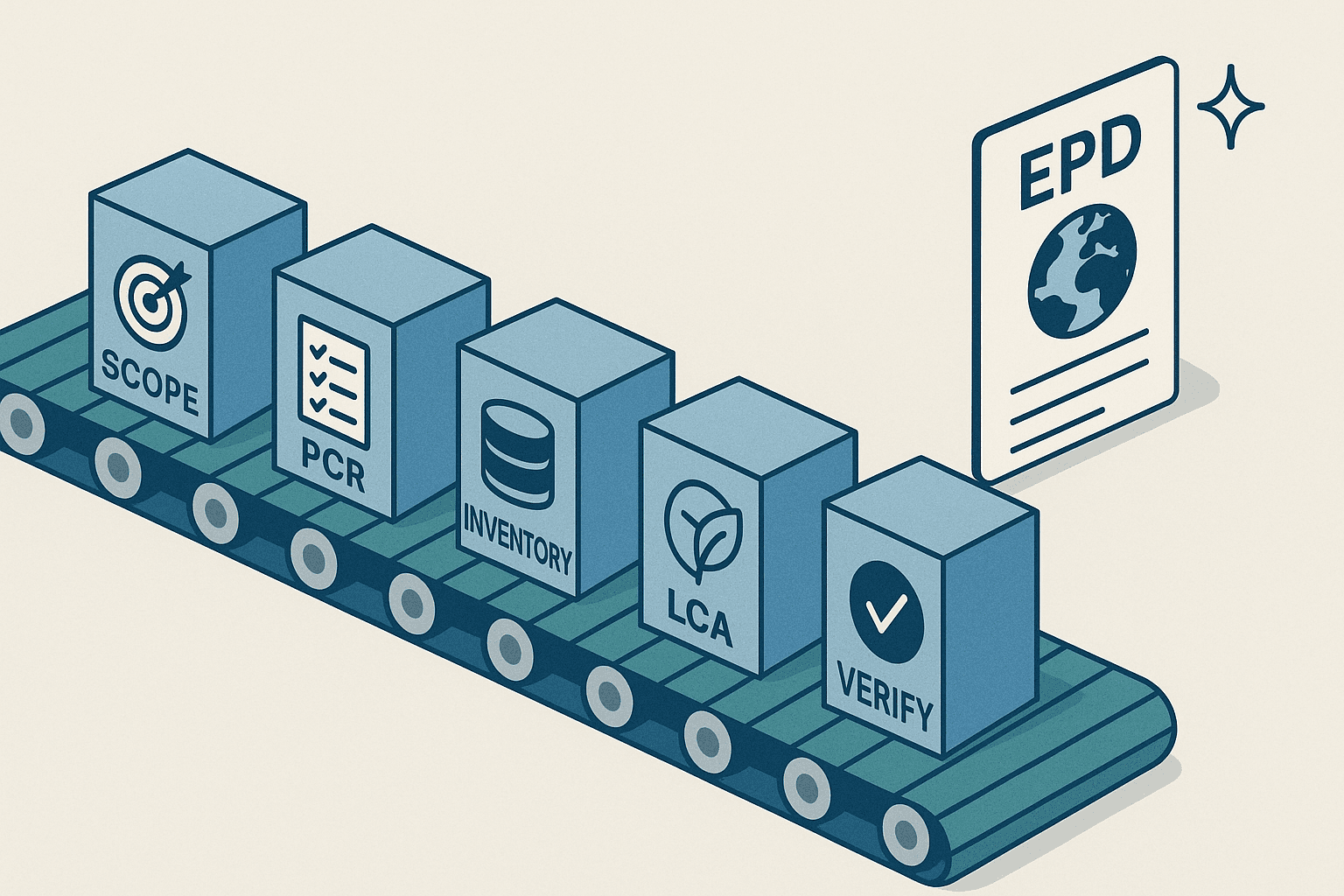
Preflight. Confirm the target products, pick the program operator, and lock the PCR so scope creep does not sneak in. Document what counts as success and the publication window.
Data sprint. One reference year, one template, one deadline. Plants get the same columns and the same definitions. No custom asks unless the PCR demands it.
Modeling and verification. Your LCA partner models, you precheck for obvious gaps, then an independent verifier reviews. Plan calendar time for Q&A, since changes are normal.
Publication and launch. Operator publishes a PDF and digital record. Archive every file in a clean package so renewals are easy.
Renewal and upkeep. Book a quick annual health check. Flag large process changes that might require an interim update.
Stakeholder map on one page
Use a simple responsibility map. Keep names and backups.
Owner. Internal Technical PM. Accountable for scope, schedule, and unblockers.
Partners. LCA practitioner and verifier. Responsible for modeling and independent checks.
Contributors. Plant managers, procurement, EHS, finance. Provide data and clarifications.
Advisors. Sales enablement, marketing, legal. Validate messaging and claims before publication.
Deciders. Product leadership and executives. Approve scope, budget, and publication timing.
Communication templates that save weeks
Kickoff note. “We are preparing an Environmental Product Declaration for [Product]. The reference year is [YYYY]. Please complete the attached template by [date]. If a field is unknown, write ‘unknown’ and add a note. Questions in the comment column.”
Weekly pulse. Subject line pattern: “EPD Week [N] status. Data [85%], Verifier Qs [3 open], Risks [supplier fuels].”
Executive checkpoint. “On track for publication by [date]. Remaining decisions. Confirm operator and product naming convention for registry.”
Plant follow up. “Thank you for utility files. Missing items listed below, with examples. We will schedule a 20 minute working session if unanswered by [date].”
Rulebook checkpoints you cannot skip
Validity window. Most published EPDs are valid for five years, which sets your planning horizon for updates and sales enablement (IBU, 2024) (IBU, 2024).
PCR cycle. Most Product Category Rules are reviewed or expire roughly every five years, so check expiry dates before you start to avoid a mid‑project reset (UL Solutions, 2025) (UL Solutions, 2025).
Data age. EN 15804 expects primary manufacturing data representing a recent twelve month period, and background datasets that are usually not older than ten years for general data in the model (EN 15804+A2, 2019).
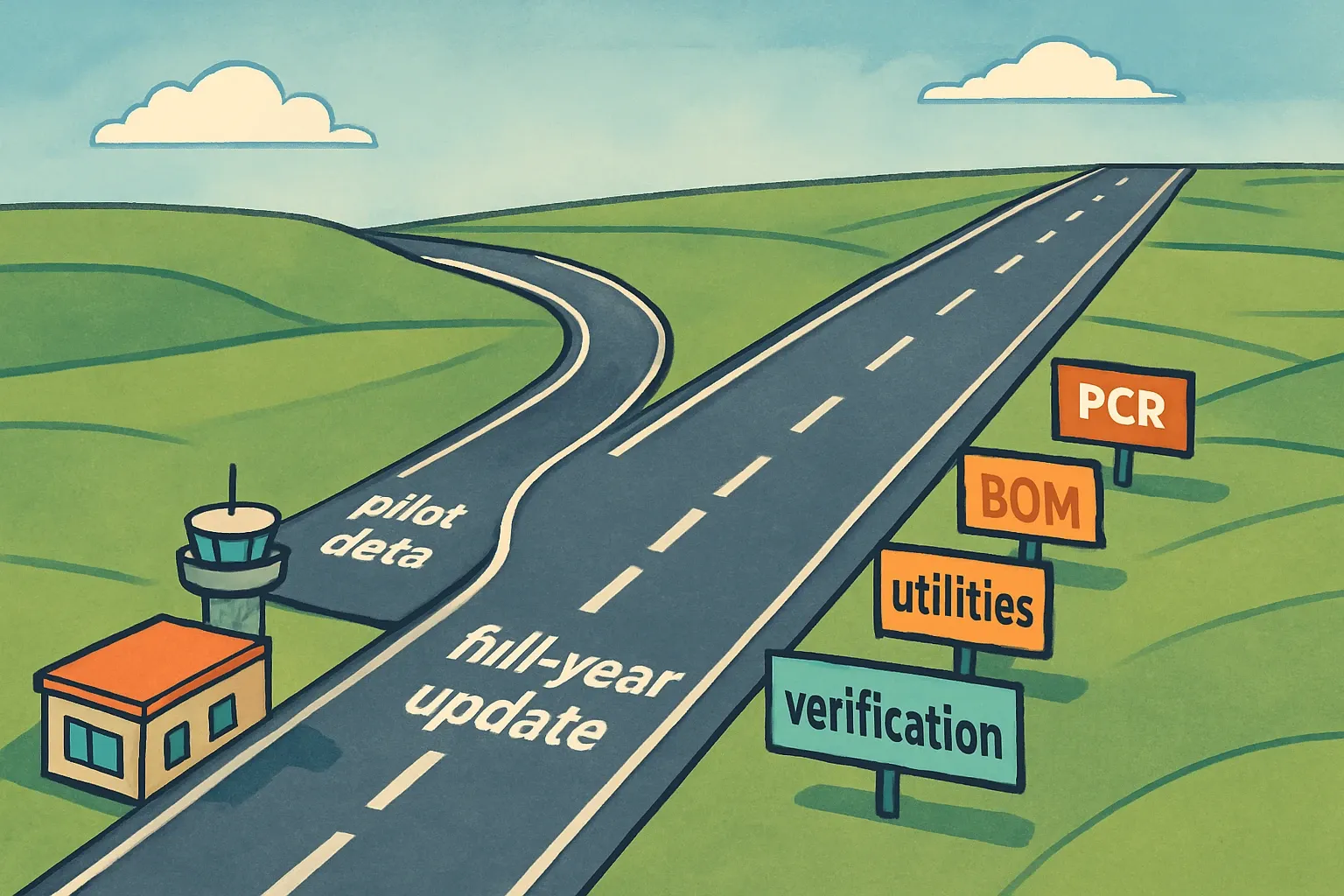
Prospective starts. If a product is new, an initial period such as three months can be acceptable with a clear disclaimer, followed by an update once a full year is available (EPD International FAQ, 2024).
Data pack sized for speed
Aim for one complete pull, not ten partials. Your fast pack typically includes:
- Utility invoices or meters by energy type for the reference year
- Production volumes, yields, scrap, and rework by month
- Bills of materials with weights and supplier locations
- Inbound and outbound transport modes, lanes, and typical loads
- Waste streams and treatment routes
Add site photos of key processes. Verifiers love clear context.
Choosing PCR and operator without drama
Start with the competitive landscape. Pick the PCR that peers use when it fits the product, then confirm its expiry and any addenda. Choose the operator early so formatting and digital fields match from day one. Common choices include operators in North America and Europe that publish both PDF and machine readable records. Stay program‑agnostic and optimize for clarity, verifier capacity, and mutual recognition.
Risk register for the first 30 days
Ambiguous product scope. Write a one sentence declared unit and system boundary, then circulate for signoff.
Shifting datasets. Freeze the reference year. If a correction appears, log it and update once, not five times.
Supplier silence. Offer a simple alternative. Accept a regional average when the PCR allows, then note the gap for next renewal.
Verifier queue. Prebook a slot during data collection. Treat comments within forty eight hours to keep the queue warm.
PCR expiry surprise. Track PCR end dates next to your project plan. If the window is tight, escalate for a go or no go.
ROI lens the business will respect
Project teams often prefer products with verified EPDs because carbon accounting penalties shrink when declarations are available. LEED v5 was ratified by USGBC members on March 28, 2025 and continues to reward credible materials disclosure, so transparency remains a gateway to specifications, not a nice to have (USGBC, 2025) (USGBC, 2025). Many manufacturers underestimate the projects they never see when an EPD is missing. One mid sized win can pay for an entire EPD cycle.
The copyable one page playbook
Header. Product, plant, reference year, declared unit, PCR name and expiry, operator.
Milestones. Data complete, model built, internal QA, verifier review, operator publication.
Owners. Names for PM, practitioner, verifier, plant contact, executive sponsor.
Risks. Top three with a single mitigating action each.
Comms. Weekly pulse day and standing links. Decision log location.
Artifacts. Data template, background report path, EPD draft filename, final registry URL.
Make it easier on your team
Staff a single technical PM with clear authority. Give them a clean template and real calendar time with plant teams. Choose a partner who handles data wrangling and verification handoffs so engineers keep building while the paperwork moves. We believe speed with rigor is the only mix that lasts. Dont bury it in committees.