What you already own, and what you probably don’t
An EPD PDF is public and yours to use. The underlying LCA report and native model files usually belong to whoever’s contract says so, not automatically to the manufacturer. Background databases like ecoinvent are licensed to the consultant or company site, so raw datasets are rarely transferrable. Contracts decide everything here.
What can be reused without drama
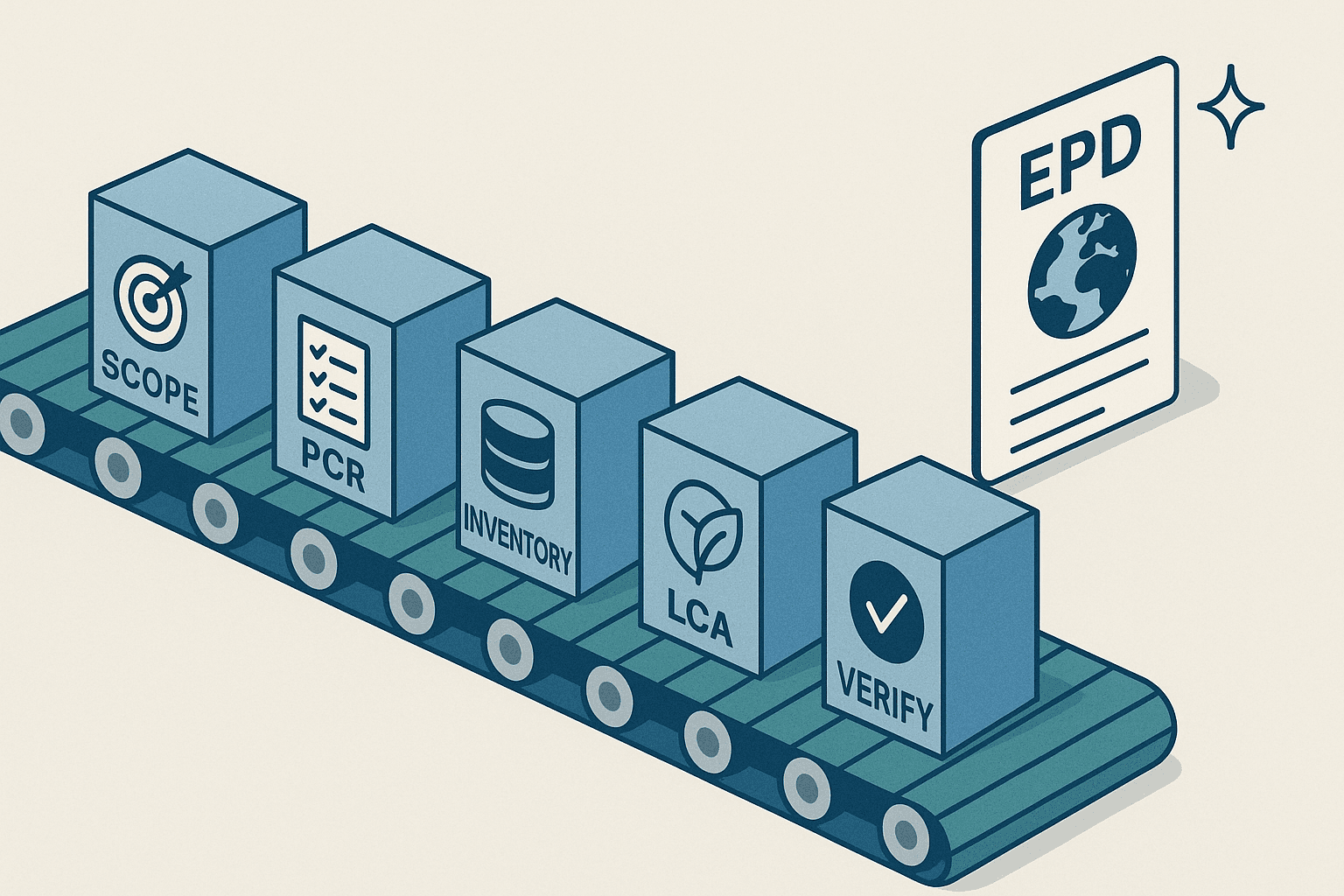
You can typically reuse facility data, bills of materials, process maps, utility records, measured scrap and yield, supplier certificates, and any published EPDs cited as inputs. Those elements let a new provider rebuild the model quickly and match previous assumptions. Reusing the exact native model file only works if your contract gives you rights, and if the software license allows handover.
When a rebuild is the smart move
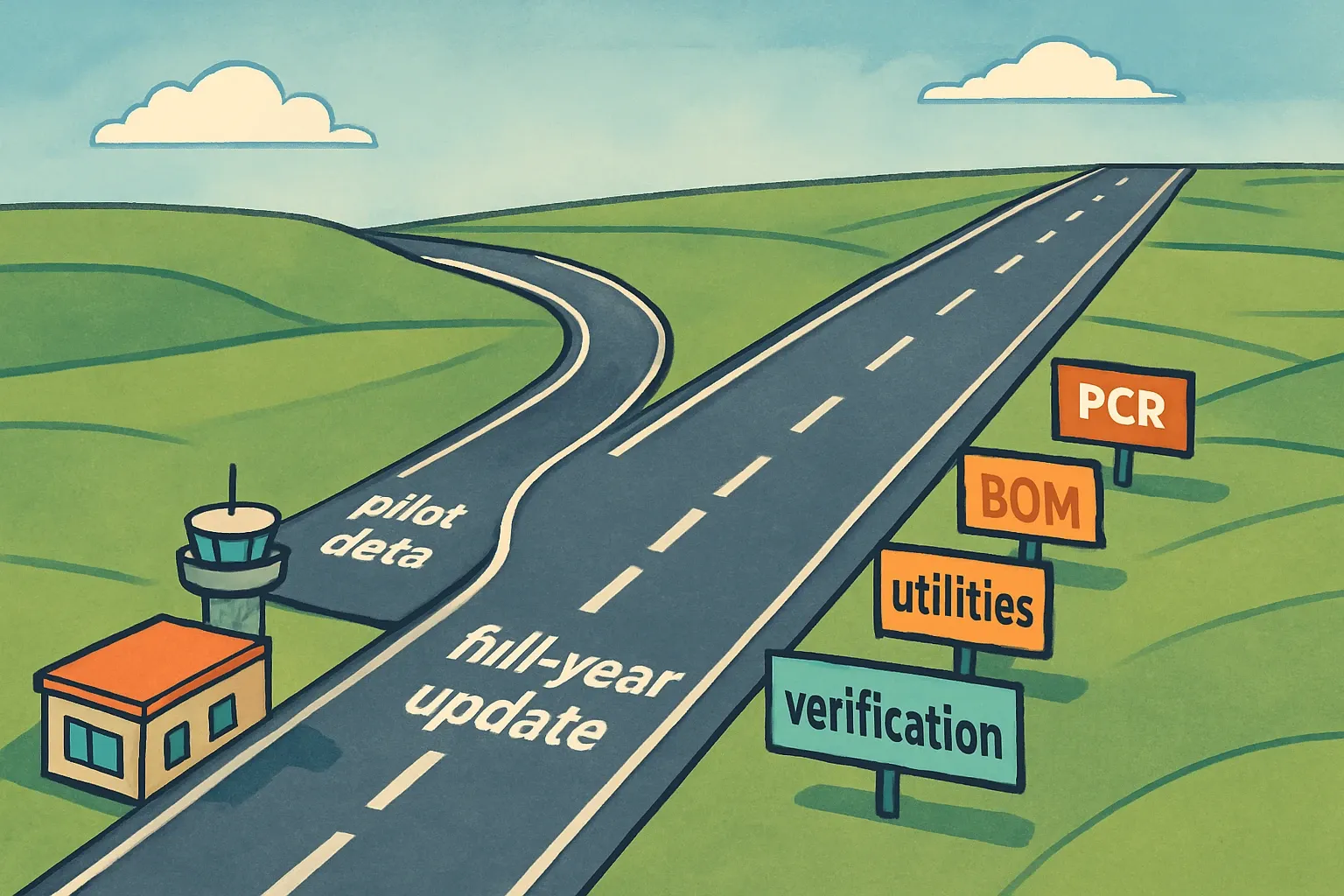
If the governing PCR version changed or your product, plant, energy mix, or supply chain shifted, an update can trigger recalc anyway. Many programs require an update if results change by about 10 percent for any declared indicator, and they expect an annual internal follow up during the five year validity window (EPD International, 2025) (EPD International, 2025). In those cases, a clean re‑model avoids weeks of back‑and‑forth and yields higher confidence.
Validity and PCR clocks to watch
Most PCRs are reviewed on five year cycles, with publication and expiration dates that gate what can be used for verification (UL Solutions, 2025) (UL Solutions, 2025). Many programs set EPD validity at five years, subject to surveillance and significant‑change rules that can force an update in between (EPD International, 2025). Treat these dates like tender deadlines, not suggestions.
If the prior consultant will not share
Start with the contract. Look for clauses on ownership of the LCA model, rights to native files, and deliverables beyond the EPD PDF. If rights are unclear, request a limited license to the model structure and assumptions, not the background database. Failing that, ask for a complete methodological summary and data quality statement. If none of that is forthcoming, your new provider can rebuild using your operational data and the published EPD as a benchmark for plausibility.
Practical reuse checklist for a fast handoff
- Facility data for the reference year, with utility bills and production volumes.
- Current BOMs and recipes with tolerances, plus packaging specs.
- Transport lanes, modes, and load factors.
- Waste streams, scrap rates, and treatment routes.
- Supplier EPDs or declarations for key inputs.
- Prior allocation choices, cut‑offs, electricity modeling approach, and any biogenic accounting notes.
Signals that mean “budget for re‑model”
- New PCR version or operator rules that change required indicators or scope.
- Major product or process shifts that likely move results by 10 percent or more (EPD International, 2025).
- New factory, fuel switch, or market electricity change that breaks earlier assumptions.
- Missing rights to the native model, or refusal to share critical methods and system boundaries.
Contract language to prevent lock‑in next time
Ask legal to add four lines that save months later. 1) Work‑for‑hire or assignment of all LCA models and reports to the manufacturer. 2) Delivery of native model files plus a human‑readable method report on verification. 3) License to reuse model structure and consultant‑generated parameters with any future provider. 4) Clarify that background databases remain under their original licenses, but the model topology and foreground data are deliverables. One more line helps a lot too, require the verifier’s summary of non‑conformances and how they were closed.
Program operator and PCR fit
A PCR is the rulebook of Monopoly, ignore it and the game falls apart. Pick the operator and PCR that best match where the product sells and what competitors use. If options exist, consider which template, indicators, and digital data requirements will speed publication and reduce reviewer ping‑pong.
Keep the commercial lens sharp
No EPD means many projects default to conservative assumptions that make your product look heavier on carbon. Staying current keeps you in the spec conversation without competing on price alone. The cost of a redo is often eclipsed by a single mid‑sized win, and teams recoup time when a provider handles the data chase instead of tossing spreadsheets back over the fence.
A simple decision path
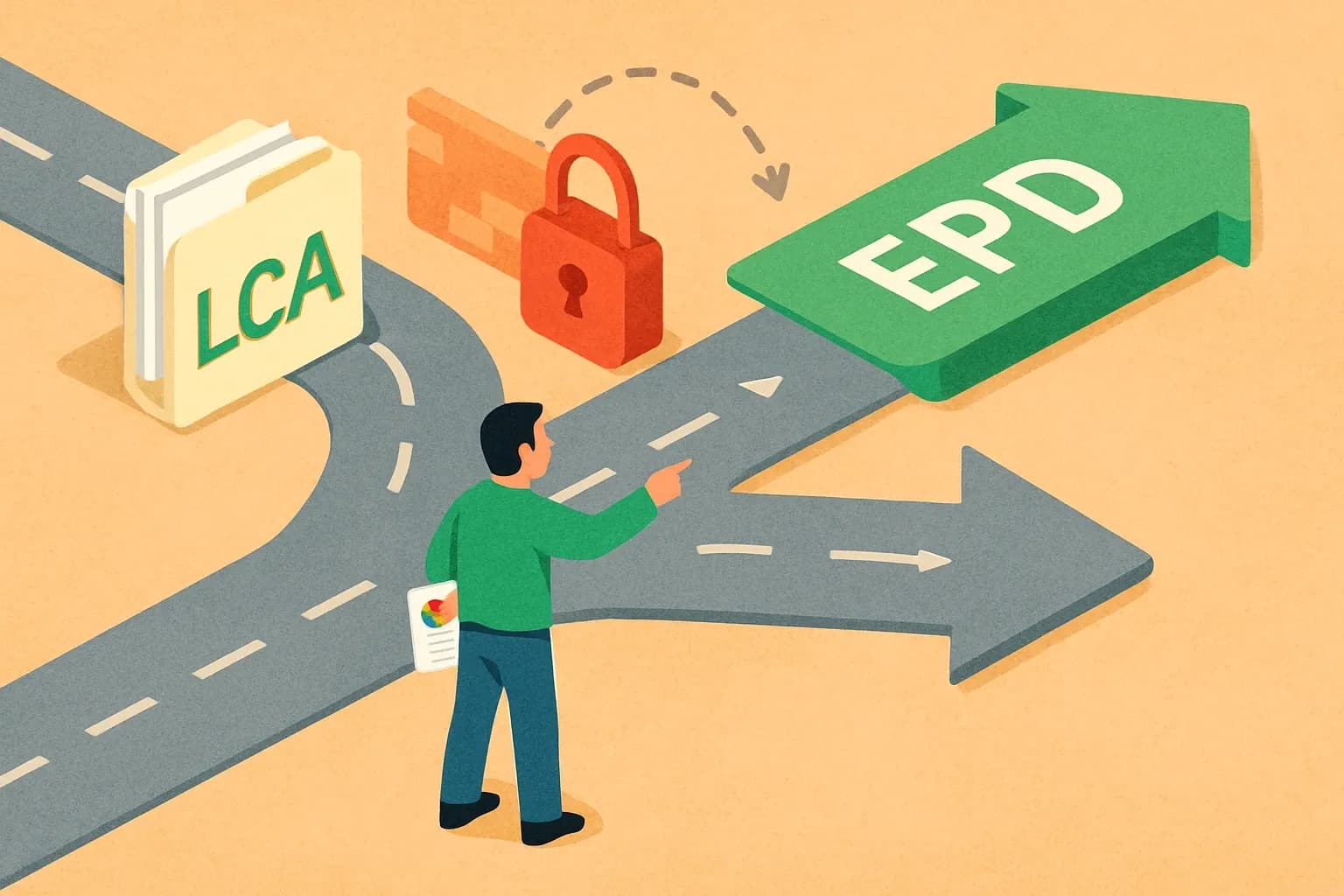
If you have rights to the model and the PCR has not shifted, request the native files and proceed with an update. If rights are missing or the model is stale, rebuild using your data and align to the current PCR. If the old team stalls, move on and document all assumptions so verification goes smoothly. We prefer momentum over stalemate, and so do bid deadlines.
Note on timing and validity EPDs typically carry five year validity, with mandatory annual internal follow up and updates after significant changes of about 10 percent in results during that period (EPD International, 2025). PCRs are commonly reviewed on five year cycles which affects what can be used for verification on a given date (UL Solutions, 2025). If precise dates are unclear for your product category, say so plainly and ask the operator for confirmation rather than guess.
Small but mighty tip When you request files from a prior consultant, ask for the model’s bill of processes list and data quality assessment, even if they refuse the full model. Those two documents let a new team recreate the structure faster. Always request in writing and keep a time‑stamped trail, otherwise you may never recieve a clear answer.