What actually moves with you
Your EPD belongs to your company as the EPD owner, not to the consultant. The program operator hosts the record and shows the validity date, but ownership remains with the manufacturer.
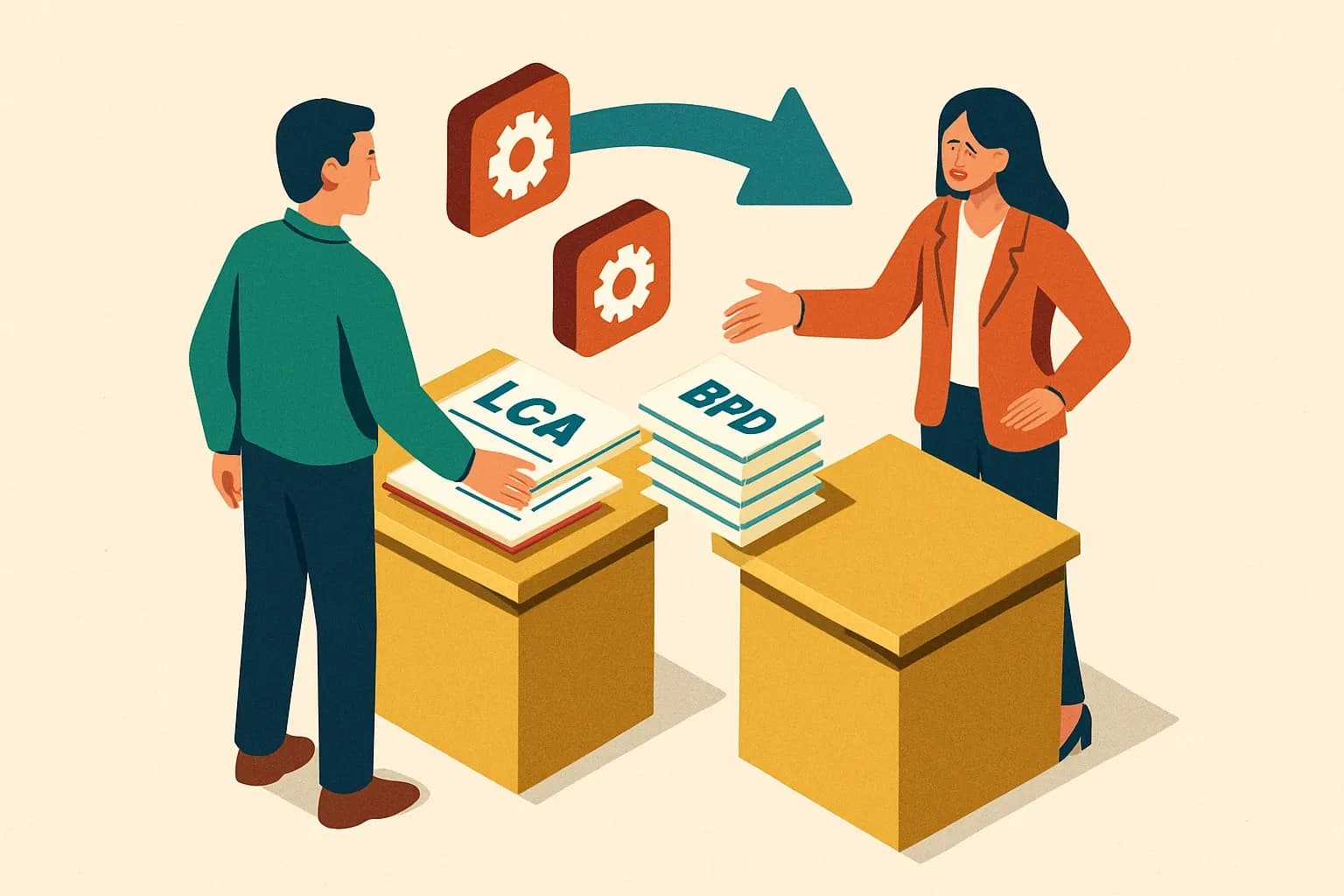
The LCA model itself is different. Unless your contract says otherwise, many firms treat model files and their templates as their intellectual property. Assume nothing. Ask for the exact list of deliverables in writing.
Reusable data, organized
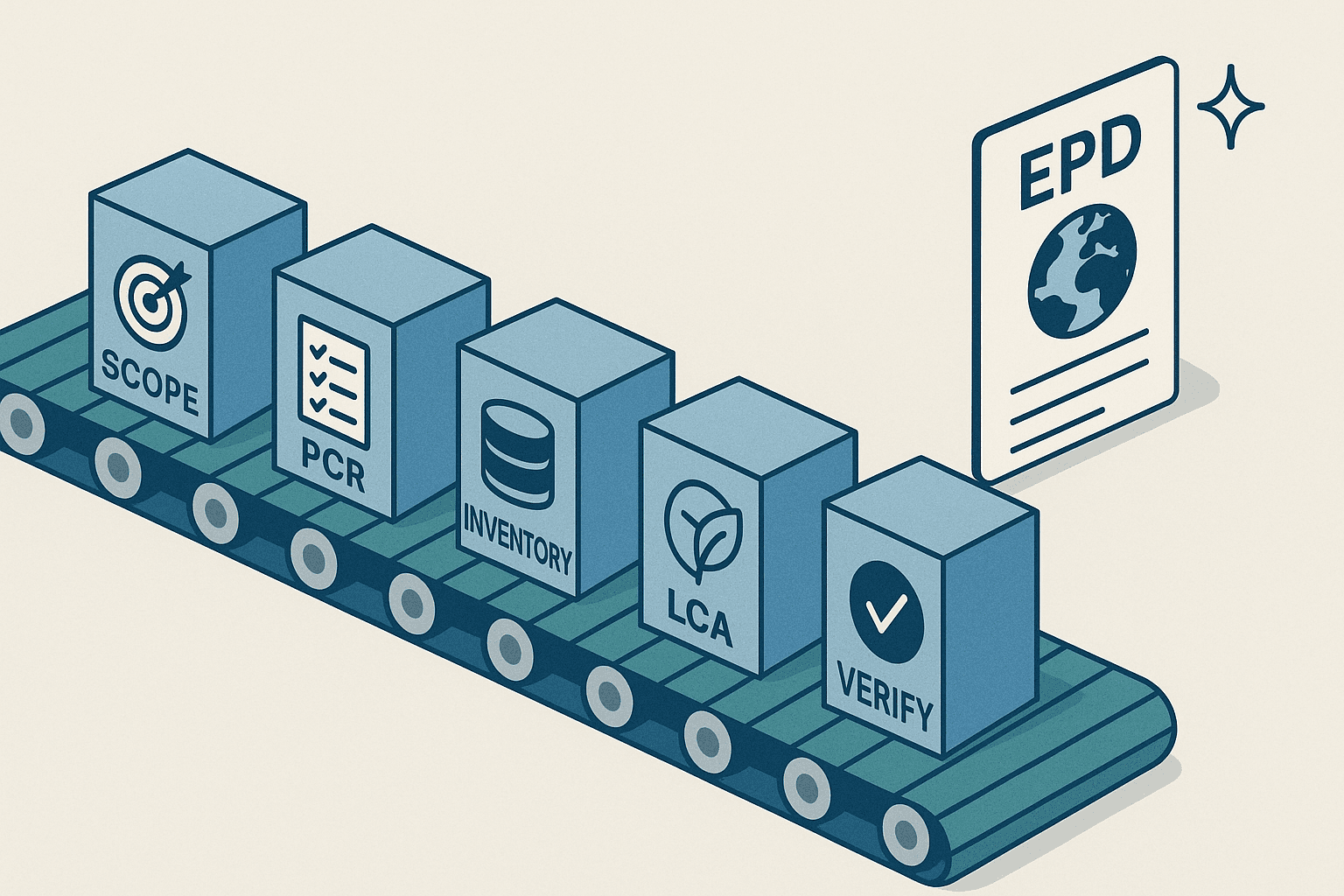
Primary data is portable when it is timestamped and well labeled. Think monthly utilities, production volumes per line, material recipes, packaging, scrap and rework, inbound and outbound transport, plus waste handling. Keep units explicit and sources traceable.
Background facts also travel well when documented. Keep a data dictionary, a list of suppliers by plant, and a simple change log so a new team can understand context quickly.
What usually does not transfer
Licensed background datasets are rarely transferrable between tools or firms. Examples include commercial LCI libraries that sit behind your model. A new consultant must have their own licenses and may map to equivalent datasets instead of moving the originals.
Proprietary calculation templates often cannot be reused. You can still reuse assumptions and inventory values, but expect remapping into the new modeling environment.
ILCD and openEPD exports are your lifeboats
Ask for an ILCD package of the LCI and assumptions where your operator allows it. ILCD is not a perfect one‑to‑one across tools, yet it accelerates model reconstruction.
Export the published EPD in a machine‑readable format such as openEPD where available. That file pre‑populates product identifiers, declared unit, indicators, and metadata so re‑publication and downstream portals do not become a copy‑paste marathon.
Time the switch to the built‑in clocks
Most operators set EPD validity to five years, printed on the EPD itself. You can switch providers any time, and you will re‑verify at renewal against the then‑current rules (EPD International FAQ, 2025) (EPD International FAQ, 2025).
PCRs tend to run on five‑year cycles. That means rules can shift midstream and you will meet the new PCR at your next renewal, even if your product did not change (UL Solutions, 2025) (UL Solutions, 2025).
If you work under the International EPD System, note they set 20 June 2025 as the sunset date for Construction PCR 2019:14 v1.3.4, a clear example of timed transitions you should plan around (EPD International, 2025) (EPD International, 2025).
Preserve the reference year
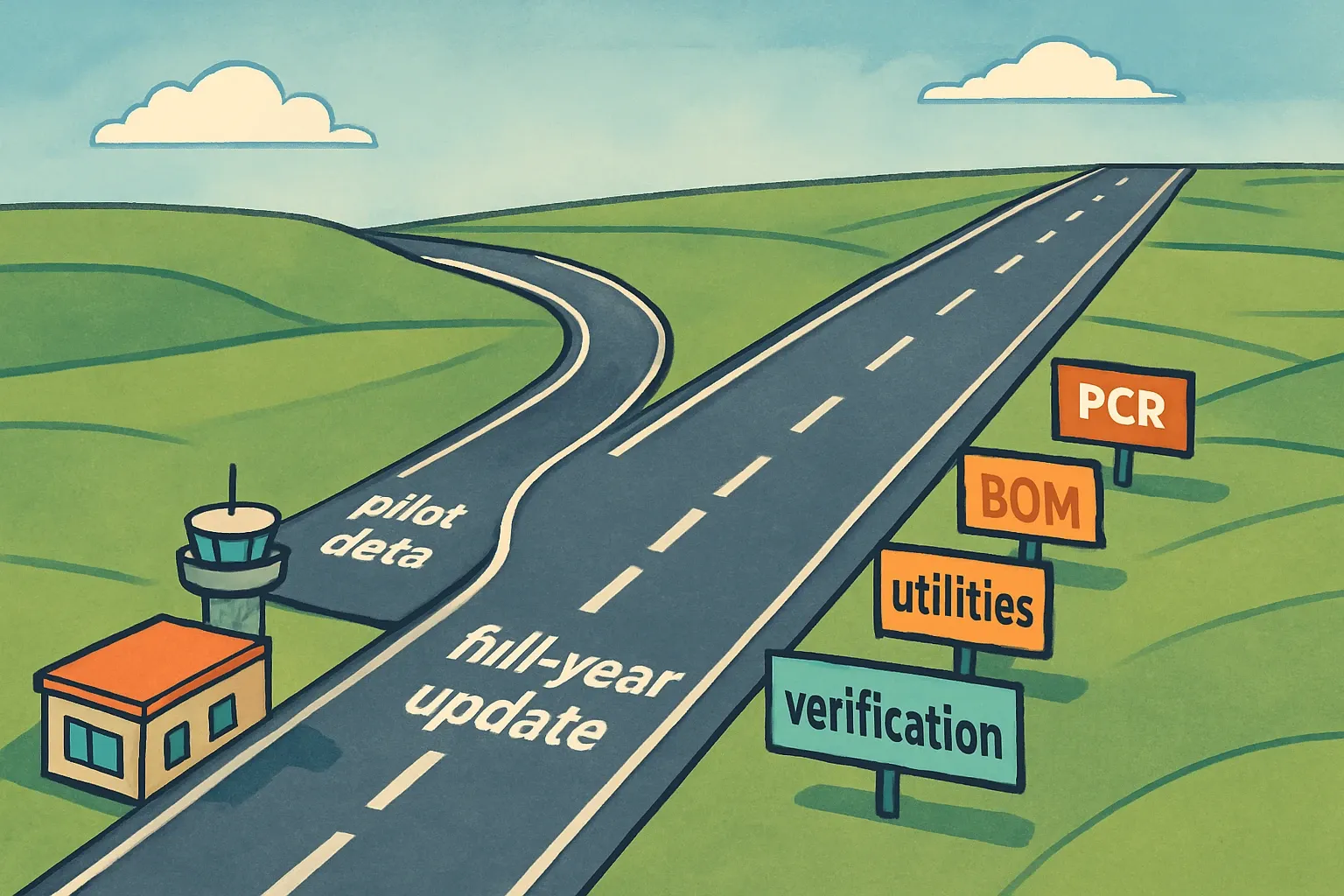
Strong renewals use one recent, continuous reference year of plant data. Lock the exact start and end dates in your brief, and keep the raw monthly extracts, not just annual totals. A clean reference year means fewer verifier questions and faster publication.
Prospective EPDs for brand‑new lines are possible. Plan to replace them once a full year is available so your next update is routine instead of forensic.
Contract language that avoids rework
Write deliverables like you would write a bill of materials. Name files and formats up front. For example: one consolidated data workbook per plant, a documented assumptions log, an inventory list with suppliers and transport modes, and a model export in ILCD where supported.
Clarify rights. State that your organization owns the foreground data, the EPD PDF, and the verification report. Grant your consultant rights to reuse their templates elsewhere, while your team retains a perpetual license to use the model outputs for renewals and disclosures.
Verification and operator choices when you switch
You can renew with the same operator or move to another that your market prefers. Either way, expect a fresh verification step. Keep your verifier’s findings from last time. Common comments repeat, and that makes a quick win.
If your sales team targets multiple regions, ask your next partner to design the model so it can serve more than one operator without structural changes. That usually means tidy metadata, transparent scenarios, and a well‑kept change log.
The fast‑switch checklist
- Confirm contractual access to all foreground data, the verification report, and machine‑readable EPD exports.
- Decide whether to stay with the current operator until expiry or to republish sooner because of major product changes.
- Freeze the reference year and collect raw monthly extracts for utilities, volumes, waste, and transport.
- Request an assumptions log and a list of background datasets with versions for traceability.
- Map any product family coverage so SKUs and ranges do not drift between versions.
Pitfalls that slow teams down
Undefined declared units or system boundaries create avoidable rework. Lock both early. Ambiguous product families also cause delays. If you need one EPD to cover a range, document representativeness and variation rules so the next verifier does not have to guess.
The last pitfall is human. Spreadsheets live in inboxes. Move them into a shared space with version control. Future you will be thankful, and your verifier will be calmer.
A cleaner way to think about migration
Treat your EPD like version control for a product line. Tag every data pull, every assumption, and every scenario with dates and sources. A great partner will handle the messy chasing and validation so your engineers keep building product, not wrangling spreadsheets. That is how you switch consultants and keep momentum, not rebuild your house of cards. It is definately possible.