The bottleneck no one budgets for
Consultant‑led data hunts often start with a spreadsheet blast and end with a tangle of versions. Suppliers reply in different templates, time frames, and units. Teams spend days retyping, which invites errors and stalls schedules.
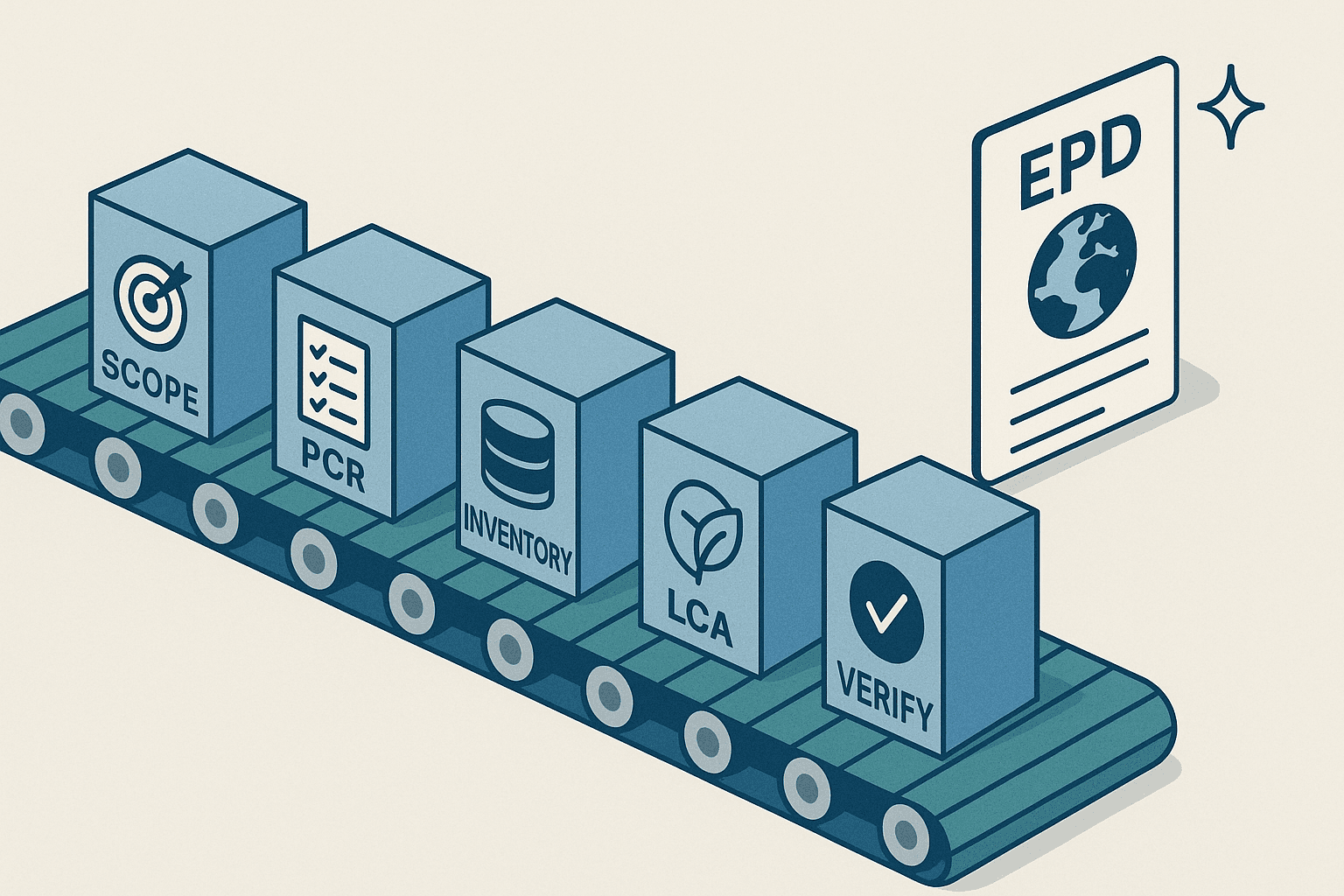
A modern approach treats data collection as an always‑on workflow, not a one‑off task. Inputs flow in continuously, then get validated and normalized before anyone opens an LCA tool.
What foreground data really means
Foreground data is the information a manufacturer and its suppliers control. Think plant utilities, batch yields, scrap rates, inbound transport, packaging, and specific raw materials. Background data is everything from the life‑cycle libraries, such as grid mixes and upstream processes.
Great EPDs rise and fall on foreground data quality. If suppliers are unclear, the LCA inherits uncertainty and comparability suffers.
Why spreadsheets break at scale
Spreadsheets are fine for a single plant and two suppliers. Multiply that by dozens of suppliers, multiple regions, and variant SKUs, and the wheels come off. Version drift appears. Hidden formulas creep in. Different decimals and densities collide.
The fix is not another template. The fix is a system that ingests what exists and shapes it to what auditors require.
Intake that meets suppliers where they are
A scalable intake model accepts data from ERPs, CSVs and XLSX files, shared drives, emailed attachments, and even photos or scans of invoices when that is what a supplier actually has. Optical character recognition turns images into text, then field mapping assigns each value to the right variable and time window.
Multilingual outreach removes friction. Suppliers can interact in their preferred language, see just the fields they own, and get reminders that feel like helpful nudges, not nagging.
Automatic normalization that auditors can trust
Normalization converts inconsistent inputs into a single, comparable structure. The system standardizes units, applies densities or moisture factors where provided, converts energy to consistent bases, and flags outliers for human review. Every transformation is logged with who, what, and when.
Auditors need to trace each number back to source. Clear logs and supplier attestations shorten verification and reduce rework. EN 15804 requires reporting across defined impact categories, including 13 core indicators, so clean conversions matter from the start (CEN EN 15804+A2, 2019).
Goverance that compounds across plants and EPDs
Good governance is boring in the best way. A shared data dictionary, version history, supplier‑level permissions, and plant‑level scoping let teams reuse validated inputs across product lines. When a PCR updates or a program operator asks for clarification, the answer is already organized.
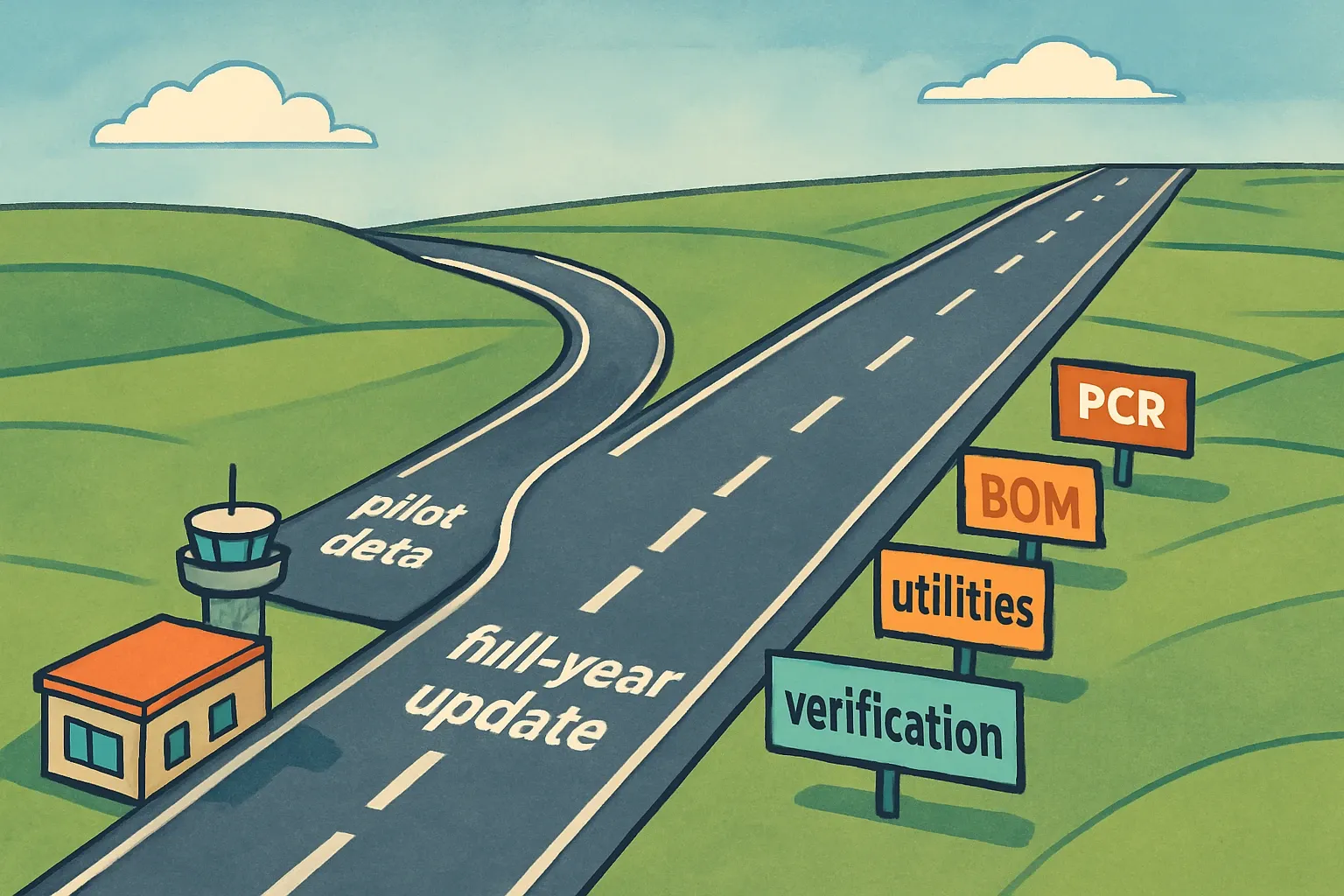
This reuse pays off at renewal. Most program operators set EPD validity at five years, so carrying forward vetted supplier datasets avoids a fresh scramble (IBU General Program Instructions, 2024).
Program operators, explained without the maze
A program operator is the organization that registers and publishes an EPD after third‑party verification. Examples include Smart EPD in the United States and IBU in Europe. They check conformance to ISO 14025 and EN 15804 and ensure the declaration is public and comparable.
Choosing an operator is not a branding decision. It is about fit for product category rules, verifier access, and publication timelines.
From messy inputs to a clean audit trail
Here is what a platform‑plus‑people model looks like in practice:
- Multilingual, always‑on supplier outreach that routes each contact the fields they own, with service channels that fit them, email, portal, or phone.
- Automated intake across ERPs, spreadsheets, and images, with OCR and field mapping to a shared data dictionary.
- Unit, currency, and weight conversions with check ranges and alerts for outliers, then human review where it counts.
- Governance and permissions that let teams reuse supplier data across plants and multiple EPDs without copy‑paste.
- Export to the LCA model that matches the chosen PCR and program operator requirements, with full logs for verification.
Commercial upside when data flows
Product‑specific EPDs remove a common penalty in carbon‑managed bids, where generic assumptions can push a product out of contention. Reliable data also supports quicker updates when formulations or suppliers change, which keeps sales from stalling during renewals.
We have seen that clean intake does more than save time. It preserves focus for engineers and plant managers so they can improve the product rather than chase paperwork. That is where the ROI shows up.
Quick glossary for non‑specialists
Foreground data: The plant and supplier information under a manufacturer’s control, such as utilities, transport distances, material specs, and scrap.
Normalization: The process of transforming varied inputs into a standard structure with consistent units, time frames, and boundaries, while keeping a traceable audit trail.
Program operator: The organization that registers and publishes verified EPDs according to ISO 14025 and EN 15804, often with additional category guidance.
PCR, Product Category Rules: The rulebook for how an LCA and EPD must be done for a specific product category, including declared unit and system boundaries.
The scalable path forward
Automating supplier data collection does not mean removing people. It means giving people a workflow that fits reality, multilingual outreach, machine‑assisted transformation, and governance that compounds value over time. Do that, and EPD timelines shrink, verification gets smoother, and specs stop slipping for avoidable reasons. It is simple in summary, and it is definately worth doing.