What “streamlined” really means for an EPD
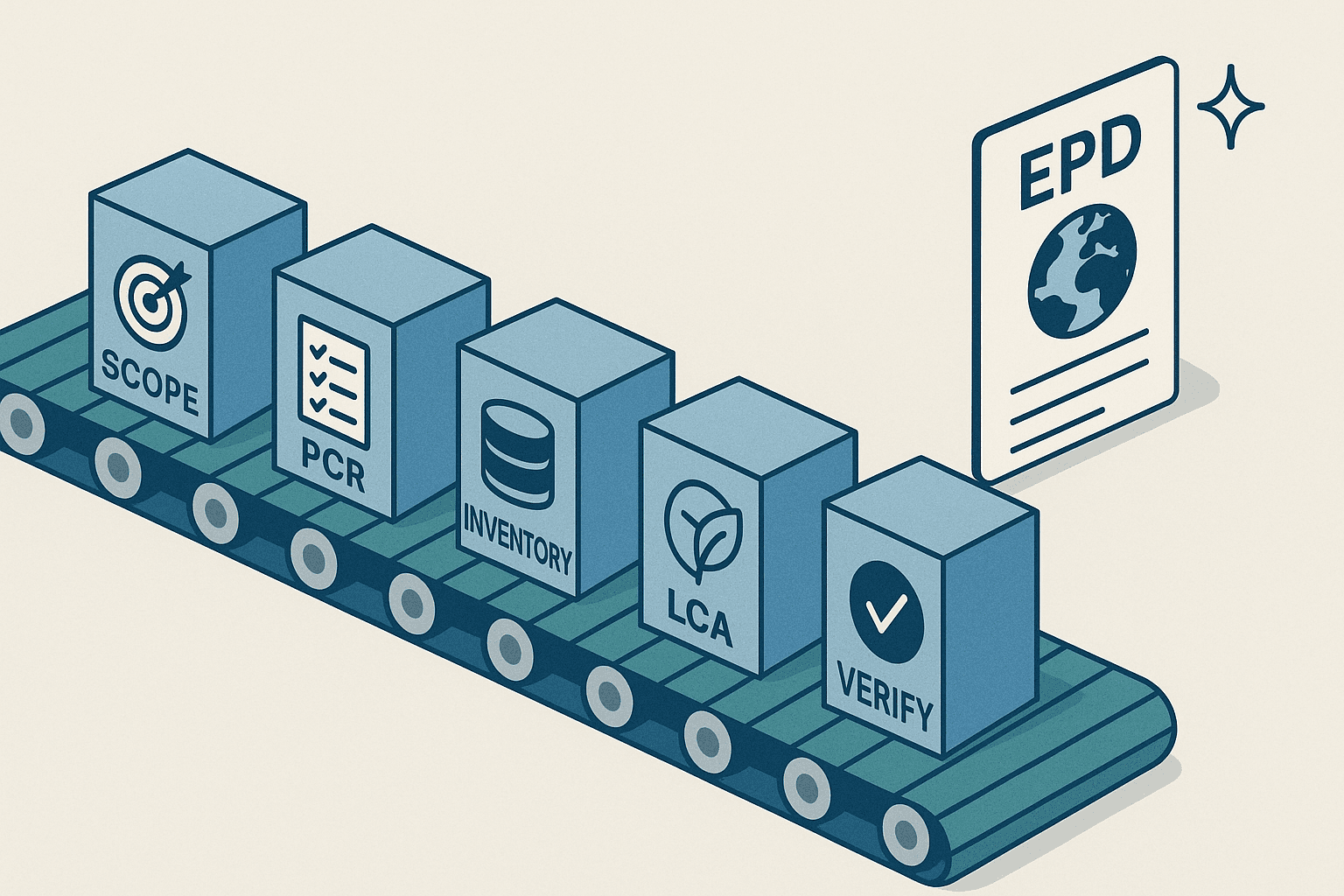
Streamlined is not cutting corners. It is cutting rework. The fastest paths standardize inputs, lock scope early, and remove guessing about who does what by when. Think assembly line, not scavenger hunt.
Pick the right PCR on day one
A PCR is the rulebook of Monopoly. Ignore it and the game falls apart. Start by reviewing which PCR competitors use for comparable products, confirm its revision status, and note its renewal timeline. When a product‑specific PCR does not exist, a generic construction materials PCR from a recognized operator often works, provided scope and comparability make sense.
Scope that fits the spec
Decide up front what the market expects: cradle‑to‑gate for A1 to A3, or extended scope with A4 and A5 if logistics and install matter to buyers. If durability or maintenance is part of the sales story, include the relevant B modules. Clear scope prevents surprise data requests two months in.
Data, gathered once and cleaned fast
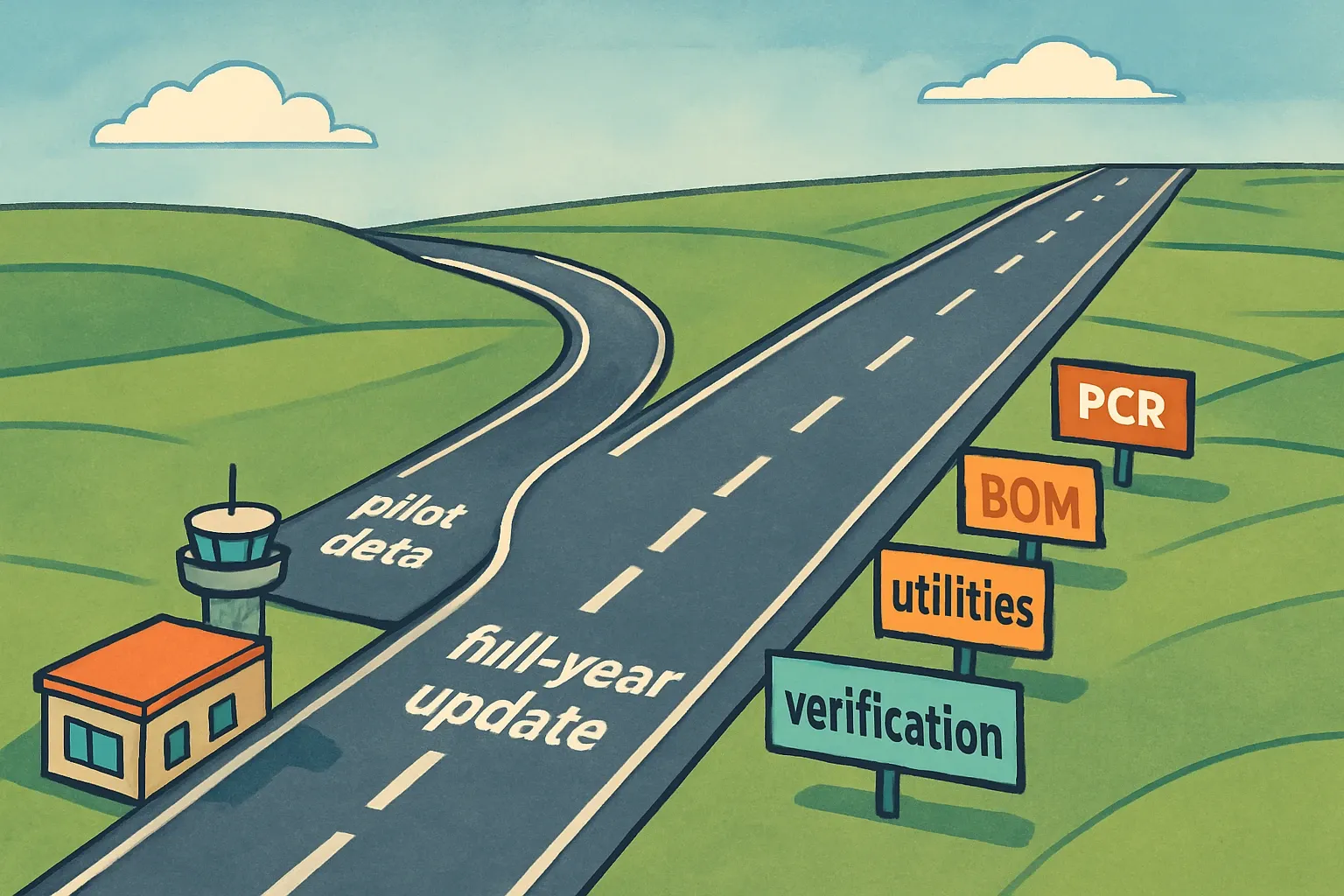
Treat data like parts on a pallet with labels. One reference year keeps utilities, volumes, inbound materials, scrap, and water aligned. For a brand‑new line, a prospective EPD based on the first months of production can be a bridge, then updated after a full year. Reliable cost averages for collection effort are hard to pin down because every factory runs differently.
The six‑checkpoint workflow
- Discovery and PCR confirmation, including program operator short‑list.
- Data mapping to plants, SKUs, and processes, with a simple responsibility grid so nothing falls through the cracks.
- LCA modeling with background datasets that match geography and technology, then sensitivity checks for hot spots.
- Internal review with manufacturing, product, and quality to verify plausibility and boundaries.
- Third‑party verification based on ISO 14025 and EN 15804, scheduled early so calendars do not bottleneck.
- Publication with the chosen program operator, plus a tidy data room for renewals and customer requests.
Background datasets that match reality
Your upstream data should reflect where you buy and how you make. Electricity mixes, clinker ratios, resin grades, or coil coating yields can swing results. When options exist, choose datasets with transparent documentation and recent updates, then log the choice so next year’s renewal is not a detective story.
Verification without the last‑minute scramble
Accredited verifiers look for methodological consistency, data quality, and claims that match the PCR. Schedule the review window early. The final checks is where ambiguous wording and unit mismatches usually surface, so keep a running log of assumptions and units in plain English.
Program operator choice, simplified
Pick an operator your market recognizes, and that supports your format and languages. Many North American manufacturers publish with Smart EPD, while European teams often use IBU, and some global firms prefer Environdec. All credible operators require third‑party verification and follow ISO 14025 or EN 15804. Choose based on audience, not habit.
Timelines that hold
Fast timelines come from parallel work. Data collection can run while the LCA model skeleton is built. Verification can be booked once draft results stabilize. Renewal planning should begin as soon as the declaration goes live so teams are not surprised by PCR updates or verifier availability next year.
Avoid the time traps
Common drags include missing supplier declarations, unclear SKU boundaries, and late scope shifts. Fix them with a single data template, a frozen bill of materials per product family, and a change‑control note for any mid‑project decisions. One owner per dataset keeps email threads short and outcomes predictable.
Turn the EPD into wins, not just a PDF
Product‑specific EPDs ease carbon accounting for specifiers. Teams pursuing LEED v5 style low‑carbon outcomes prefer products with third‑party verified declarations because they avoid penalties from generic default factors in project tools. When your EPD is easy to find, simple to read, and tied to current SKUs, you stay in play rather than quietly swapped out.
When to expand scope beyond one product
If buyers usually compare families, consider a series of product‑specific EPDs that share a core model with clear parameterization. That lets you refresh the entire range quickly when energy or formulations change, and it makes comparative marketing claims safer and more defensible.
What great looks like
A clean data trail, a PCR that matches the market, a published declaration with clear scope language, and a renewal calendar everyone can see. We aim for a process that protects R&D and plant leaders time, while giving sales a document they can hand to any specifier without a long explanation.
Ready to streamline your own path
Start with the PCR choice and a one‑page data map. Book verification early. Build the model in parallel with collection. Keep a decisions log. Do this and the EPD process feels less like a maze and more like a moving walkway. It is definitly achievable.