Why this work pays
Embodied carbon is now a board‑level topic. Buildings account for 39% of global energy‑related emissions, with 11% from materials and construction, so buyers increasingly request verified EPDs to compare options (WorldGBC, 2024) (WorldGBC, 2024). LEED v5 kept a strong materials focus and was ratified by USGBC members on March 28, 2025, which sustains demand for product‑specific EPDs in submittals (USGBC, 2025).
Define the certification stack up front
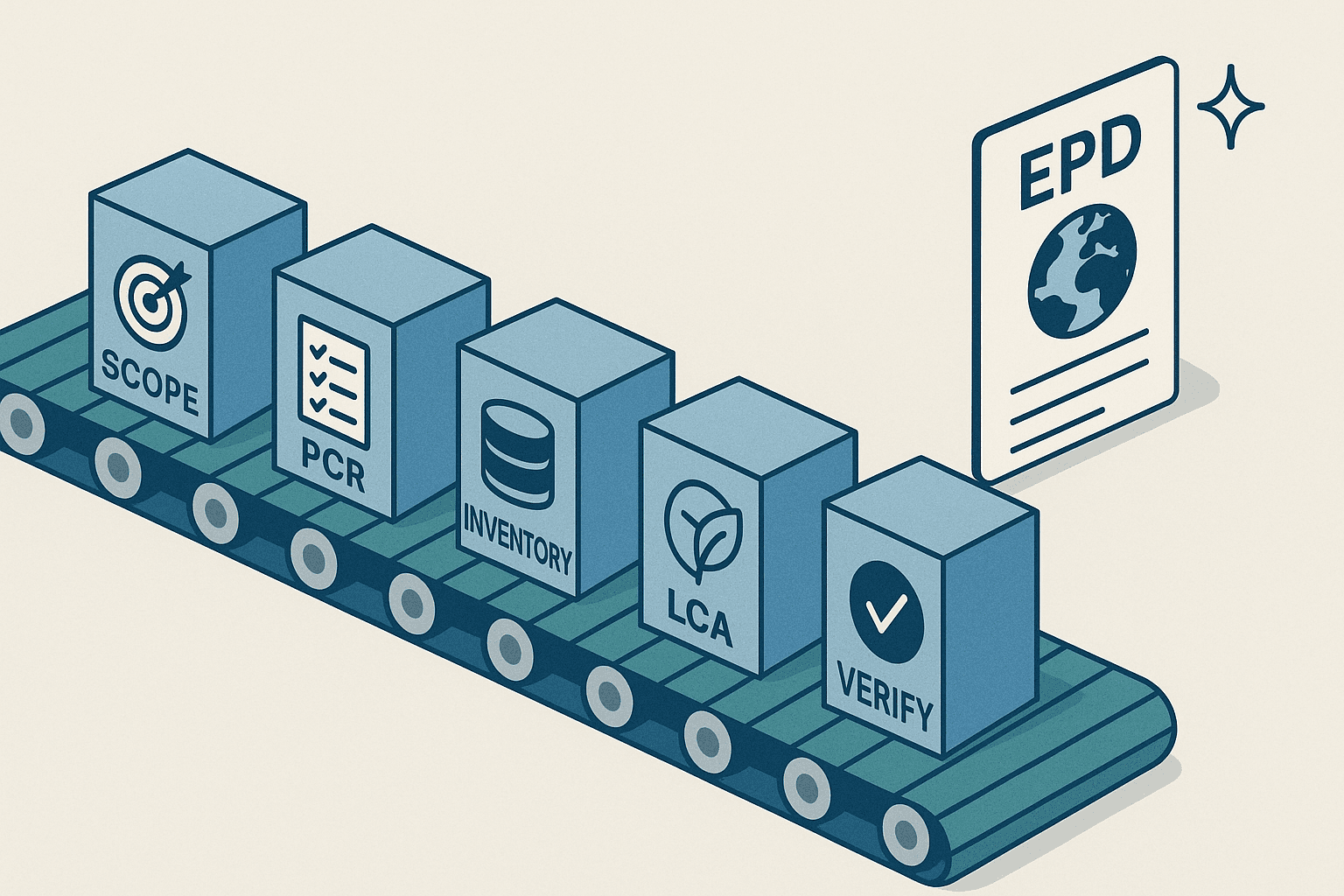
Clarity beats speed for speed. Decide early whether the target is an ISO 14025 Type III EPD, an HPD, or both, and whether the EPD will follow EN 15804 for construction markets. Product‑specific EPDs tend to unlock more procurement doors than industry‑wide EPDs when projects compare like for like.
Choose the right PCR like you choose a rulebook
A PCR is the rulebook of Monopoly, ignore it and the game falls apart. Scan which PCR competitors use, confirm its revision status, and note the program operator that will publish the declaration. This is the single choice that governs scope, comparability, and verification.
Data spine, not data swamp
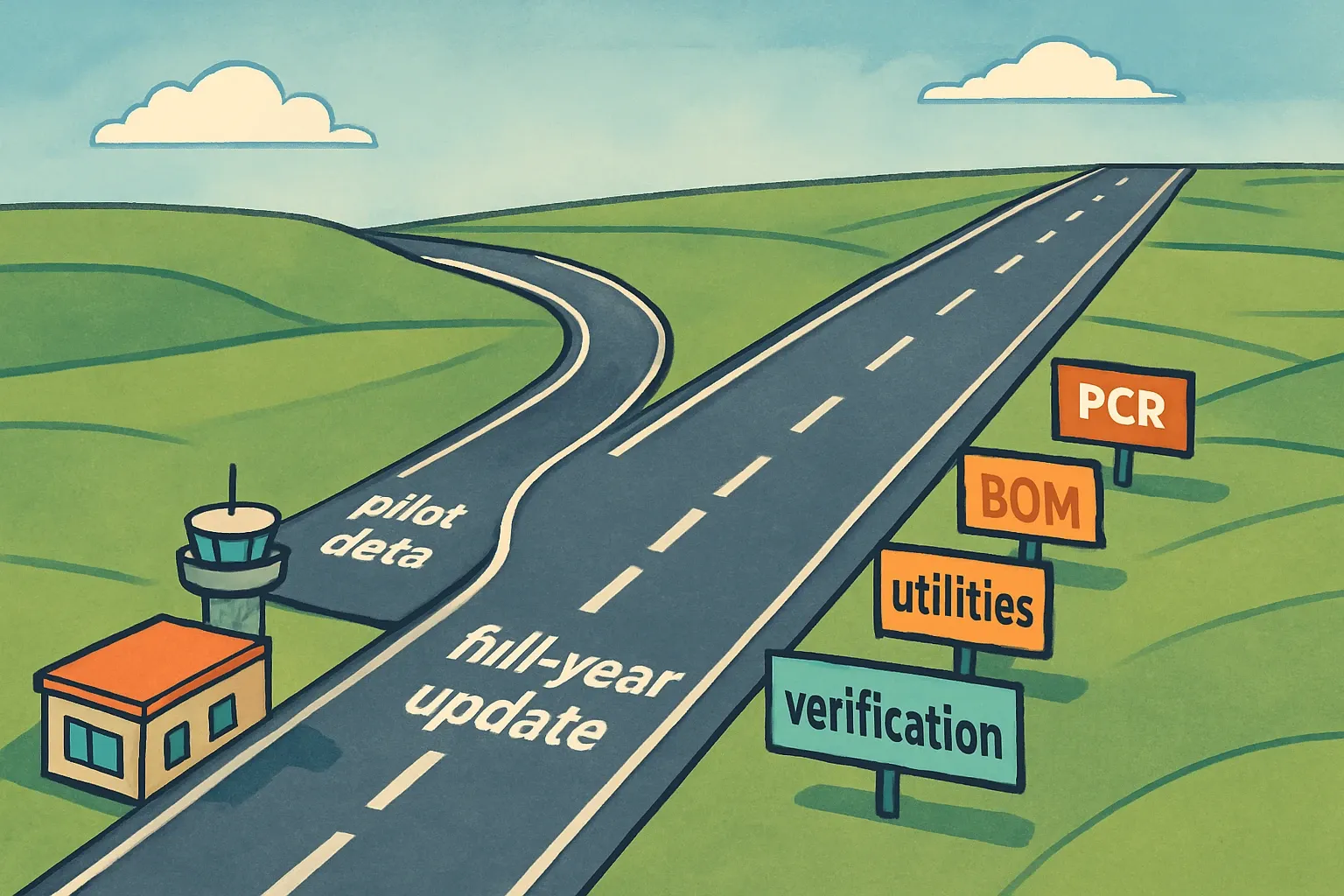
Pick a recent twelve‑month reference year and freeze it. Then collect only what the LCA needs so plant teams are not buried.
- Bills of materials and recipes by SKU and line
- Energy and fuels by meter and month, plus water
- Inbound and outbound transport, modes and distances
- Scrap, rework, and waste destinations
- Packaging, maintenance, and chemicals with SDS links
Program operator and third‑party verification
Select an operator that buyers recognize in your markets, then plan verification time. IBU notes verification typically takes several weeks, and confirmed that published EPDs are valid for five years, after which an update is required (IBU, 2024) (IBU, 2024). Independent verification is required for Type III EPDs, which protects credibility with specifiers.
Timeline math that avoids last‑minute scrambles
Work back from bid dates and dealer launches. Most PCRs are reviewed or expire about every five years, so mid‑project updates are possible and should be watched (UL Solutions, 2025). EPD International’s GPI clarifies that already‑published EPDs retain their original validity during GPI transition periods, which reduces churn during rule updates (EPD International GPI, 2024) (EPD International GPI, 2024).
Quality checks that prevent rework
Before sending to a verifier, align units, confirm allocation choices, and lock background datasets. If an indicator worsens by more than 10%, program rules may require an update during the validity window, so monitor production changes and energy contracts after publication (EPD International FAQ, 2024) (EPD International FAQ, 2024). Keep version control tight for the LCA model and the background report so surveillance questions are fast to answer.
Orchestrate the people side
Certification fails when responsibilities are vague. Assign a single owner for data intake, one for LCA modeling, and one for approvals. Sales should feed pipeline clues, since untold demand is common when reps avoid buyers that require EPDs. That hidden demand is why certifcation timing often surprises teams.
What to ask any EPD partner
Ask how they collect plant data without endless spreadsheets, which operators they publish with, and how they manage PCR choice. Confirm they run point on scheduling verifiers, handle HPDs when requested, and build a renewal calendar that starts at publication day one. Speed, ease, quality, and completeness should be visible in their plan, not a promise.
Make certification a relay, not a marathon
Lock scope, build a lean data spine, pick the right operator, and protect the calendar. Done this way, environmental product certification stops being a fire drill and starts acting like a revenue system that keeps products in the spec conversation.