Why a tiny spec team can still move markets
A small team can outmaneuver bigger rivals by picking lanes and shipping tidy disclosures that cut submittal friction. LEED activity remains strong, with the 2024 Top 10 states certifying 1,437 projects and more than 414 million square feet, which means verified product data keeps mattering on bids (USGBC, 2025) (USGBC, 2025).
EPDs and HPDs are the two documents that unlock most asks on carbon and material health. Treat them like your starter kit, not a science fair.
Target the right segments first
Start where disclosure is already expected. Public projects and large institutional owners tend to ask for third‑party verified EPDs and HPDs during prequalification, then again at submittals. Cross‑reference your pipeline with states and owners active in LEED and city policies. One win in a hospital network or university system often cascades to standard details and master specs.
If data is thin on exact policy counts this quarter, say so to your sales leads and focus on the visible demand signals in RFQs, addenda, and submittal templates rather than guessing.
Decide your disclosure mix
Lead with an EN 15804 or ISO 21930 EPD for carbon and an HPD for ingredients. EPDs typically carry a five‑year validity window under program operator rules, so you can plan renewals and avoid crunch seasons (EPD International, 2025) (EPD International, 2025). The HPD Public Repository lists more than 13,000 published HPDs and adds around 250 new reports monthly, a clear sign that specifiers are looking there first (HPD Collaborative, 2025) (HPD Collaborative, 2025).
Pick one program operator for each region you sell into and keep it consistent so reviewers know where to find you. Smart EPD and IBU are common choices, but any credible operator aligned to the right PCR works.
Build the lean collateral stack
Your team does not need a library of everything. It needs the right few, kept current:
- One‑page EPD summary per product family that calls out declared unit, system boundary, and GWP A1–A3 in plain language.
- An HPD PDF in the repository, plus a short explainer on thresholds and residuals so submittals do not stall.
- MasterFormat‑mapped spec notes with the exact section numbers sales will see on drawings.
- A Q&A cheat sheet for common reviewer asks, like electricity mix, recycled content, and allocation choices.
Translate disclosures into spec‑ready talking points
Turn the technical into punchy lines a PM can quote on a pricing call. Example: “Product‑specific, third‑party verified EPD, EN 15804, cradle‑to‑gate A1–A3 reported, reference year 2024, verification listed in the EPD.” Another: “HPD v2.3 published to the Public Repository, 1000 ppm disclosure threshold noted in the document.” The goal is less back‑and‑forth and fewer RFI detours.
A PCR is the rulebook of Monopoly: ignore it and the game falls apart. Always name the PCR on the first page of your EPD summary so reviewers see the fit instantly.
Set up the data engine once
Pick a clean reference year for LCA foreground data and lock the sources. Document meters, production volumes, waste streams, and transport distances in a single worksheet your factory leads can update. We favor simple templates and white‑glove data wrangling so R&D and plant teams stay on their day jobs.
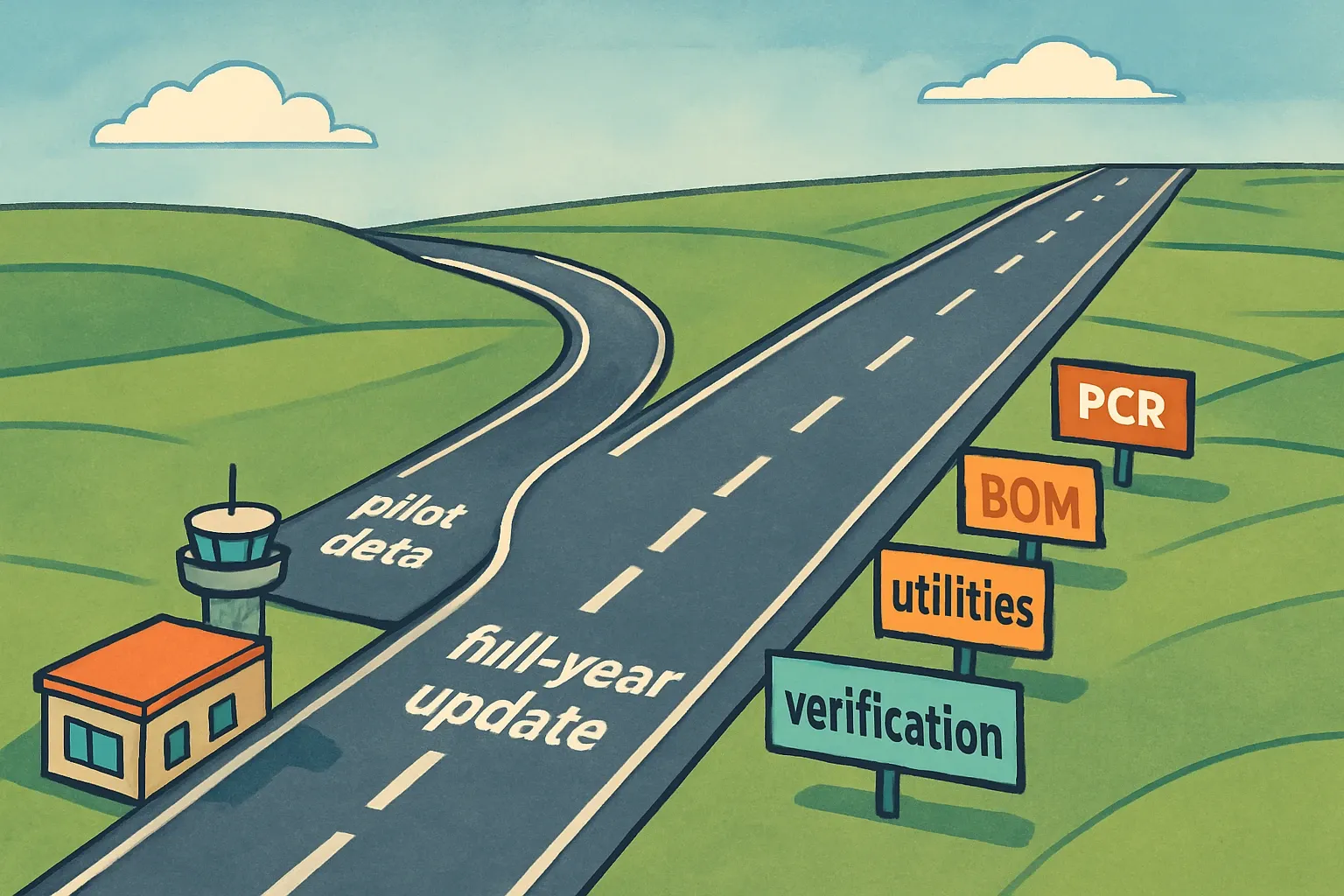
For brand‑new products that are already shipping, consider a prospective EPD based on an initial period, then refresh after twelve months of data are in. Sales hates waiting, specs hate gaps, this bridges both.
A 90‑day sprint your team can actually run
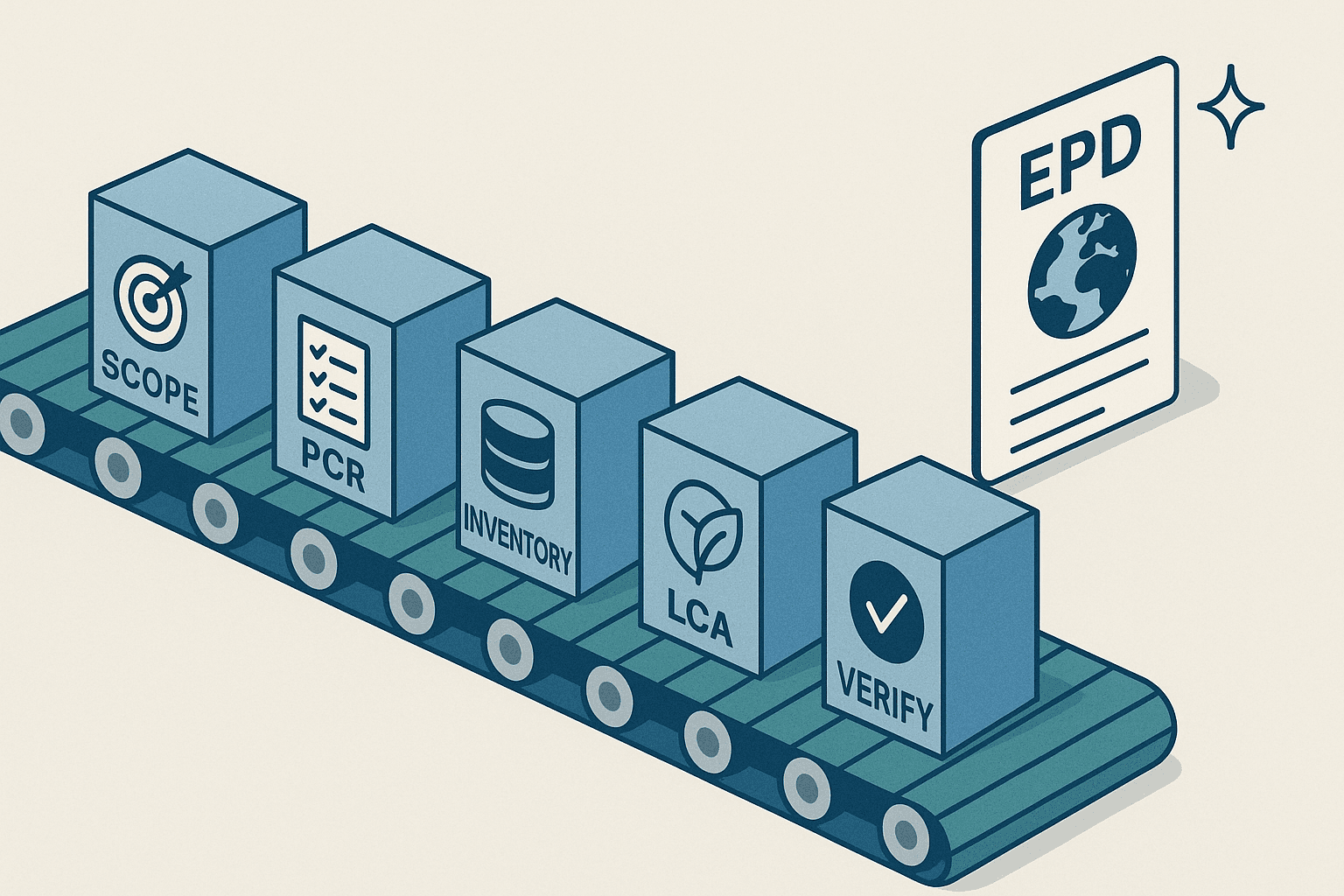
Week 1–2: Confirm product scope and variants, select the current PCR, and agree on program operator and geographies.
Week 3–6: Collect and QA data, align assumptions, and draft the LCA model. Hold a 30‑minute review with sales to preview the messaging.
Week 7–10: Verification, operator review, and publication. In parallel, finalize the one‑pager, spec notes, and the team’s Q&A sheet.
Week 11–12: Train the field. Run two mock submittals with real project formats. Fix anything that slows a reviewer by more than thirty seconds.
Coach the field on when to use what
We see a simple rule work well. Lead with the EPD when the conversation is carbon, lead with the HPD when the conversation is ingredients or WELL. If a designer asks for both, send both with the spec notes attached. Make it feel like a clean Spotify playlist, not a folder full of mystery tracks.
Keep it fresh without burning out
Plan renewals 6 to 9 months before expiry, and watch for mid‑cycle changes that require an update. Program operators expect annual internal checks and updates if results worsen beyond defined thresholds during the five‑year window, so build that into your calendar now (EPD International, 2025). Older EPDs within their validity are still acceptable on most bids, just avoid letting them drift into the final months during a live pursuit.
Your HPD cadence is simpler. Maintain the same product identifier and versioning, republish to the repository when formulas or supplier inputs change, and tell the sales team exactly what changed so they can speak to it. That transparency builds trust alot faster than silence.
Metrics that matter to a small team
Three signals prove the commercial case without spreadsheets that never end. First, LEED activity remains high in key states, which keeps disclosures in the spec conversation (USGBC, 2025). Second, EPDs have predictable five‑year windows, which lets a small team stage renewals around selling seasons instead of reacting under pressure (EPD International, 2025). Third, HPDs are discoverable at scale in the public repository, which is exactly where specifiers search during submittals today (HPD Collaborative, 2025).
What “good” looks like next quarter
One product family with a current EPD and a published HPD, one page of spec notes mapped to MasterFormat, and one thirty‑minute training for sales and tech services. That package travels cleanly through RFQs, prequalification, and submittals. It also turns your small A&E team into the group that removes friction, which is where specs are won.