What each one is
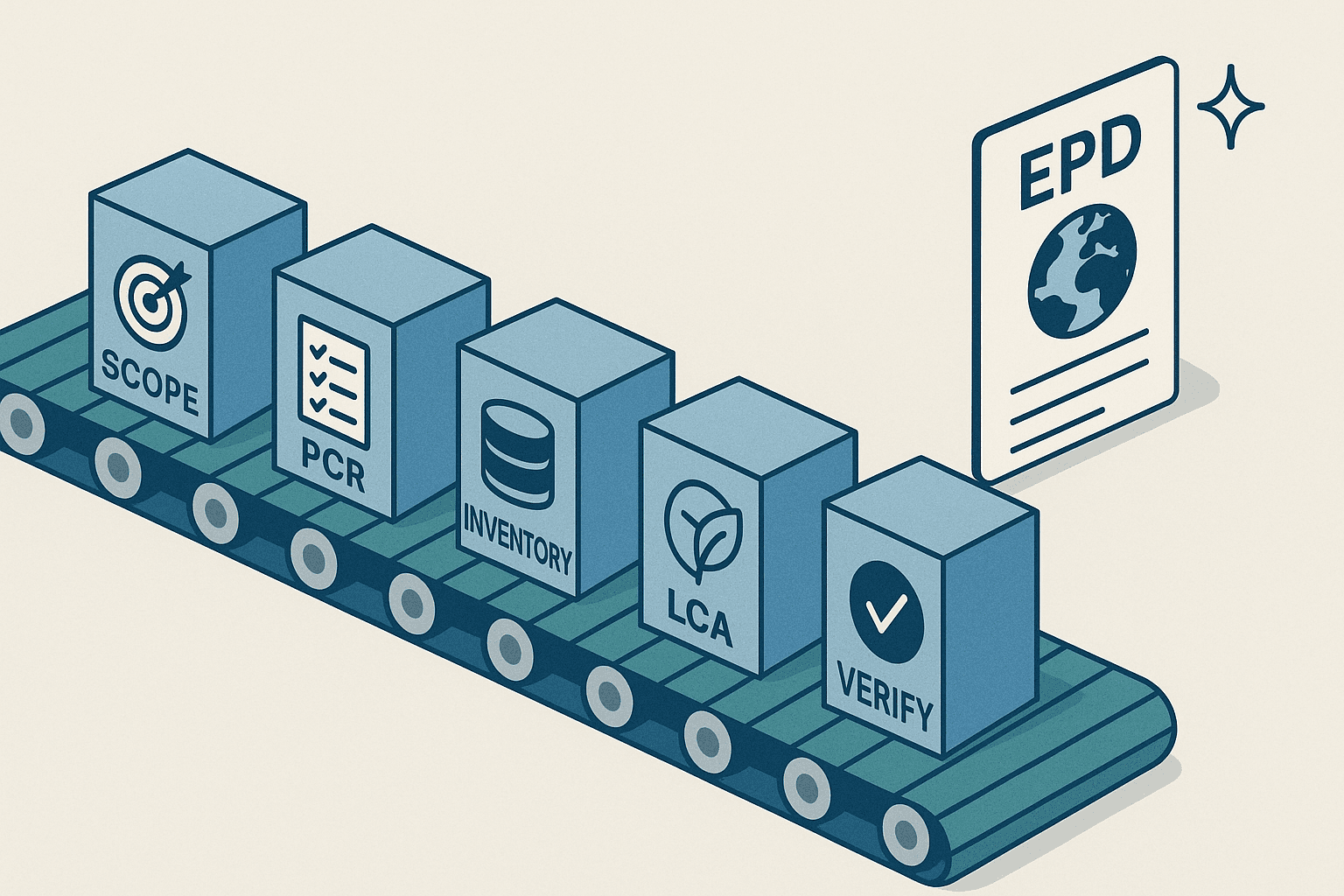
A product carbon footprint (PCF) totals the greenhouse gases for a unit of product, usually shown as kg CO₂e. It follows ISO 14067 and focuses on climate only (ISO 14067, 2024). An Environmental Product Declaration (EPD) is a third‑party verified report built on an LCA that follows ISO 14025 and, for construction, EN 15804. It includes climate plus other impact indicators and required modules.
Where each is used in construction
PCFs are common for portfolio management, supplier requests, and quick comparisons inside a company. EPDs are what public owners, large GCs, and design teams rely on for submittals, low‑carbon procurement, and credits in rating systems. Many databases and Buy Clean‑style policies point to a published EPD as the source of truth.
Boundaries and modules, without the jargon
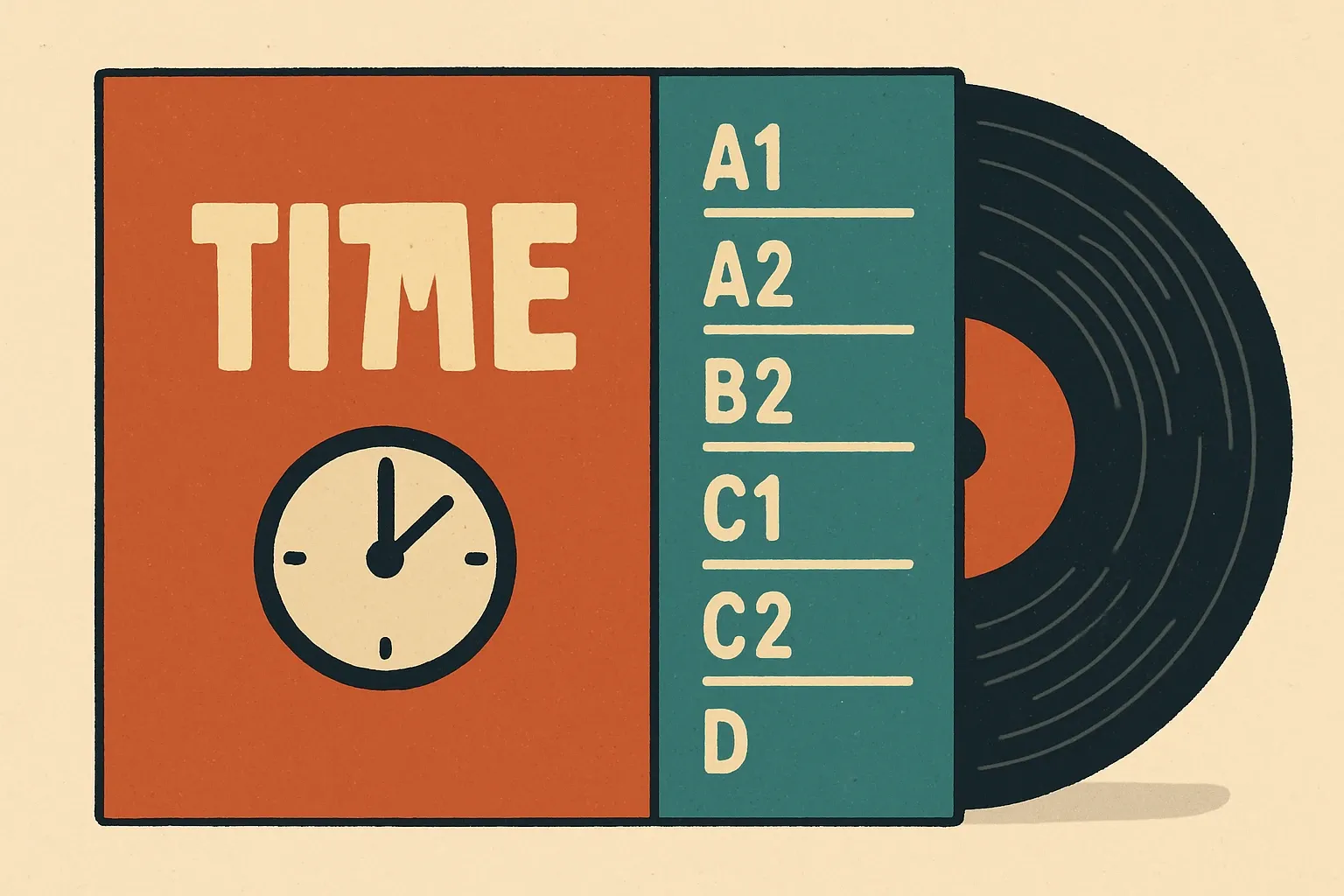
A PCF can be cradle‑to‑gate or cradle‑to‑grave, as long as the boundary is stated. An EPD reports life‑cycle modules. Think of A1–A3 as the factory album, A4–A5 as the logistics and install singles, B as the long tour, and C–D as the final track with any credits back to the system. Same songbook, more tracks.
Comparability depends on the rulebook
PCFs are comparable only when scope, functional unit, and data quality match. EPDs are built under Product Category Rules (PCRs), which define those choices for a product family, so comparisons are less apples‑to‑oranges. If competitors publish to different PCRs, be cautious about claims.
Validity and refresh cycles that actually matter
Most EPDs carry a five‑year validity, set at verification, after which they must be renewed to remain current (EPD International FAQ, 2024) (EPD International, 2024). PCRs also refresh. For construction, the prior core PCR line ended publication under version 1.3.4 on 20 June 2025 in favor of version 2.0.0, so teams should plan updates accordingly (EPD International, 2025) (EPD International, 2025).
Want to get your EPDs spec'd more often?
Follow us on LinkedIn for insights that help you navigate EPD creation and unlock new business opportunities.
Why this is commercial, not academic
Buildings still drive a large share of global emissions, which keeps embodied‑carbon requirements in specs. The latest global review reports that buildings consume about 32% of final energy and contribute roughly 34% of energy‑related CO₂ emissions (UNEP Global Status Report for Buildings and Construction 2024/2025, 2025) (UNEP, 2025). Owners respond with material thresholds and EPD requests. If you do not publish, you forfeit opportunities quietly.
Picking PCF or EPD first
If you sell into projects that ask for submittals, start with an EPD. If you are mapping a decarbonization roadmap or talking to upstream buyers who want a single number for Scope 3, a PCF can be a fast on‑ramp. The smartest path is to plan both from the same LCA model, so one data campaign yields two outputs.
Data you will actually need
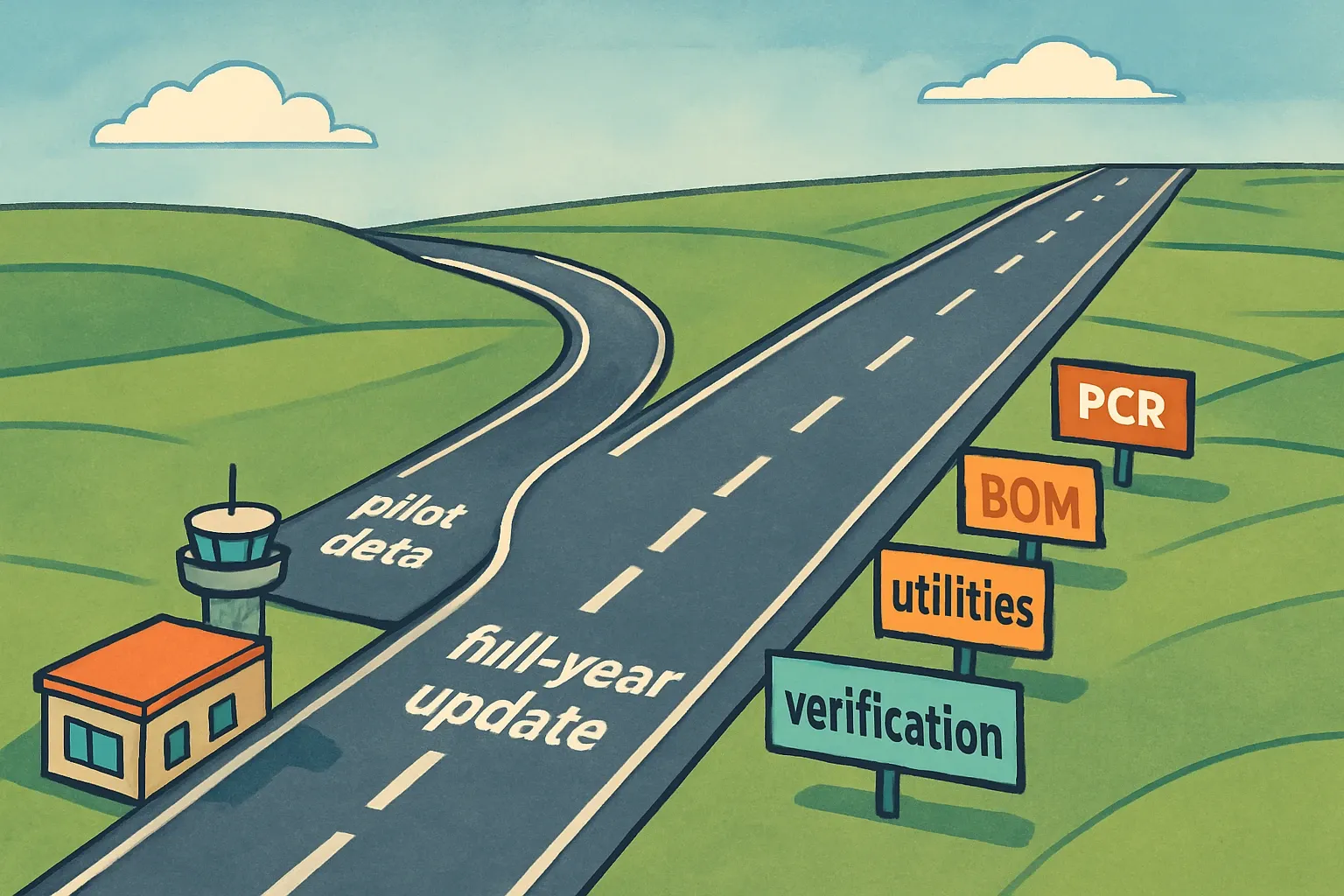
Choose a recent reference year. Pull energy, fuels, inbound freight, yields, scrap, packaging, and outbound transport to the declared boundary. Replace generic datasets with primary supplier data where feasible, starting with energy‑intensive inputs. Document QA so reviewers can follow the thread. It sounds like alot, yet disciplined collection saves weeks later.
Publication choices that influence speed
Decide on the program operator early and align on the target PCR. Agree on the declared unit that sales actually quotes. If a new product is ramping, ask about options for products recently on the market and expected update timing. Time verifications to avoid crunch near PCR sunsets.
Quality signals specifiers notice
Clarity on declared unit. Transparent allocation and recycled content. A transport model that matches reality. Sensible scenarios for A4, A5, and end‑of‑life. If numbers improve, publish the update. If they worsen materially, be ready to explain drivers and the plan to correct them.
A five‑question checklist
- Who is asking for the result, and what document will satisfy them: PCF or EPD?
- What boundary and declared unit match how the product is sold?
- Which PCR do direct competitors use, and when does it expire?
- Which program operator will you publish with, and what are their timelines?
- Can the same dataset feed both a PCF and an EPD this cycle?
Bottom line for manufacturers
A PCF is the headline number. An EPD is the full liner notes. You will likely need both across markets. Pick the rulebook, gather data once with tight project management, and publish where specifiers look. That is how environmental reporting turns into real pipeline, not just paperwork.