Why queues and fees are up
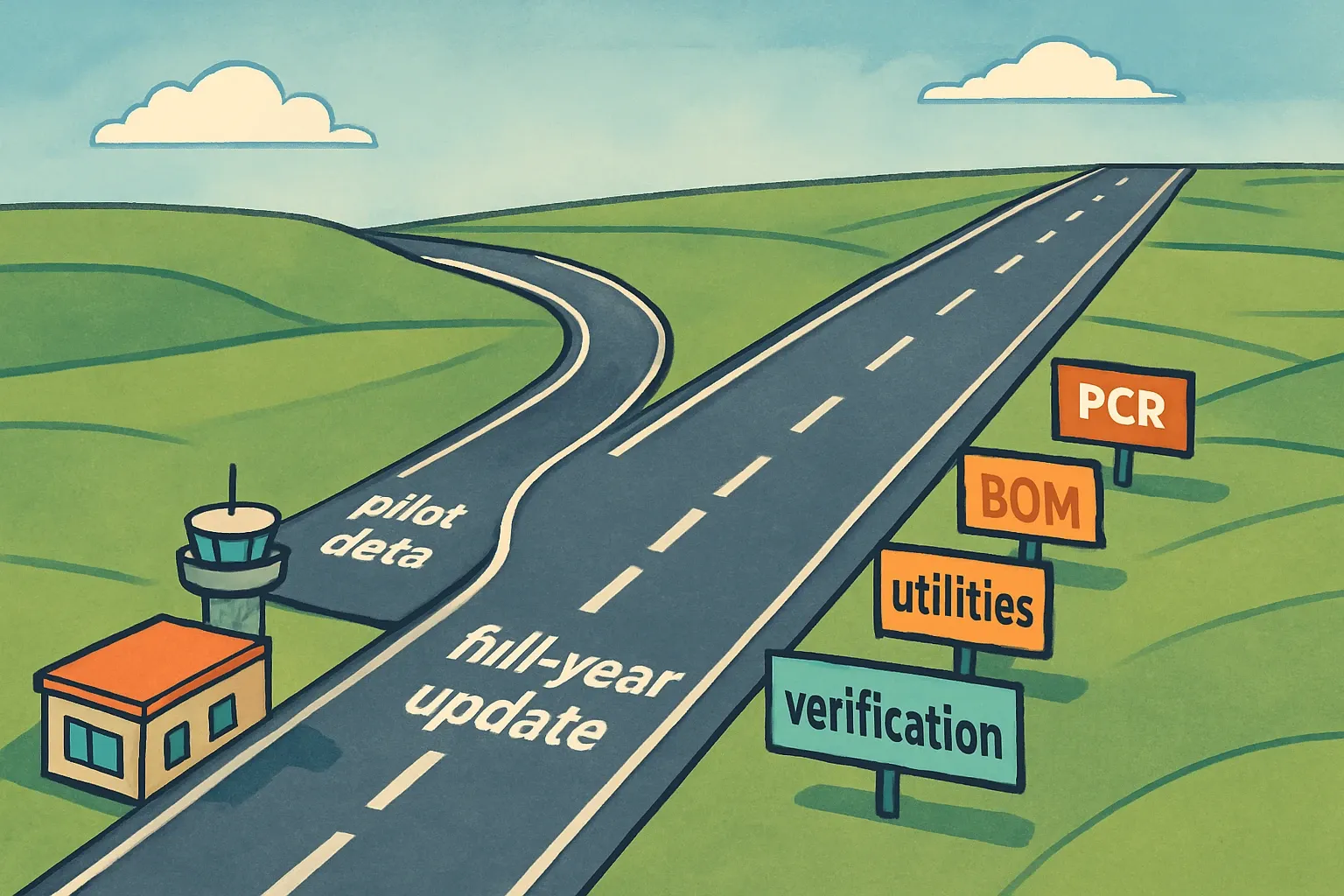
European operators report heavier volumes and tight verifier capacity, which stretches timelines and budgets. IBU publicly notes verification times around six months during high demand periods (IBU, 2025) and an increase of verification fees from €2,000 to €2,700 effective September 1, 2025 (IBU, 2025). The Dutch NMD passed 1,000 new declarations in 2024, a signal of rising throughput that pressures review calendars too (NMD, 2024).
What a pre‑verification quality check is
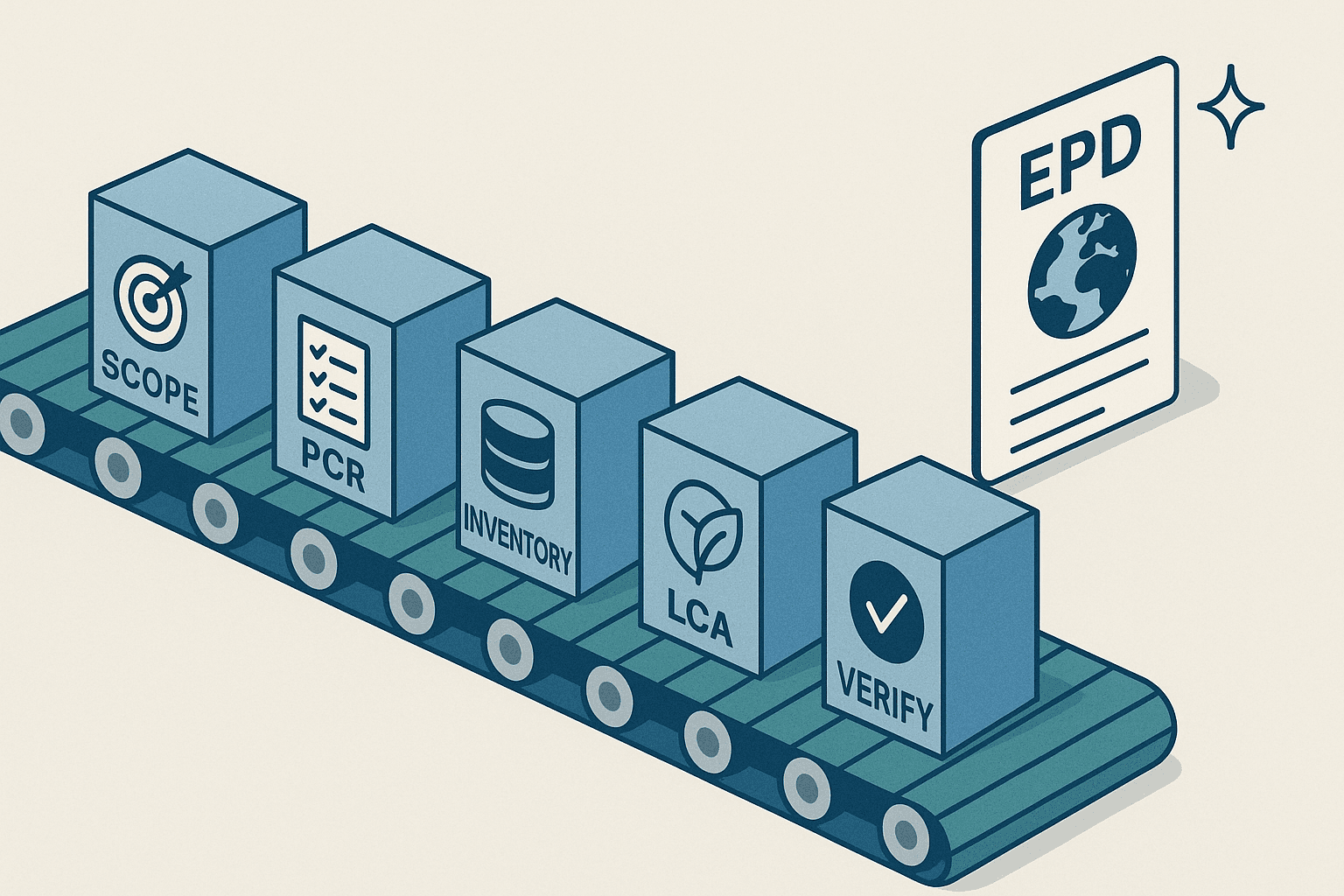
Think of it as spell‑check plus rule‑check for EPDs. It scans the EPD PDF and background report against standards, program rules, and PCR or Part B so issues are fixed upstream. The goal is fewer clarification emails and fewer resubmits, not replacing the verifier.
What these checks actually catch
Small human errors cause big delays. A focused pass can spot mismatched declared units between the cover and body, missing TRACI tables for a U.S. cross‑listing, orphaned scenario text, or references to an older PCR version. It also flags undocumented assumptions, incomplete cut‑off rationale, and references that do not line up with data exports.
- Cover page consistency with declared unit, scope, modules, and dates
- Presence and placement of required statements and verification table per program
- Crosswalk of impact tables to the correct method set and units
- PCR Part B specific fields and evidence, including scenario logic
Humans verify EPDs. Full stop.
Verification is an independent, third‑party, human task by design. Programs require an external expert to check conformance and plausibility. A pre‑verification quality check does not automate verificaiton. It clears the noise so humans can focus on judgement calls and material questions.
Avoid duplicate math checks, target the gaps
Modern LCA tools already validate a lot of numbers. Do not re‑implement their numeric guardrails. Aim your quality gate at document completeness, narrative coherence, table formatting, scenario traceability, and alignment across PDF, annexes, and the background report. This is the messy middle where typos and logic gaps live.
Where to place the quality gate
Put the check after your core model is stable and before the first hand‑off to a verifier. If you run pre‑verified core PCR models, treat the gate as a light, repeatable review that travels with each product variant. For multi‑site rollouts, make it part of the package you send to approvers and translators.
Portfolios that span operators benefit the most
Cross‑listing from IBU to Smart EPD avoids re‑verification but adds formatting and method extras. The IBU lists a Smart EPD administrative fee of 540 USD and calls for ISO 21930 outputs and TRACI 2.1 tables where relevant (IBU, 2025) (IBU, 2025). A pre‑verification pass can check those tables and naming conventions are present before submission. That saves rework when two registries need the same story told two ways.
Business outcomes worth tracking
Fewer back‑and‑forth cycles reduce calendar time in a year when verifiers are scarce and fees are trending higher (IBU, 2025). Sales teams get to reference numbers sooner. Tender packages ship on time. Relationships with verifiers become predictable because files arrive tidy, complete, and defensible.
Quick starter template for the check
Start small and automate where it is safe.
- Static checks for file hygiene. Validate product names, declared unit, scope, modules, and dates match front page, summary tables, and background report.
- Rule checks by operator. Load operator‑specific must‑haves like verification statements, program logos, and any registry text blocks.
- Method checks by market. Confirm impact tables include CML and TRACI as needed. Lock units and rounding rules.
- Evidence checks. Link each claim to a location in the background report. Tag missing justifications for scenarios and cut‑offs.
- Final human skim. A short editorial read catches nonsense values, typos, and odd phrasing that software will miss. It takes minutes and pays off fast.
A clear line in the sand
Pre‑verification checks are a quality filter. Independent verification is the gatekeeper. Keep both. One keeps the process efficient and lowers the chance of rejection. The other protects market trust. If data on average verification times beyond the cited European context exists across all operators, it is not published in a consistent way yet, so plan buffers and track your own cycle data.