Why multi‑plant EPDs get tricky fast
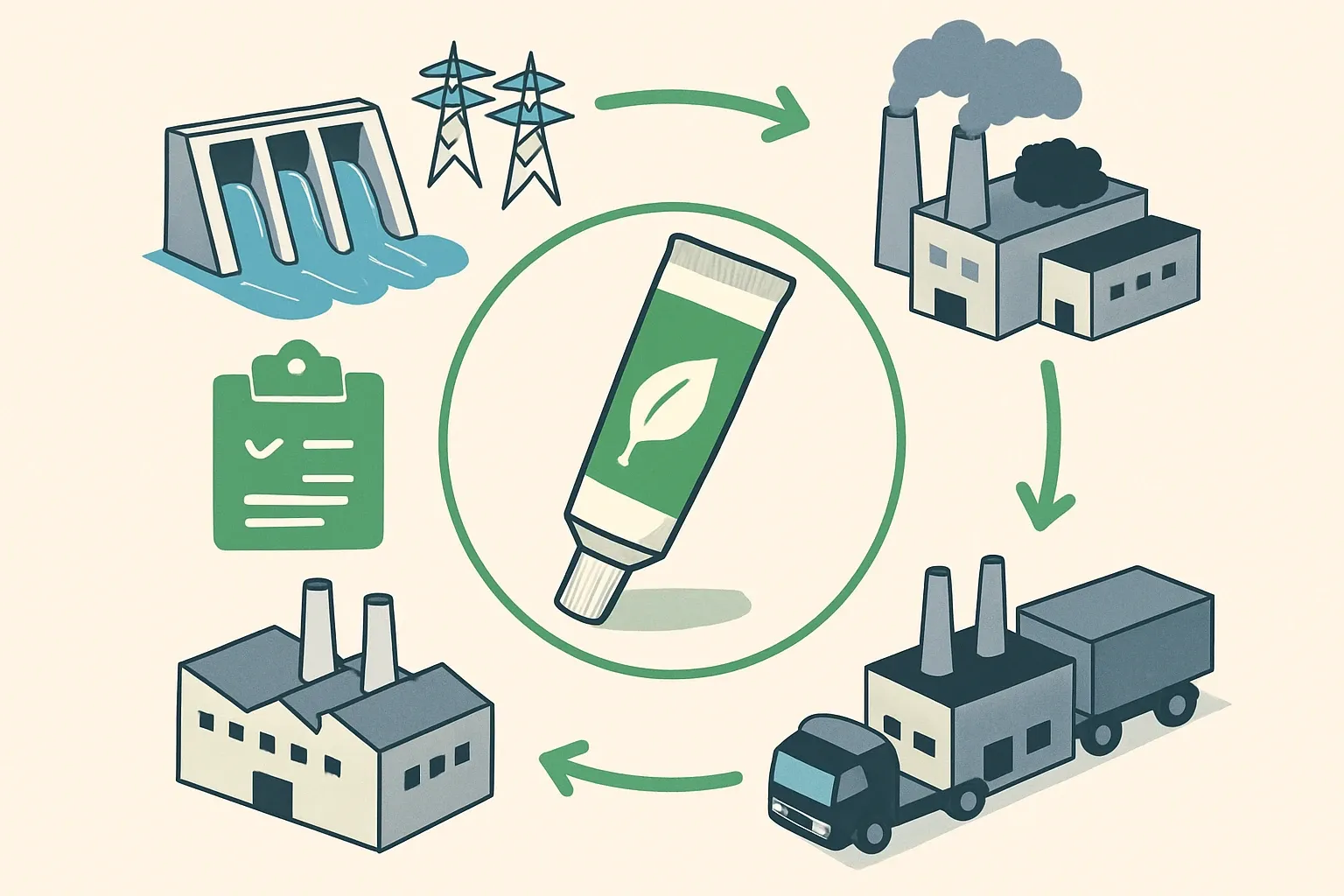
A product’s A1 to A3 footprint swings with electricity mix and logistics. In 2023 eGRID data, CO2e intensity ranged from about 243 lb per MWh in Upstate New York to roughly 1,549 lb per MWh in Puerto Rico, a spread that can flip the ranking between plants overnight (EPA eGRID, 2025, Summary tables). Transport adds up too, with typical heavy freight factors around 0.07 kg CO2 per tonne‑km in widely used reporting sets (UK Government Conversion Factors, 2024).
The three structural choices
Think of it like the same recipe baked in different ovens. You can publish separate plant‑specific EPDs, issue one EPD that reports per‑plant GWP, or publish a single averaged result when the PCR and operator allow it.
When plant‑specific EPDs are the right call
Facility‑specific is mandated in several procurement contexts. California’s Buy Clean guidance specifies facility‑specific, ISO 14025 Type III EPDs for eligible materials, not manufacturer averages or multi‑facility blends (California DGS, 2025, BCCA Requirements). Caltrans requires EPDs for hot mix asphalt over 2,250 tons per plant per job mix and concrete over 250 cubic yards per plant per mix on qualifying projects with bid openings on or after February 1, 2025 (Caltrans, 2025). New York’s state guidelines require EPDs for all concrete mixes on applicable projects starting January 1, 2025 (NYS OGS, 2025).
When one EPD can cover multiple plants
Some program operators now limit construction EPDs to a single set of results per document, even if several similar products or sites are covered, with any site variability disclosed per the PCR rather than as multiple result tables. EPD Australasia, aligned with the International EPD System, clarified in 2024 that multi‑result tables for construction products are no longer allowed, and that one averaged, representative, or worst‑case set may be published with the covered sites listed and variation noted if required (EPD Australasia, 2024).
When averaging makes sense
Averaging can be efficient for identical products made at several sites when the spread is tight and the PCR permits volume‑weighted results, with documented variation if it exceeds defined thresholds. Where buyers need a clear LEED path rather than facility‑specific procurement, a product‑specific Type III EPD still carries extra weight in v4.1, counting as 1.5 products toward the 20‑product target in Option 1, which can speed up project submittals (USGBC Credit Library, 2024, BPDO EPD credit). If policy or an owner asks for per‑plant numbers, do not average.
Commercial lens, not just compliance
A plant‑specific EPD can unlock eligibility in public projects and reduce substitution risk on private jobs chasing rating points. Teams that publish the needed EPDs see fewer last‑minute bid gaps and faster close‑outs. Reliable cost averages are hard to pin down, but one mid‑sized win often outweighs development costs in practice.
Data collection blueprint per plant
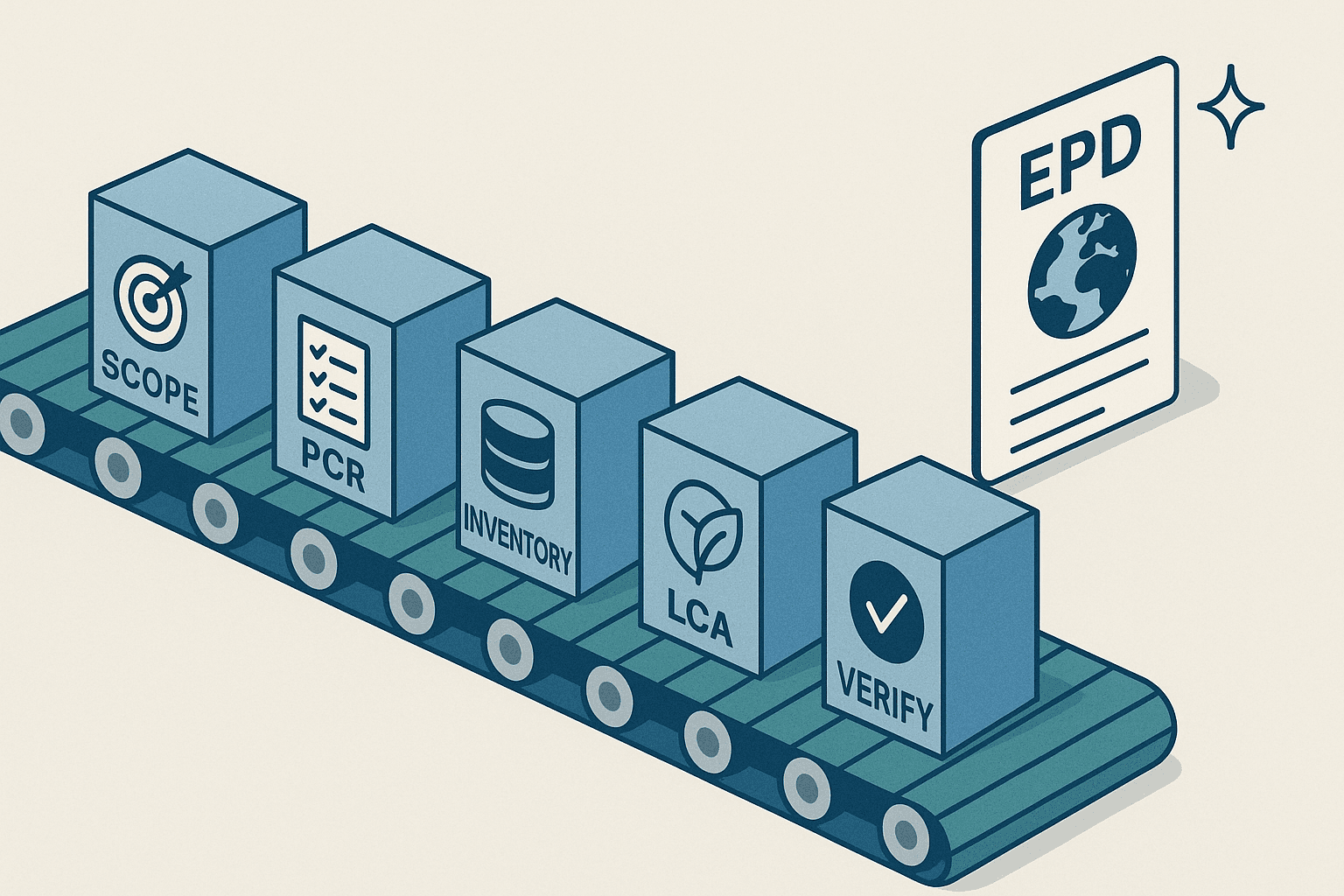
Collect one recent 12‑month window per site. Get electricity bills with supplier mix details, on‑site fuel and process data, scrap and yield, water and waste, and inbound raw material logistics with tonne‑km by mode. For outbound, document typical shipping lanes if A4 is in scope per your PCR. This sounds tedious, but a clean template turns it into a week of focused effort, not a quarter of detective work.
Program operator and PCR guardrails to check
Rules evolve. Under the International EPD System, EPD validity is normally five years, and mid‑cycle updates are required if a declared indicator worsens by more than 10 percent versus the published value (EPD International FAQ, 2025). Many operators now emphasize one result set per EPD for construction products, with variability reported per PCR. Always confirm the current PCR clause on multi‑site representativeness before deciding your structure. If trustworthy numbers are missing in public guidance for your product family, say so plainly in the EPD and in your LCA report.
A quick decision guide
Pick plant‑specific EPDs for any market with facility‑specific procurement rules or tight client carbon caps. Consider a single averaged EPD only when sites are truly identical, the spread is low, and the PCR explicitly allows averaging with documented variation. Use one EPD listing covered sites only where the operator permits it and where buyers do not require per‑plant results. For LEED‑driven private work, product‑specific Type III remains the fastest way to tick boxes at scale, since it counts as 1.5 products toward Option 1’s 20‑product target and helps wrap the materials scorecard sooner (USGBC, 2024).
What this means for your next spec cycle
Start with the spec landscape, not internal convenience. Map which customers need facility‑specific today, then publish those first. Sequence averaged or representative EPDs for the rest only if the PCR permits and the performance spread is tight. The energy mix and haul miles will keep moving, so plan refreshes on a five‑year cadence and watch for rule updates each quarter. It is not glamorous, but it definately wins bids.
(References for numeric claims: EPA eGRID 2023 Summary Tables, 2025, USGBC Credit Library, 2024, California DGS Buy Clean requirements, 2025, Caltrans EPD thresholds for HMA and concrete, 2025, NYS OGS Buy Clean Concrete guidelines, 2025, EPD International FAQ on validity, 2025.)