First, what “plant‑specific” really means
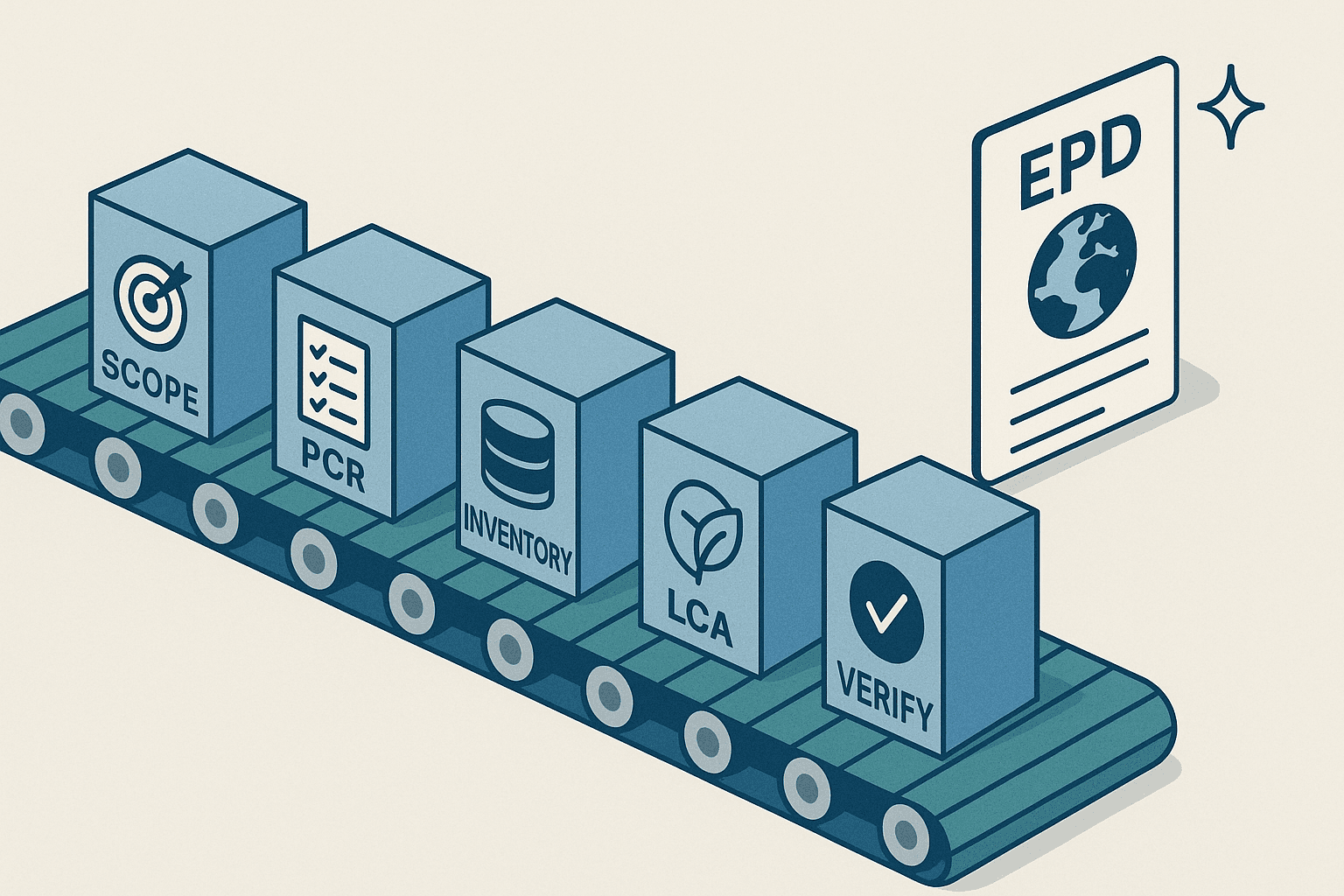
A plant‑specific EPD reports impacts for one product from one facility, verified to the relevant PCR and ISO 14025. Most programs keep EPD validity at five years, which gives room to plan renewals without scrambling at bid time (EPD International GPI, 2024) (EPD International GPI, 2024).
Where policy points the needle right now
California’s Buy Clean rules expect facility‑specific, third‑party verified EPDs and do not accept industry‑average documents for compliance screening. The current scope covers structural steel, concrete reinforcing steel, flat glass, and insulation, with maximum GWP thresholds by category (DGS, 2025) (DGS, 2025). citeturn5search0
Colorado’s state building program requires product‑specific Type III EPDs and sets limits for seven eligible materials including cement and concrete mixtures, glass, and multiple steel categories, effective policies updated January 2025 (Colorado OSA, 2025) (Colorado OSA, 2025). citeturn2view0
These two markets illustrate a trend. Averaged or industry‑wide EPDs help with education, yet facility‑specific data is increasingly expected when thresholds decide award.
The grid swing that makes plants look different
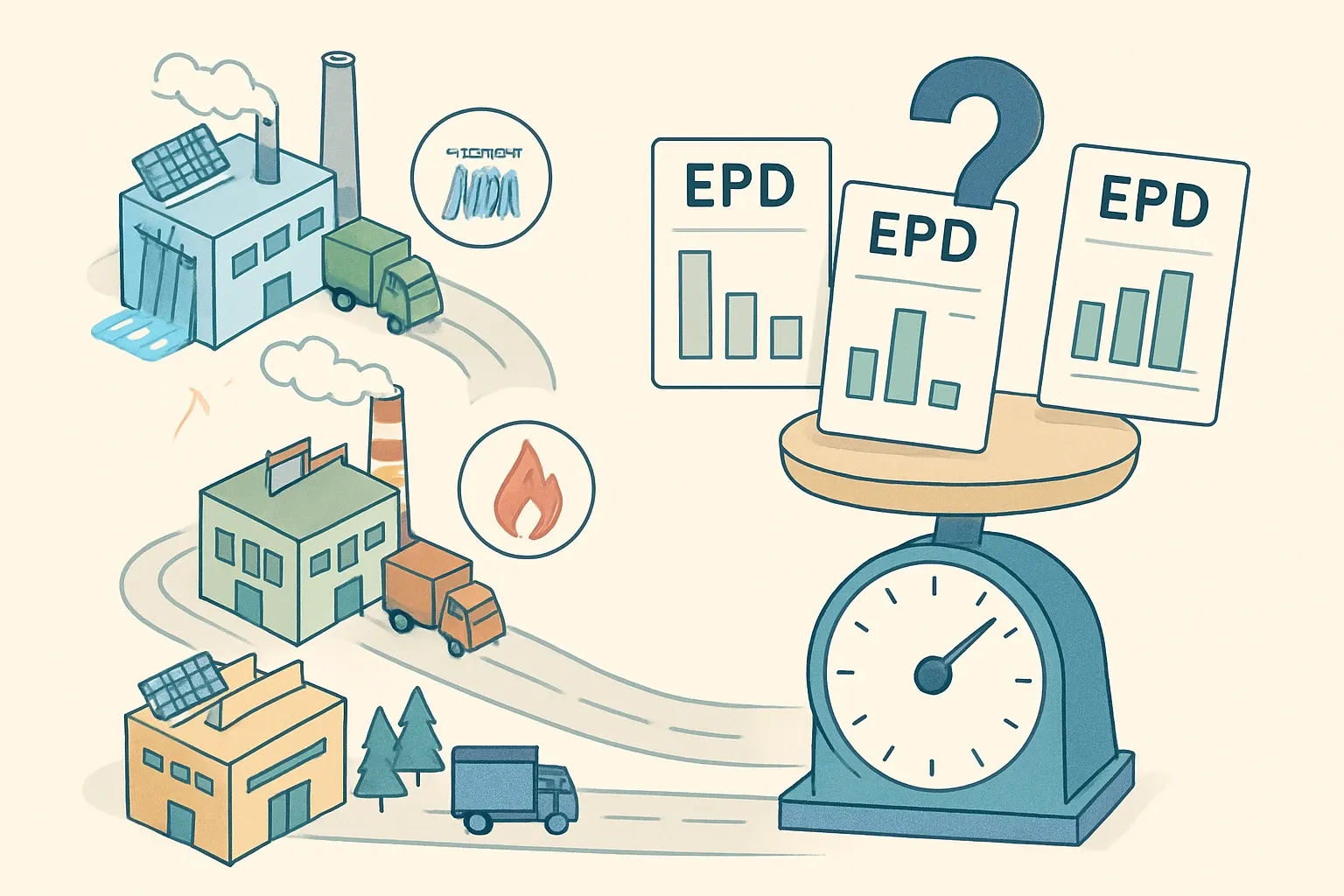
Electricity mix alone can reshape cradle‑to‑gate results. Across US eGRID subregions, total output emissions span roughly 0.20 to 0.51 kg CO₂e per kWh using the 2023 dataset released in 2025, which means identical lines in different regions can publish very different A1–A3 numbers (EPA eGRID, 2025) (EPA eGRID, 2025). citeturn0search0
When one averaged EPD is a smart opening move
Choose a company‑average EPD when speed to shelf matters, product is uniform across plants, and your immediate bids do not mandate facility disclosure. A single declaration accelerates internal buy‑in and equips sales with a verified GWP to stop losing specs by default. Publish fast, then roadmap plant splits.
When plant‑specific EPDs pay for themselves
Go facility by facility when any of the following are true. Your target tenders require facility‑specific EPDs. A plant benefits from a clearly cleaner grid or process efficiency and you want that lower GWP visible in bids. Logistics or scrap rates differ meaningfully between sites. In these cases, a plant EPD often wins more than it costs because it clears compliance checks and avoids pessimistic proxies.
The hybrid play most teams end up choosing
Start with one averaged EPD for portfolio coverage, then layer facility EPDs for priority SKUs and geographies. That gives broad specability while capturing best‑in‑class numbers where they exist. Keep the model backbone identical across plants, align on one PCR and allocation approach, and vary only site inputs you can audit. This avoids dueling methods and keeps verifiers happy.
Data shortcuts that cut months, not corners
Pick a clean reference year and collect the same datapoints for every plant, including hourly or monthly electricity and fuels, inbound transport modes and distances, scrap and yield, and packaging. Lock master bills of materials in a single structure so updates flow to all plants. Decide early where to publish. Some operators are faster and have clearer templates, your schedule may depend on that. We prefer ruthless clarity over heroic spreadsheet archaeology.
What to tell procurement, simply
If the bid asks for facility‑specific EPDs, declare which plants already have them and which are in motion with target publish dates within the validity window. If an average must be used temporarily, state that plant‑level data collection is underway and provide a reasonable ETA. Honesty travels farther in pre‑award reviews than silence, and it keeps submittals from bouncing.
A quick decision tree
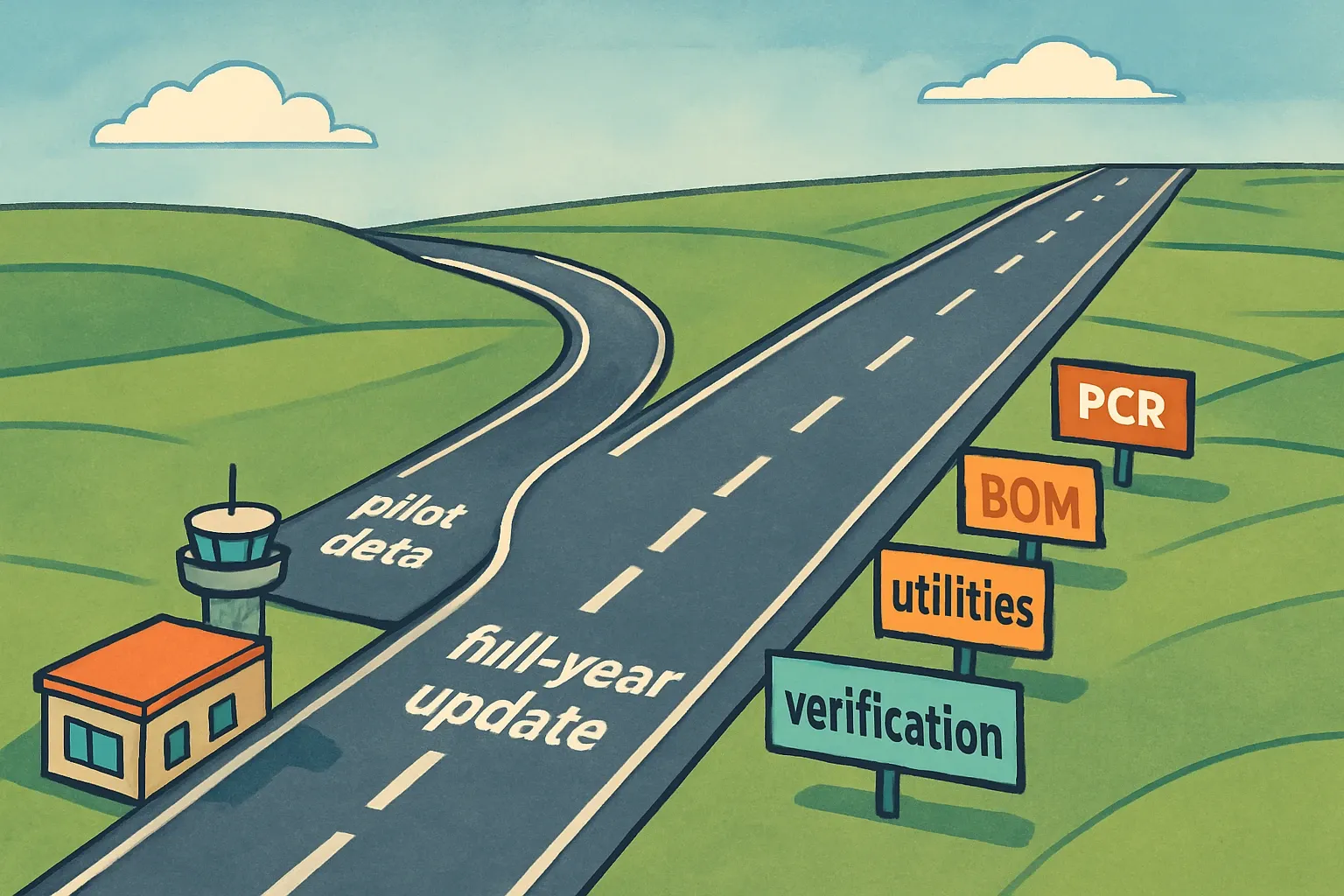
If your next 6 to 12 months include California or similar rules, prioritize plant EPDs for those flows first. If not, get the averaged EPD published and booked into your submittal library. Then sequence facility EPDs by commercial impact. This is definately the lowest‑stress path to full coverage.
Tieing it together
Multi‑plant manufacturers do not need to choose once and forever. Use the average to open doors, plant‑specific to pass thresholds and win on true performance, and a hybrid to balance speed with precision. Keep validity and PCR alignment tight, keep data requests under control, and your team spends more time selling than chasing PDFs.