What the choice really decides
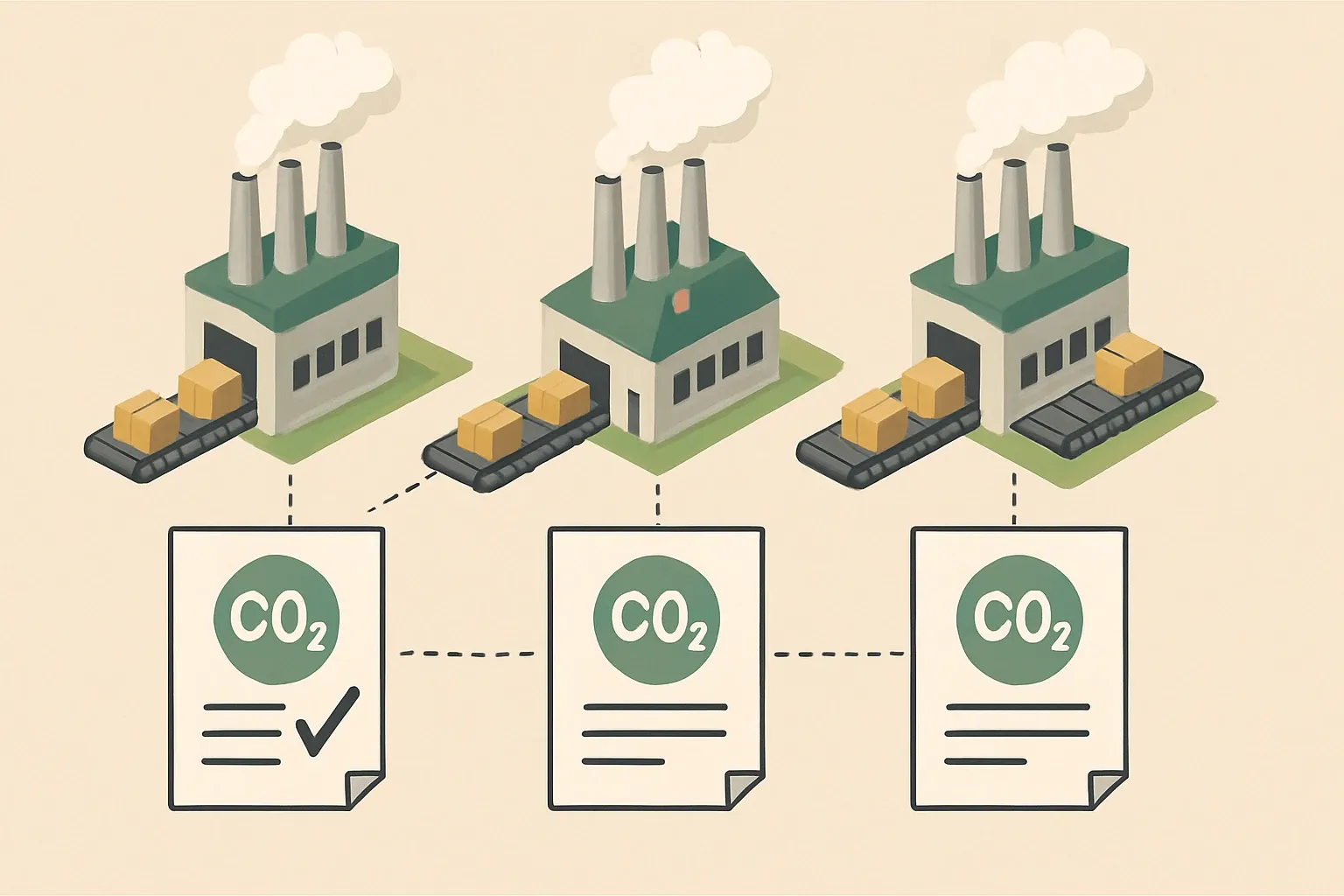
An averaged EPD blends data from multiple plants into one number that represents typical production. A plant‑specific EPD reports the actual performance of a single facility. Both are valid if the PCR allows it and the EPD states representativeness clearly. The wrong call can cost weeks and cause avoidable RFI ping‑pong.
Where tenders already prefer the plant view
Two large markets have moved from “any EPD” to “show me the facility.” California’s Buy Clean requires facility‑specific Type III EPDs for covered materials and sets maximum GWP caps before installation, which are checked against the EPD on submittal (California DGS, 2024) (California DGS, 2024). New York’s Buy Clean Concrete guidelines make EPDs mandatory for mixes on state jobs beginning January 1, 2025, with published GWP limits by strength class and accepted EPD types that include plant‑specific and supply‑chain specific (NYS OGS, 2025) (NYS OGS, 2025).
Why plants diverge more than most expect
Electricity intensity varies widely across North American grids, which pushes A1 to A3 results up or down. EPA’s 2023 eGRID release reports subregion total output emission rates spanning roughly 430 to over 1,100 lb CO2e per MWh, a spread that easily triples the power‑related portion of cradle‑to‑gate impacts when production shifts between regions (EPA eGRID, 2025) (EPA eGRID, 2025). If one plant runs on a cleaner grid and recovers more scrap or heat, an averaged EPD can blur a genuine advantage.
When an averaged declaration makes sense
If production routes, fuels, waste rates, and inbound transport are similar across facilities, an averaged EPD is efficient. Sales teams get a single document to deploy, specifiers get a stable number, and QA effort concentrates in one place. This works best when core bids do not require facility‑specific documentation and internal variance is small enough that the average truly represents day‑to‑day output.
When to go plant‑specific without hesitation
Choose plant‑specific when any of these are true: priority customers ask for it in writing, one plant is materially lower‑carbon due to grid mix or process upgrades, or covered projects fall under policies that check facility‑level GWP. In these cases, a plant EPD turns operational wins into spec wins instead of letting a portfolio average mute the signal.
The hybrid portfolio most teams land on
Many manufacturers publish both. They keep a portfolio average for general marketing and fast qualifications, then add plant‑specific EPDs for high‑volume lines, strategic regions, or low‑carbon flagships. This keeps document management sane, yet covers bids that filter by facility.
Timelines and renewals that reduce risk
Most program operators set EPD validity at about five years, set at verification, with annual internal follow‑up required in some schemes to ensure changes over 10 percent are addressed during validity (EPD International, 2025) (EPD International, 2025). Plan verification windows so nothing expires mid‑pursuit. If a PCR revision is imminent, sequence work to avoid a last‑minute redo.
A quick decision tool you can apply today
Ask three questions and pick a lane.
- Do target specs or policies require plant‑specific EPDs for your key materials in the next 12 to 18 months, such as California’s state work or New York’s concrete? If yes, prioritize plant EPDs for those SKUs.
- Is one facility clearly cleaner on energy or clinker factor, recycled content, or scrap recovery, and is that advantage material to A1 to A3? If yes, publish that plant first so the advantage shows up in bids.
- Is portfolio variance modest and markets are not forcing plant data? If yes, start with an averaged EPD to get coverage quickly, then layer in plants as sales signals arrive.
Data operating model that keeps momentum
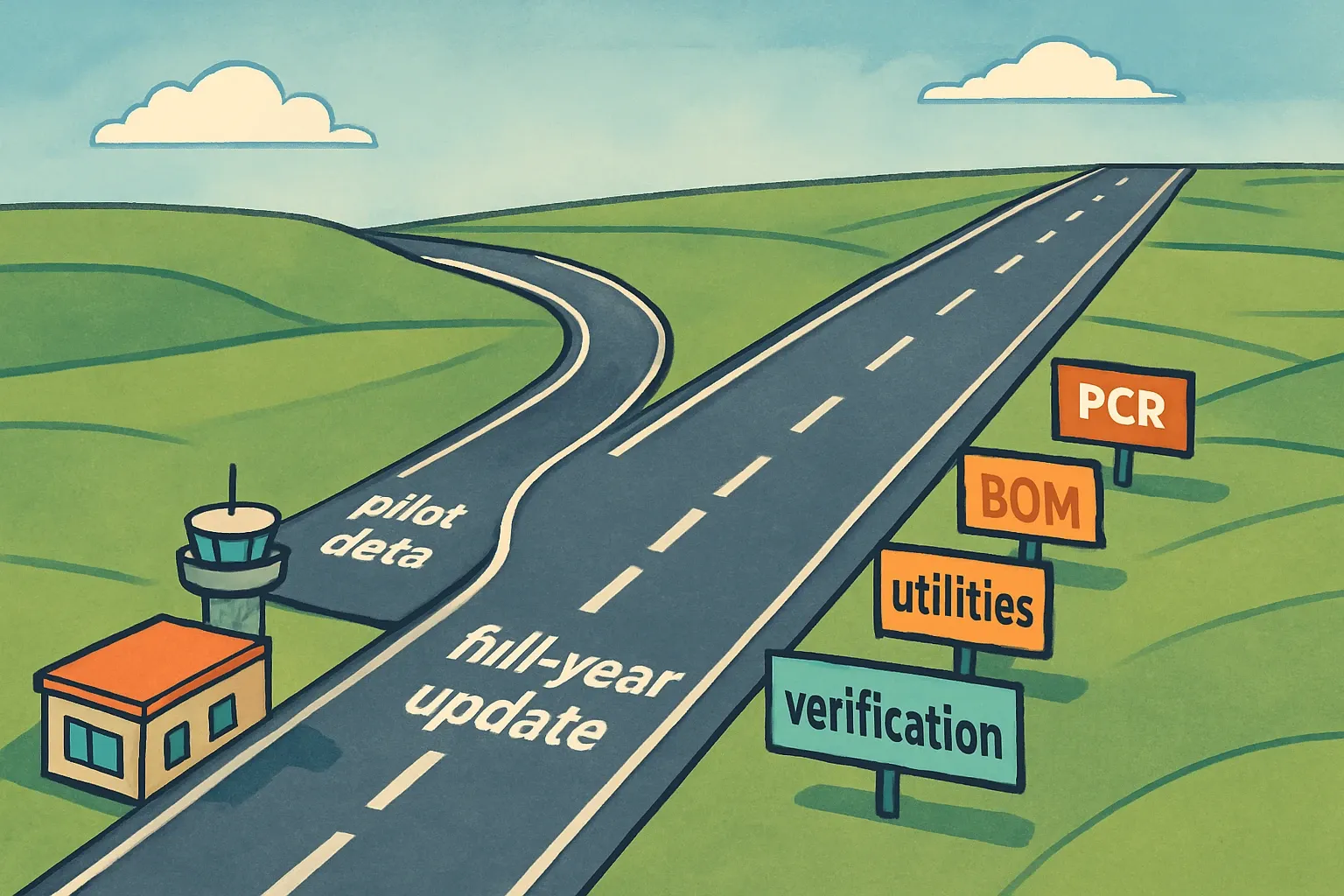
Pick a recent twelve‑month reference year, standardize plant templates for utilities, yields, and transport, then lock change control so updates do not break comparability. Publish, train sales on when to use which EPD, and schedule a light annual check. That cadence preserves speed, quality, and completeness without burning crew time. It’s definately the difference between chasing submittals and shaping them.
Bottom line for multi‑plant portfolios
If policy or performance creates meaningful spread, plant‑specific EPDs win commercial points and unlock low‑carbon premiums. If operations are uniform and bids are flexible, an averaged EPD gets you in the game fast. Most teams do both, on purpose, with a bias toward plants wherever the grid, cement chemistry, or scrap rates make the math sing.