Why configurable products overwhelm EPD workflows
High option counts explode ERP BOMs, then every small change looks like a new product to model. Most of those changes barely move environmental results. The goal is to separate signal from noise so the model stays both accurate and maintainable.
Think of it like a studio album. The core melody does the heavy lifting, while remixes change texture but not the song. Build your LCA around the melody.
The modular BOM pattern
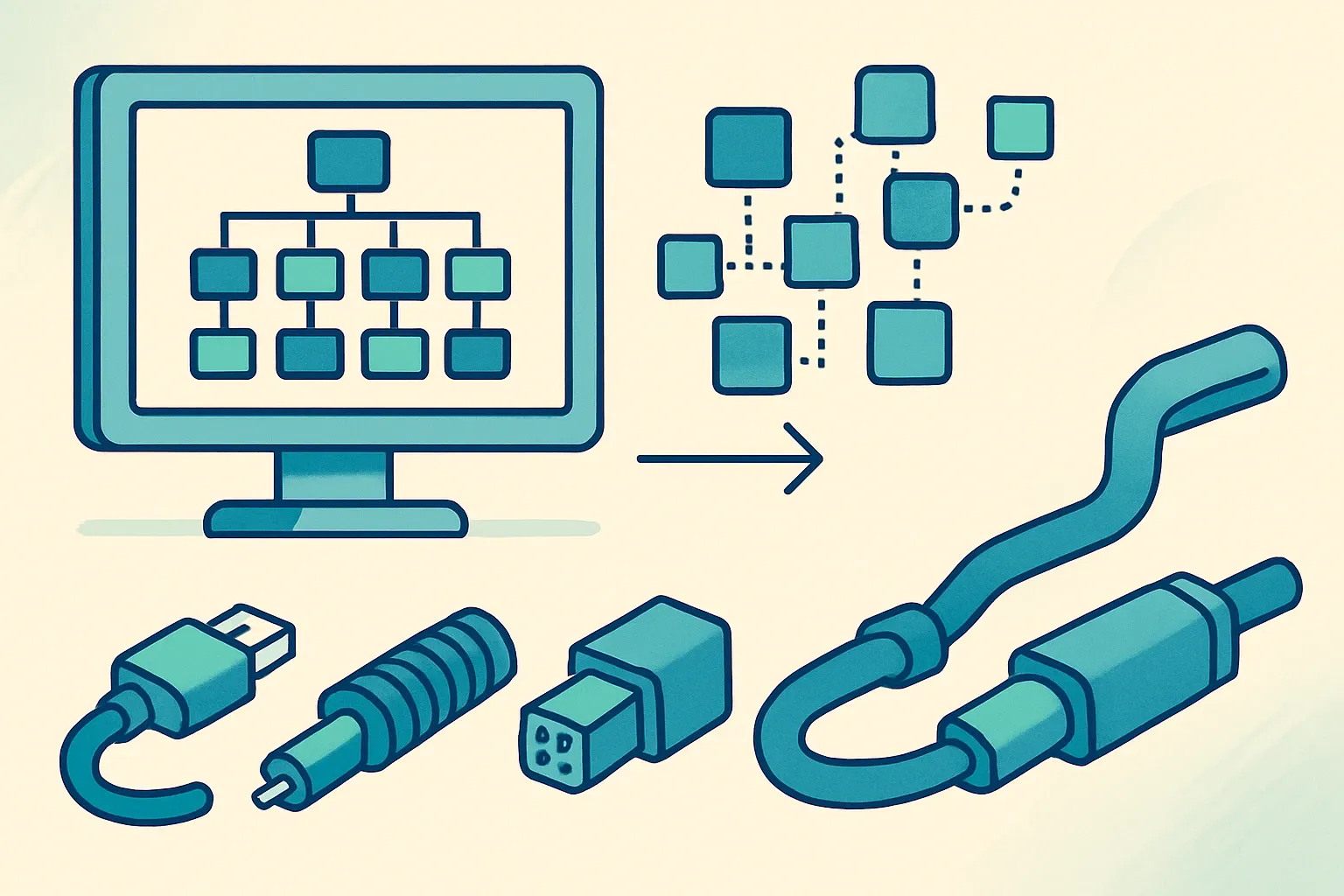
Break each product into reusable modules that map to how it is engineered and built. For a cable assembly, that often means a core cable, a connector family, and a breakout or transition assembly. Each module carries its own materials, processes, yields, and scrap.
This lets teams update a connector plating once, then roll the change across hundreds of SKUs. It also keeps gate reviews simple because the verifier sees clear module boundaries instead of one sprawling BOM.
Pick granularity that moves the needle
Model detail where it actually shifts results, and group the rest. Mass drivers like copper, aluminum, and stainless steel deserve module level detail. Finish choices that only change grams of coating can often live as parameters.
Transport is another swing factor. Road freight commonly lands around 60 to 70 g CO2e per tonne‑km for heavy goods vehicles, so distance and mode belong in your module data (UK Government GHG Conversion Factors, 2024).
Prioritize the configurations that matter commercially
Start with the configurations that dominate sales volume and mass throughput. Many manufacturers discover a small set covers most revenue once the data is cleaned. Model those first so sales can pursue specs that require product‑specific EPDs, especially where LEED v5 expectations are influencing bids.
This sequence also surfaces outliers early, like an unusual connector finish or a long export route that needs its own transport module.
Map modules to LCA stages cleanly
Give each module a home in A1 to A3 for materials and manufacturing, then treat assembly and packaging explicitly. If modules change service life or maintenance, record that in B stages with a short note on what triggers replacement. Make end‑of‑life rules predictable, for example recycled content assumptions and recovery rates by material.
Verifiers read faster when module boundaries line up with LCA stages. That saves calendar time and back‑and‑forth.
Data collection that actually sticks
Pull structure from ERP or PLM and keep it stable, then layer LCA attributes on top. Record units, densities, plating thickness, wire diameters, and yields at the module level. Lock a naming convention so every module ID points to one source of truth.
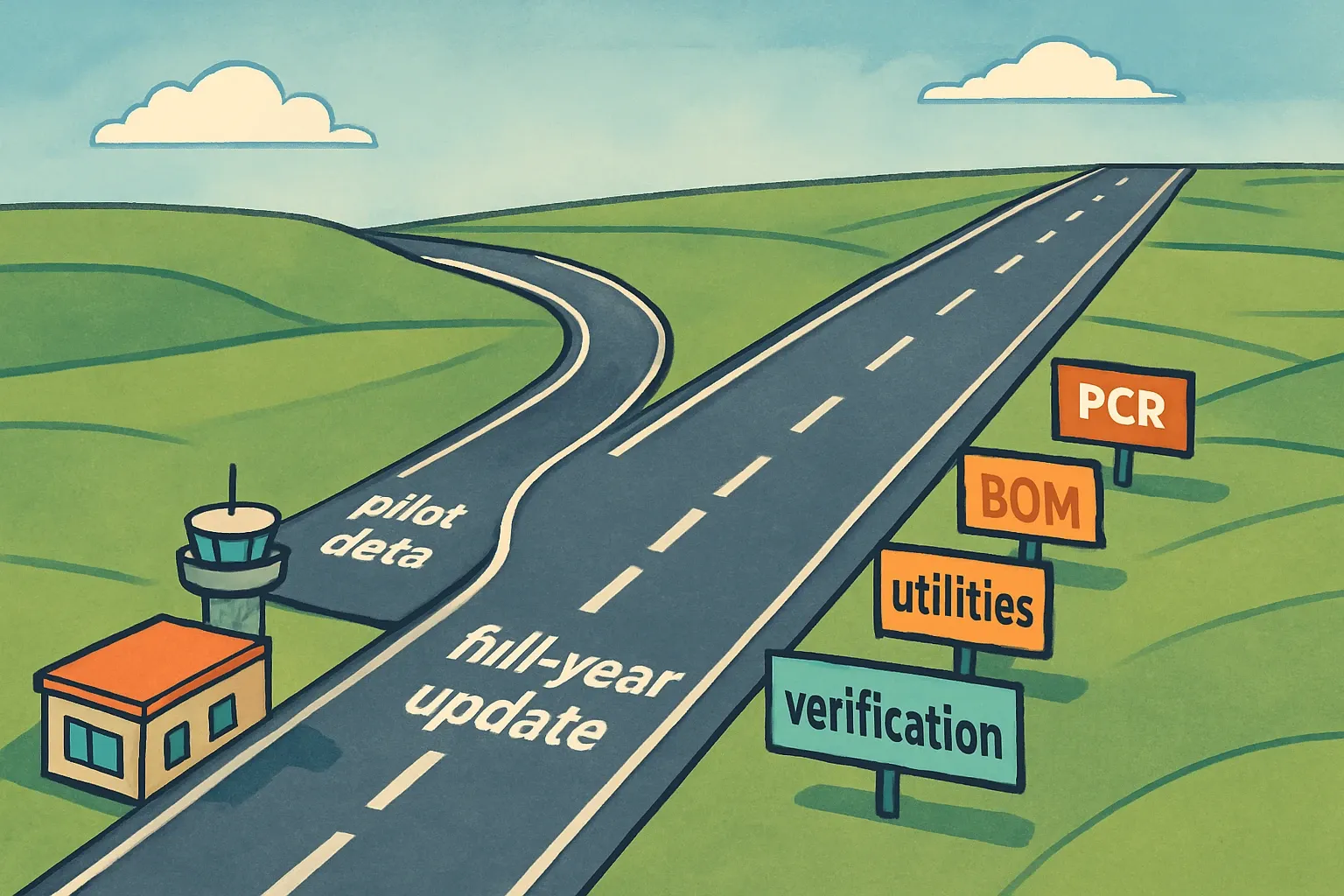
Refresh operational data on a fixed cycle that matches your reference year practice. Prospective EPDs can start with partial periods, then move to a full year when available. This saves alot of rework.
A quick split checklist
Use a simple test when deciding whether to split a module or keep it parameterized:
- Does it change mass or energy by more than a few percent relative to the module baseline, yes or no.
- Does it introduce a new material family with different end‑of‑life behavior.
- Does it change a manufacturing process, for example a new plating bath or cure.
- Does it alter transport mode or distance materially.
If you hit at least two, make it a separate module.
Keep pace with program rules without redoing everything
EPDs are typically valid for five years under common program operators, so plan a light‑touch renewal pass that updates background data and any module deltas without rebuilding the whole model (IBU General Programme Instructions, 2024).
PCRs are reviewed on regular cycles, commonly up to five years, so track which modules are sensitive to rule changes and test them first when a revision lands (Environdec Programme Instructions, 2024).
Versioning that helps verification
Give each module a semantic version and a short change log. Store verifier‑ready evidence next to it, like plating thickness certificates, material specs, and yield studies. When a reviewer asks how a number moved, you can point to the module history instead of diffs across a thousand SKUs.
What this unlocks for specs and sales
A modular BOM makes EPD production repeatable. New variants roll in with minutes of setup rather than weeks of modeling. Sales teams get credible declarations on the configurations that win bids, and product managers avoid a maintenance tax that quietly grows with every option code.
The result is speed with quality, not a tradeoff. That is the edge when projects expect product‑specific EPDs and LEED v5 style documentation without drama.