LCA in one page
Life Cycle Assessment is a structured way to measure a product’s environmental burdens from defined boundaries. For building products, an LCA is the engine and an EPD is the dashboard you share with the market.
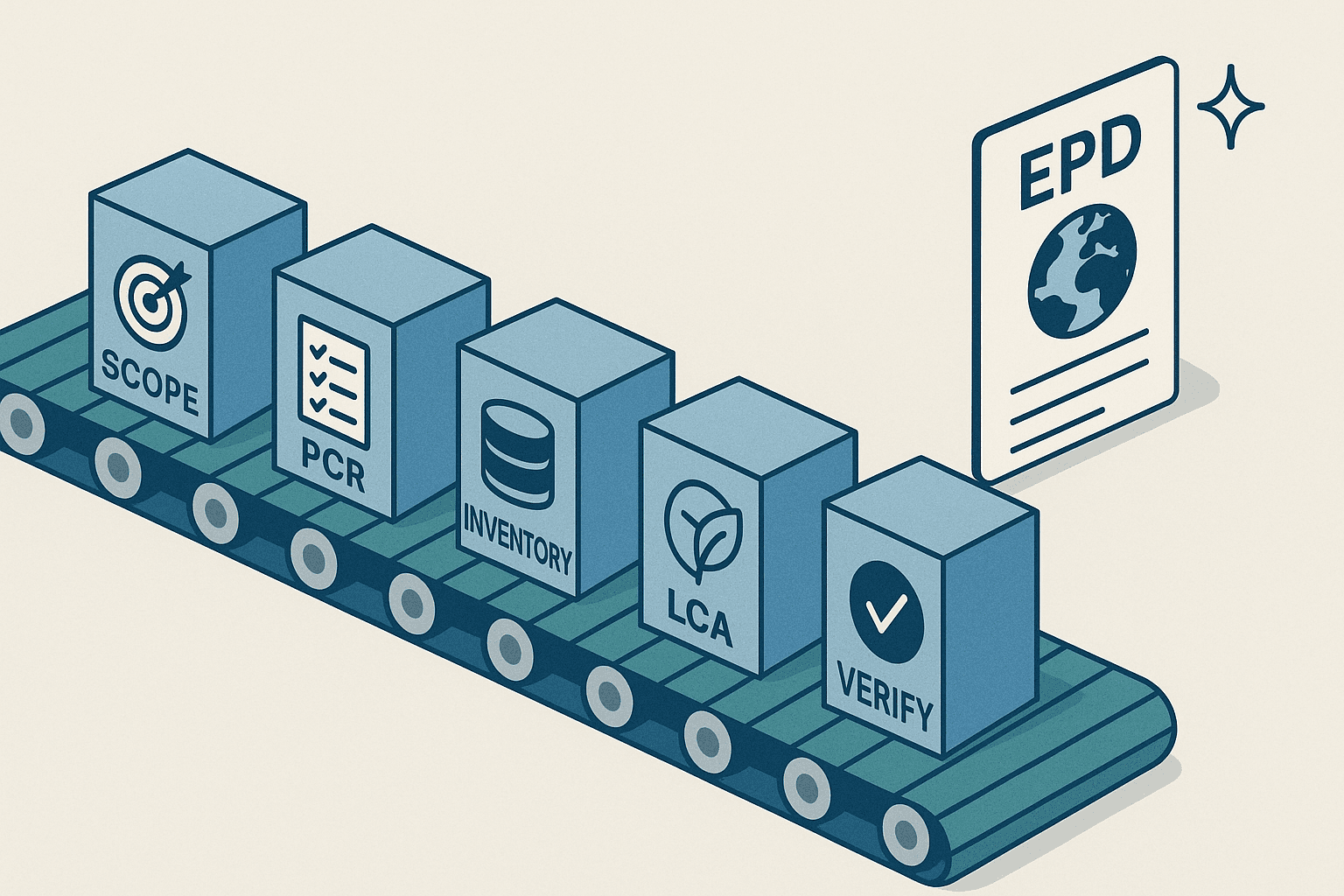
Treat it like a product launch. Set a clear goal, pick the rules, get the data, run the model, verify through a program operator, then publish and improve. Simple to say, doable to execute.
The rulebooks that keep comparisons fair
Three families of standards guide the work. ISO 14040 and ISO 14044 set method. ISO 14025 defines how results become a Type III label. EN 15804 (widely used for construction) standardizes impact categories and life cycle modules for comparability.
Product Category Rules are the game-specific rulebook. They specify functional unit, declared unit, scenarios, and datasets to use. Think Monopoly versus Mario Kart. Same idea of rules, different tracks.
Scope like a pro before data hunting
Start with goal and scope. Define the product system, variants in or out, and the functional or declared unit that mirrors how the product is sold.
Pick boundaries that match the market ask. Common choices are cradle to gate (A1 to A3), cradle to site (A1 to A4), or cradle to grave (A1 to C4). If a PCR mandates modules, follow it to the letter.
Data that actually moves results
Two data tiers matter. Primary data from your sites for materials, energy, yield, scrap, water, and waste. Secondary data from reputable LCI libraries for upstream materials, electricity mixes, and transport.
Quality beats volume. Align the reference year, document measurement methods, and map utilities to the correct grid regions. Small mis-maps can skew results more than a process upgrade.
The practical workflow manufacturers use
- Confirm the PCR and program operator you will publish with (for example Smart EPD, UL, IBU, or EPD International).
- Lock the reference year and product scope. Freeze naming and SKUs so cross-functional teams stay synced.
- Build the data plan. Assign a single owner per site for energy, materials, and logistics.
- Collect and check data. Capture meters, invoices, ERP pulls, and transport routes with distances and modes.
- Model per the PCR. Apply allocation rules, cut-offs, and scenarios exactly as written.
- Verify and publish. Third-party verification then program operator publication.
What a solid PCR choice looks like
Use the PCR most common among direct competitors so results are comparable in specs. If your exact PCR does not exist, check whether a generic construction materials PCR is acceptable under your operator while a product-specific update is developed.
Watch expiry dates at the PCR level. An EPD created under an older PCR can remain valid until its own renewal, but the next refresh must use an updated rulebook if one exists.
Avoid the five classic LCA traps
- Misaligned declared units that make side by side comparisons impossible.
- Electricity factors pulled for the wrong geography or voltage class.
- Incomplete transport data that defaults to generic, usually conservative, assumptions.
- Mixing product variants in one model without clear parameterization.
- Rushing verification artifacts. Auditors need transparent calculations and traceable sources.
Reading the results without getting lost
Learn the impact map. Global Warming Potential is the headliner, but acidification, eutrophication, smog formation, and resource use tell the fuller story.
Check which modules drive the signal. If A1 to A3 dominate, prioritize resin swaps, recycled content, or yield gains. If A4 or A5 is heavy, optimize packaging density or jobsite waste. If C modules pop, tune end of life scenarios within the PCR rules.
Speed and ease matter more than you think
The bottleneck is rarely the modeling software. It is the data chase across plants, suppliers, and logistics. A partner that owns collection, wrangles evidence, and runs tight project management saves your senior people weeks they never get back. Many consultants leave the chase to internal teams, which is why LCAs stall.
Choose teams that can recieve messy spreadsheets without drama and return a clean audit trail ready for verification. Ask how they keep tasks moving inside large organizations with multiple approvers.
Publishing without drama
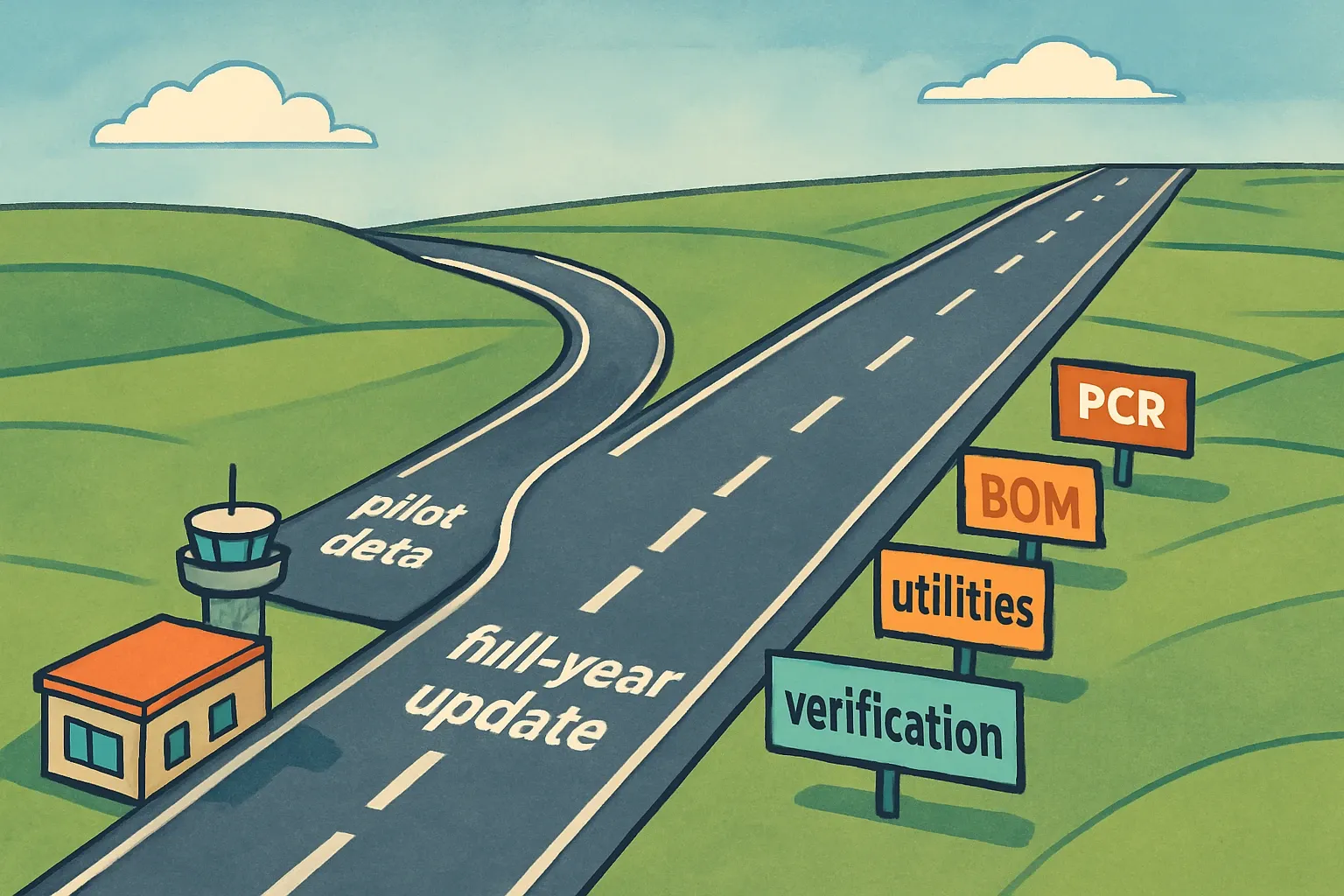
Select a program operator that aligns to your geography and buyer expectations. Clarify verification route, expected queues, and formatting requirements upfront. Set a refresh cadence tied to product or process changes rather than waiting for surprises.
Plan communications early. Your EPD is not only compliance. It is a sales asset that prevents penalty assumptions in bids and keeps you in the spec when carbon targets are tracked.
Turn LCA into an improvement engine
Do not stop at the first declaration. Use hot spot analysis to prioritize material changes, supplier switches, and line efficiency projects. Re-run scenarios inside the rules before you cut POs so the next refresh shows real progress.
When teams treat LCA as product intelligence, not paperwork, EPDs become easier to renew and more compelling to buyers.