What “inventory” really means
Life cycle inventory, or LCI, is the structured ledger of inputs and outputs for a product system. Think of it as the track list before the album is mastered. The LCI maps energy, materials, transport, waste, and emissions by process, then a life cycle assessment runs the math to turn those flows into impacts. Many searches blur “inventory life cycle assessment” with “product carbon footprint.” Both start from the same inventory, the difference is scope and which impact categories are reported.
Why manufacturers care right now
Project teams still reward products backed by third‑party verified Type III EPDs. In LEED, EPDs contribute under the materials category, with guidance that continues in LEED v5 and remains accessible via USGBC’s credit library and forms (USGBC, 2025). For teams working under earlier LEED structures, Option 1 historically counted qualifying EPD products and exemplary performance kicked in at 40 products or 75% by cost of compliant products, which signals the volume expectations owners use to screen submittals (USGBC, 2024). That market signal is not fading.
Boundaries you will be asked to declare
Most product EPDs report at least cradle to gate, modules A1 to A3. Additional modules such as A4 transport, A5 installation, use stage B modules, and end‑of‑life C modules may be included when rules require or customers ask. Steel’s North American PCR spells this out clearly, and fixes the declared unit at one metric ton with A1 to A3 mandatory for any EPD built under that rule set (AISC PCR, 2025).
What belongs in a rock‑solid inventory
Start with a 12‑month reference period that reflects typical production. Cover purchased materials by grade and supplier, on‑site energy by meter, water, process yields, scrap, packaging, internal transport, and direct emissions. Document how co‑products are handled, which cut‑off criteria were applied, and any scenario assumptions for modules beyond A1 to A3. Good inventories read like a clean bill of materials with receipts.
Data quality expectations, by the book
Program operators align with EN 15804 rules and their own programme instructions. The International EPD System notes that EPDs are normally valid for five years, and that material changes of roughly ten percent on an indicator trigger an update during that period (International EPD System, 2025). IBU’s 2024 PCR Part A update implemented ECO Platform calculation rules and flagged a six‑month transition window from April 30 to October 29, 2024, a helpful signal for scheduling verification and publication across portfolios (IBU, 2024).
Want to streamline your EPD creation process?
Follow us on LinkedIn for insights that help you build a compliant inventory and unlock new project opportunities.
Primary vs secondary data, made practical
Use primary data for processes you control. That means meters, ERP pulls, weigh tickets, and lab logs. Use reputable secondary datasets for upstream and downstream processes you cannot measure directly. Record dataset names, versions, geography, and age so the verifier can trace every link. If a supplier swaps a chemical or you move to a new power tariff, flag it in your change log.
Electricity choices that change outcomes
Two defensible pathways appear repeatedly. Location‑based modeling uses the grid where manufacturing occurs. Market‑based modeling uses your contracted mixes and certificates if the PCR and operator allow it. Document both when possible so you can answer procurement questions across jurisdictions without redoing the study. Grid assumptions are the plot twist specifiers always ask about.
Allocation, co‑products, and scrap
If one process yields multiple salable outputs, state the allocation method and why it fits the PCR. Mass and economic allocation are common. For internal scrap loops, show how returns are measured and whether losses are counted. Clear allocation notes are the difference between a clean review and a week of back‑and‑forth emails.
Biogenic carbon without the buzzwords
For wood and bio‑based inputs, report biogenic carbon content and emissions consistently with the governing PCR. Avoid promising long‑term storage unless the rules explicitly let you claim it, and keep the inventory entries transparent. Over‑modeling here can backfire in verification.
From inventory to EPD without losing time
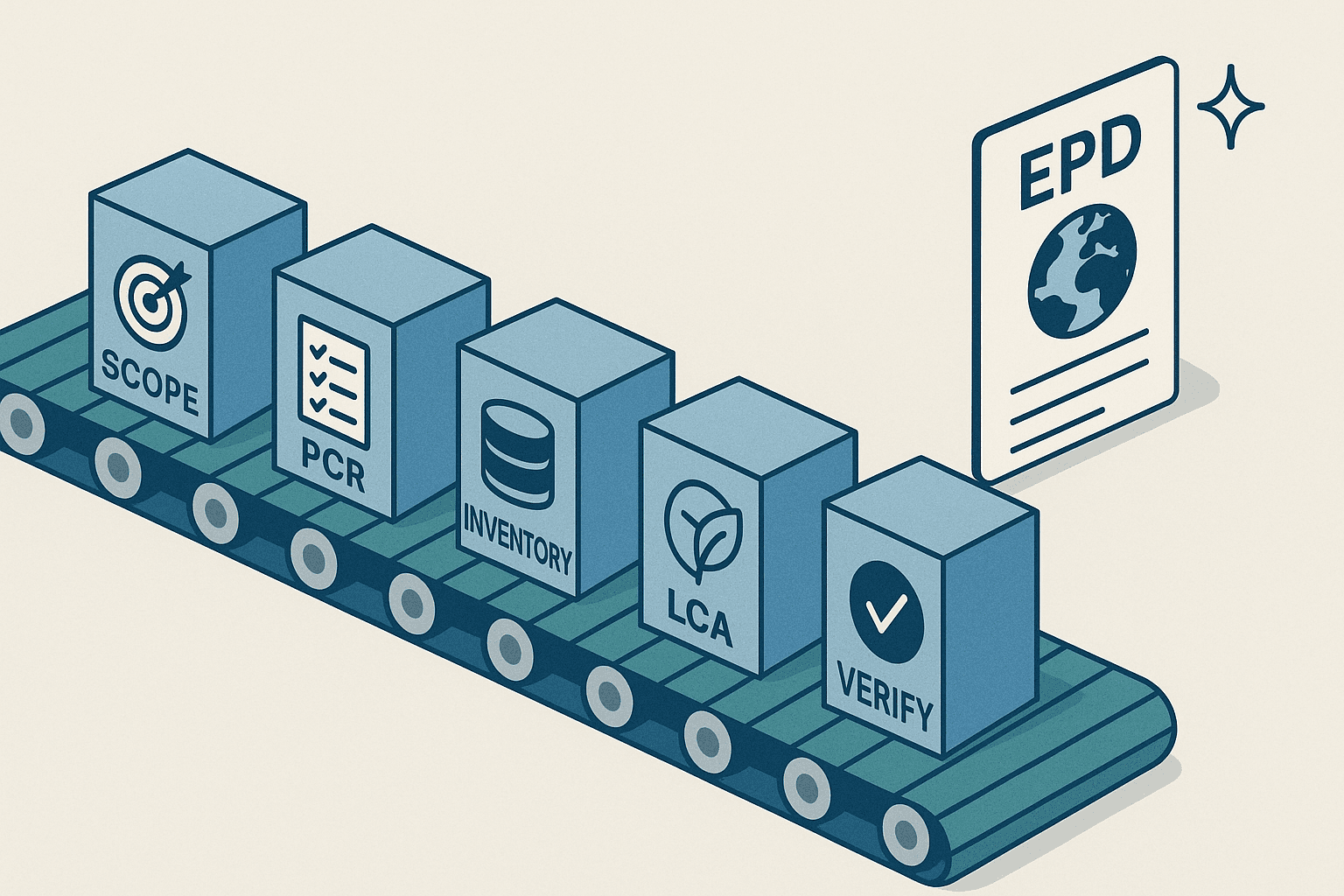
Once the inventory is complete, the path is straightforward. Pick the right PCR by checking what competitors used and when those rules next revise, model the LCA to that rulebook, write the background report, and engage a third‑party verifier. Publish with a program operator that your target markets recognize. Mutual recognition across operators like IBU and North American programs helps with visibility, so plan listings early to avoid duplicative work (IBU, 2025).
Governance that scales beyond one product
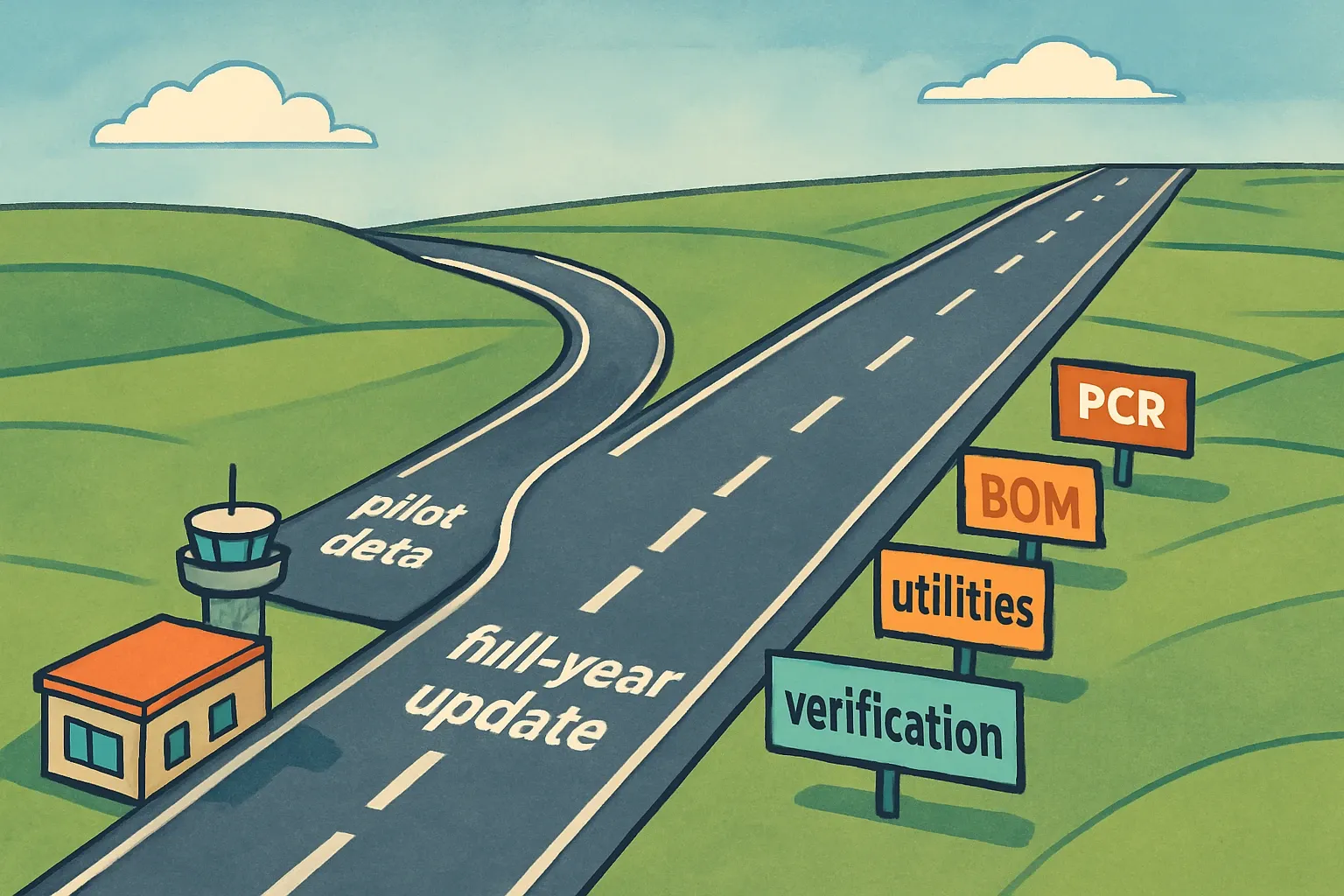
Treat your LCI like a living dataset. Version it. Lock reference years. Store evidence files. Schedule a mid‑cycle review so surprises are caught before renewal. This is also how you reuse the same spine of data for HPDs, Product Carbon Footprints, or customer questionnaires without new rounds of data chases. We prefer inventories that feel like a well‑tuned instrument, ready to play the next set.
A short playbook to get moving
- Map the process train and declared unit, then confirm the minimum modules your PCR requires.
- Stand up a simple data room with meters, BOMs, purchasing reports, waste logs, and supplier confirmations linked to the reference year.
- Record choices for electricity, transport, allocation, and any scenario assumptions in a one‑page method note. Ship that with your first data pull so reviewers see the rules upfront.
The payoff for doing inventory right
A trustworthy inventory turns verification into a confirm, not a debate. It shortens time to a publishable EPD and keeps your product on shortlists where transparency is a pass‑fail filter. Get the inventory right once and you can refresh quickly, add SKUs faster, and spend less time chasing mystery data that should have been captured from day one. Sounds simple becuase it is, with the right discipline.