What an “industry average EPD” really is
An industry average EPD, often called an industry‑wide or sector EPD, reports cradle‑to‑gate impacts for a representative product made by multiple manufacturers under a common Product Category Rule. It is commissioned by a trade association or consortium, not by a single plant. Think of it as a box‑score for the league, not your team’s stat line.
It is valid and third‑party verified, but it is not product‑specific. That distinction drives most procurement and rating‑system outcomes.
Why these averages exist
Associations publish sector EPDs to set a defensible baseline, harmonize method choices, and speed education in markets with many small producers. They also reduce friction when buyers only need a benchmark to understand order‑of‑magnitude carbon for a material class. Useful, yes. Sufficient for optimization or carbon caps, often not.
Where rating systems are headed
Disclosure earns attention, but product‑specific data earns advantage. LEED v5 was ratified by USGBC members on March 28, 2025, reinforcing higher value for product‑specific, third‑party verified EPDs compared to industry‑wide documents (USGBC, 2025) (USGBC, 2025). If a project team is comparing products, the one with a product EPD removes guesswork and avoids conservative default penalties.
What an industry‑wide EPD can and cannot do
It can help sales start conversations, educate specifiers, and satisfy basic disclosure asks where no product options are shortlisted yet. It can inform early bid estimates when a product EPD is still in process. It usually cannot demonstrate improvement for optimization points, meet product‑specific GWP thresholds, or differentiate your plant’s efficiency. Buyers know the difference.
Need clarity on industry average EPDs?
Follow us on LinkedIn for straightforward insights that help you win specs and streamline your EPD process.
Read the document without getting burned
Before you file it in the bid package, check four items that change interpretation:
- Declared unit and scope alignment with your product. If your SKU is per panel and the EPD is per kilogram, conversions matter.
- Geography and technology coverage. A North America average may not reflect regional fuel mixes.
- PCR version and EN 15804 alignment. Many programmes now expect A2‑aligned methods and updated characterization factors.
- Validity date. EPDs are generally valid for five years, and some programmes require updates if any indicator worsens by more than 10 percent during that period (EPD International FAQ, 2025).
Don’t confuse averages, generics, and product EPDs
Industry‑wide EPDs are based on real primary data from multiple companies and verified under a PCR. Generic values in tools or databases are modeled estimates. Product EPDs are tied to your bill of materials, energy, yield, and scrap at a specific site. Mix them up and a bid can look stronger or weaker than reality. That is avoidable.
Scale of the EPD landscape, briefly
If you are wondering whether investment in product EPDs is niche, it is not. The International EPD System alone listed about 12,749 EPDs as of July 1, 2025, within ECO Platform’s tally, alongside thousands more from other operators (ECO Platform, 2025). The market is normalizing around verified declarations, which means averages are a starting point, not the finish line.
When to start with an industry‑wide EPD
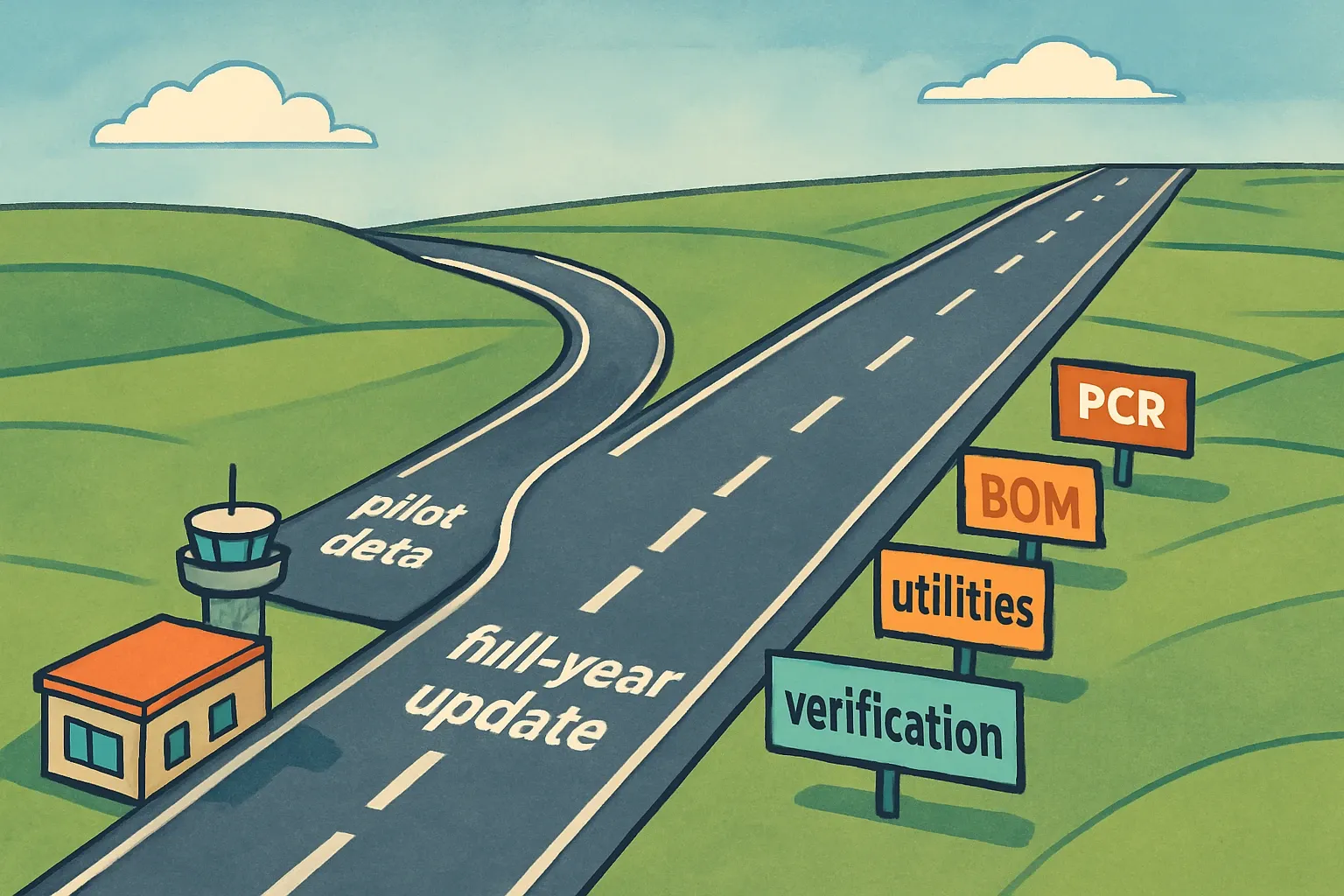
Use it as a bridge if you are launching a new line, entering a region, or standardizing methods before a full data pull. It keeps you in the conversation while procurement screens vendors. Treat it like a demo reel. The feature film is your product‑specific EPD tied to your plant’s actual performance.
How to move from average to product‑specific, fast
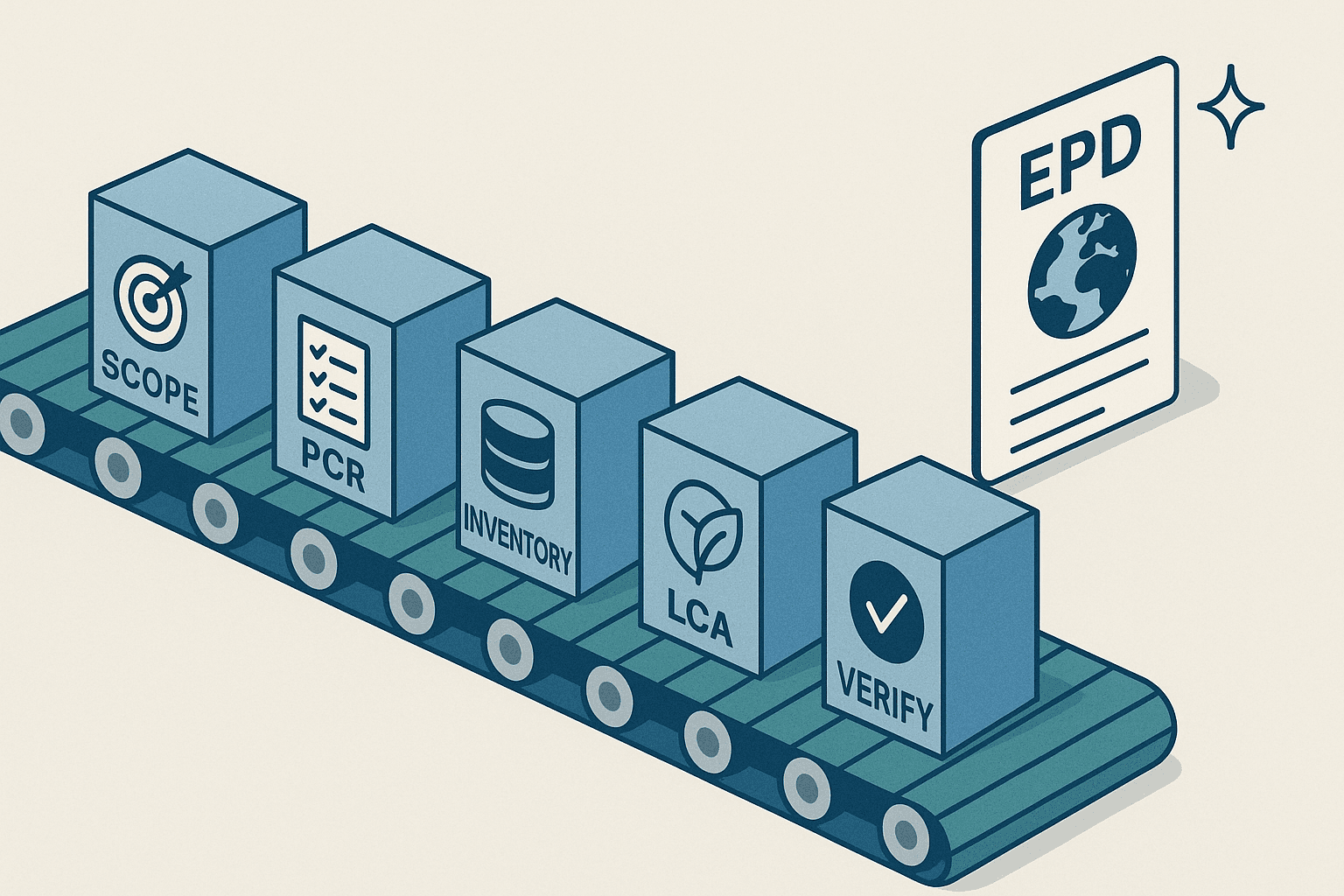
Speed comes from ruthless data orchestration. Pick an LCA partner that handles cross‑functional wrangling across purchasing, production, utilities, and QA, then verifies against the right PCR and publishes with your chosen operator. White‑glove data collection means engineers and plant managers do not waste weeks spelunking for meters and receipts. You want a workflow that gets you from first data pull to publication in weeks, not quarters.
Program operator specifics that matter
Different operators have different templates and small rule differences, yet some fundamentals are stable. EPD validity is typically five years, declared in the document itself, and publication rules require third‑party verification under ISO 14025. For construction categories, alignment with EN 15804 and current characterization factors is the safe default. If your target market prefers a specific operator, publish there first, then mirror elsewhere to widen reach.
Quick answers to common search questions
Is an industry average EPD acceptable for bids that require an EPD? Often yes for disclosure, but product‑specific is usually preferred when scores, caps, or incentives apply. Does an industry‑wide EPD expire? Yes, typically on a five‑year cycle, just like product EPDs (EPD International FAQ, 2025). Is LEED v5 live? Member ratification occurred in March 2025, with market rollout following USGBC’s published timelines (USGBC, 2025) (USGBC, 2025).
A note on keeping documents current
Standards and portals keep evolving. ECO Platform’s operator stats and portal changes in 2025 illustrate the pace of updates for EPD access and consistency, which is why programme and PCR versions in your documents should be checked during renewals (ECO Platform, 2025). If trustworthy category‑wide improvement rates are missing for your material this year, say so plainly in bids rather than guessing.
Bottom line for spec‑driven teams
Industry‑wide EPDs are a useful on‑ramp. Product EPDs are the vehicle that wins the race. Start with the average if you must, then prioritize your own declaration, tuned to the right PCR and verified by the operator your market expects. The faster you can collect, verify, and publish, the sooner your team will recieve credit for the efficiency you already earned on the factory floor.