What the numbers actually mean
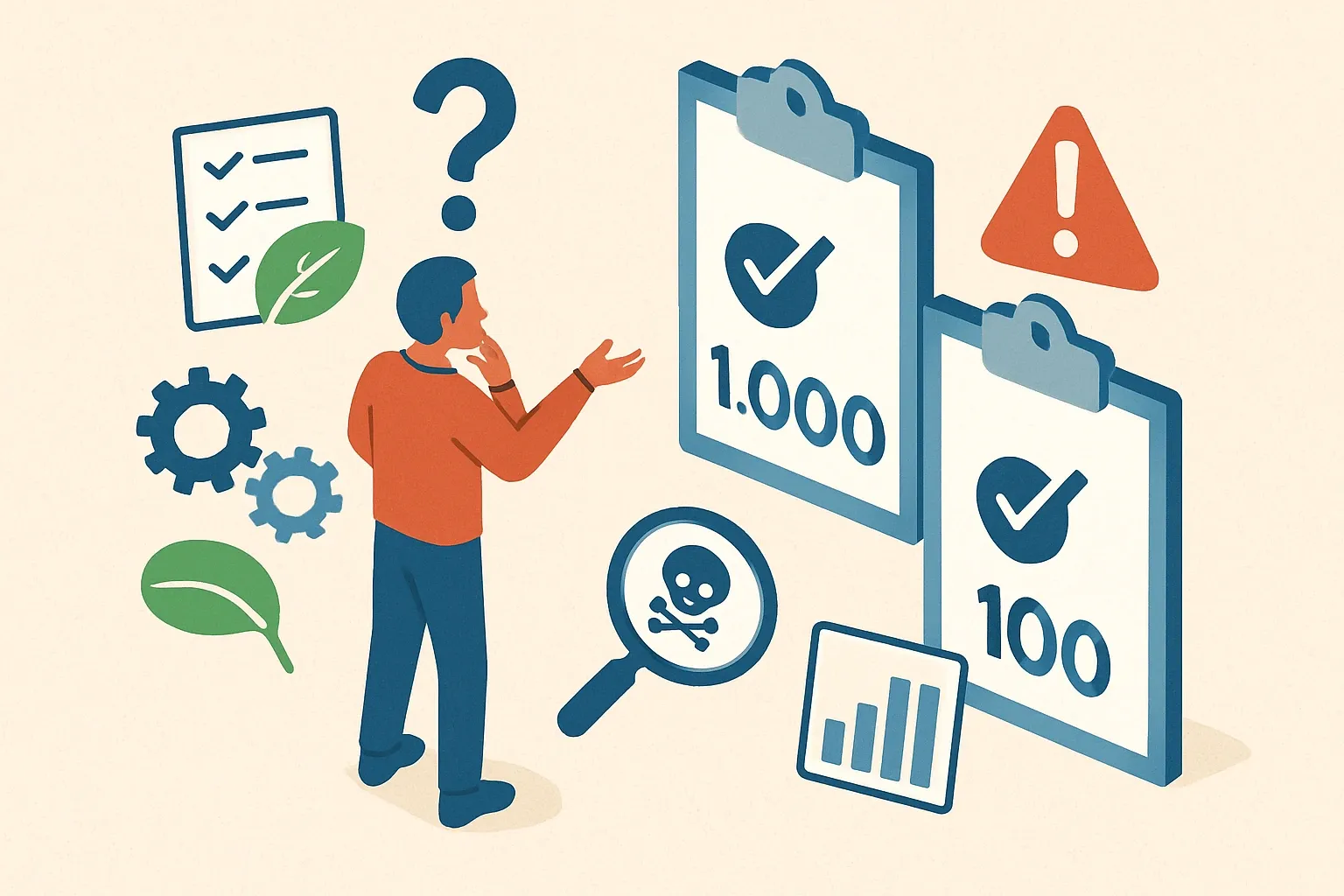
1000 ppm captures substances at or above 0.1% by weight, while 100 ppm looks 10 times deeper at 0.01%. The lower threshold surfaces small additives and residuals that matter for some credits and for certain customers. Think of it like swapping reading glasses for a microscope.
Where 1,000 ppm satisfies the brief
LEED’s Material Ingredients credit accepts product inventories down to 0.1% by weight for core disclosure, which is exactly 1,000 ppm (USGBC, 2024). If a project only needs disclosure credit at that baseline, 1,000 ppm is usually sufficient. Teams still benefit from third‑party verified HPDs that count more favorably under LEED calculations (HPDC, 2025).
When 100 ppm pays off
LEED’s advanced optimization pathways require a 0.01% inventory, plus conditions like no GreenScreen LT‑1 hazards and, in some cases, 75% or 95% Benchmark assessments by weight (HPDC, 2025). That deeper inventory can convert a product from “counts as one” to higher value, which can swing close calls in spec reviews. If the project team signals they are chasing these pathways, 100 ppm is the safer bet.
Specs beyond LEED
Declare labels require disclosure of intentionally added ingredients and residuals at or above 100 ppm, which means a 100 ppm HPD aligns more cleanly with Declare‑driven specifications (ILFI, 2025). Some owners and developers also mirror that depth in their internal standards. If those customers are strategic for sales, aim for 100 ppm on the SKUs they buy.
What drops from 1,000 to 100 ppm in practice
Moving to 100 ppm usually means more supplier requests, more nondisclosure navigation, and more time spent on residuals and impurity screening. Expect extra GreenScreen work and tighter QA on CAS numbers and ranges. The payoff is access to advanced credit pathways and fewer back‑and‑forths with demanding project teams.
A simple playbook that avoids rework
Set a default, then define upgrade triggers. The cleanest pattern we see across manufacturers is to publish at 1,000 ppm for the full catalog, then selectively produce 100 ppm HPDs where it creates real commercial leverage. That balance keeps engineering time focused, not trapped in endless data chases.
Use 1,000 ppm by default when
- the target projects only need baseline LEED disclosure at 0.1%.
- supplier transparency is limited today but improving each quarter.
- speed to a published, third‑party verified HPD will help win near‑term bids.
Move to 100 ppm when
- the project team is pursuing LEED advanced optimization that requires 0.01% and specific hazard outcomes ([HPDC, 2025]).
- the spec calls for Declare alignment at 100 ppm ([ILFI, 2025]).
- a strategic customer or market segment has written 100 ppm standards into procurement.
A quick note on LEED v5 timing
LEED v5 was ratified by USGBC members on March 28, 2025, and continues to emphasize better chemical inventories and hazard reduction. Final credit text and guidance continue to evolve, so confirm the exact pathway your project is targeting before committing effort (USGBC, 2025).
Make the call with eyes open
Pick the threshold that matches the business goal of the product. If the aim is broad coverage and speed, 1,000 ppm is the efficient default. If the aim is to unlock advanced credits or meet high‑bar owner specs, 100 ppm is worth the extra lift. We prefer clarity over heroics, and a tight internal rulebook avoids suprises, saves calendar time, and keeps teams focussed on building products people want.