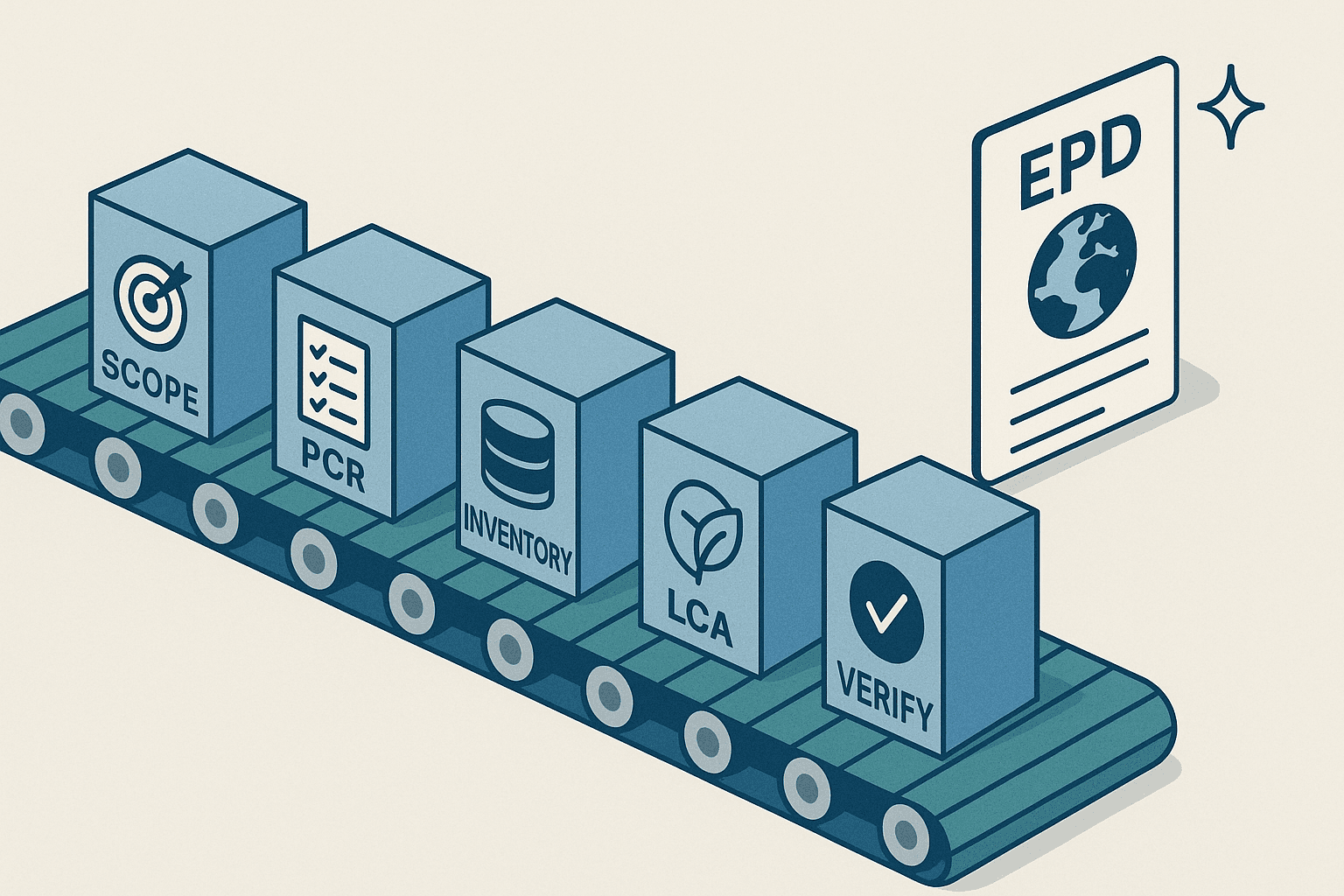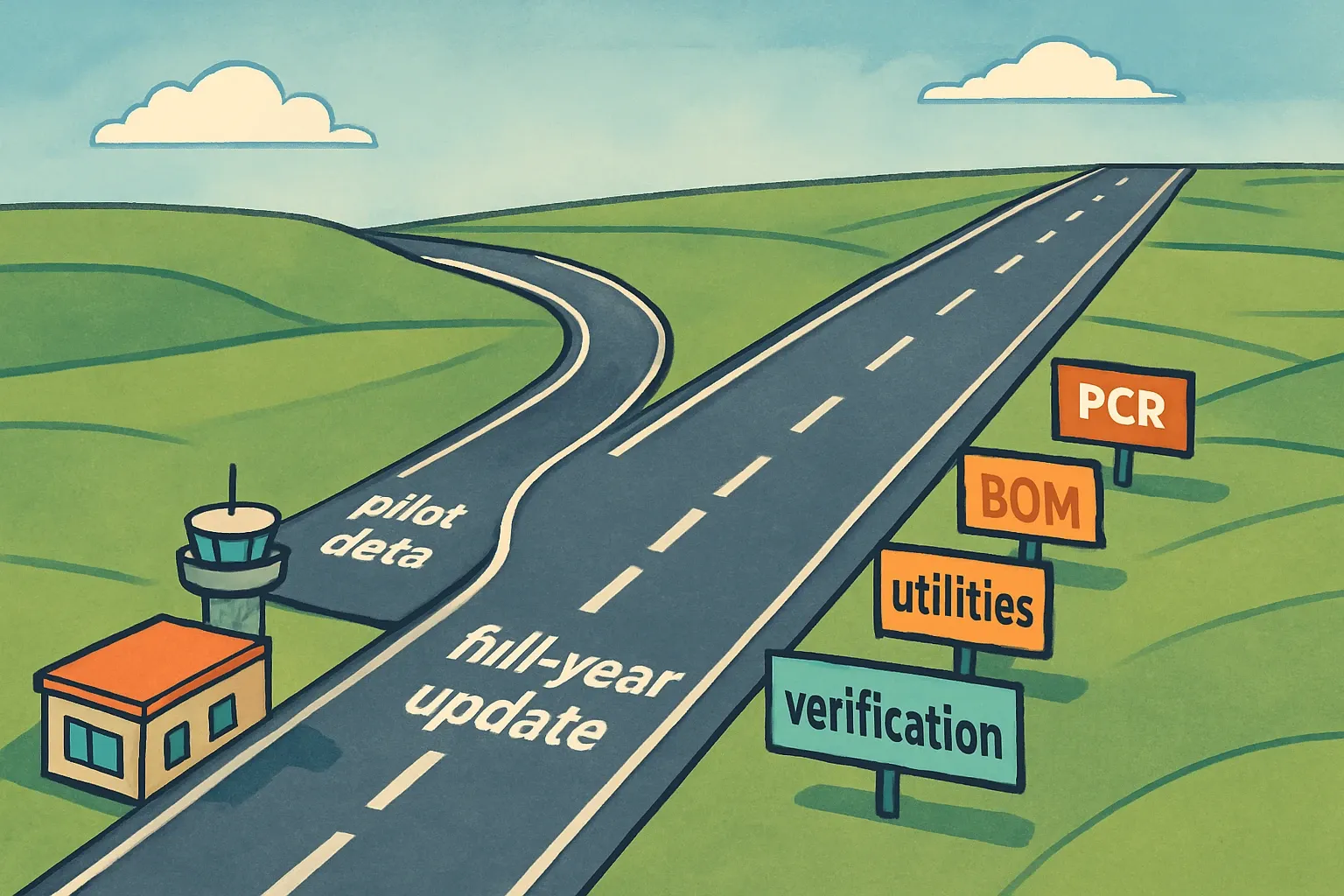
Start with the win map
List the SKUs that move revenue and the SKUs that move specs. If a product appears in most bids or is a frequent basis of design, it goes first. Treat this like a set list for a tour, not a random playlist.
Use family EPDs where rules allow
Many program operators permit a single EPD to cover closely related SKUs when differences do not materially change results. That can turn eight labels into two, while keeping comparisons fair for reviewers. Think of it as bundling episodes into a season rather than dropping 20 stand‑alone shorts.
Check the clocks that govern validity
Most EPDs run on a five‑year validity cycle, so plan renewals accordingly (EPD International FAQ, 2025). PCRs have their own clocks, typically four years within a three to five year range (EPD International, PCR Development, 2025). Build your rollout to avoid landing in the last months of a PCR’s life.
Mind live transitions, especially Construction Products PCR
If the category relies on PCR 2019:14, note that version 1.3.4 sunset on 20 June 2025 and new work follows version 2.x under GPI 5. Time your waves so verifications do not straddle that cutoff (EPD International, 2025). Your current EPDs remain valid, then must adopt the newer PCR at renewal.
Match the fiscal year so maintenance stays sane
Anchor the reference year of data to your finance calendar. That keeps utility pulls, volume reports, and QA reviews aligned with existing close processes. Renewals will then fall into predictable quarters rather than colliding with year‑end.
A four‑wave plan for 20 SKUs
- Wave 1, Quarter 1: 5 products. Top revenue drivers and spec magnets. If family rules apply, group by material system or identical bill of materials with size variants.
- Wave 2, Quarter 2: 5 products. Fill portfolio gaps that block bids in core segments. Prioritize plants with the cleanest data maturity.
- Wave 3, Quarter 3: 5 products. Adjacent SKUs that can ride the same datasets and verifier familiarity. Use this window for any prospective EPDs on new launches.
- Wave 4, Quarter 4: 5 products. Low volume or regional lines. This positions renewals to stagger across future years rather than clustering.
Keep the data window tight
Pick a single 12‑month reference period per site. Lock the cut‑off rules, supplier mix, and electricity metering up front. A partner who handles the messy collection frees R&D and plant leaders to focus on process changes while we keep the paperwork moving.
Choose one operator per category when possible
Publishing the set under the same program operator and PCR family improves comparability for project teams. It also streamlines verifier Q&A and avoids duplicate templates. Switching operators mid‑portfolio is like changing camera formats mid‑season.
Build a risk calendar
Flag known PCR revisions, planned product reformulations, and facility changes. When any one is likely, schedule that SKU earlier so an in‑flight shift does not force rework. If uncertainty is high, reserve a contingency slot in Wave 3.
What to measure every month
Track percent of SKUs with complete primary data, number of verifier comments resolved, and how many EPDs are within 12 months of expiry. You do not need fancy dashboards. A simple table that sales and product management actually read beats another slide.
Example timeline that respects PCRs and finance
Quarter 1: publish Wave 1 before any looming PCR sunset to lock five years of validity. Quarter 2: push Wave 2 and pre‑collect for Wave 3. Quarter 3: verify Wave 3 after fiscal close to use fresh data. Quarter 4: finish Wave 4, then pre‑plan Year 2 renewals and any PCR‑driven updates. If a PCR revision overlaps, slip a family into the earlier quarter to avoid split rules.
Budget notes without the spreadsheet soup
Exact averages vary by scope and verifier expectations. The right workflow trims internal hours dramatically because the heavy data wrangling sits with the EPD team, not the plant scheduler. That time savings often matters more than headline fees for thier CFO.
Wrap the rollout with a renewal runway
Stagger publication dates so only a handful expire each quarter in future years. Keep a one‑page register that shows publication date, validity end date, PCR version, operator, verifier, and reference year. The register becomes the compass that keeps your 20‑product set from drifting.