What the rules actually ask for
Standards tell you what must be covered, not exactly how far to chase every rivet. ISO 14025 requires third‑party verification for Type III declarations and sets a typical validity window of five years, which matters for maintenance planning and renewals (ISO 14025, 2022). EN 15804 and your PCR define modules A1 to A3 at minimum for cradle to gate and state when to use specific versus generic data. None of that forbids deeper supplier data, it only frames consistency and comparability.
The practical boundary: materiality over heroics
Think of your bill of materials like a playlist. A few tracks carry the mood, the rest are ambience. Start with the biggest mass and energy drivers and the processes you control, then work upstream only where results are sensitive. If another hour of supplier chasing barely nudges declared results, stop. Document the choice so verifiers see a clear line of reasoning rather than a mystery gap.
Decision rules that keep you moving
Adopt written thresholds before data collection begins. Suggested heuristics that many teams find workable:
- Stop when remaining unknowns are collectively small in mass and clearly non‑energy intensive, and when sensitivity checks show no meaningful change across key impact categories.
- Go one level deeper when a component is both high mass or high value and produced with energy or chemistry that is likely carbon intensive.
- Prefer supplier‑specific data for processes inside your fence line, and for any upstream process that appears in your hotspot list.
- When two suppliers are strategically important, collect both and keep the higher value as your declared scenario, then show the range in background files.
When to push deeper into the chain
Push beyond finished components when any of these apply. The aim is useful precision, not perfection.
- A hotspot flags a specific material or process that swings results, like primary aluminum, virgin PVC resin, clinker, thermal curing, or solvent heavy coatings.
- A customer spec or label hinges on a subpart, for instance a low‑VOC coating or halogen free PCB laminate.
- You plan a redesign and need data you can actually steer, such as switching alloy, filler content, or curing profile.
- Your story needs proof, for example a recycled content claim, a renewable electricity share, or closed‑loop scrap recovery that you want visible in A1 to A3.
Electronics, PCBs, and tiny parts without getting lost
Treat electronics as micro supply chains. Start with the PCB laminate and copper weight, then the integrated circuits by package count and die type. Use manufacturer published product carbon footprints when they exist, otherwise use reputable generic datasets and capture the assembly energy. For screws, clips, and standard connectors, avoid line‑by‑line heroics unless they rise into your hotspot list. Your verifier wants logic, not lore.
Coatings and finishes that quietly dominate
Curing energy, solvent formulation, and solids content decide whether coatings are a footnote or a headliner. If ovens or long cure times appear, get primary energy data for those steps. If the chemistry is commodity and low solids, generic background data is often sufficient unless the coating mass is large relative to the product. Record volatile content and recovery systems so reviewers can trace emissions factors to real equipment, not assumptions.
Verification, comparability, and audit trail
Deeper primary data generally improves confidence, but comparability only improves if your peers use similar rules. Solve that by writing your inclusion criteria into the project plan and keeping a clean assumptions log. Verifiers move faster when they see your boundary logic, sensitivity checks, supplier correspondence, and versioned datasets lined up. That discipline also protects against apples to oranges debates in competitive reviews.
Maintenance when suppliers and CMs change
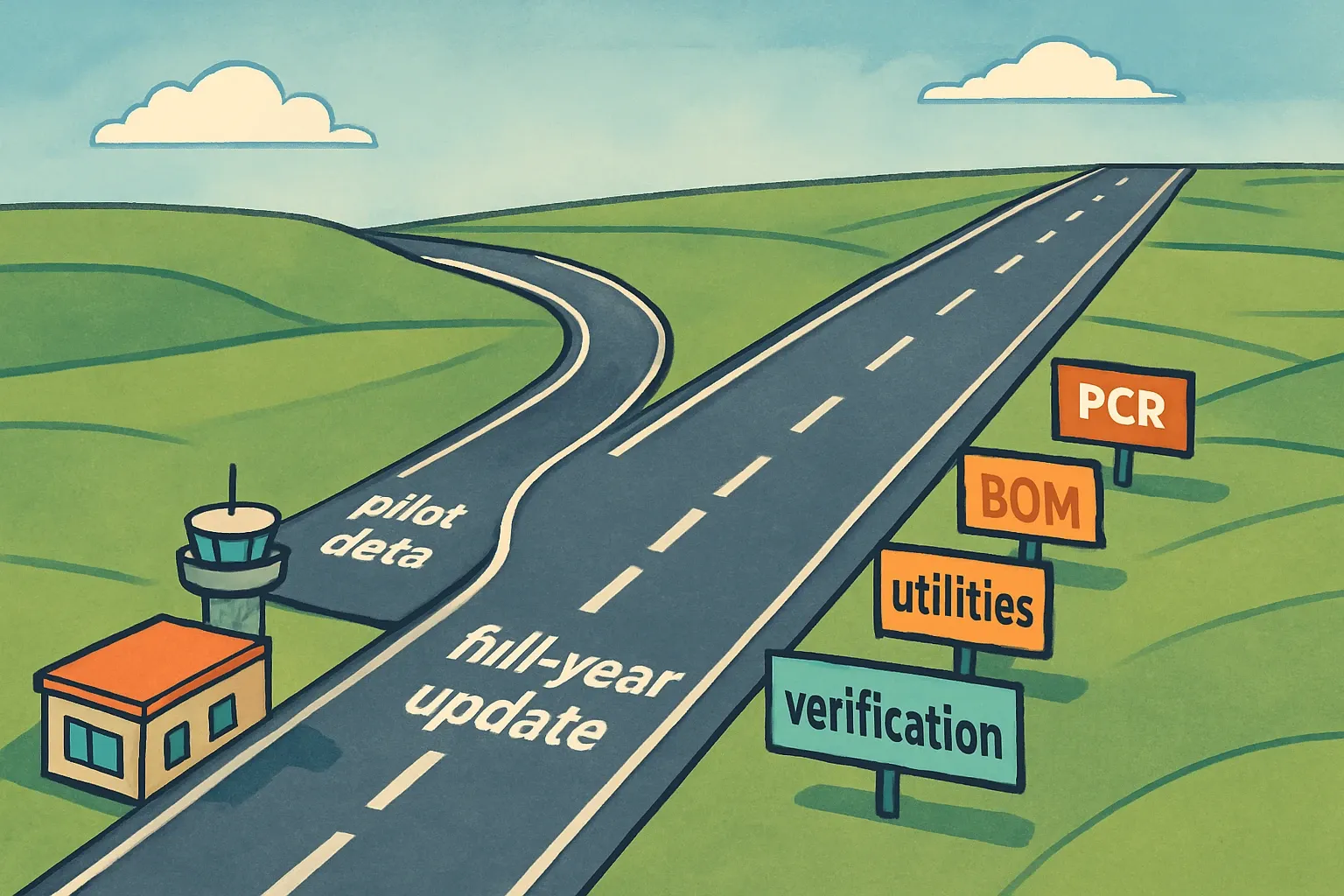
Supply chains shift. Build a simple change protocol. If a supplier change touches a hotspot process, rerun the model and capture the delta. If it touches a non‑hotspot, log it and batch recheck during the next annual data pull. For renewals, align to PCR updates and grid factor revisions, and schedule time to replace any generic data that the PCR now discourages. Five year validity means you will revisit choices, so make them traceable from day one (ISO 14025, 2022).
A starter workflow you can run next week
- Freeze a reference year and lock your product definition, variants, and declared unit.
- Build a rough A1 to A3 model with generic data to reveal hotspots.
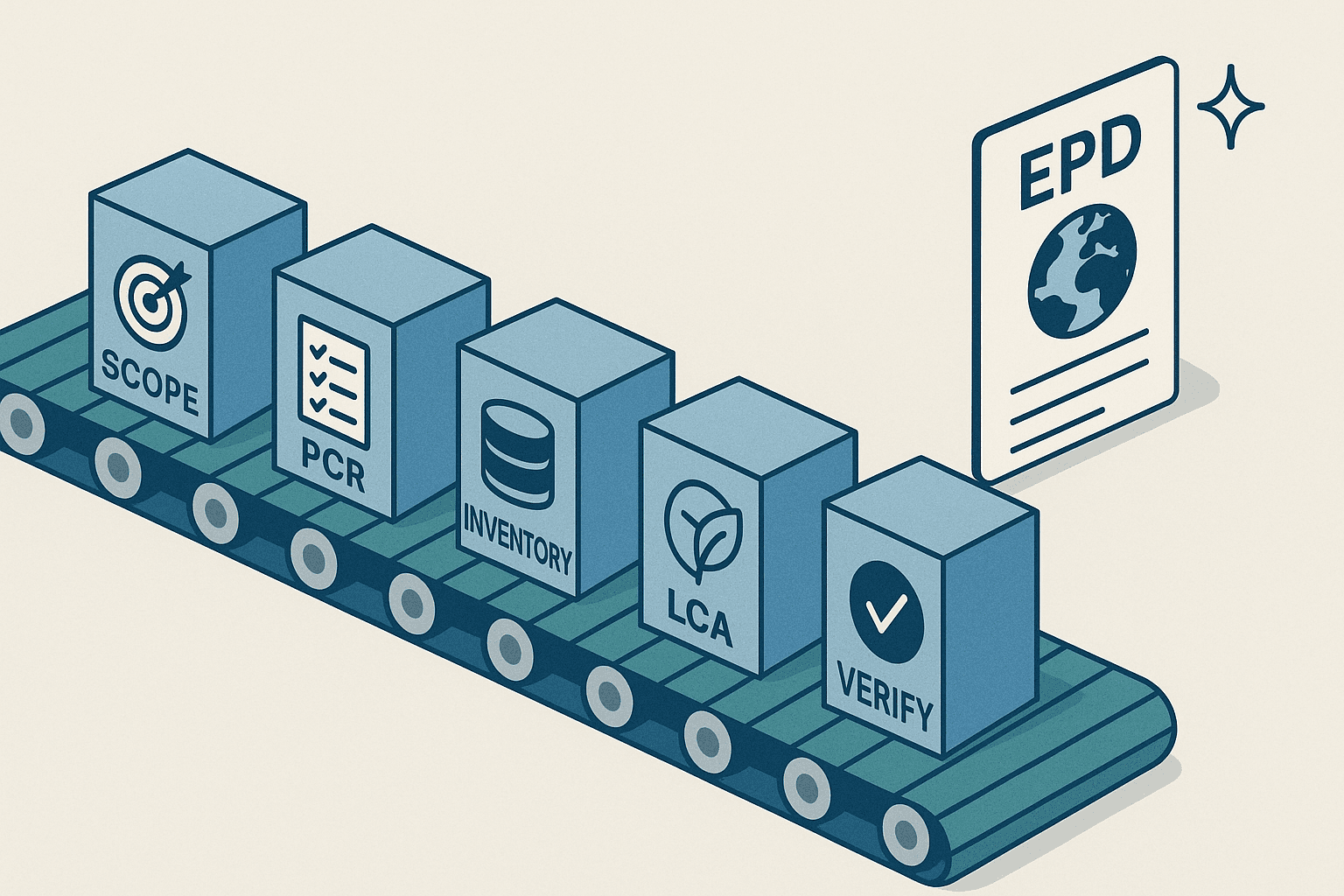
- Write the boundary rules in one page and agree on them with LCA and verification teams.
- Prioritize supplier outreach for the top processes and any marketing critical claims.
- Run sensitivity checks to confirm your stop points are defensible.
- Package the audit trail so renewals and product updates take hours, not weeks.
The stance that wins bids without boiling oceans
Depth is a choice, guided by materiality and purpose. If the goal is compliance, stop at a defensible boundary and move on. If the goal is differentiation or redesign, invest where the model is sensitive and where engineering can act. That is how we keep EPDs both credible and useful, and how teams avoid turning teh supply chain into an endless scavenger hunt.