Why teams get stuck in the Wild West
A few urgent RFQs ask for an EPD, so the team spins one up fast. Different plants copy that play for other SKUs, each choosing its own operator and PCR. Momentum turns into noise, and leadership cannot tell what is current, what expires next, or what to budget.
Failure modes to spot early
- Platform‑by‑platform experiments that create conflicting databases and templates.
- Overlapping consultants who redo the same data requests in slightly different formats.
- Inconsistent PCR and operator choices that block comparability across SKUs.
A simple governance model that works
Appoint one program owner in product management, with a steering pair from operations and sustainability. Give that trio decision rights on PCR selection, operator policy by region, and reference‑year rules. Publish a short RACI so plants and R&D know who supplies data, who reviews LCAs, and who approves EPD text.
Sequencing logic for a smart first year
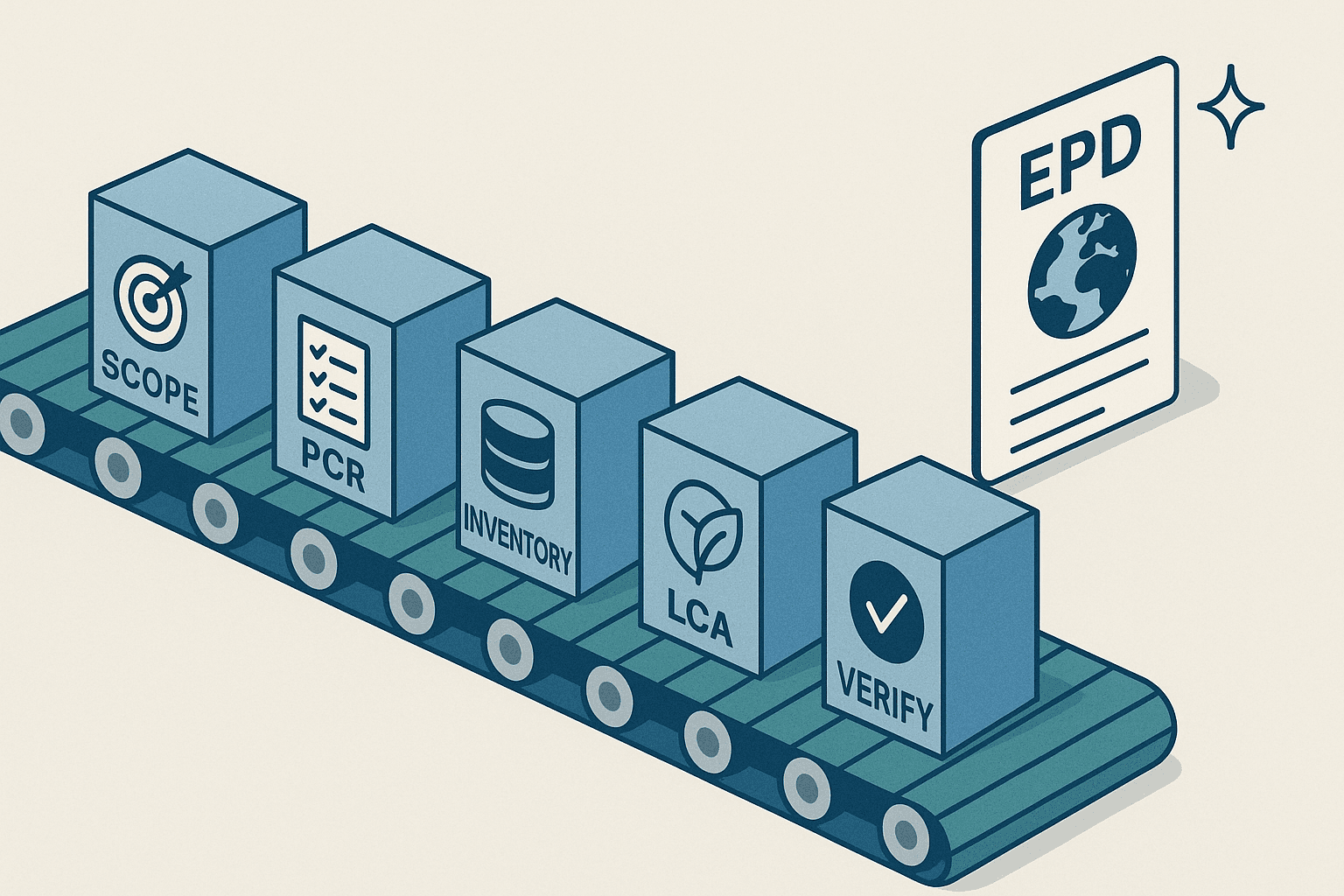
Prioritize SKUs that are most spec‑critical, highest revenue risk, or share a process route, so a single data set unlocks many declarations. Map competitor PCRs first, then match where possible to keep buyers’ comparisons apples to apples. If a PCR gap exists, use the closest recognized alternative while tracking the next revision window.
Your data operating system
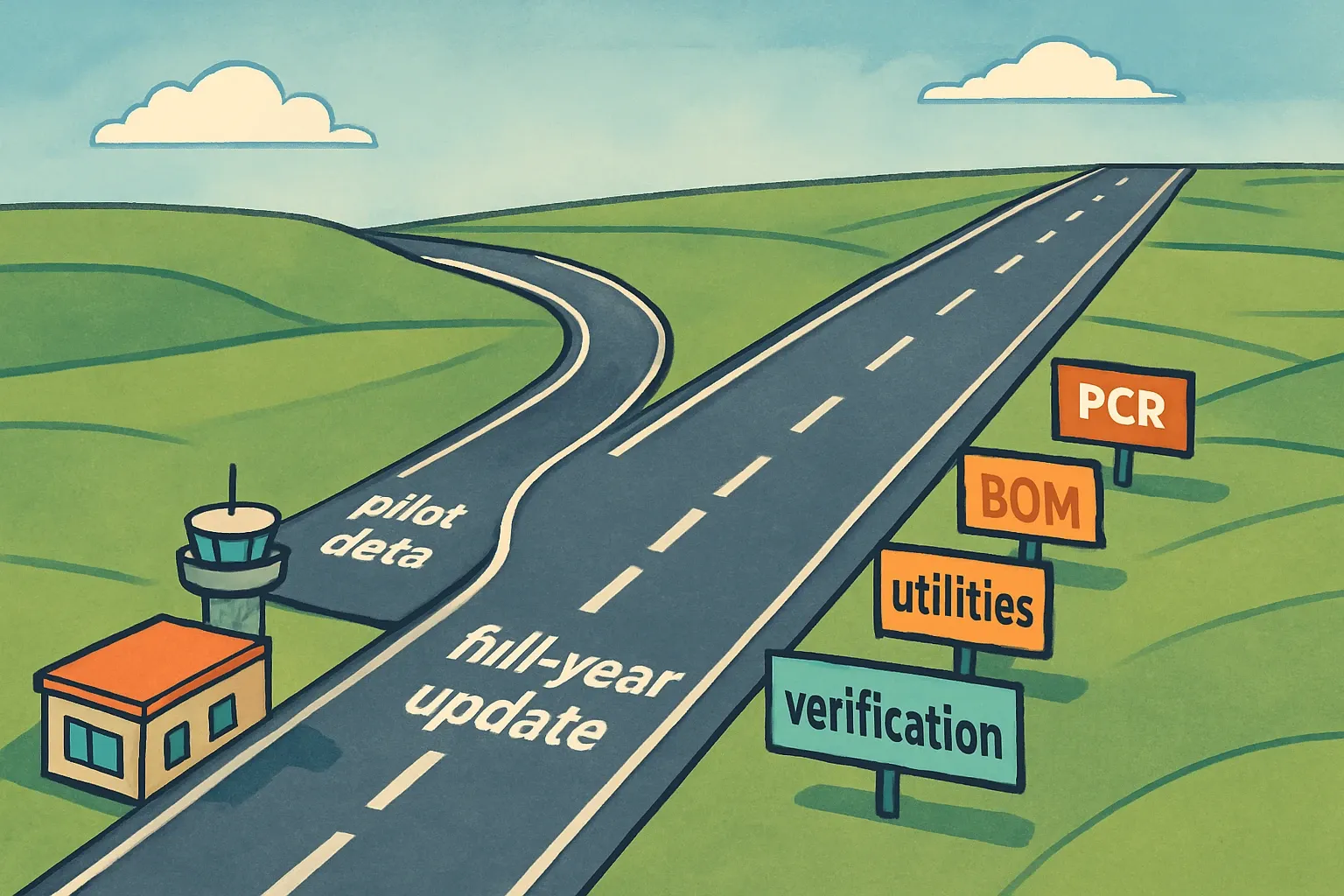
Create one data dictionary for bills of materials, utilities, co‑products, and transport defaults. Lock a reference year per plant and document how to handle prospective EPDs for new lines. Store evidence files with traceable filenames, not inbox attachments, so renewal is a retrieval job, not a hunt for thruth.
Make PCR and operator choices predictable
Treat PCRs like the rulebook of Monopoly. Ignore them and the game falls apart. Select the PCR most common in the competitive set, confirm its expiry, and record the next planned version. Use a primary operator per region for consistency, such as a North America choice and a Europe choice, while staying open when customers specify otherwise.
Renewal plan, set once then run
Assume typical EPD validity of five years across major programs. Start an 18‑month runway before any expiry, because data refresh, modeling, and third‑party review take calendar time. Keep a rolling 12‑quarter view that shows each SKU’s reference year, expiry, PCR version, and operator so nothing sneaks up in Q4.
One orchestrator, fewer headaches
If multiple consultants or software tools are involved, appoint one integrator to own templates, version control, and submission calendars. Require every partner to use the same data model and file structure. This prevents dueling spreadsheets and stops teams from answering the same question twice, which they really dont enjoy.
ROI that shows up in specs
Procurement teams increasingly penalize products without product‑specific EPDs because they must model embodied carbon with conservative assumptions. Having a current, comparable declaration keeps products in contention without leaning only on price. The buildings sector accounts for roughly 37 percent of energy‑related CO2 emissions, so owners are pushing harder on product data that reduces whole‑life carbon pressure (GlobalABC, 2024).
What good looks like next quarter
Publish a one‑page policy that fixes governance, PCR and operator rules, and reference‑year conventions. Build a 24‑month portfolio plan that sequences high‑impact SKUs, then clusters the rest by process family. Stand up a single source of truth for data and evidence, and automate reminders for renewal milestones. Calm replaces chaos, and your team gets back to real product work.