Why EPD projects stall inside plants
Scattered ERPs, supplier portals, and one heroic spreadsheet make data feel ungrabbable. Teams wait for a perfect template, then momentum dies. Buyers do not pause specs to match your calendar, so delay silently taxes pipeline.
White‑glove means “send what you have”
The model starts by accepting exports, PDFs, spreadsheets, even phone photos. Think of it like a universal charger for plant data. We translate file types, map fields, and capture provenance so auditors understand where each value came from.
Normalization that survives audit questions
Centralized unit balancing turns short tons, kilograms, and gallons into one clean ledger. Outliers get flagged instead of buried. A simple model log records assumptions so reviewers can trace every figure without email archaeology.
Targeted asks to the right people, not reply‑all threads
Requests are routed by plant and category, with context on why the value matters. Each owner gets a short orientation and specific due date. Automated reminders handle follow‑ups so managers are not playing air‑traffic control.
Hours, not weeks of internal effort
Most contributors only touch a few narrow tasks. One person confirms energy by meter, another uploads supplier EPDs, a third validates waste routes. Short, well‑timed asks keep production teams focused on throughput, not paperwork.
The 90‑day runway, broken into three fast sprints
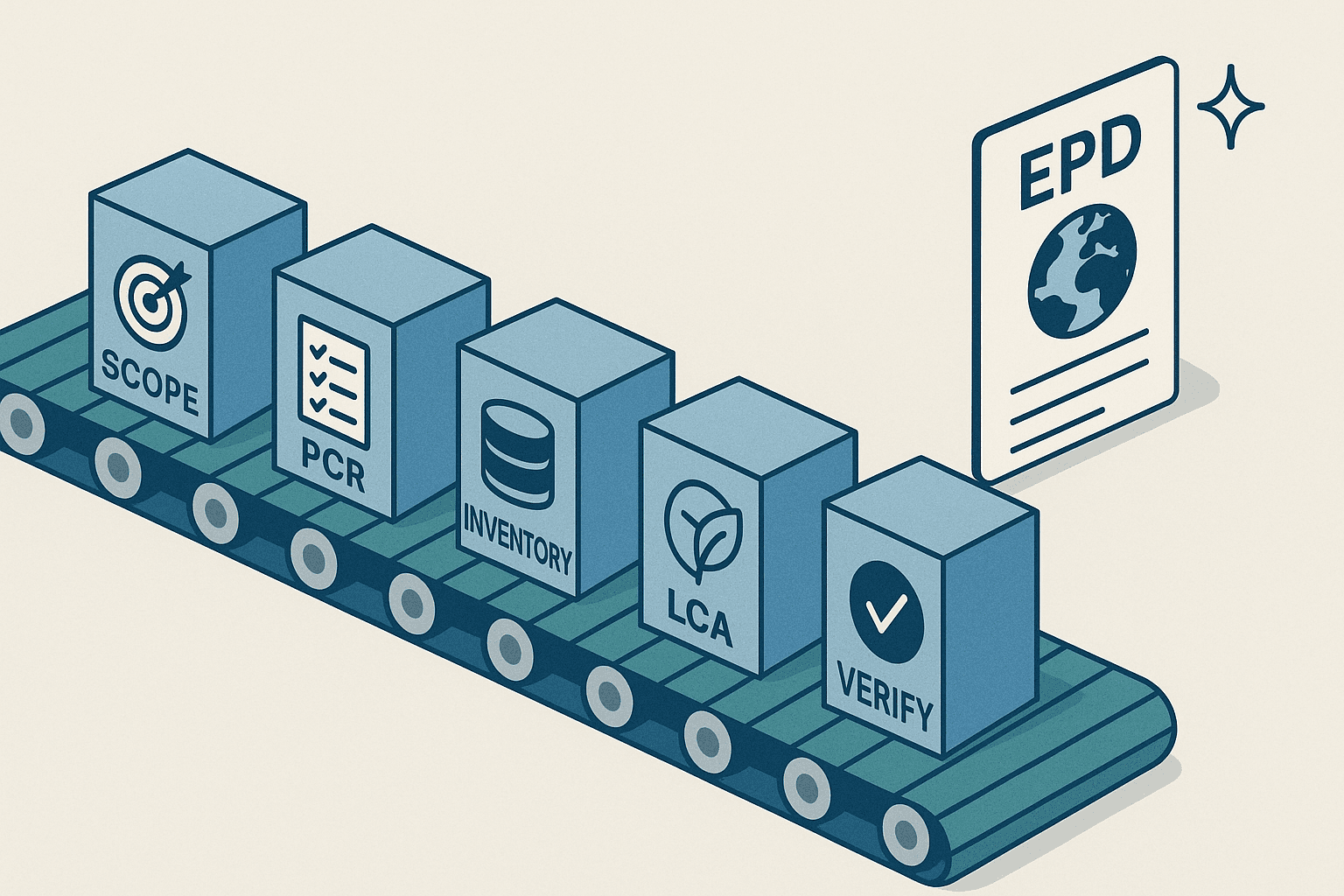
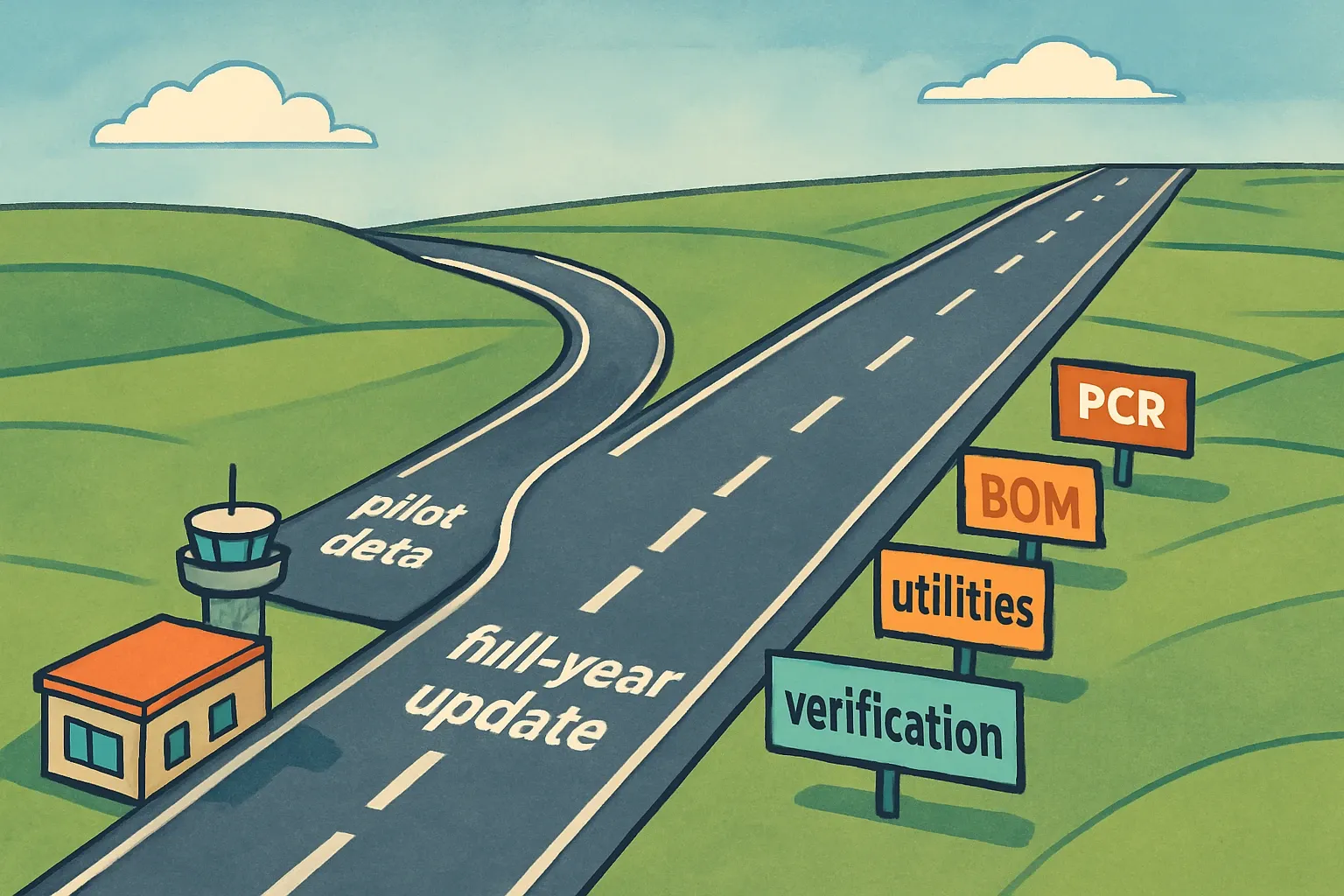
- Intake and mapping, week 1 to 3. Gather what exists, lock the reference year, confirm PCR fit, and identify any gaps that need supplier pings.
- Modeling and evidence, week 4 to 7. Normalize data, run A1 to A3 at minimum, produce draft tables, and assemble evidence packets for verification.
- Review and publish, week 8 to 13. Address verifier questions in batches, finalize disclosures, then publish with your chosen program operator.
Why timing matters in 2025 and 2026
LEED v5 advanced through ratification on March 28, 2025, which keeps pressure on project teams to document embodied carbon with product‑specific, third‑party verified EPDs for credits and procurement guardrails (USGBC, 2025). A predictable 90‑day path helps sales hit bid calendars instead of slipping a cycle.
Built for multi‑plant portfolios
The same playbook repeats product by product and site by site. Templates travel, but each plant’s utilities, yields, and scrap are kept distinct. Results roll up for leadership without flattening the nuance that auditors require.
Quality that stands up to verification
Third‑party review checks traceability, math, and conformance with EN 15804 and the selected PCR. Most programs set EPD validity at five years, so solid evidence and a tidy model pay dividends across multiple bid seasons (EPD International, 2025).
Handling PCR shifts without panic
Construction PCR 2019:14 version 1.3.4 sunset on June 20, 2025, so current EPD work typically follows version 2.0 or later. A white‑glove team tracks these cutovers for you and adjusts scope or templates before modeling starts (EPD International, 2025).
What buyers actually gain
When a product lacks a product‑specific EPD, project teams often must apply conservative defaults, which can make your material look heavier on carbon than it is. A verified EPD keeps you in contention on projects chasing carbon thresholds or LEED v5 points, which protects margin and reduces swap‑out risk.
Make speed your moat
Treat data wrangling like the assembly step before coating cure. Quick, clean inputs lead to faster, dependable outputs. Dont overthink the format. Start the intake, let a white‑glove team do the heavy lift, and keep production time where it belongs: on the floor.