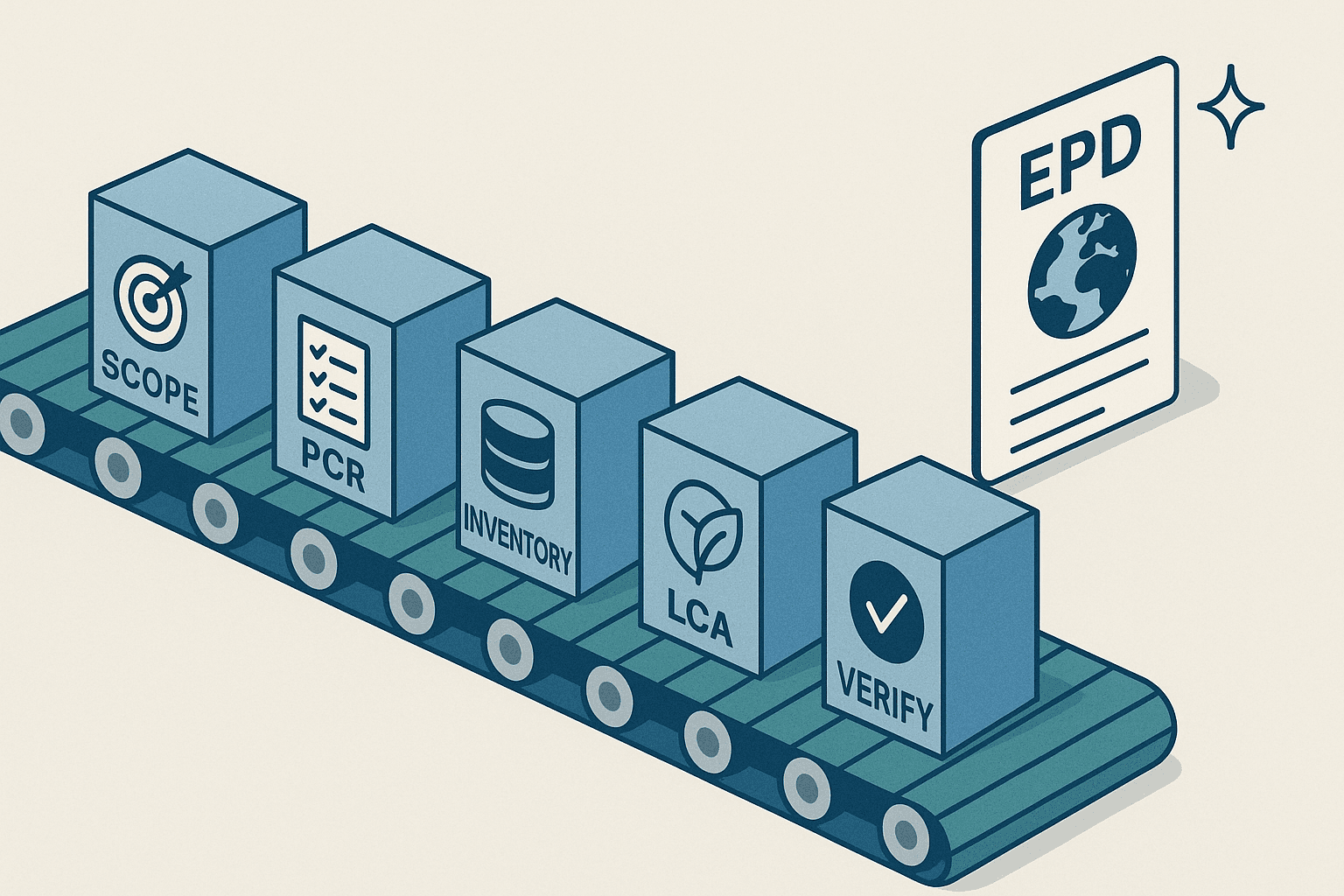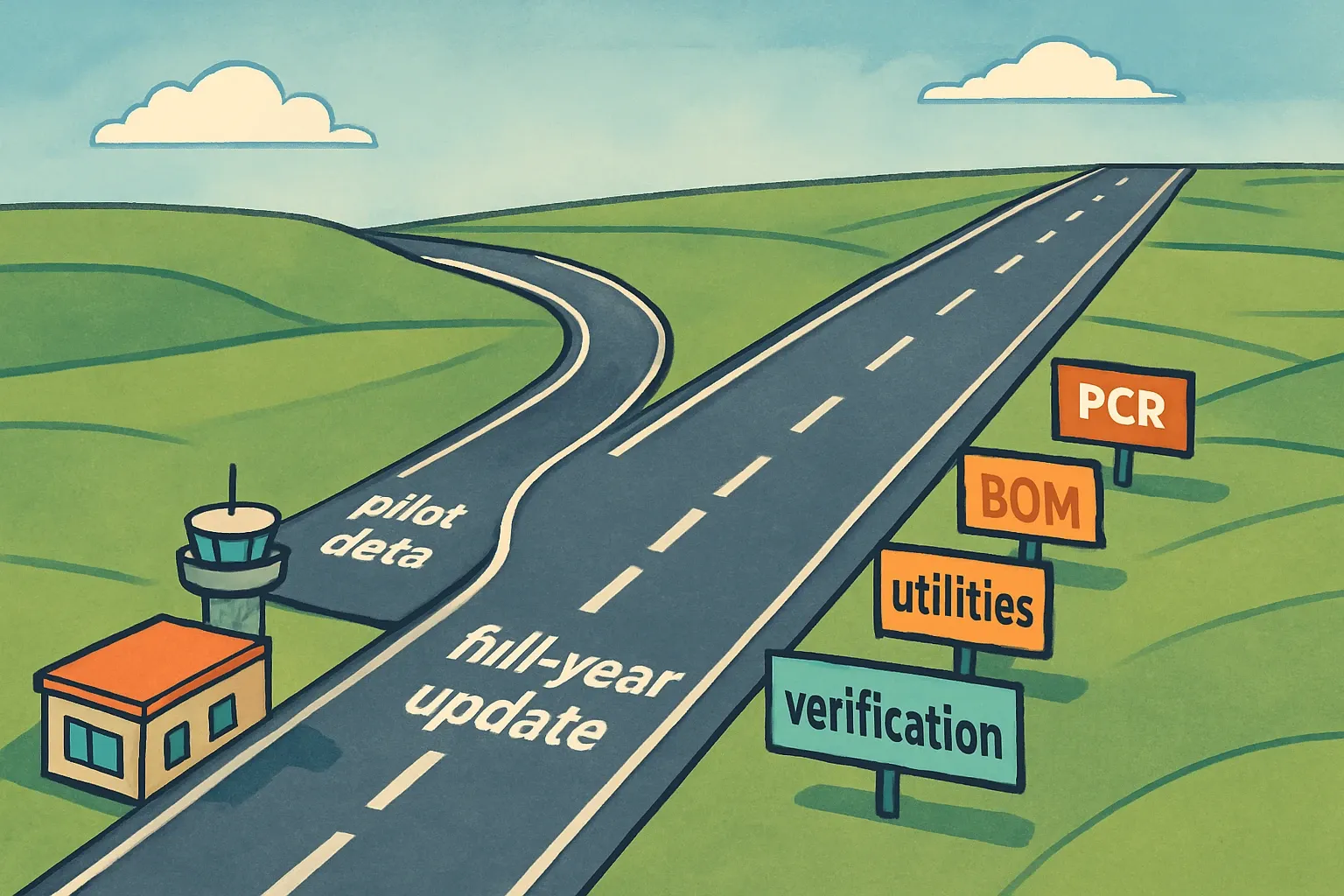
Start with one pilot, not a portfolio
Pick a single product line where an EPD helps close real deals. Think high revenue, spec sensitive, and already on shortlists. Treat the pilot like a limited series, with a clear season finale that sales can point to in a pipeline review.
Prove revenue relevance quickly
Project teams need qualifying products to finish materials credits. Under LEED v4.1 Option 1, at least 20 products from 5 manufacturers are required, and a product specific Type III EPD counts as 1.5 products toward that total (USGBC Credit Library, 2024) (USGBC Credit Library, 2024). That simple multiplier explains why an EPD equipped SKU gets picked over a comparable product that lacks one.
Use the momentum of LEED v5
LEED v5 was ratified on March 28, 2025 and keeps verified EPDs in the mix while shifting more weight to embodied carbon performance (USGBC, 2025) (USGBC, 2025). Teams that already publish ISO 14025, EN 15804 aligned EPDs are positioned to ride that wave without rethinking their fundamentals.
Make compliance changes boring for stakeholders
EPDs are normally valid for five years, so sales can plan around a stable document window instead of constant churn (EPD International, 2025). The main construction PCR, 2019:14 version 2.0.1, is valid until 2030-04-07, with the earlier 1.3.4 version sunset on 2025-06-20, which keeps your comparisons aligned to current rules (EPD International, 2025) (EPD International, 2025). Build that timeline into launch calendars so no one gets surprised near a bid.
Want to transform EPD resistance into project wins?
Follow us on LinkedIn for insights that help you streamline EPD creation and unlock new business opportunities.
Aim the first EPD where specifiers feel the pinch
Choose a category that commonly appears on embodied carbon hotlists. Insulation, coatings, flooring, or structural items often trigger early questions. If distributors get repeated RFI requests for a product, that is your signal. The goal is not a trophy PDF. It is a document that unblocks a live project.
Remove effort from the busiest colleagues
Early wins die when data wrangling lands on R&D or plant managers. Centralize the data pull, pre map meters and bills, and schedule verifier time upfront. The less your experts need to stop production to explain utility splits, the faster momentum builds.
Turn the EPD into a sales asset, not a file
Give sales one page that answers three things. What the EPD covers, which credits it supports, and how to prove it in submittals. Link the PDF from the product page, tag the SKU in your BIM library, and prewrite the two sentence RFI response that reps can paste into email.
Instrument the pilot so wins are visible
Track three numbers for the pilot period. Inbound requests that mention EPDs, time to answer RFIs, and opportunities where the EPD kept you in the spec. If deal rooms require a narrow, project specific claim, log it. Even a modest shift in win rate will be obvious to finance.
Anticipate speed bumps and clear them early
Verification slots can bottleneck. During the 2019:14 transition, the International EPD System temporarily extended publication timelines to up to 10 working days due to a surge in requests, a reminder that calendars matter when markets shift (EPD International, 2025). Keep a shortlist of verifiers, identify backup program operators, and block time on legal for template approvals so nothing stalls at the finish line.
Scale with a simple, repeatable queue
Once the first EPD lands, create a quarterly queue. Prioritize SKUs by revenue influence and spec frequency, then by ease of data. Add a renewal calendar that starts at month 48 so re verification never collides with bids. This keeps enthusiasm high because progress is visible and predictable.
What early wins change inside a company
Skepticism softens when an EPD helps a project team meet a credit or makes a submittal go faster. The conversation switches from why to which SKU is next. That is the moment to broaden scope, standardize data handoffs, and scale publication across the catalog. It is definately the turn from resistance to buy in.