The signal and the noise
Different names, colors, finishes, and SKUs do not automatically require different EPDs. What matters is whether products perform the same function and share a near‑identical recipe and process. If the LCA results sit close together, one family EPD often does the job and keeps submittals simple.
The 10 percent lens
Many program rules allow grouping when variation between included products stays within about 10 percent for the declared indicators, especially when ISO 21930 compliance is claimed (EPD International FAQ, 2025) (EPD International FAQ, 2025). Treat it as a decision filter, not a loophole. If a variant pushes results well beyond that band, it probably deserves its own declaration.
What actually moves the model
Think like the LCA does. Impact tracks mass per declared unit, energy intensity, transport, and chemistry. Changing a pigment rarely matters, but swapping binder type, increasing density, adding a steel insert, or running a separate curing step usually does. Two products with different marketing series can be twins to the model if the bill of materials and process are the same.
When one becomes too many
Split the family when function changes, when recipes diverge enough to move impacts beyond the tolerance, or when markets demand site‑specific results. A new plant with very different electricity or fuel can push A1 to A3 away from the group. If the declared unit changes, for example mass versus piece, that is a hard line for a separate EPD.
Options inside a family EPD
Most construction PCRs let you declare an average, a representative product, several representatives, or a worst‑case. If you need ISO 21930 compliance, keep all included products within the 10 percent variation rule across indicators. If not claiming it, some operators allow larger spreads, provided you disclose the variation and justify the grouping in the background report (EPD International FAQ, 2025) (EPD International FAQ, 2025).
Validity and renewal timing that influence scope
EPDs are typically valid for five years under major program operators, which means your portfolio structure should be durable for that window (IBU, 2024) (IBU, 2024). PCRs themselves are generally reviewed on a five‑year cycle, so plan families that can survive a rules refresh without rebuilds every season (UL Solutions, 2025) (UL Solutions, 2025).
A quick field check before you order work
Ask three questions. Does every SKU serve the same function and declared unit. Is the bill of materials within a tight band, ideally under 10 percent swing on mass‑drivers. Are energy and transport profiles similar. If yes across the board, one family EPD is likely efficient and defensible.
Commercial framing without the headache
A single EPD that lawfully covers many variants speeds submittals, reduces audit churn, and keeps sales out of dead‑ends where a generic factor would penalize bids. When a split is necessary, do it on purpose. Pick the few break‑out SKUs that move the needle on impacts or specification, not every shade in the catalog.
How to avoid rework
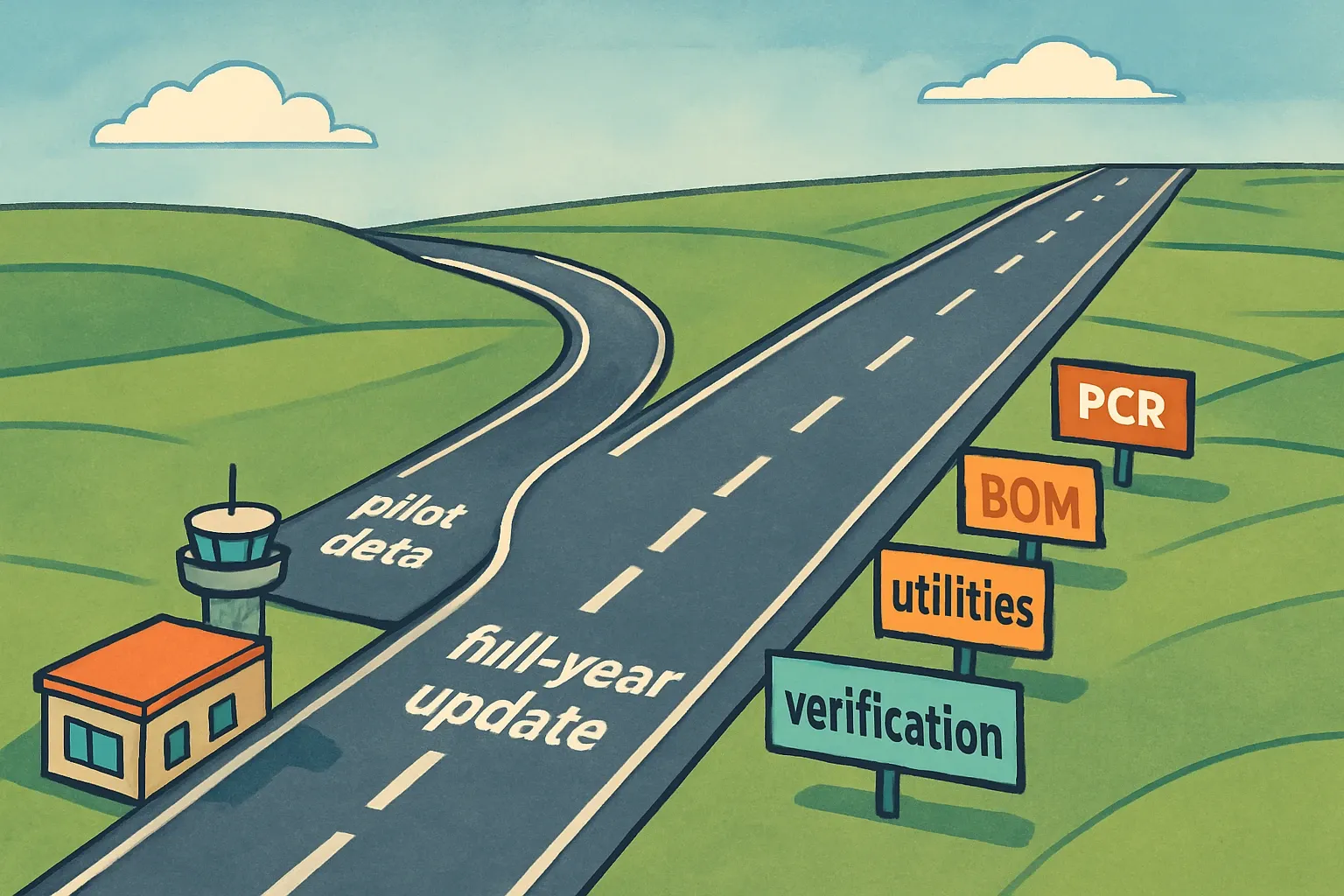
Document your grouping logic in the background report, show how variation was tested, and note any site list if production spans locations. Line up reference‑year data early, then hold it steady so verification goes fast. A good LCA partner will take on the data wrangling so engineering stays focused, that is how timelines stay short and quality stays high.
Bottom line
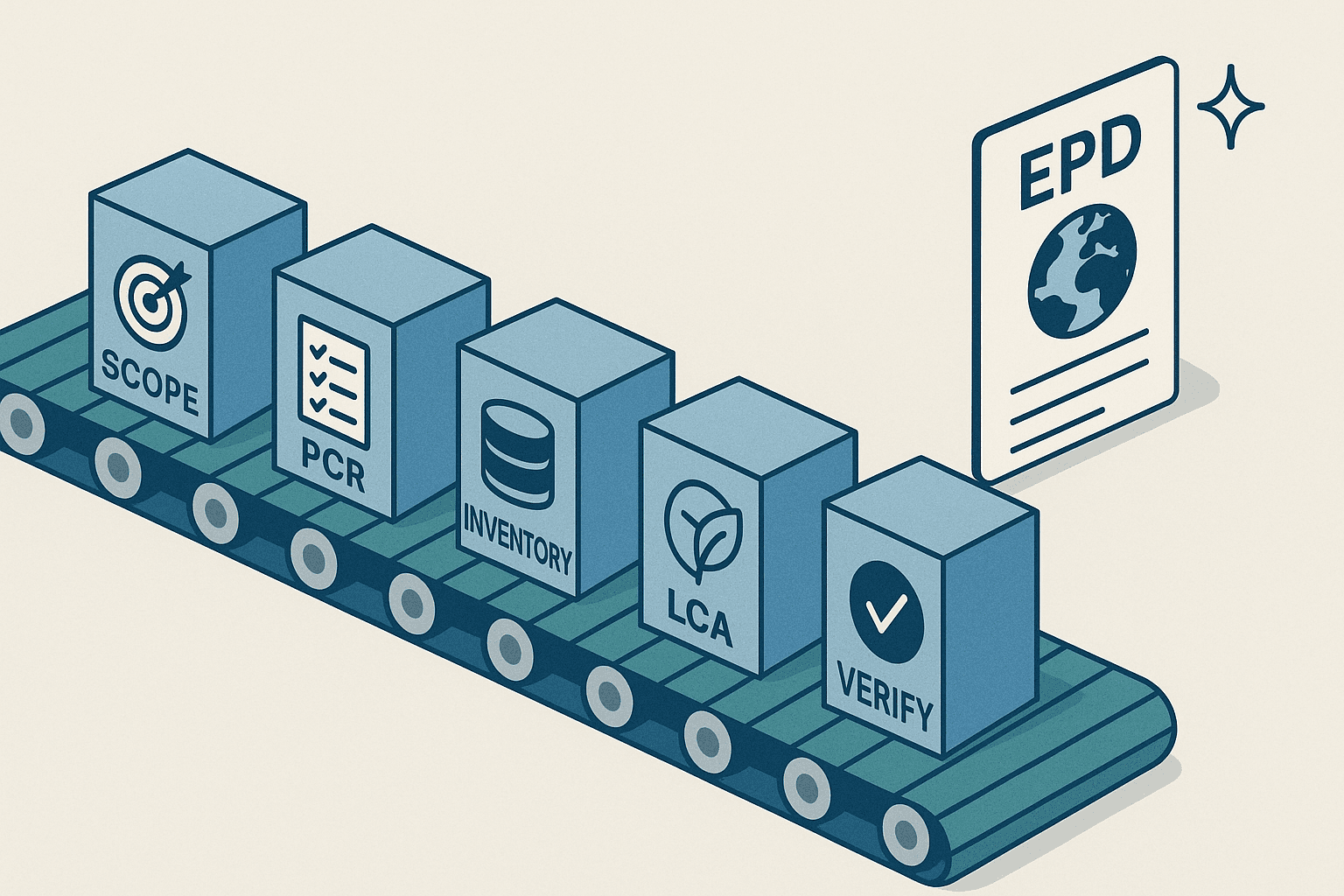
Start narrow, prove similarity, and let the numbers decide. One strong family EPD can carry a portfolio, and a few surgical splits handle the real outliers. Do that and the EPD program becomes a calm conveyor belt, not a game of whack‑a‑mole. It definately saves time and keeps specs moving.