Why a 90‑day EPD is realistic
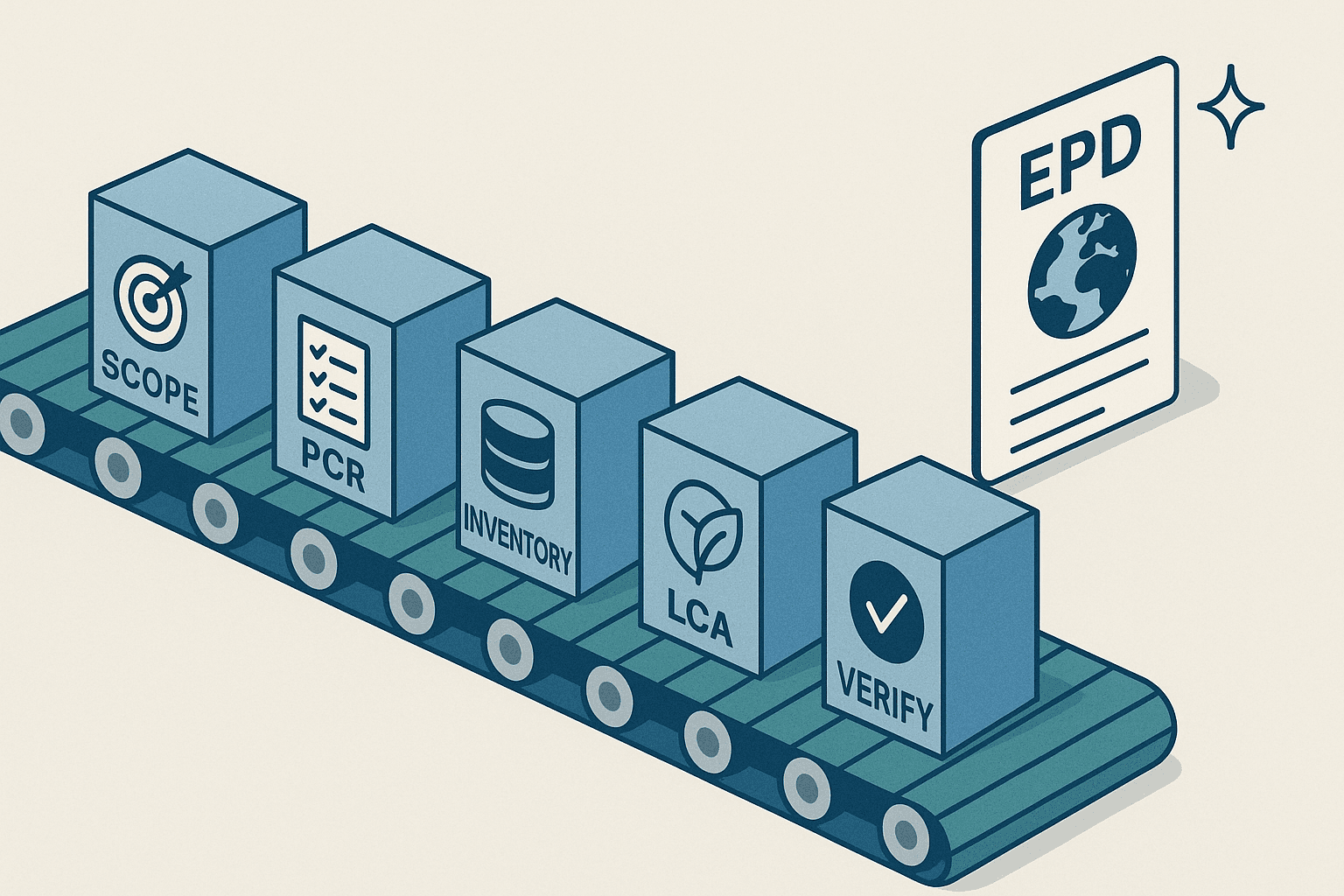
A product EPD is a finite project. The scope is defined by a PCR, the data comes from a specific reference year, and the verification follows a known checklist. When responsibilities and program operator are set on day one, the calendar becomes predictable and the workstream moves like a production line.
Kickoff: who attends and what they bring
Invite product management, plant or operations leads, procurement, sustainability, quality, and a finance contact for volume checks. One focused meeting aligns goals, the PCR candidate list, and the reference year. Come ready with the basics so momentum starts immediately.
Typical starter documents
- Plant utility summaries and metering details for the reference year
- Production volumes by SKU or family and yield or scrap rates
- Bills of materials with supplier names, locations, and transport modes
- Waste streams with handling routes and recycling rates
- Packaging specs, palletization, and shipment profiles
The data map: primary, public, proxy
Primary data covers what happens inside the gate. Utilities, throughput, scrap, and internal transports. Public datasets fill the background. Think grid emission factors, upstream materials, and standard end‑of‑life scenarios from recognized libraries. Proxies bridge gaps where suppliers cannot provide specifics. Good practice is to document every proxy and set a plan to replace it on renewal so the model keeps getting sharper.
The 90‑day plan at a glance
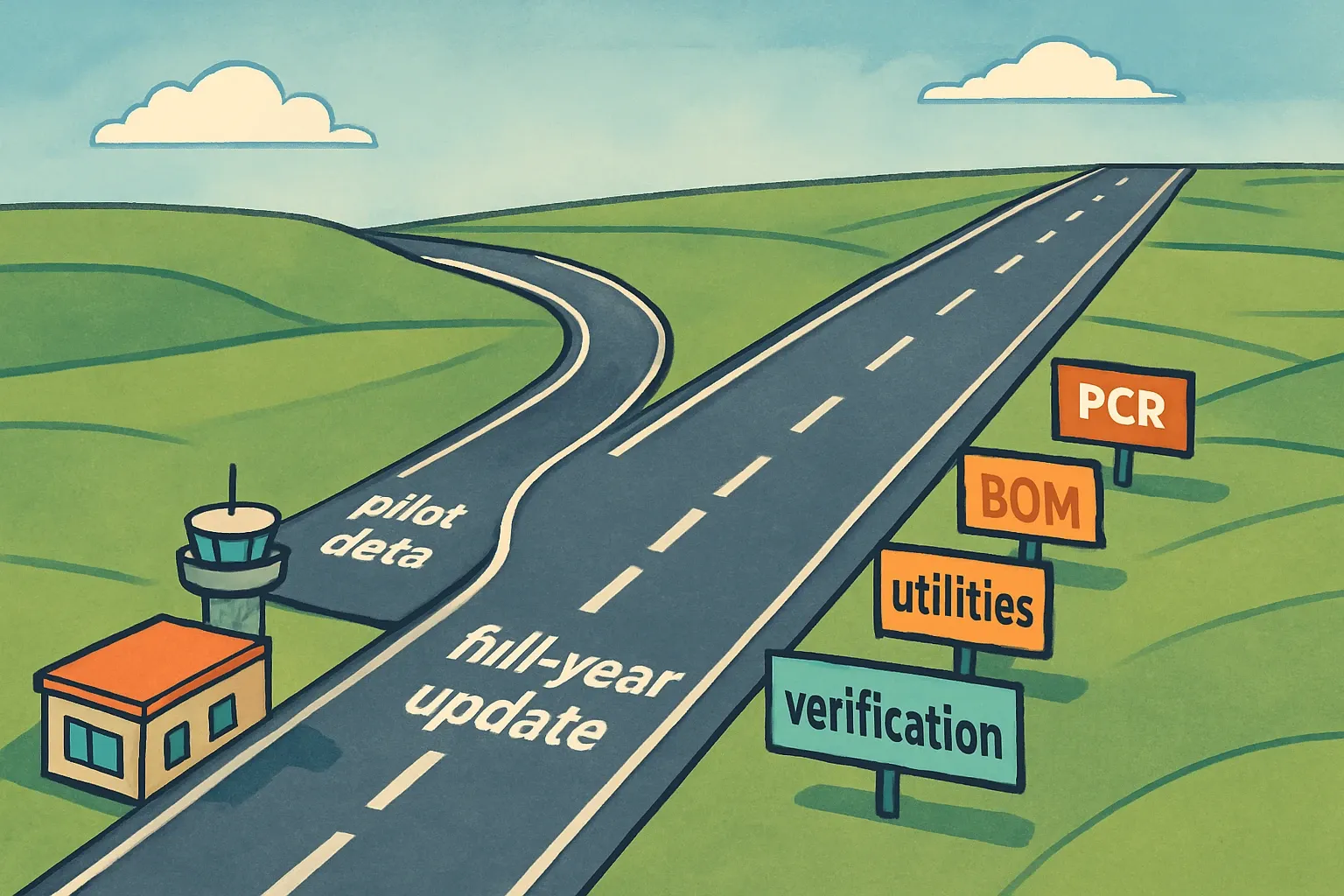
- Days 0 to 10. Kickoff, PCR screening, reference year lock, program operator shortlist, data template issued, and secure workspace opened.
- Days 11 to 30. Data pull and QA. Close gaps with supplier requests, define transport routes, and freeze functional unit and declared unit language.
- Days 21 to 45. LCA modeling. Build the foreground model, link to background datasets, run sensitivity checks, and identify hotspots that may need a process note.
- Days 46 to 60. Draft EPD and internal review. Confirm product descriptions, system boundaries, scenarios, and disclosures. Align any marketing claims with verifier expectations.
- Days 61 to 75. Submission pack. Finalize the LCA report, EPD draft, and supporting evidence for third‑party review. Respond to early questions quickly to avoid stalls.
- Days 76 to 90. Verification, final fixes, approval, and publication in the operator’s portal and PDF library.
Modeling that sticks
Model once, use often. A clean, modular foreground model lets teams update volumes or energy mixes without rework. Document cut‑off rules, allocation choices, and data quality ratings in the LCA report so the verifier sees a consistent logic. Treat the EPD text as a user‑friendly window into the same model, not a seperate artifact.
What the third‑party verifier checks
Verifiers test conformance to the selected PCR and governing standards, then dive into the math. Expect scrutiny on declared unit, system boundaries, allocation methods, data quality scoring, cut‑off criteria, and scenario assumptions for installation, use, and end‑of‑life. They also spot red flags like unexplained step changes in energy or unusually low transport distances. Clear evidence beats creative prose every time.
Picking a program operator without drama
Select an operator that aligns with target markets and buyer expectations. In the United States, many teams publish through Smart EPD. In Europe, IBU is common for EN 15804. The operator’s job is to host the review, apply program rules, and publish the final record as both PDF and machine‑readable data. Good partners are operator‑agnostic, which keeps options open and timelines steady.
Automation that actually reduces effort
The slowest part of most EPDs is chasing data. An automated workflow with white‑glove data collection flips that math. Prebuilt plant templates, supplier outreach kits, secure data rooms, and QA rules make the hardest steps feel routine. We prioritize the time of operators, product owners, and R&D so they stay focused on production and product changes while the heavy data lifting happens in the background.
Plan for publication and renewal
Major operators set EPD validity at five years, which means publication day also starts the renewal clock (IBU, 2024) (IBU EPD Creation, 2024). Updates to a program’s rules do not void already published EPDs. They remain valid under the PCR and program version used at verification, then move to the latest rules at renewal (EPD International GPI, 2025) (EPD International GPI, 2025). PCRs themselves carry expiry dates. For example, the International EPD System’s core construction PCR 2019:14 version 2.0.1 is valid until April 7, 2030, which guides comparability expectations in many markets (EPD International PCR 2019:14, 2025) (PCR 2019:14, 2025).
Keep sales in the loop from week one
Specification teams prefer products with verified EPDs because it avoids penalty factors in carbon accounting on many projects. A live 90‑day plan gives sales permission to pursue opportunities they might otherwise hold back on. That confidence is often the difference between being considered and being quietly swapped for a competitor with a declaration already in hand.