Start where projects bundle products
Owners and GCs award packages that behave like playlists. Walls come with doors and hardware, roof assemblies come with fasteners and coatings. Prioritize product families that appear together in the same submittal set so your first EPDs unlock full, usable coverage in bids rather than isolated wins that sales cannot combine.
A quick scoring model you can run this week
Keep it simple. For each family, score 0 to 5 on these inputs, then sort by total.
- Revenue at risk when an EPD is missing
- Frequency in real bid packages and specifications
- Alignment with rating systems and public buyer requirements
- Overlap in bills of materials with other families
- Ease of replication once the first declaration is verified
If two lines tie, pick the one that completes an obvious system. We like models that fit on one page because they actually get used.
Follow the rulebook your market already trusts
A PCR is the rulebook of Monopoly. Ignore it and the game falls apart. Check which PCR competitors cite and which program operator your market prefers, then mirror that choice unless there is a strong reason not to. EPDs are typically valid for five years, which makes the PCR horizon and your renewal plan a package deal (EPD International, 2025, IBU, 2026).
Cover the anchor, then roll up siblings
Publish an EPD for the highest volume configuration first, the anchor. Next, extend to close siblings that share the same background report and most unit processes. This is where smart modeling pays off because many SKUs differ by dimensions, finishes, or minor hardware. One strong backbone model can support a family without redoing every calculation from scratch.
Map to real submittals, not catalog logic
Catalogs are built by product teams. Submittals are built by estimators. Build a simple matrix of the top ten submittal packages you target and the product families that appear in each. Your first wave should complete the most common packages so sales can walk into a meeting and say yes to the whole ask, not just one item.
Use BoM overlap to multiply impact
Families that share raw materials, lines, and utilities compress the data effort. If three coatings run on the same line with the same solvents and cure cycle, lifting data for one lifts all three. The same logic applies to doors that share cores or frames that share steel sections. This is free leverage, take it.
Plan around validity and operator timelines
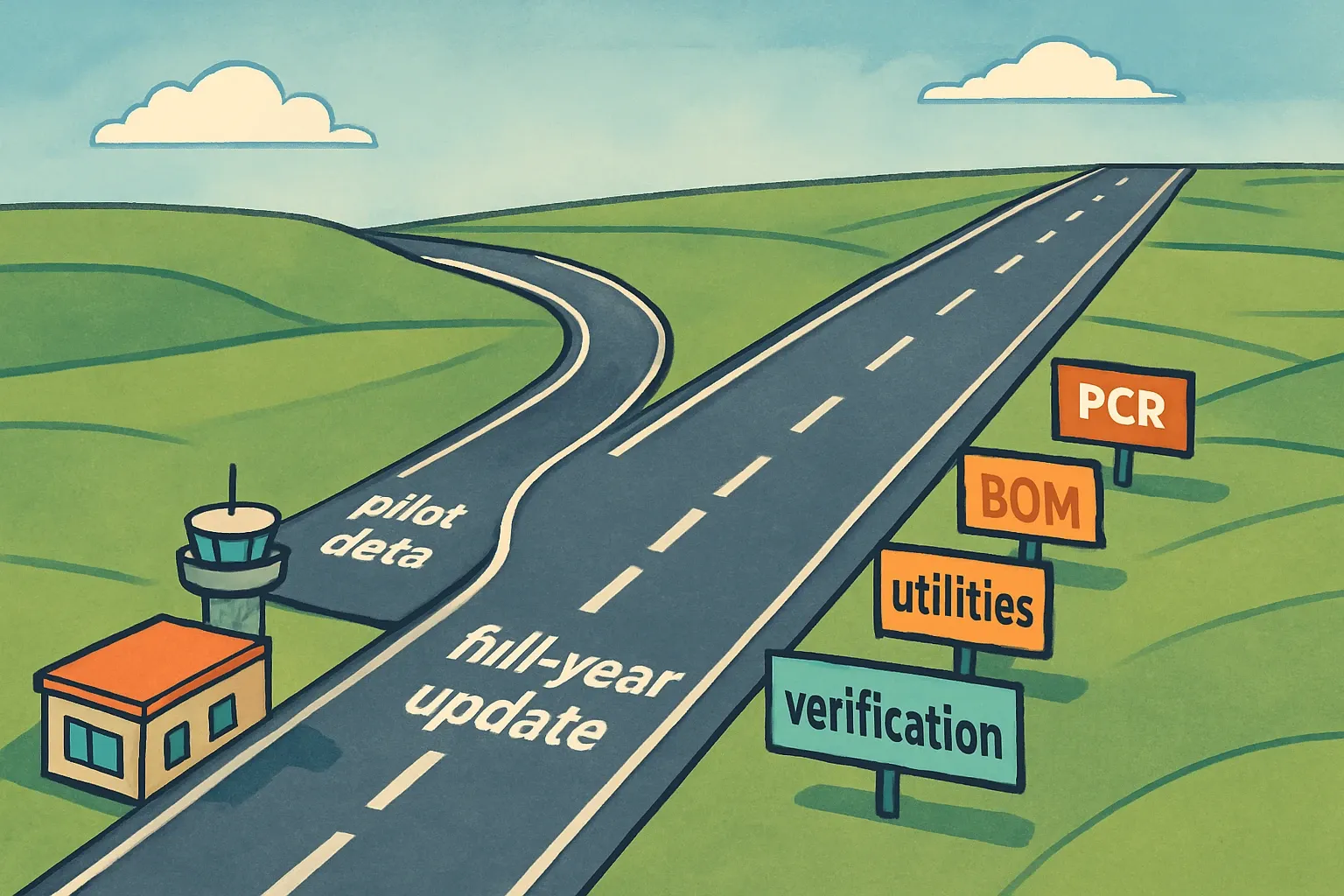
Two dates shape momentum. EPDs generally carry a five year validity window, so stagger launches so renewals do not pile up in a single quarter (IBU, 2026). Operator queues can also stretch during PCR transitions, with publication windows extended up to 10 working days, so lock verifier time early and assume a little slack when timing a launch to a bid week (EPD International, 2025).
Read the room on LEED v5 and public buyers
LEED v5 was ratified on March 28, 2025 and raises the emphasis on decarbonization, while still recognizing third party verified, product specific EPDs in material documentation. That keeps pressure on current declarations for assemblies that move the score or de‑risk embodied carbon requirements (USGBC, 2025). If your pipeline includes state or municipal projects, expect EPD requests to persist even as federal incentives shift.
A 90 day sprint that actually ships
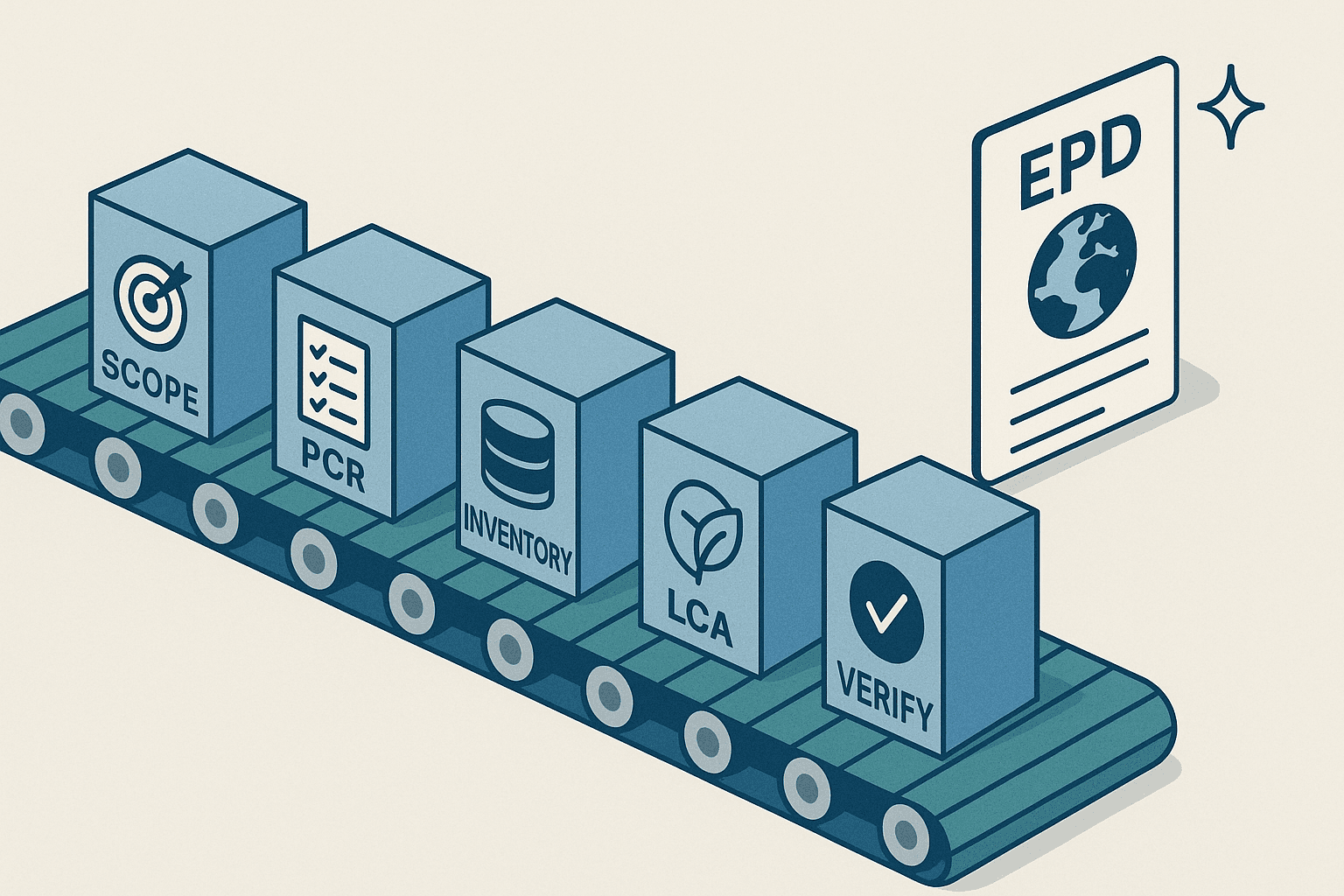
Week 1 to 2, run the scoring model and lock the first two families. Week 3 to 5, complete data pulls for the shared processes and the anchor SKU. Week 6 to 8, modeling and internal review. Week 9 to 10, verification, fix findings fast. Week 11 to 12, publication and sales enablement. It is not fancy, it is focussed, and it gets your team a credible win.
Progress that sales can use
Good EPD planning looks like coverage where people buy, not a scatter of PDFs. When the first declarations complete a real system, estimators stop hesitating, reps stop skipping carbon‑focused projects, and product managers stop firefighting last minute submittals. Ship the anchor, extend to siblings, and keep an eye on the five year timer. It is definately the calmest path to visible progress.