The clock you plan around
EPDs usually carry a five‑year validity. That window starts at publication and is worth protecting when a move is on the calendar (IBU, 2025) (IBU, 2025). Verification itself often takes several weeks, not days, so build that into the migration plan (IBU, 2025) (IBU, 2025).
What “representative” data really means
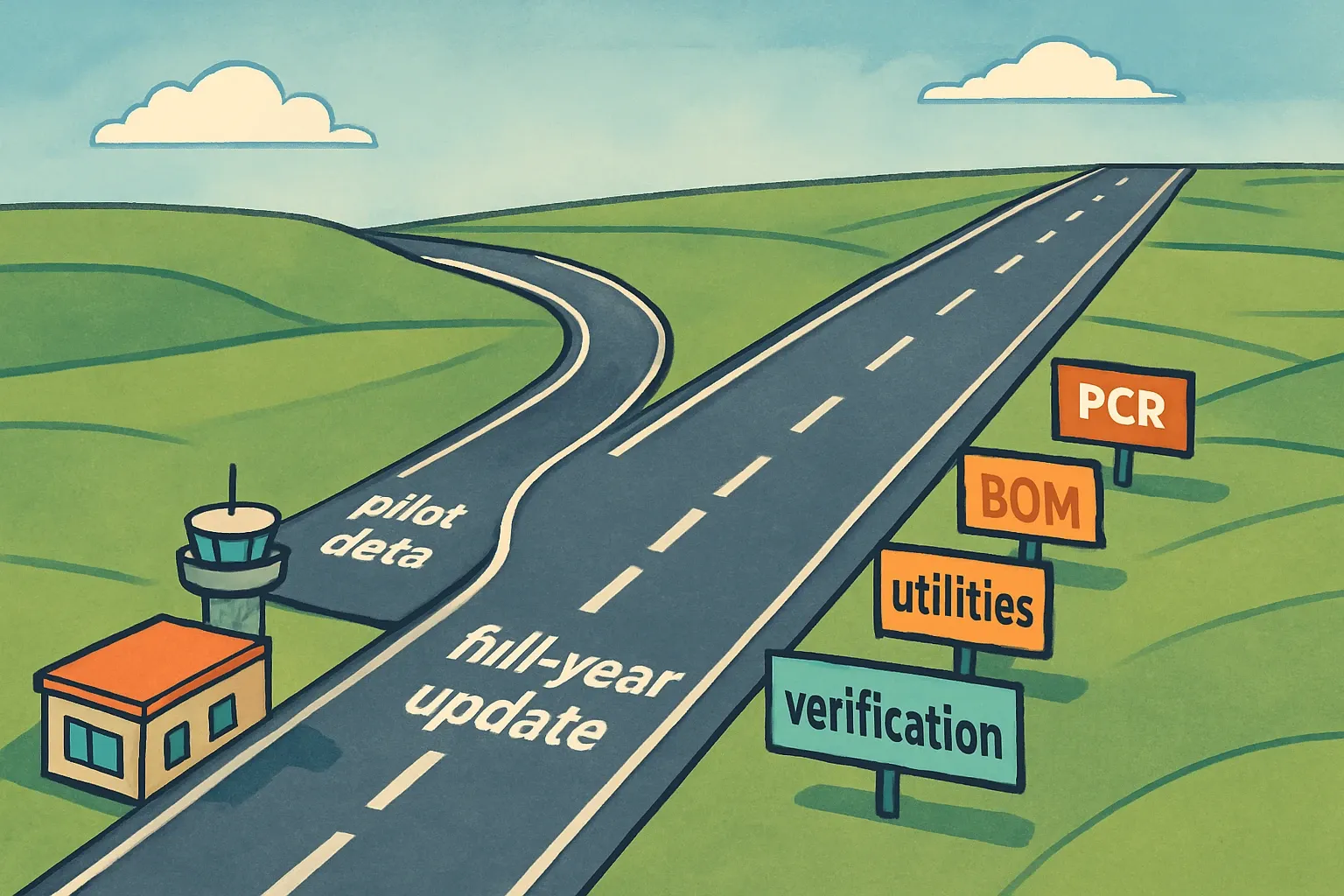
Standards and PCRs expect roughly twelve months of site‑representative production data for a standard EPD. New lines can use a shorter initial period if rules allow, but the declaration must be updated once a full year is available (EN 15804+A2, 2019).
Three viable paths during consolidation
- Publish on legacy sites now, then refresh post‑move. Keeps sales eligible for EPD‑gated specs while the new facility ramps.
- Issue a prospective declaration for the new plant, then update after twelve months. Useful when the market needs the new address on the cover page.
- Wait for a full production year. Cleanest technically, riskiest commercially if bids require an EPD this quarter.
Ramp‑up noise without publishing junk
New plants run through tuning phases that spike scrap, rework, and utilities. Programs require updates when indicators worsen by 10 percent or more, or when there is a substantial change such as a new manufacturing site. That trigger applies even inside the normal validity window (EPD International, 2025) (EPD International, 2025). Use guardrails: metered energy at the line, clear allocation rules, and freeze the reference year once the process stabilizes.
One product family at a time
If lines migrate in waves, phase EPDs accordingly. Many programs allow multi‑site EPDs when processes and recipes are demonstrably similar. If the new facility changes energy mix or yield, publish a plant‑specific update for that family instead of waiting for the whole portfolio.
A simple sequencing playbook
- Freeze a clean twelve‑month dataset at the legacy site for any product that will keep shipping for six months or more.
- For moved lines, start a prospective model the day the first saleable units leave the new plant. Label assumptions and data coverage clearly so the verifier can track deltas.
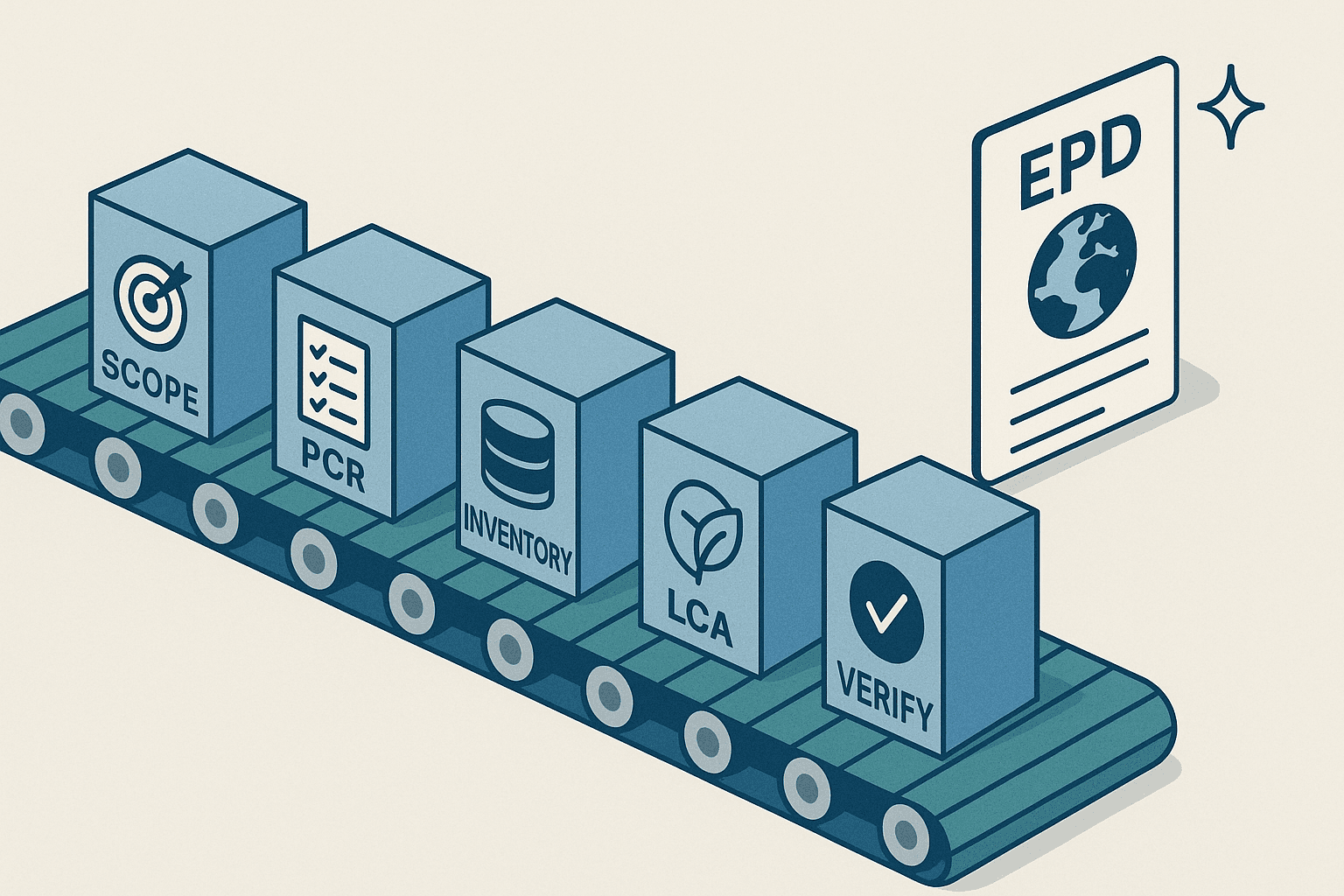
- Lock verification slots early. Treat publication dates like launch gates, not “whenever” tasks (IBU, 2025) (IBU, 2025).
- Monitor quarterly. If any indicator drifts past the 10 percent threshold, plan an in‑term update rather than waiting for renewal (EPD International, 2025) (EPD International, 2025).
Cost control without cutting corners
The expense of an extra verification is real, but losing EPD‑required bids is pricier. Most owners will accept a current, verified declaration during ramp‑up and do not discount it solely because it was based on legacy operations. Aim for clarity that lets project LCAs use your numbers without penalties.
When to flip the switch to the new site
Change the declared plant once volumes, utilities, and waste rates are steady enough that a twelve‑month average will not swing wildly next quarter. If procurement or energy contracts are still in flux, hold the publication and keep the legacy EPD live to avoid a gap. It is ok to be pragmatic here, just document everything for the verifier.
The takeaway for teams mid‑move
Publish to stay eligible, measure to know when stability arrives, and update with discipline. That rhythm keeps specifications moving while the factory finds its stride. It is definately possible to avoid paying twice for the same story when the sequence is thought through up front.