What actually lives on the EPD timeline
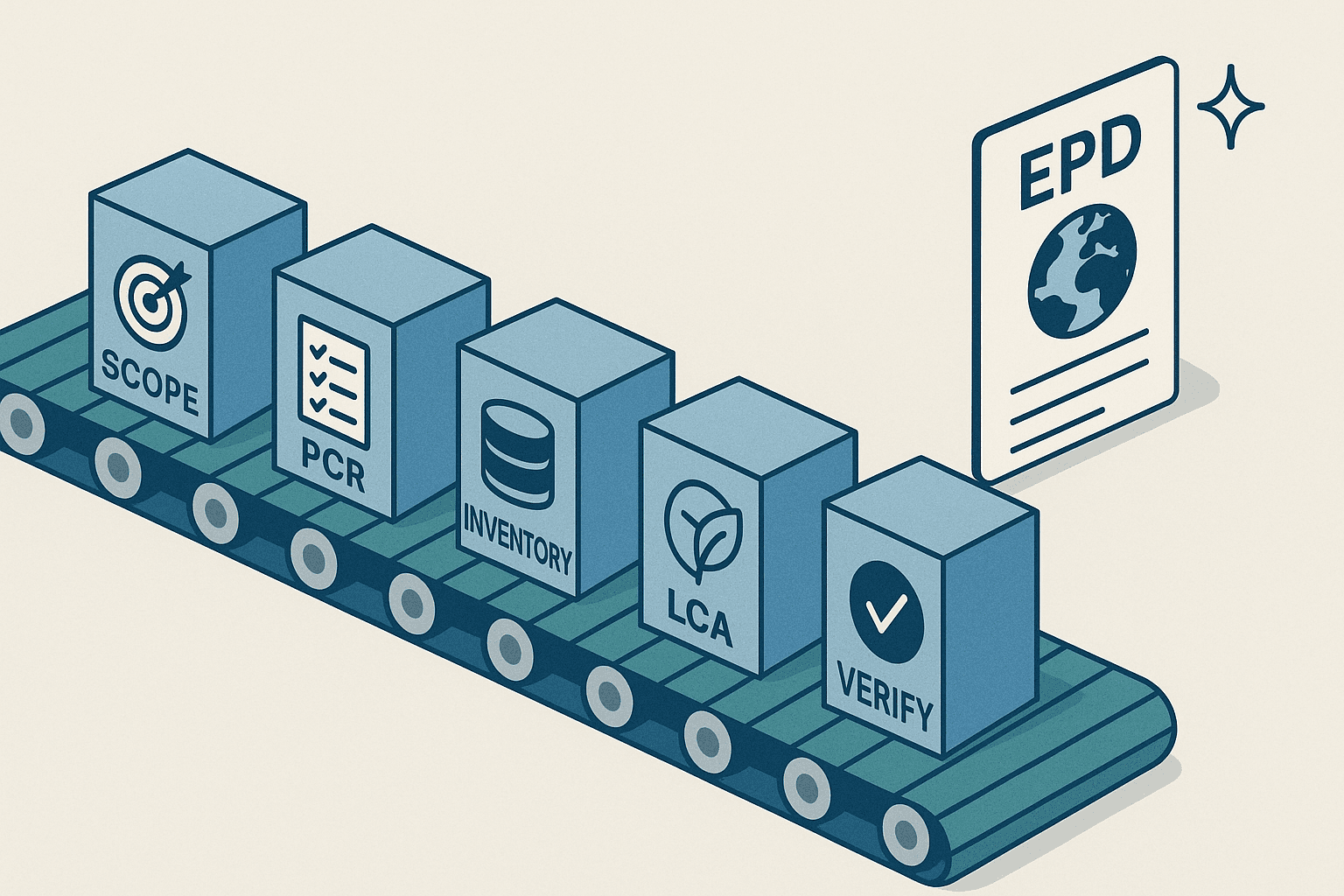
An EPD timeline starts with scoping against the right Product Category Rules and ends when the program operator publishes your declaration. In between sit data collection, LCA modeling, independent verification, and operator checks. Hit each gate cleanly and the rest of your go‑to‑market plan stops wobbling.
The five stages, at a glance
- Scope and PCR fit check.
- Data collection for a defined reference year and facilities.
- LCA modeling and EPD drafting to ISO 14025 and EN 15804.
- Independent verification by an approved verifier.
- Program operator review and publication to their registry.
How long does each stage take
Durations vary with product complexity, data quality, and verifier capacity. Program operators note that verification alone should be planned for several weeks, especially when corrections are needed (IBU, 2025). Treat calendars, not wishlists, as your source of truth.
When the clock starts and when it stops
Validity is tied to the publication process, not when you gathered data. Most EPDs are valid for five years from verification and publication steps, with that validity date printed on the EPD itself (IBU, 2025). Environdec also clarifies that when their rules update, already‑published EPDs retain the original validity during the transition period (EPD International GPI, 2024).
Want to streamline your EPD timeline?
Follow us on LinkedIn for practical insights to accelerate your EPD process and win more projects.
PCRs: the rulebook that updates midseason
PCRs set the methods and scope your LCA must follow. Most PCRs are written on a five‑year cycle before review or renewal, so mid‑project changes can happen (UL Solutions, 2025). If a PCR sunsets during your project, your in‑progress EPD typically stays aligned to the valid version you used, and new editions apply at your next renewal (EPD International GPI, 2024).
Program operator differences that influence timelines
Operator policies can shift cadence. CARES, for example, limits validity to three years to force more frequent performance checks, even though EN 15804 allows five years (CARES, 2025). Environdec has also confirmed EPD Process Certification can now run on a five‑year cycle with annual audits, which can streamline repeat publications for organizations that qualify (EPD International, 2025). Read the fine print early so you do not discover a surprise gate at the end.
Data windows and “prospective” starts
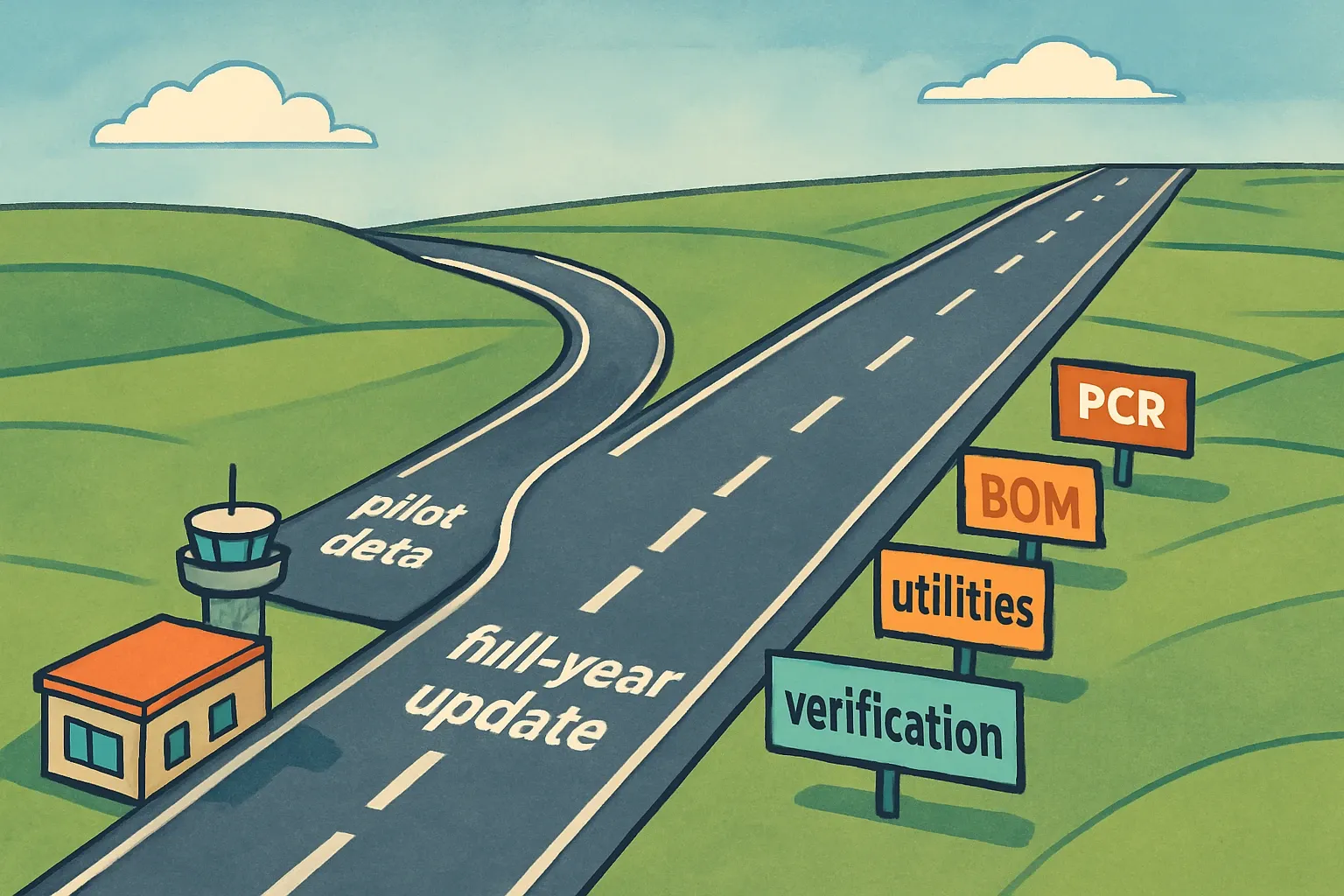
Most manufacturers use a full recent calendar year for utilities, volumes, and waste. New or ramping products sometimes begin with a shorter operational window, then refresh once a full year is available. Operator acceptance varies, so confirm expectations at kickoff and document assumptions clearly.
Capacity crunch is real
Several operators have flagged tight verifier supply as EPD volumes rise. IBU publicly cites a limited number of qualified verifiers and recent increases in external verification costs of about forty percent, a signal that queues can form when demand spikes (IBU, 2025). Book verification early and keep your background report audit‑ready to avoid rework loops.
Portfolio planning beats one‑off heroics
Map every product family against PCR renewal cycles, facility changes, and your commercial calendar. Treat renewals as an annual operating rhythm instead of a rescue mission in the last quarter. Older EPDs still work within their validity window, yet expiring in the near term invites risk on time‑sensitive specs.
Practical ways to accelerate without cutting corners
Tighten BOM accuracy and supplier inputs before modeling begins. Align electricity data to utility bills and metering records. Pre‑brief the verifier on any unusual allocation choices or cut‑off rules so feedback arrives once, not in fragments. Keep version control on datasets so corrections do not ripple across products. It sounds basic, but it is definately where most delays start.
Where LEED v5 fits on your schedule
LEED v5 was ratified by USGBC members in 2025, with stronger attention on embodied carbon across materials. Product‑specific Type III EPDs remain a dependable way to contribute to materials credits, so earlier publication preserves optionality for project teams working on tight design windows (USGBC, 2025).
Build a timeline you can defend
Set the route, pick the rulebook, book the verifier, and keep datasets clean. The result is an EPD timeline that survives design shifts, PCR updates, and operator queues. That steadiness shows up where it counts: fewer bid surprises, faster submittals, and a portfolio that stays spec‑ready.