What “registration” really means
Registration is the finish line after the LCA and third‑party verification steps. Your Environmental Product Declaration is accepted by a program operator, assigned an ID, published in its library, and becomes citable in specs and submittals. In short, it is the official go‑live moment, not just a PDF living on a website.
EPD registration happens with program operators that run recognized schemes under ISO 14025 and EN 15804, then those entries are often mirrored in national data hubs used by modelers and buyers.
Where EPDs get registered and found
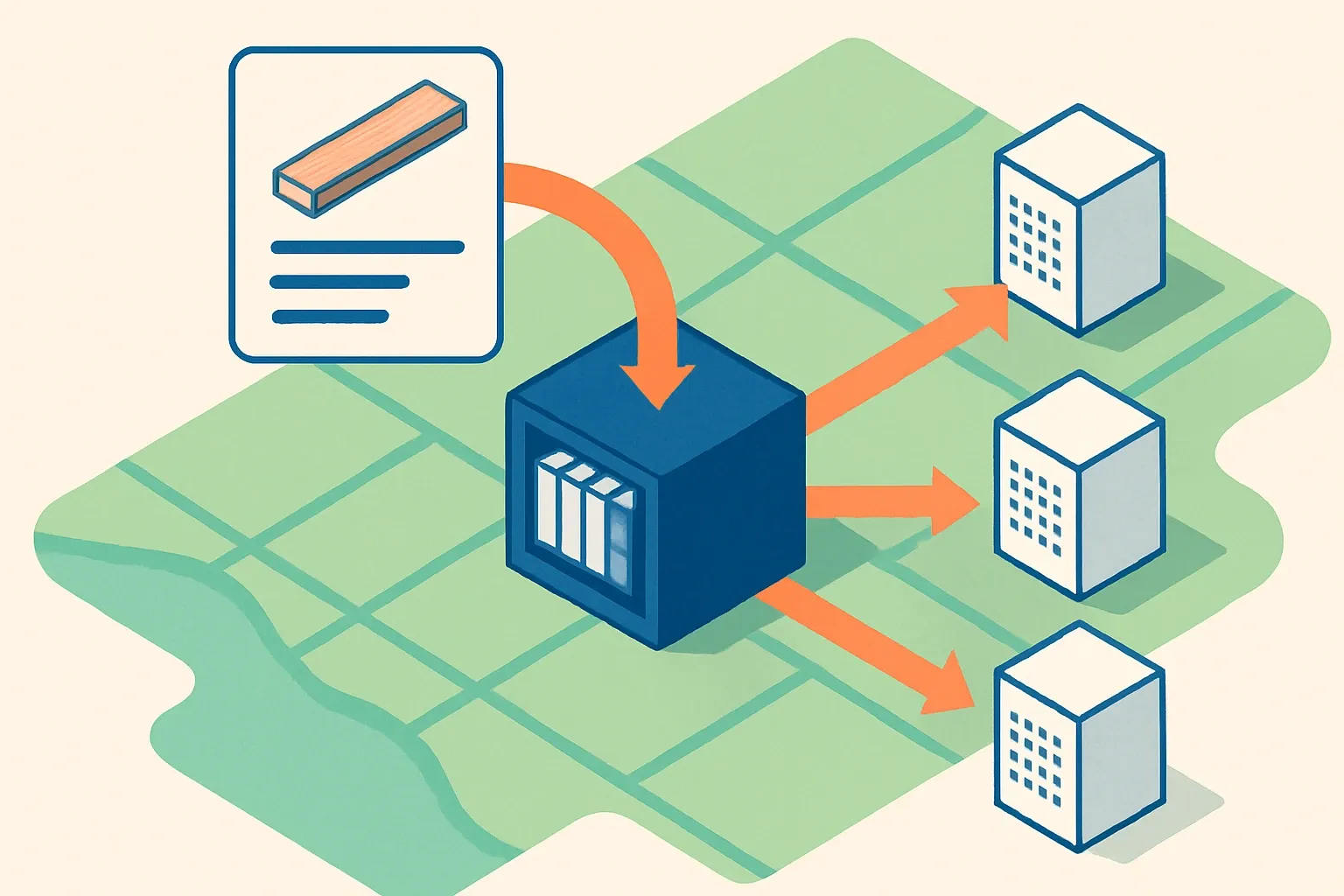
Think of two layers. First, program operators such as the International EPD System, IBU, UL Solutions and others. Second, national or regional data hubs that downstream users rely on. For example, the International EPD System reported more than 10,000 valid EPDs by September 2024 (EPD International, 2024). In France, INIES listed 5,432 FDES and 1,789 PEP on December 9, 2025 (INIES, 2025) (INIES, 2025). Those hubs are where building LCA tools and specifiers actually pull data.
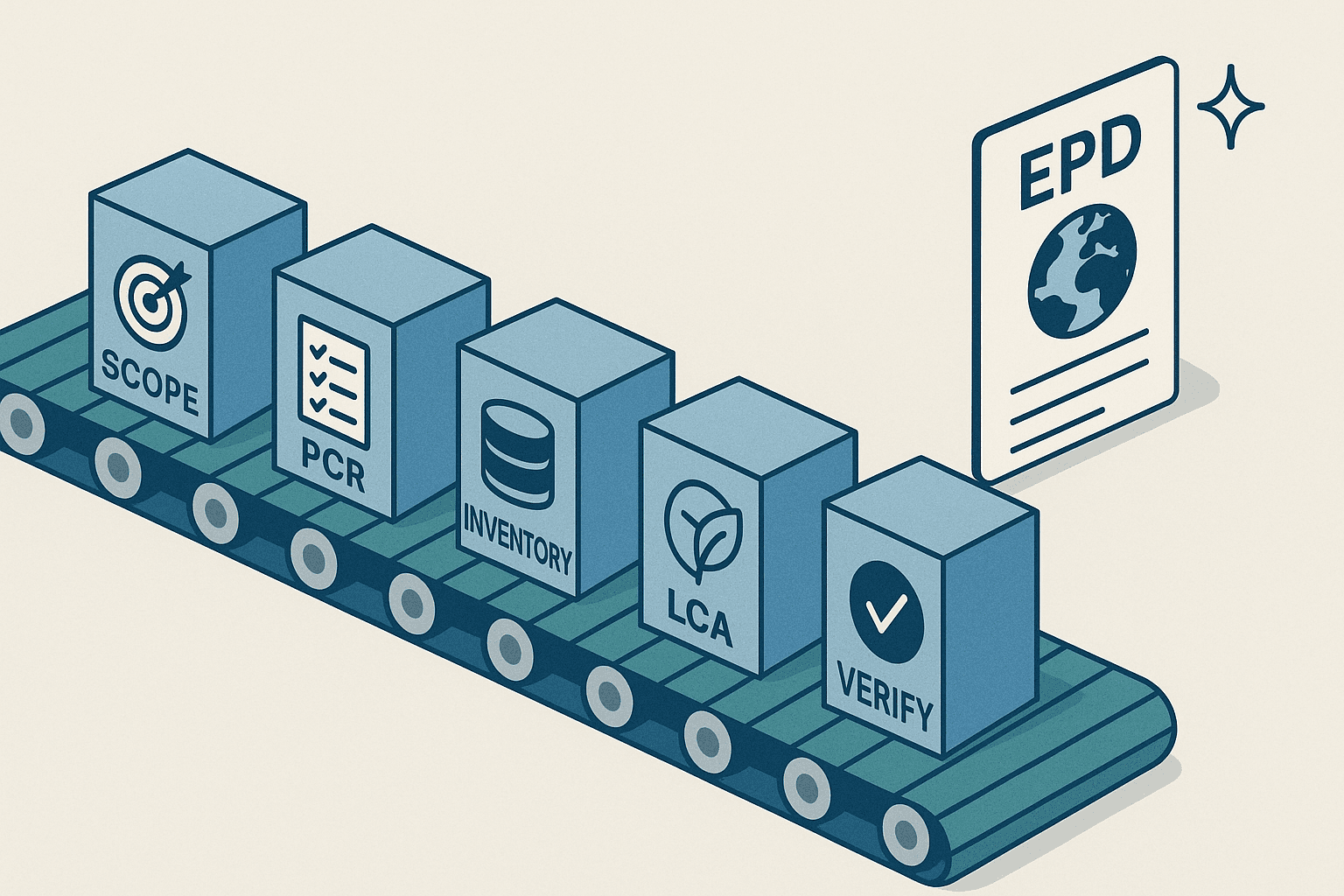
The core steps to registered status
- Select the governing PCR and goal scope.
- Collect a clean reference year of plant data, supplier data, and QA records.
- Build the LCA model to the chosen PCR and standard.
- Draft the EPD, then send EPD and background report to an independent verifier.
- Address comments, obtain the verification report, and submit for program approval.
- Register and publish, then list in any required national hubs.
A PCR is the rulebook. Under the International EPD System, PCRs are typically valid three to five years, with four years as the default to ensure periodic updates (EPD International, 2025).
Timelines and bottlenecks
Verification alone often requires several weeks depending on complexity and data quality, which is why the intake process matters so much (IBU, 2025). Calender time shrinks when data collection is white‑glove and organized against the PCR from day one. Program operator queues can add days, sometimes longer around year‑end.
Want to master EPD registration in your next bid?
Follow us on LinkedIn for insights that streamline your EPD process and boost your project specifications.
Picking the right PCR and operator
Most manufacturers use an existing PCR to stay comparable with competitors. When options exist, consider alignment with target markets, operator recognition among specifiers, and upcoming PCR sunsets. The International EPD System updated its main Construction Products PCR in 2025, with transition timing communicated to maintain continuity for new registrations (EPD International, 2024). If Europe is key, ensure EN 15804+A2 alignment and, when relevant, ECO Platform acceptance. If France is core, plan for INIES listing rules tied to RE2020 formats, since that is where practitioners source product data at scale (INIES, 2025).
Fees and budgeting without the guesswork
Fees vary by operator, verification route, and whether you publish a family, plant‑specific, or tool‑generated set of EPDs. A public marker for context only is IBU’s verification fee adjustment to €2,700 effective September 1, 2025, reflecting market‑wide verifier scarcity and workload (IBU, 2025). Treat that as an external fee benchmark, not a total project cost.
Digital EPDs are here
The shift from static PDFs to machine‑readable EPDs is underway. The International EPD System reported 62 fully digital EPDs in its library by May 20, 2025, a sign that registration pipelines are modernizing and comparisons are getting faster (EPD International, 2025). Choosing partners and operators that support digital formats future‑proofs your portfolio.
Validity, updates, renewals
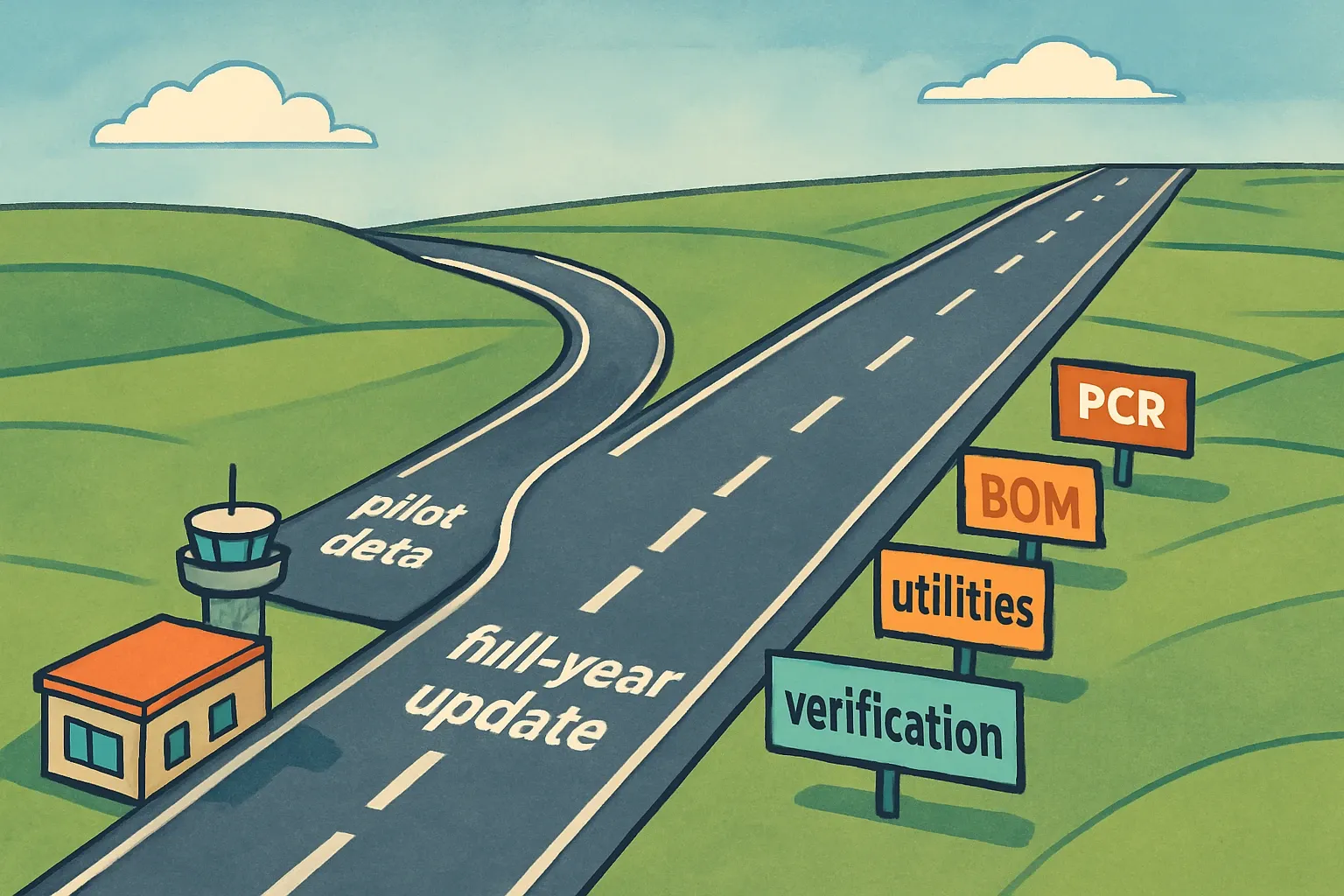
A registered EPD is typically valid for five years at operators like IBU and IES, subject to update if any indicator worsens beyond defined thresholds (IBU, 2025) (EPD International, 2025). Process‑certified setups can also be approved for five‑year certificates when annual audits are maintained, which streamlines multi‑product registration over time (EPD International, 2025). Plan a light annual check and a heavier refresh in year four so you never face a gap.
Getting listed where buyers look
After program registration, decide which national hubs matter commercially. INIES is essential for France because RE2020 workflows pull from it directly, and its inventory growth confirms strong practitioner reliance (INIES, 2025). Other regions use their own portals. The goal is simple. Put your verified data in the exact systems that project teams open during design and procurement.
Common pitfalls that slow or stall epd registration
- Mismatched PCR scope versus how the product is actually specified and sold.
- Missing documentation for electricity mixes, co‑product allocation, or scrap rates.
- Submitting a PDF that does not match the verified dataset or module coverage.
- Forgetting the national complement a registry expects in that country.
- Waiting too long to group similar SKUs under one background report when allowed by the operator.
A quick sanity check helps. Does the EPD clearly state the product definition, declared unit, system boundary, modules covered, plant, and verification details. If any of these are fuzzy, reviewers will circle back.
Why registration still pays off in 2026 planning
Even with shifting federal incentives in the United States, private owners, state Buy Clean rules, and rating tools continue to prefer product‑specific, third‑party verified EPDs, and LEED v5 keeps that emphasis. Markets that emphasize open data are expanding. EPD Australasia alone reported 431 new EPDs between August and December 2024, with construction products dominating submissions (EPD Australasia, 2024).
Make registration a repeatable habit
Build a yearly data rhythm, align to the right PCR, pick an operator with the reach you need, and publish in the hubs your buyers actually use. Do it once, then treat EPD registration like a product release cadence. The reward is less scrambling, faster bids, and fewer surprises.