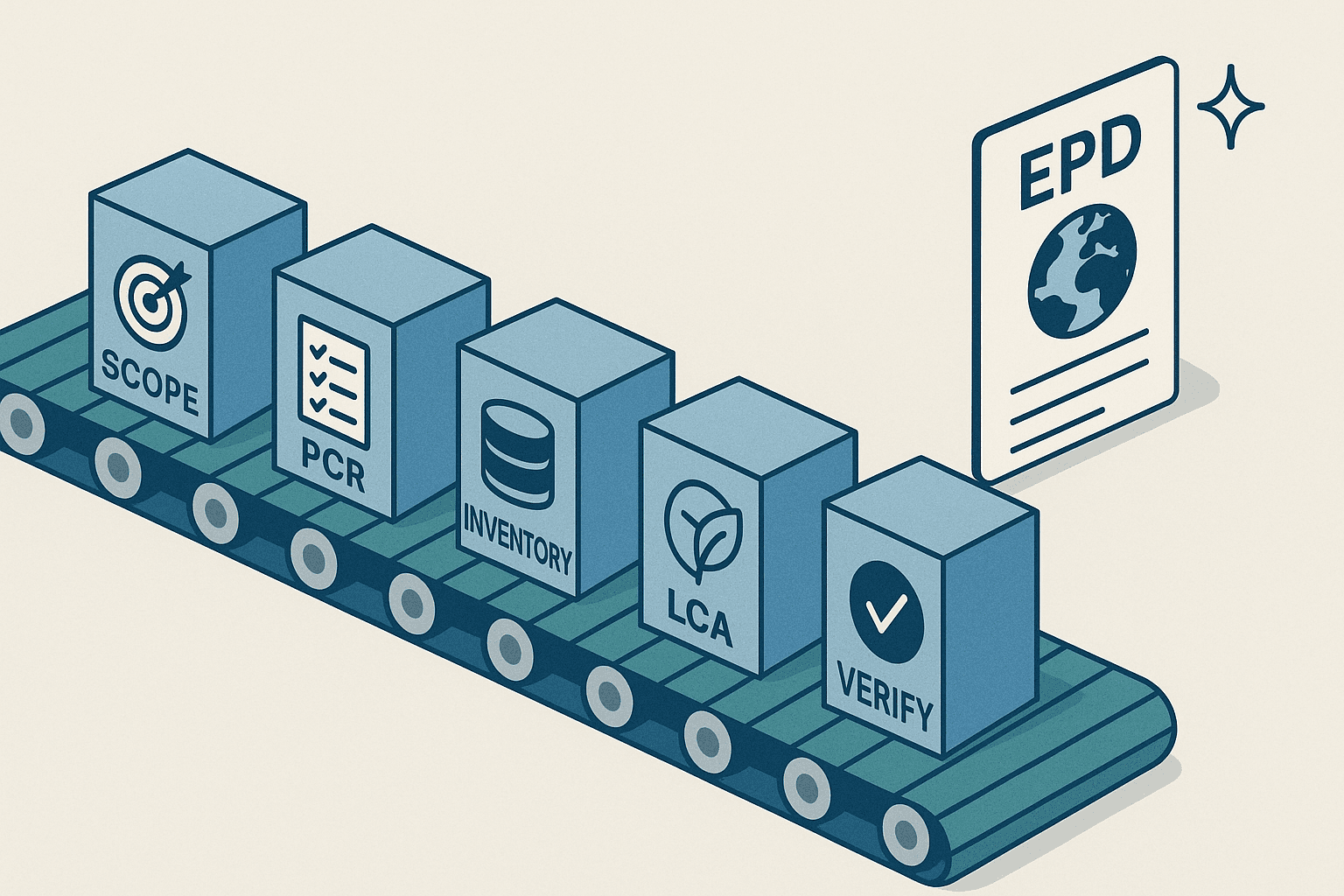
What “recertification” really means
EPD recertification is a full renewal of your declaration, verified again against the current Product Category Rules and program instructions. For construction products, program operators commonly set a five‑year validity for EPDs, which is why most teams plan around a five‑year cycle (IBU, 2024) (UL Solutions, 2025) (EPD International FAQ, 2024).
The clock you must watch
The validity runs from the publication date printed on the EPD, not from the data’s reference year. Treat it like a vehicle service interval. If publication landed in April 2021, your renewal target is April 2026 unless your operator specifies otherwise. Aim to finish early so sales cycles never cross an expiry.
PCR changes drive the rules of renewal
PCRs are the rulebooks. They often revise on five‑year cycles, and some operators publish current PCRs with explicit expiration dates you can track (UL Solutions, 2025). An expired PCR does not void your existing EPD, but your next renewal must follow the latest applicable PCR. Strategy tip: align your product line under the same PCR when practical, so one ruleset governs multiple SKUs.
Off‑cycle updates: do we need them?
Yes, sometimes. EPD International instructs owners to update during the validity period if any indicator worsens by more than 10 percent compared with the published results (EPD International FAQ, 2024) (EPD International FAQ, 2024). If your process changes push impacts upward or downward materially, plan a recalculation and re‑verification rather than waiting for the five‑year mark.
Want to keep your EPDs compliant and spec'd on projects?
Follow us on LinkedIn for strategies that ensure your certifications stay fresh and competitive.
Data expectations for recertification
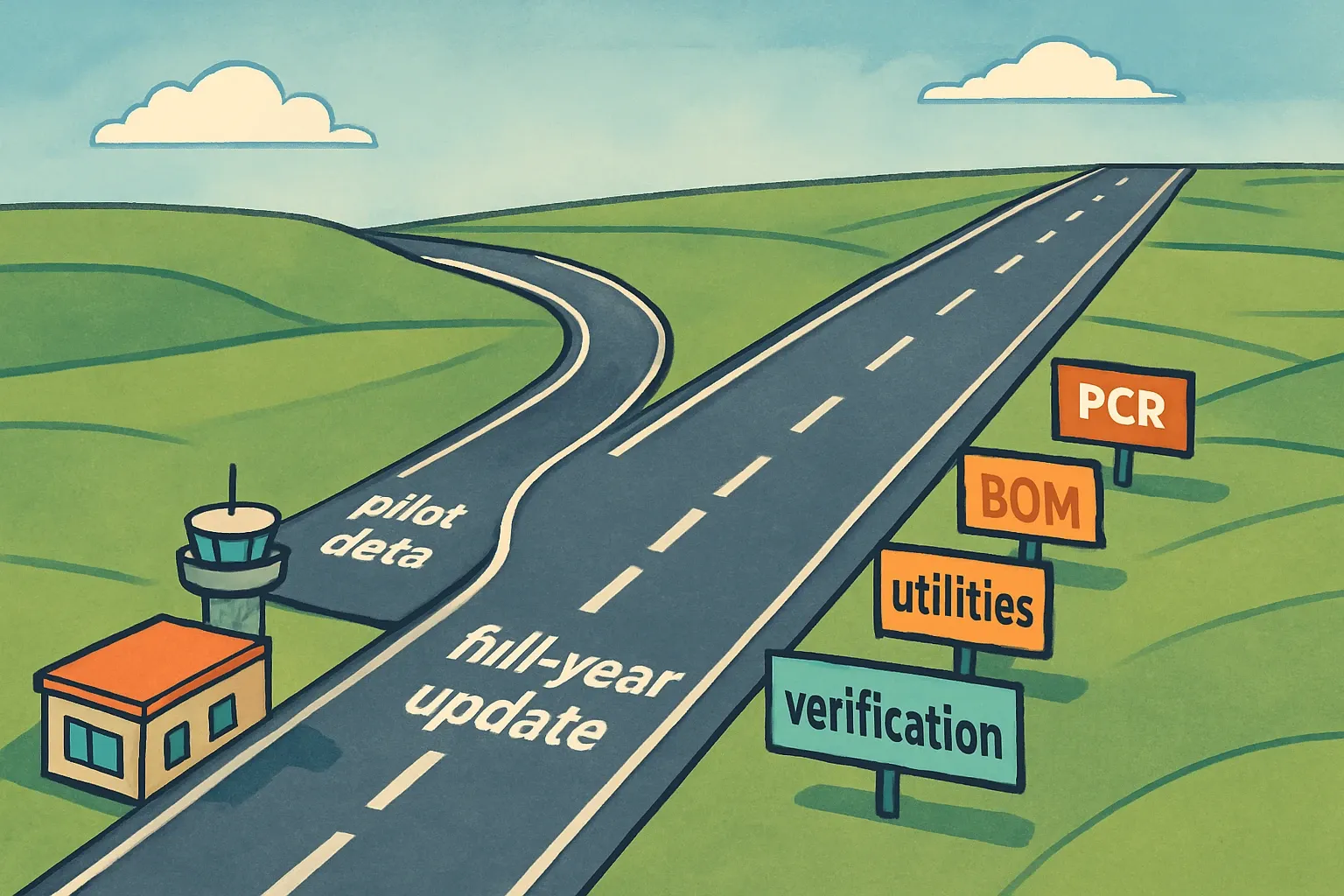
Think fresh, representative production data and transparent assumptions. Most building programs expect a full recent production year for factory inputs, utilities, waste, and outputs, documented in the background report, which mirrors common EN 15804 practice (BRE, 2025) (BRE, 2025). Keep supplier EPDs, energy contracts, and transport data organized so verification moves quickly.
Publication timelines can stretch
Day‑to‑day, operators can publish within a few days once verification clears. During big transitions, queues grow. In mid‑2025, EPD International temporarily extended publication timelines to up to 10 working days during the switch to PCR 2019:14 v2.0.0 (EPD International, 2025). Build buffer time into your plan, especially if your renewal lands near a PCR change.
What happens if the EPD expires
You can still keep the PDF online for information, but it is not usable for marketing and will fail many procurement checks until renewed (EPD International FAQ, 2024). Sales teams hate surprises. Keep a shared tracker that flags EPDs entering the renewal window.
Picking the right verification route
Whether you work with a consultant or an internal LCA team, the real time sink is data wrangling across plants and systems. Favor partners who take on collection and evidence gathering, not just modeling, and who can publish with your chosen operator in the US or EU. Speed comes from clean inputs and proactive project management more than clever spreadsheets.
A quick checklist for smooth renewal
- Confirm the governing PCR now and note its sunset date.
- Lock the reference year and start data pulls early across energy, materials, transport, and waste.
- Freeze the product bill of materials for modeling or clearly document changes.
- Run a sensitivity scan to spot >10 percent swings that may trigger an interim update.
- Align comms with sales so bids never cross a validity end date.
Stay ahead of the spec
Treat EPD recertificiation like planned maintenance. A little foresight keeps your declarations current, your teams calm, and your products in play when the shortlist forms.