What “lead time” really covers
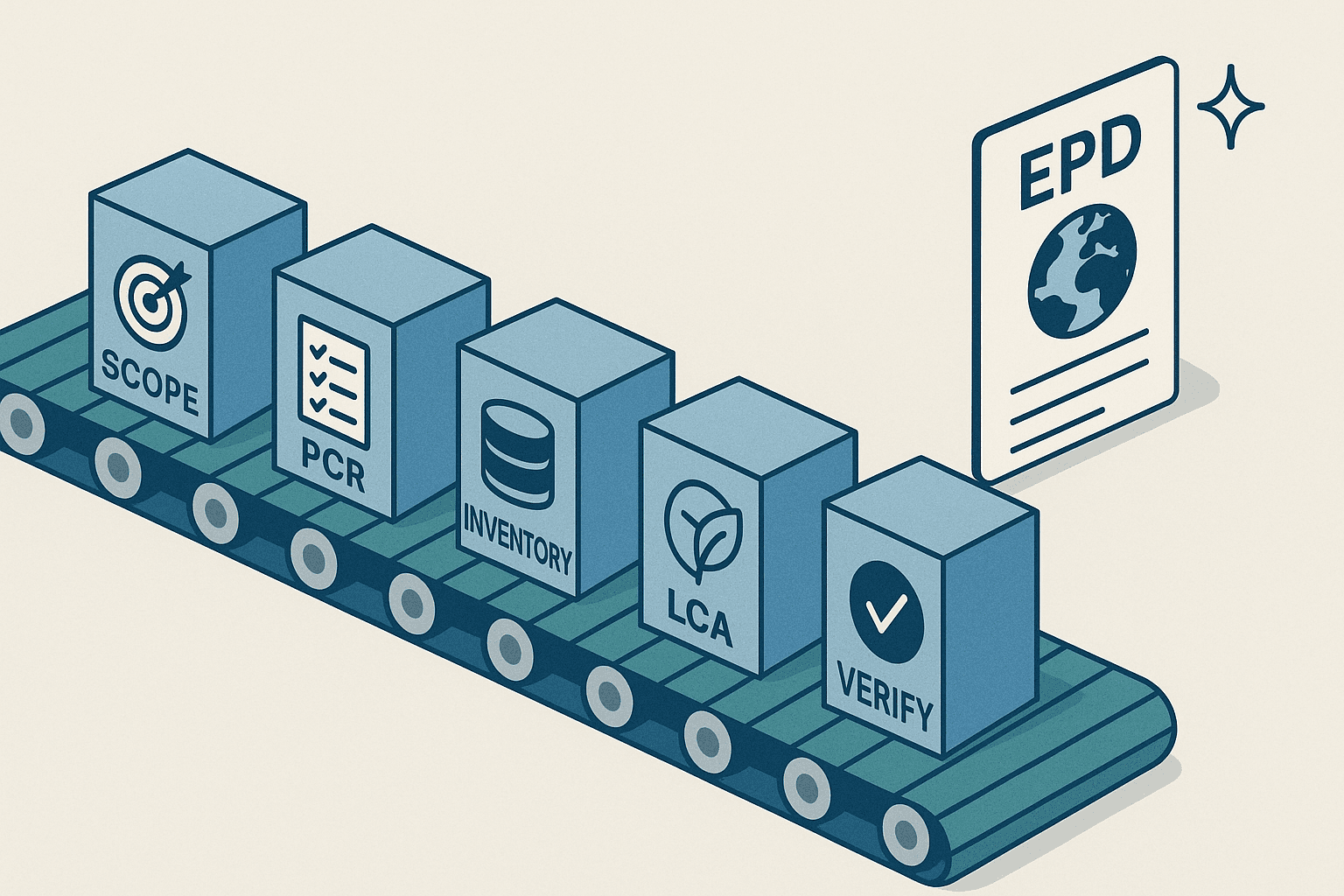
EPD lead time is the full path from scoping to a live declaration with a program operator. It spans data collection, LCA modeling, internal review, third party verification, and publication. Think of it like a relay: the baton moves fast only when each runner is ready at the line.
The big variables that add weeks
Two things dominate cycle time. First is data readiness inside the plant and ERP, especially utilities, throughput, waste, and transport. Second is decision latency across PCR selection, system boundary choices, and program operator pick. Multisite products, complex supply chains, and uncertain PCR fit all slow the relay.
What you can control on day one
Set a single coordinator with authority to unblock requests. Lock a reference year for data so everyone pulls the same period. Confirm the PCR that your competitors commonly use and note its expiry window so you do not paint yourself into a corner later. Pick the operator early to avoid backtracking.
The rulebook that shapes timing
Standards matter because they define what must be collected before modeling can start. EN 15804 requires primary manufacturing data that represents a recent 12 month period for the declared product system (EN 15804+A2, 2019). Background datasets are expected to be current, typically not older than 10 years for general data used in the model (EN 15804+A2, 2019). Published EPDs are generally valid for five years before review or renewal is required, which sets a natural planning horizon for your roadmap (EPD International GPI 4.0, 2024).
Program operator and verification, in plain terms
Operators publish EPDs and oversee third party checks. The review is independent of the LCA team and looks for compliance with the PCR, the standard, and documentation sufficiency. Different operators favor different templates and checklists, so aligning early prevents reformat churn later.
Prospective EPDs for new products
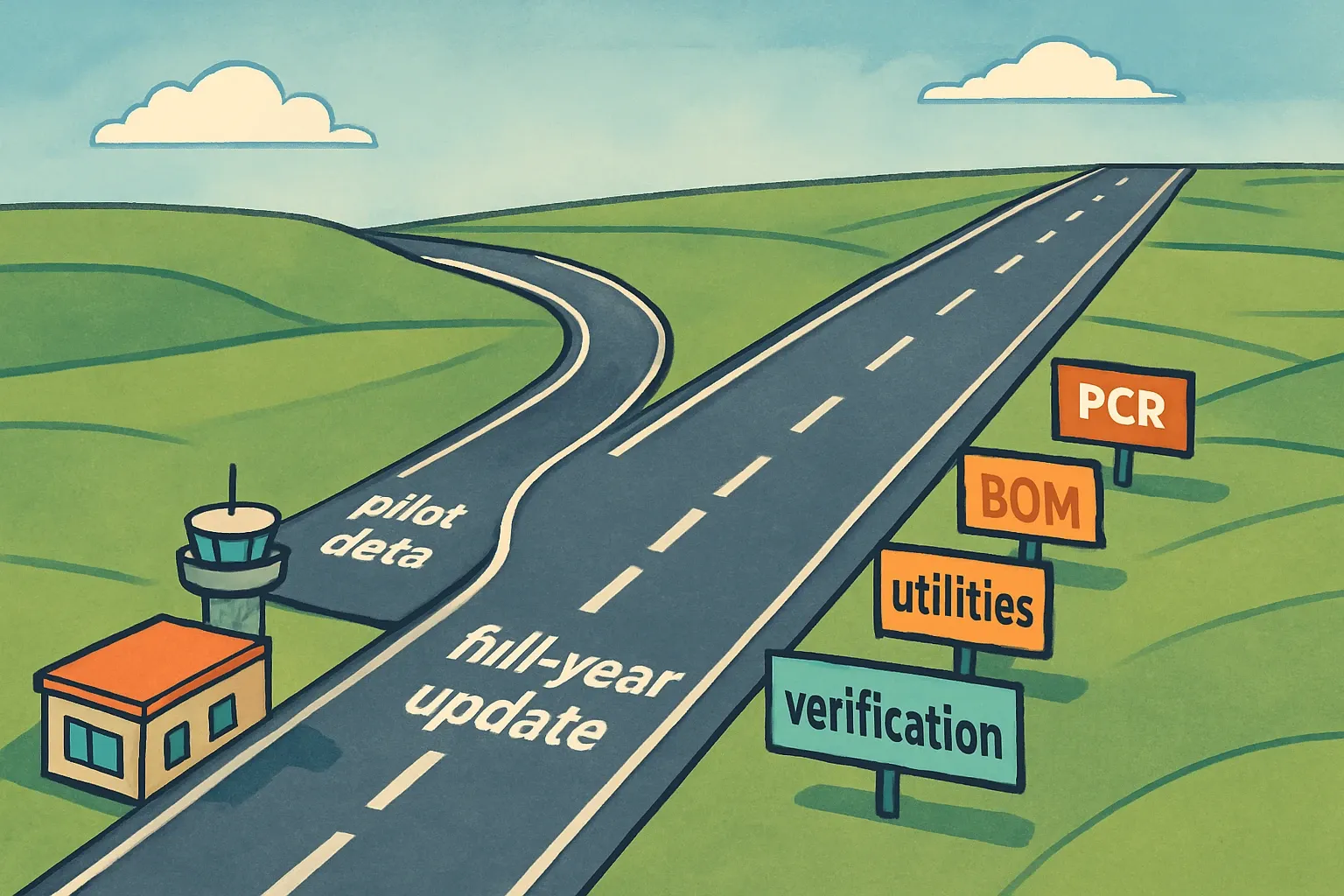
If production is young, a prospective EPD can be a bridge. You start with a shorter, representative operating window, then update once a full reference year has passed so the declaration reflects stable operations. Treat it like an early season scrimmage that gets you on the spec sheet while the plant ramps.
How to shorten the critical path without cutting corners
Do not wait on perfect data. Start the model with the best available information and pre agree on a small set of substitutions that are acceptable for early drafts. Centralize evidence in one workspace so verification can trace values back to source files without email archaeology. A partner that handles data wrangling white glove style will reduce handoffs and decision fatigue.
Ready to streamline your EPD process?
Follow us on LinkedIn for practical insights that help you meet project specifications faster and boost your winning potential.
Data to prepare before modeling even starts
- One reference period for utilities, production, scrap, and waste with plant level ownership
- Bill of materials snapshots with mass per unit and supplier names by tier
- Transport distances and modes for inbound key inputs and outbound finished goods
- Packaging specs, typical palletization, and warehouse assumptions
- A list of existing supplier EPDs where available
Multisite and product families
Families with shared formulations are efficient when you design the PCR scope and sampling plan up front. Multisite declarations save time if meters, allocation rules, and evidence formats match. If they do not, the model turns into a patchwork quilt.
Renewals and mid cycle improvements
EPDs sit on a five year clock in many schemes, which makes improvement planning easier. If a PCR updates or a process change materially shifts impacts, bring the refresh forward instead of waiting for the calendar date. That keeps specs current and avoids a scramble near expiry (ISO 14025, 2010; EPD International GPI 4.0, 2024).
A practical timeline you can adapt
- Scope and PCR confirmation, pick operator, assign data owners.
- Data harvest from ERP, meters, and suppliers, with a single tracker.
- LCA modeling and internal review, resolve hotspots and documentation gaps.
- Independent verification, respond to comments with evidence.
- Operator publication, final QA, and sales enablement materials.
What “rush” really takes
Fast cycles are less about heroics and more about orchestration. Clear scope, decisive PCR choice, one source of truth for data, and a team that actually collects evidence on your behalf. If you can only change one thing, appoint a single empowered owner and let them own the baton pass. Calender clarity beats calendar drift.
Why lead time matters commercially
Many projects now expect product specific EPDs for scoring or procurement preference. Showing up with a current, verified declaration reduces risk for specifiers and keeps you from competing on price alone. The cost and effort are quickly offset when it unlocks a few mid sized wins.
Tie it together
Treat epd lead time as a scheduling exercise, not a mystery. Decide the rulebook, assign owners, centralize evidence, and keep the baton moving. The work is complex, but it does not have to be slow when the handoffs are crisp.
(Sources: EN 15804+A2, 2019; ISO 14025, 2010; EPD International GPI 4.0, 2024)