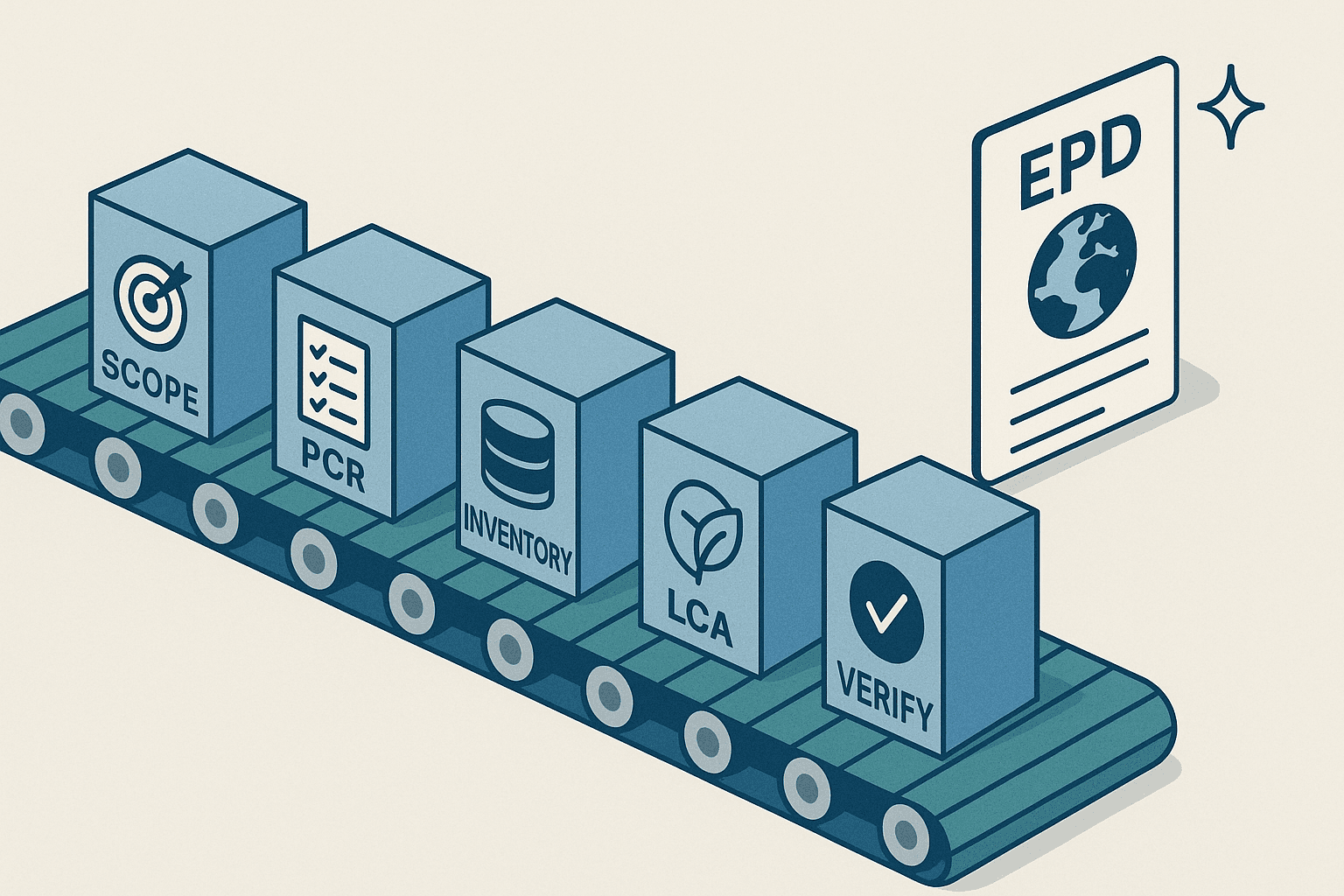
The real bottleneck is the scavenger hunt
Loose spreadsheets, cryptic ERP fields, and rotating plant roles turn EPD prep into a memory test. Teams lose time reconciling versions and translating unit conventions. A managed service reframes the job as a repeatable intake, so information shows up clean, comparable, and on time.
Platform plus services beats software alone
Software is fast once the pipes exist. The pipes are the work. A platform‑plus‑services model connects to ERP and MES, maps utility bills to meters, and standardizes supplier asks. The service team validates where data truly resides and closes gaps with people, not wishful clicks.
- Map data pathways across plants and suppliers, then confirm access.
- Connect to source systems and utility portals, not just exports.
- Run early checks and send confirmations so issues surface week one.
Make it an ongoing workflow, not a rush job
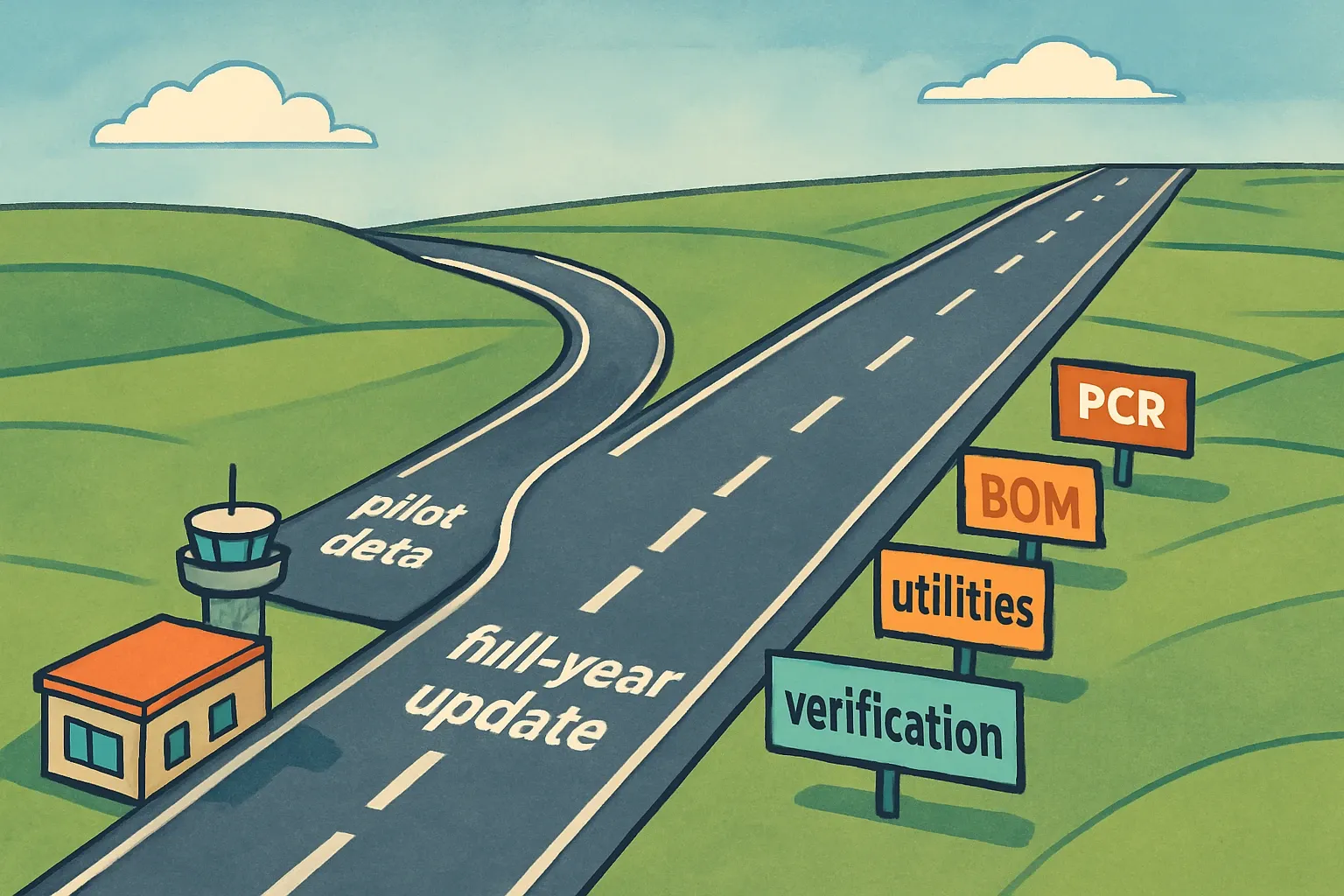
EPDs usually carry a five year validity under major operators, with interim updates when results shift beyond defined thresholds (EPD International, 2024). GPI 5.0.1 also requires an annual internal follow up to keep published EPDs current, which rewards teams that treat data as a living pipeline, not a once‑and‑done dump (EPD International, 2025).
Why pipes matter more than emails
Electricity really moves the needle in A1 to A3 for many products. Grid carbon intensity swings widely by location, from roughly 275 lb CO2 per MWh in Upstate New York to about 1,593 lb CO2 per MWh in Puerto Rico, based on the 2024 eGRID table of baseload factors (EPA eGRID, 2024). Pulling plant‑specific kWh and subregion mapping automatically is more defensible than hunting last year’s email thread.
Supplier engagement without the headache
Suppliers respond faster when the ask is narrow, the template is familiar, and the finish line is visible. A managed service handles outreach, confidentiality concerns, and quiet escalation. It turns a side quest into the main quest by giving early confirmations and clear pass‑fail checks.
Evidence, versioning, and audit‑readiness by default
Every figure should trace to a source with timestamp, unit, and owner. System connectors and task logs create that chain of custody. This saves hours and reduces error risk when verifiers or auditors ask for support, becuase the evidence lives alongside the numbers.
Choosing a partner for the heavy lift
Look for direct connectors to ERP, MES, and utility APIs. Expect supplier outreach handled as a service with standardized templates. Ask how the team validates declared units, maps facility boundaries, and captures source evidence. Check that outputs publish cleanly with common operators such as Smart EPD in the United States and IBU in Europe, while staying operator‑agnostic.
The commercial angle
Product‑specific EPDs reduce carbon accounting penalties on submittals and make swaps less likely when projects chase embodied‑carbon targets under frameworks like LEED v5. Treating data collection as a shared workflow shortens timelines and frees your experts to focus on process improvements that actually move impacts.
From file to asset
When data collection becomes a service, the outcome is bigger than an EPD PDF. It is a maintained dataset keyed to plants, products, and suppliers that can feed renewals, HPDs, and future LCAs. That turns compliance chores into a strategic capability, with less cognitive load and more momentum.