First things first: it is not a certificate
An Environmental Product Declaration is a Type III report verified by an independent expert. It is descriptive, not a pass or fail label. Think of the PCR as the rulebook of Monopoly. Ignore it and the game falls apart.
When teams say “epd certificate,” they usually mean a signed PDF EPD with the program operator logo and the verifier statement. That is the artifact buyers want on file.
What an EPD actually contains
An EPD describes a product, the declared unit, the life cycle stages covered, the background datasets, and impact results like global warming potential, acidification, eutrophication, and more. For construction products, the rule set is EN 15804 within ISO 14025. The declared unit must match how the market buys the product so estimators can plug it in with zero math gymnastics.
Why buyers keep asking for it
Owners and design teams face carbon accounting on many projects. Without a product specific EPD, they often must use conservative defaults that penalize selection, which quietly nudges your product out of contention. The sector’s footprint keeps pressure high, since buildings and construction consume about 32 percent of global energy and contribute 34 percent of energy and process related CO2 emissions (UNEP GlobalABC, 2025) (UNEP GlobalABC, 2025).
Who publishes and verifies
EPDs get published by program operators such as The International EPD System, IBU, UL Solutions, ASTM, Smart EPD, and others. Verification is carried out by accredited individual verifiers or certification bodies. Choose an operator your target market recognizes, confirm they support the relevant PCR, and make sure your verifier has direct experience with your product category.
Validity and renewals
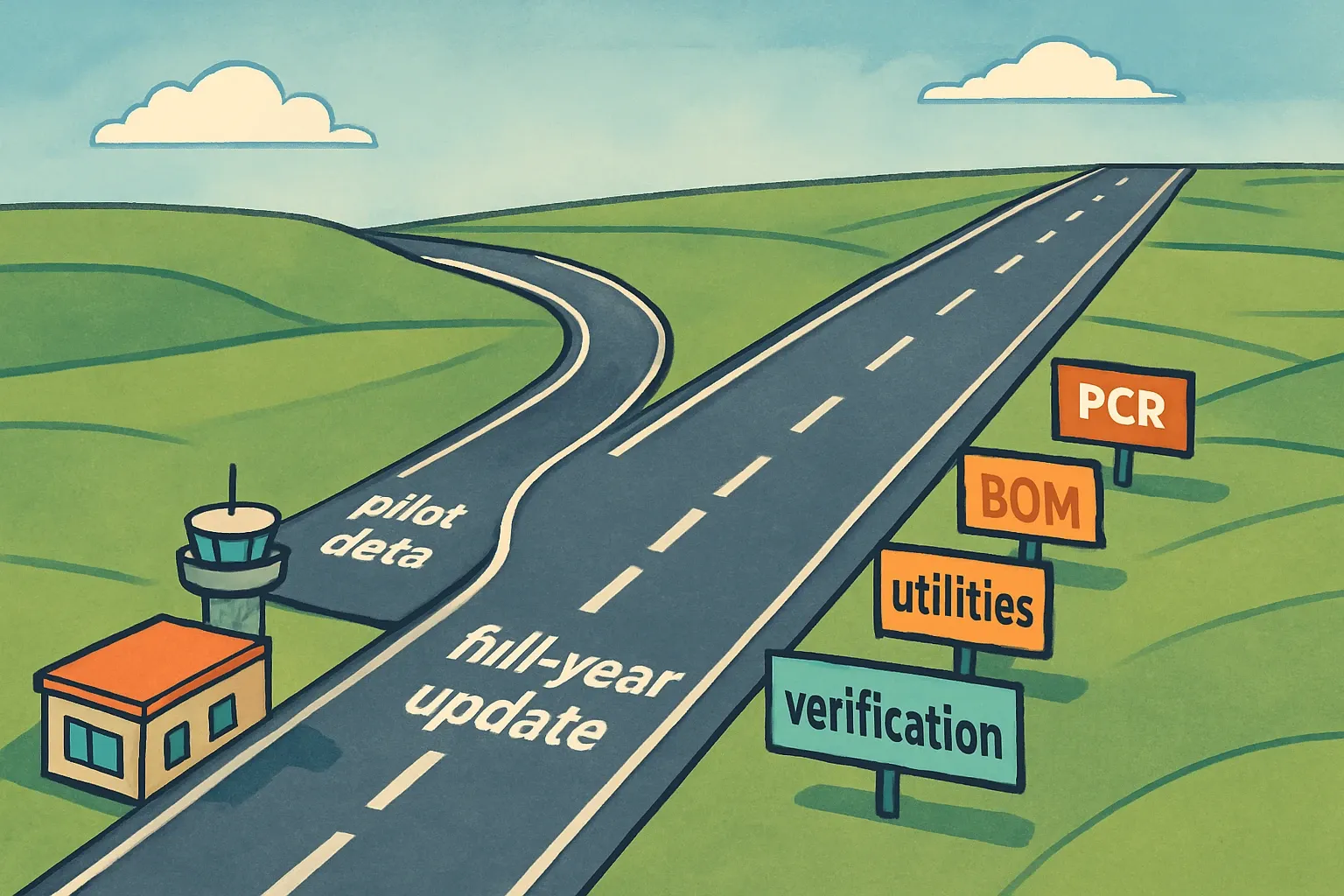
EPDs are normally valid for five years under operator rules, with updates required sooner if impacts worsen beyond defined thresholds (EPD International, 2024) (EPD International, 2024). PCRs also expire. Most PCRs are on a five year cycle and must be reviewed or replaced, which drives when you refresh your EPD even if your product has not changed (UL Solutions, 2024) (UL Solutions, 2024). Your current EPD remains usable until its validity date. An expired one can remain public for transparency but generally cannot be used in marketing claims.
Need clarity on EPD certificates for your products?
Follow us on LinkedIn for straightforward insights that help you meet specifications and accelerate your sales.
Landscape checkpoints for 2025
Standards keep moving. EN 15804 remains the anchor for construction products. GPI updates from program operators can change data quality requirements, characterization factors, and template details. If you sell in North America and Europe, align data choices up front so one data model can serve multiple operators without rework.
The commercial link to specs
An up to date, product specific EPD shortens review cycles and removes the selection penalty that comes from default factors. Private owners and rating systems such as the evolving LEED v5 keep EPDs in the material credits, which means they influence shortlists. Reliable cost averages are hard to pin down because scopes differ, but most teams see the fee dwarfed by even a single mid sized project win.
Timeline and workstream at a glance
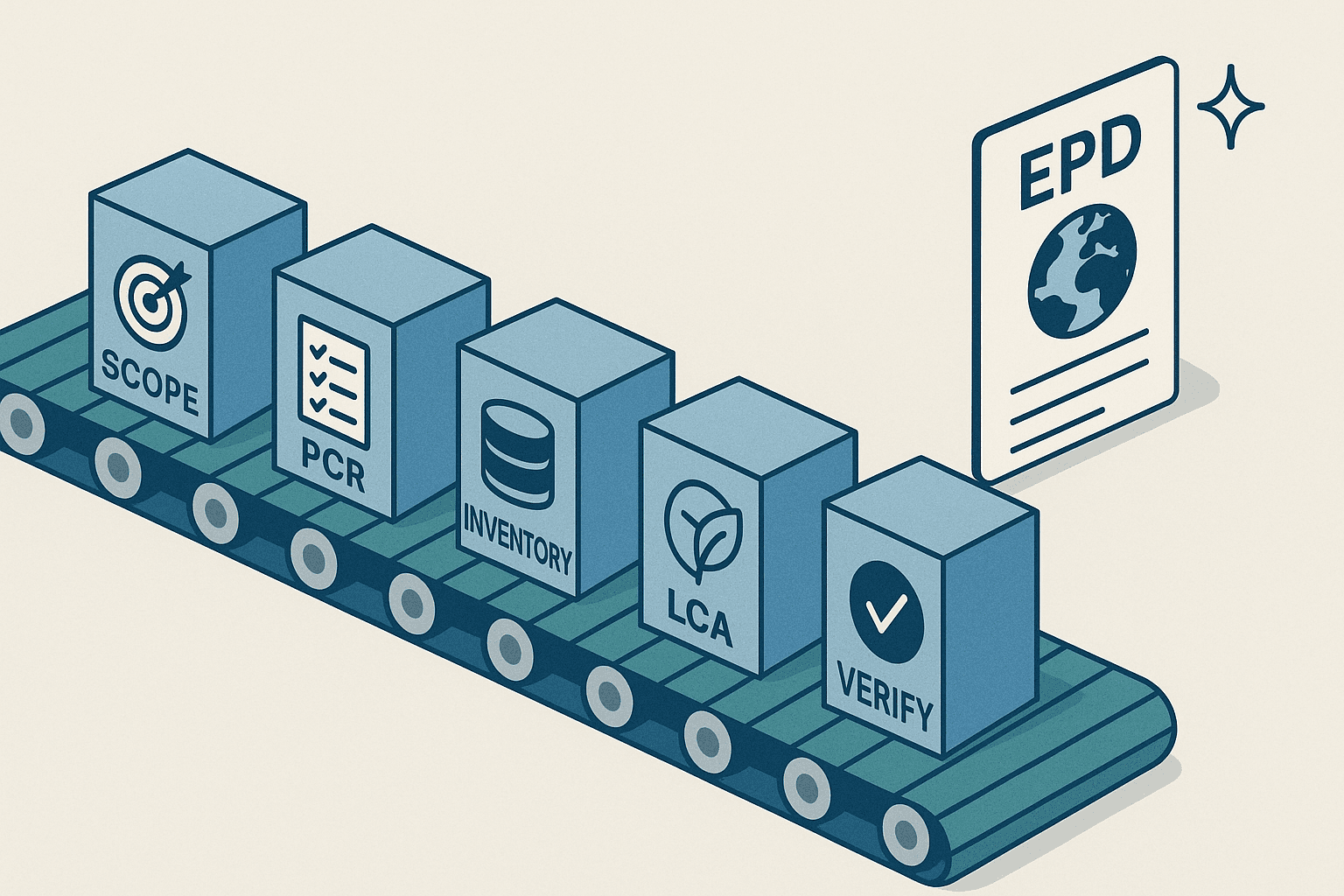
- Scope the product and market. Confirm the PCR that competitors use and the operator you will publish with.
- Lock the reference year and system boundary. Decide if you publish A1 to A3 only or a wider scope.
- Collect primary data from sites. Utilities, material inputs, yields, scrap, transport, packaging, and volumes.
- Build the LCA with consistent datasets and allocations. Document assumptions.
- Verify with an accredited reviewer. Address findings quickly.
- Publish the EPD PDF. Share the URL with sales and estimators and upload wherever specifiers search.
Choosing help without headaches
The biggest delay is rarely modeling. It is chasing internal data across plants and systems. A partner that provides white glove collection, clear checklists, and firm weekly cadence removes that drag. We prioritize speed, ease, quality and completeness so your R&D and operations teams keep focus on production, not paperwork. If a provider hands you a spreadsheet and walks away, expect weeks of back and forth. That is avoidable and definately not required.
Common misunderstandings to clear up
One EPD can cover a family of similar products if rules allow, but big differences in composition or density usually require separate results. Plant specific EPDs are common when logistics or energy mixes vary. Older within validity is fine for bids. Trouble starts when an EPD is months from expiry with no renewal plan.
What to hand procurement
Provide the EPD PDF, a short one page summary of declared unit and headline impacts, and a link to the operator page for verification. If the buyer’s portal wants an “EPD certificate,” send the same EPD PDF and the verifier statement. That closes loops fast.
Final word
Treat the EPD as a living product sheet with quantified environmental performance. Keep data tidy, keep PCR changes on your radar, and keep renewal dates visible to sales. Do that and the so called epd certificate becomes a quiet competitive advantage, not a recurring fire drill.