EPDs in plain English
Think of an Environmental Product Declaration as a product’s environmental nutrition label. It reports quantified life‑cycle impacts using a common playbook. In construction, that playbook is EN 15804 under ISO 14025, verified by an independent reviewer, then published by a program operator so specifiers can trust and reuse the data.
An EPD is not a claim of overall sustainability. It is a transparent report for a defined product, a declared unit, and explicit life‑cycle stages. That precision is what makes it useful in bids and building codes.
Why EPDs are surging in specs
Program operators keep breaking records. The International EPD System alone crossed 10,000 valid EPDs in late 2024, a signal that transparent product data is now mainstream across materials and geographies (International EPD System, 2024).
Rating systems are raising the bar. LEED v5 was ratified by USGBC members on March 28, 2025 and centers decarbonization, which elevates the role of product‑level embodied carbon data in design and procurement (USGBC, 2025). Public buyers in several markets already request EPDs in tenders for high‑impact materials, so having them shifts conversations from eligibility to preference.
What goes into an EPD
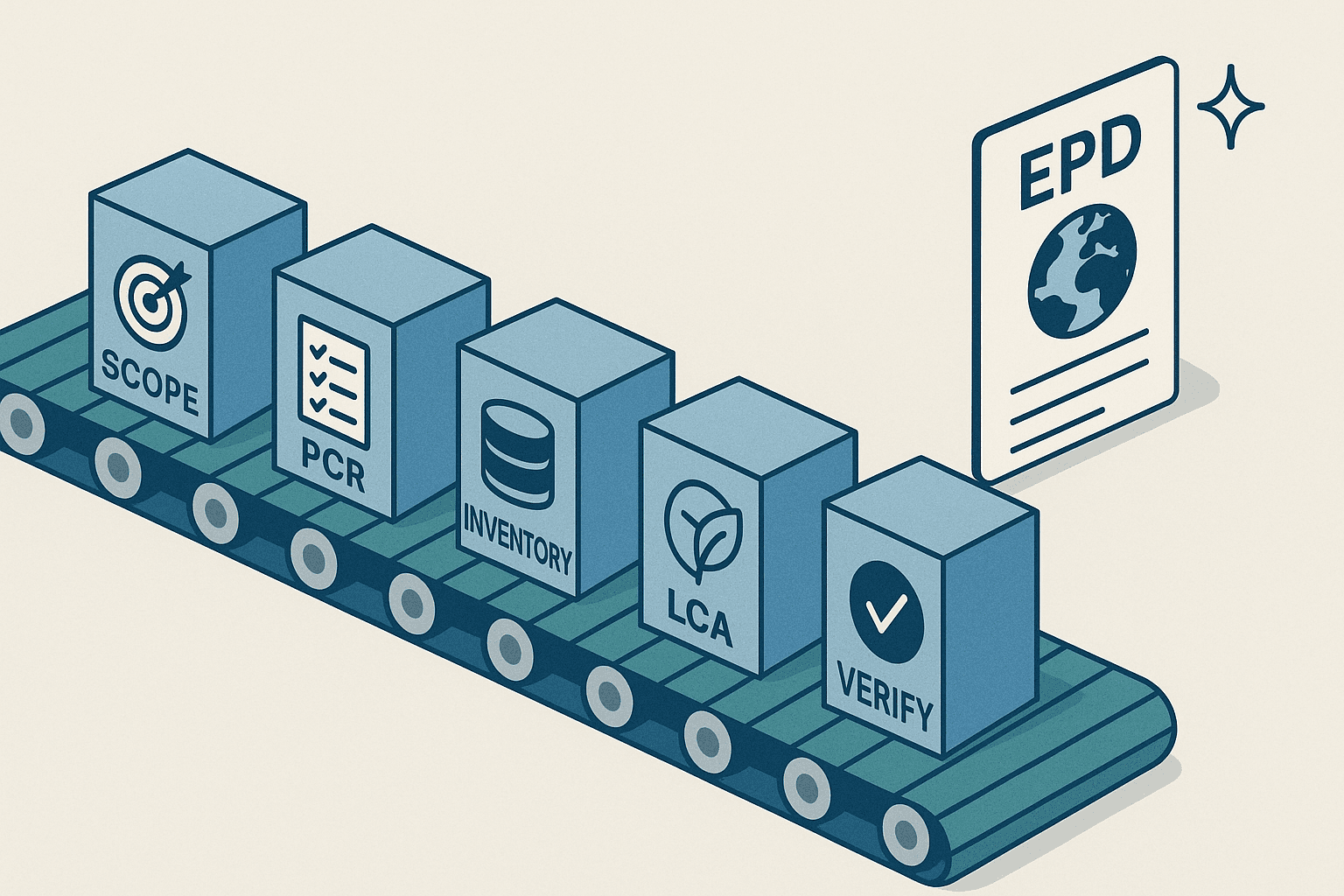
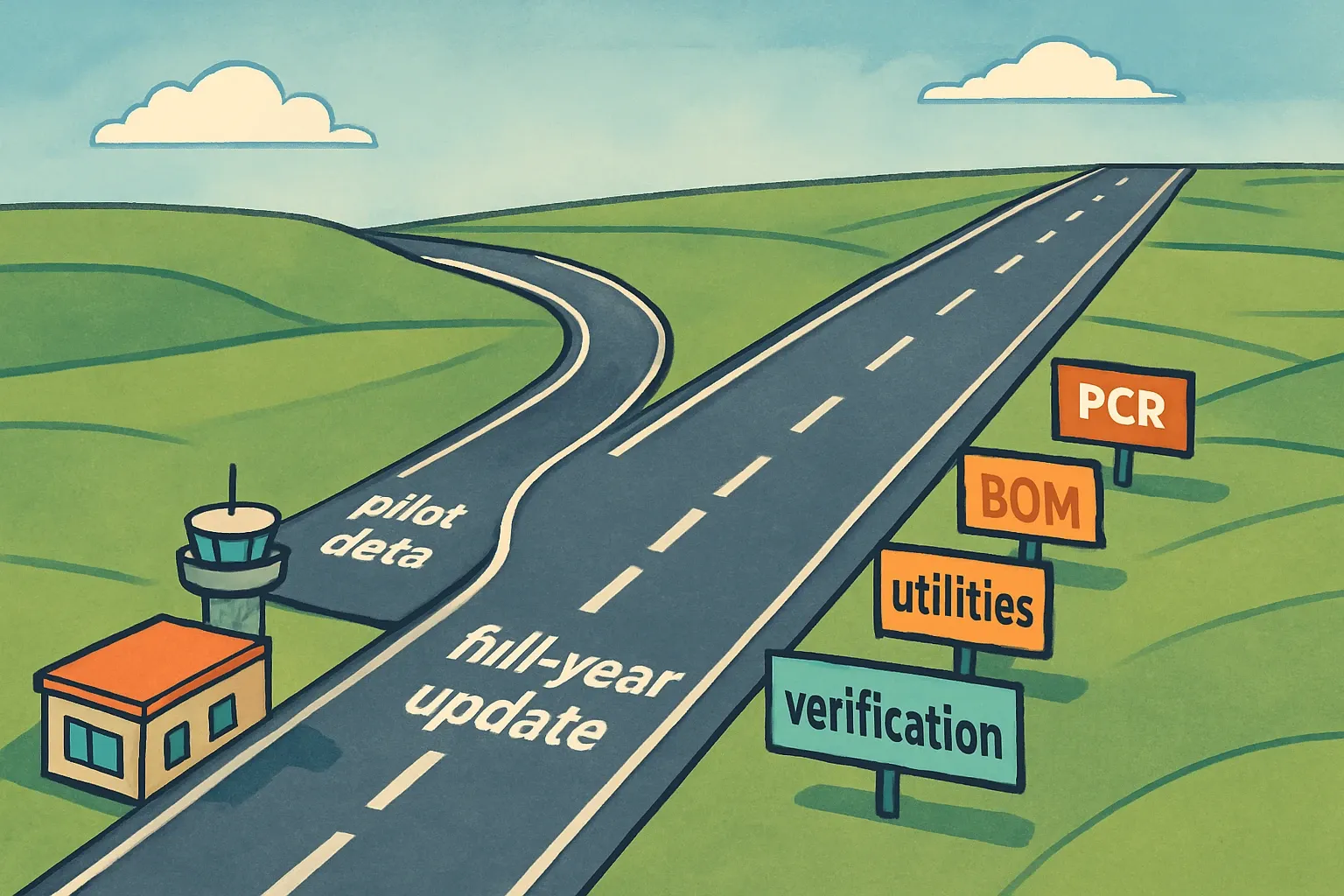
Every credible EPD starts with a life cycle assessment. Teams collect a reference year of data for the product and the plant, then model impacts from raw materials through manufacturing and beyond. For brand‑new items, a prospective EPD can start with a few months of production and be updated once a full year is available.
The result is verified, then published as a PDF and a machine‑readable dataset. Most program operators set validity at five years, after which a renewal is required or earlier if major changes occur (IBU, 2025).
PCRs are the rulebook
A Product Category Rule (PCR) defines scope, metrics, and calculation rules for comparable products. Good practice is to match the PCR used by credible competitors, consider its expiry window, and confirm the operator where the EPD will be hosted. When a PCR expires, existing EPDs do not suddenly vanish. They renew under the updated PCR at the next cycle.
Read an EPD like a pro
Not all EPDs answer the same question. Three checks keep you honest:
- Declared unit and product definition. Make sure you are comparing the same thing by mass, area, or piece.
- System boundary and modules. A1 to A3 covers manufacturing. A4 to A5 captures transport and installation. C1 to C4 is end‑of‑life. Benefits beyond the system are in module D.
- Data quality and geography. Plant‑specific beats generic. Electricity mixes and transport modes should reflect reality, not wishful thinking.
If results look too good to be true, scan scenarios and allocation rules. Small modeling choices can shift outcomes meaningfully.
Where EPDs pay off commercially
EPDs remove penalties that many project teams must apply when a product has no verified data. With an EPD in hand, your product is counted based on its measured impacts, not a conservative default. That keeps you in play on carbon‑capped jobs and reduces last‑minute substitutions.
Sales teams also stop avoiding EPD‑required accounts. Without a declaration, reps rationalize that the lead was never real. With one, the same account can flip from “not a fit” to recurring revenue. The cost is typically dwarfed by a single mid‑sized win.
Program operators, simplified
Program operators publish and maintain EPDs and oversee verification. In the United States, many manufacturers publish with Smart EPD or UL. In Europe, IBU and the International EPD System are common choices, alongside country programs aligned to EN 15804. The best choice aligns to where you sell, what databases your buyers use, and which logos reviewers instantly recognize.
We are operator‑agnostic by design. What matters is speed to a compliant, trusted declaration that moves your product through reviews without drama.
From first EPD to a portfolio
Start with a high‑volume, high‑spec product. Build the inventory cleanly, document assumptions in the background report, and move through verification. Once the first publication lands, extend the study to close siblings by using variants or representative modeling where the PCR allows it. That is how teams scale from one EPD to dozens with predictable effort.
Keep a renewal calendar. EPDs are valid for five years and renewals hit fast across a portfolio. Stagger publication dates, track PCR expiries, and budget verification lead times so nothing lapses during an active bid season (IBU, 2025).
Data collection without the chaos
The slowest part of EPD work is chasing data inside the company. Operations, procurement, and EH&S all hold pieces. A strong partner will run a white‑glove collection process, pre‑build templates for your ERP and meter exports, and do the wrangling with suppliers so your engineers are not stuck in spreadsheet purgatory. That is where calendar time disappears or gets saved.
Aim for inventories that read like a clean bill of materials with receipts. Map each input to a dataset, log meter factors, and version‑control everything so the verifier can trace it quickly.
Common pitfalls and how to avoid them
Scope spread. If you combine plants or product variants that are not truly comparable, you dilute the value. Tighten the scope or publish separate EPDs.
Missing modules. If installation or end‑of‑life is material for your category, include them. Partial system boundaries limit usefulness in specs that require whole‑life views.
Stale data. If energy sources or formulations changed meaningfully, issue an update. Buyers notice when a 2019 reference year pretends nothing moved.
Digital dead ends. Publish machine‑readable files and check that your EPD is discoverable in the databases your buyers actually consult.
What to look for in an LCA and EPD partner
Speed without shortcuts. You want study design and project management that anticipates the verifier’s questions, not a rush that creates rework.
Hands‑on data support. The partner should collect and clean data for you, not toss templates over the fence. That is the difference between a six‑week sprint and an endless slog.
Operator fluency. Teams that publish across Smart EPD, IBU, and other operators reduce friction. They know submission portals, common comments, and how to avoid delays.
Portfolio thinking. One EPD is good. A roadmap across families with shared data and staggered renewals is better.
Numbers buyers actually ask about
Global Warming Potential in A1 to A3 is the headline for embodied carbon. Transport to site in A4 can move the needle for dense or imported goods. Module D credits help when your product has meaningful circular benefits, but do not let D distract from the core manufacturing footprint in A1 to A3.
Most buyers will not fuss over whether your EPD is six months old or two years into its cycle. They will care deeply if it expires next quarter, so time publications accordingly. EPDs are valid for five years across major operators, which sets a clear planning window (IBU, 2025).
Regulatory signals to watch
LEED v5 aligns around decarbonization with more explicit embodied carbon expectations, and its 2025 launch starts a new five‑year cadence that will shape specs for the next cycle (USGBC, 2025). Several public buyers already require EPDs for selected materials in procurement criteria. If you sell into those categories, an EPD flips you from non‑compliant to selectable.
Make EPDs a repeatable edge
Pick a flagship product. Choose the PCR that matches your market and competitors. Collect one clean reference year of data. Publish where your reviewers are. Then extend. Keep a renewal calendar and a living background report so updates are measured in weeks, not quarters. It is not glamorous work, but it is a moat. And it is definately worth it.