Quick answer
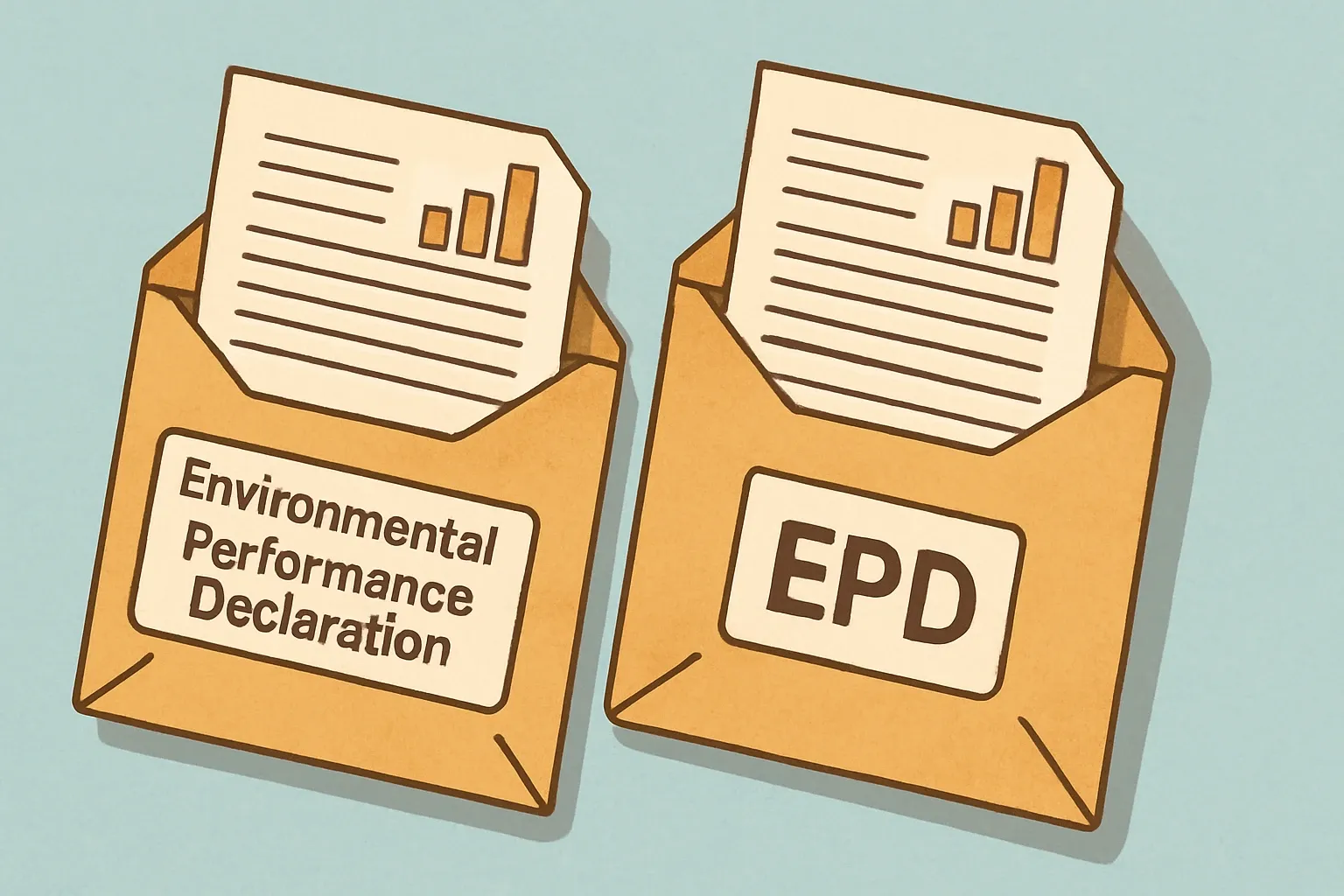
In construction materials, “environmental performance declaration” is usually a loose way of saying Environmental Product Declaration. The market expects an EPD that aligns with ISO 14025 Type III and, for construction, EN 15804. If a tender, architect, or distributor asks for an environmental performance declaration, deliver an EPD.
What standards make it an EPD
Think of ISO 14025 as the genre and EN 15804 as the screenplay for building products. ISO 14025 defines Type III declarations built from life‑cycle data. EN 15804 sets the content rules for construction products so different brands can be compared without apples‑to‑oranges math.
What goes inside the document
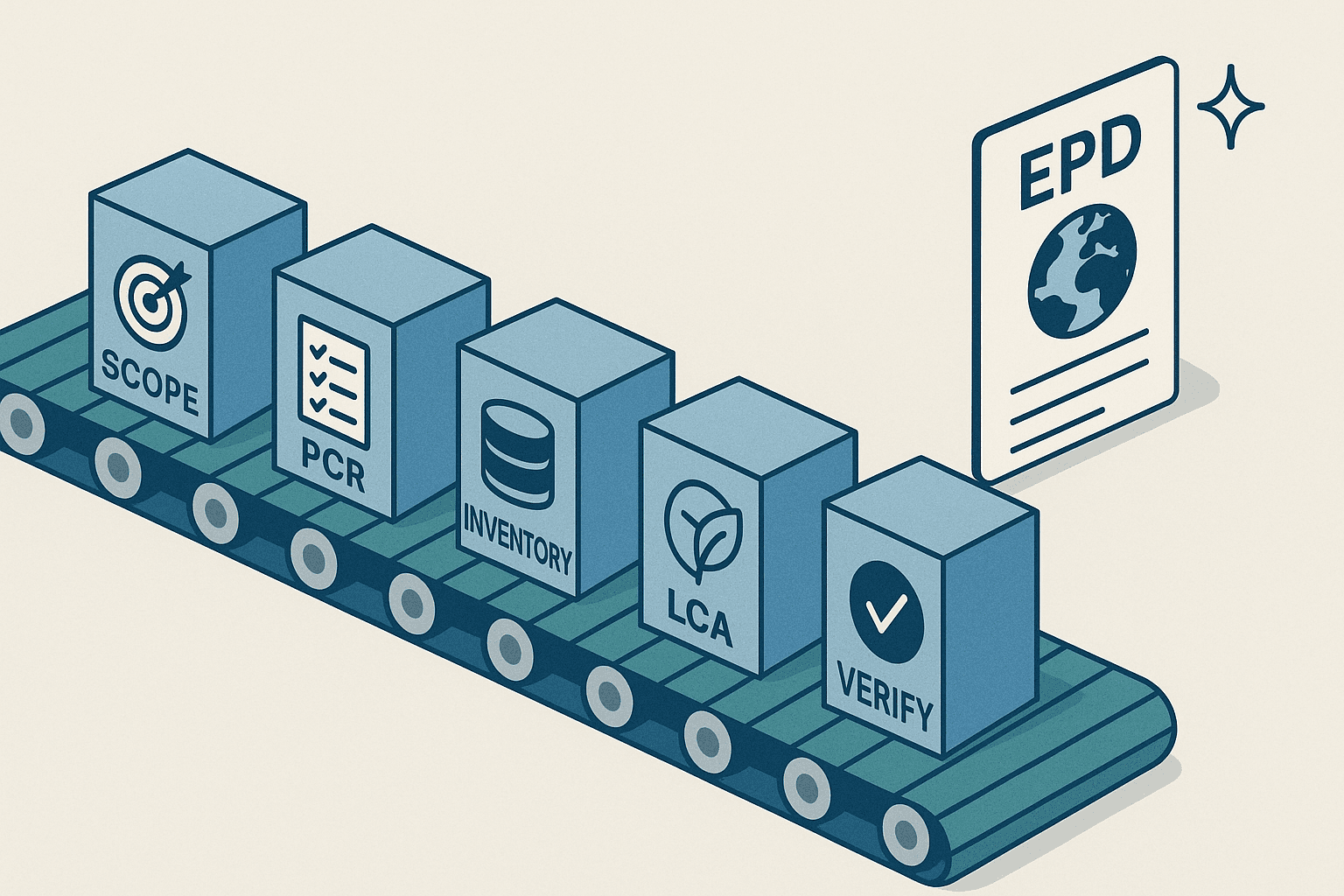
Every credible EPD nails four items. A declared unit that anchors results. Clear system boundaries, often cradle‑to‑gate A1 to A3, optionally extended to A4 transport, A5 installation, and end‑of‑life C modules, with D for benefits beyond system boundary. Transparent data sources and assumptions. Third‑party verification that the math and rules were followed.
Verification, program operators, and the five‑year clock
EPDs are published by program operators after independent verification. In the US, common operators include Smart EPD and UL Solutions. In Europe, IBU and the International EPD System are widely used. The validity period is typically five years from verification unless the PCR says otherwise (EPD International FAQ, 2025).
Want to streamline your EPD processes?
Follow us on LinkedIn for insights that help you win projects and stay compliant in a competitive market.
Why wording still matters
Some buyers write “environmental performance declaration,” others write “EPD,” and a few say “Type III declaration.” The safe path is to confirm the standard and operator they accept. If the request ties to a rating tool or a national database, align the EPD format with that destination so it drops in cleanly rather than causing back‑and‑forth.
Related terms you might see
- Type III environmental declaration. Same family as an EPD when built on ISO 14025.
- PEP ecopassport. Used heavily in electrical and HVAC segments, aligned with EN 15804 for construction projects.
- HPD. A health disclosure, not a carbon or LCA document. It complements an EPD rather than replaces it.
Picking the right PCR without drama
A PCR is the rulebook of Monopoly. Ignore it and the game falls apart. Most teams choose the PCR that competitors use, then check expiry timing and the preferred program operator. When a PCR updates, your already‑published EPD stays valid until its stated expiry. The next renewal will need the new PCR. That keeps teh market comparable without pulling products off the field mid‑season.
What specifiers actually expect
They want product‑specific results, not just an industry average, so their embodied‑carbon accounting avoids penalties. A current, third‑party verified EPD removes friction in submittals and reduces the risk of last‑minute substitutions. Sales cycles often shorten because procurement teams can pass due‑diligence checks on the first try rather than the third.
A note on LEED v5
LEED v5 was ratified by USGBC members in March 2025 and centers more explicitly on whole‑life carbon and product‑specific data than prior versions (USGBC, 2025). USGBC also moved LEED to a five‑year development cycle, which signals stable expectations for documentation planning (USGBC, 2025).
Speed without the scramble
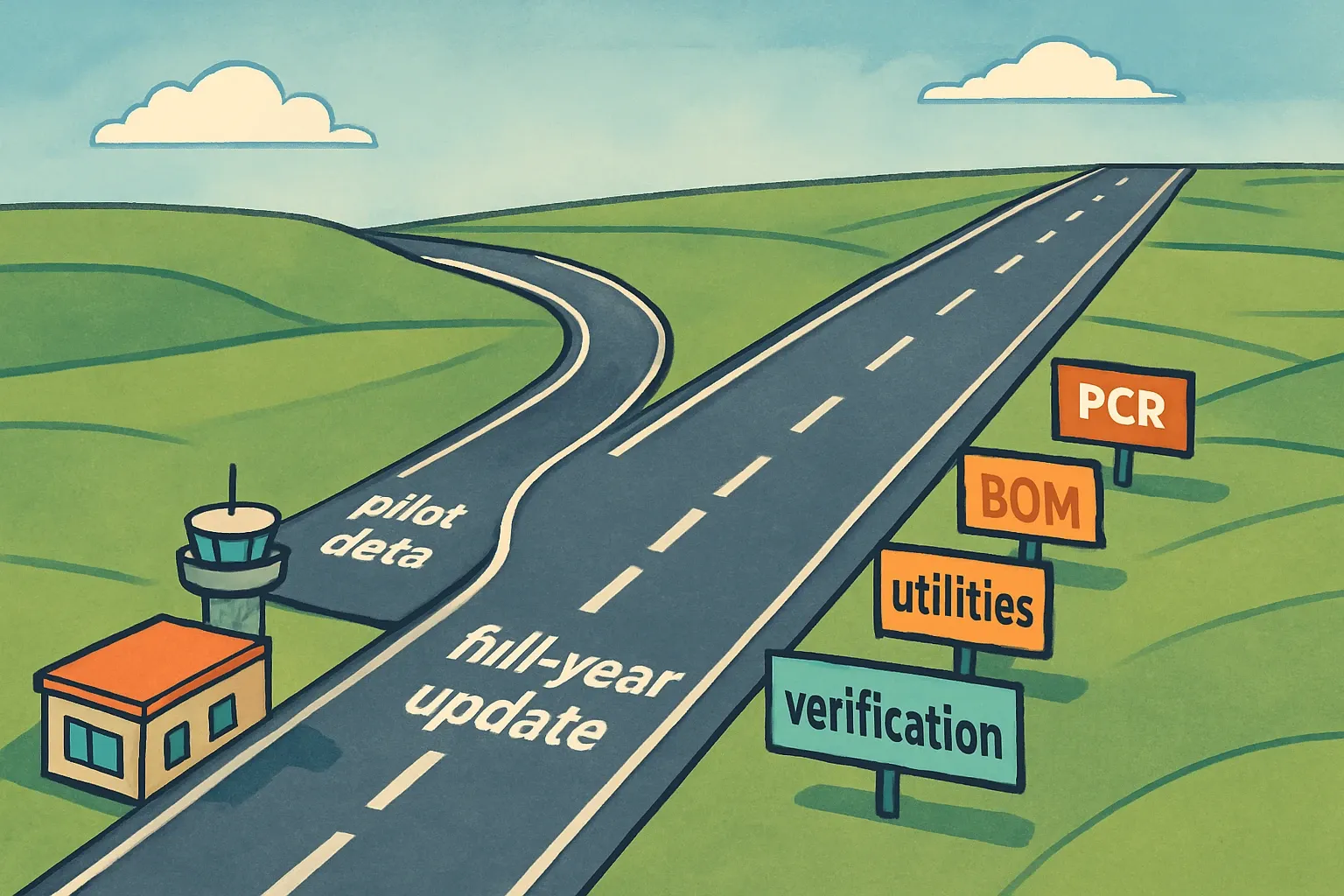
The slow part is rarely the modeling. It is collecting plant data, reconciling bills of materials, and tracking scenario assumptions. Choose a partner that takes on data wrangling and project management instead of pushing homework back to your engineers. That keeps your most valuable people focused on production while the EPD moves from kickoff to publication with fewer do‑overs.
Bottom line for manufacturers
If someone asks for an environmental performance declaration, give them an EPD aligned to ISO 14025 and EN 15804, verified by a recognized operator, and built on the PCR your market uses. Keep an eye on the five‑year validity window and plan renewals a quarter early. You will protect margin, reduce substitution risk, and make it easier to win specs where carbon targets matter.