Why pilots stall and how to avoid it
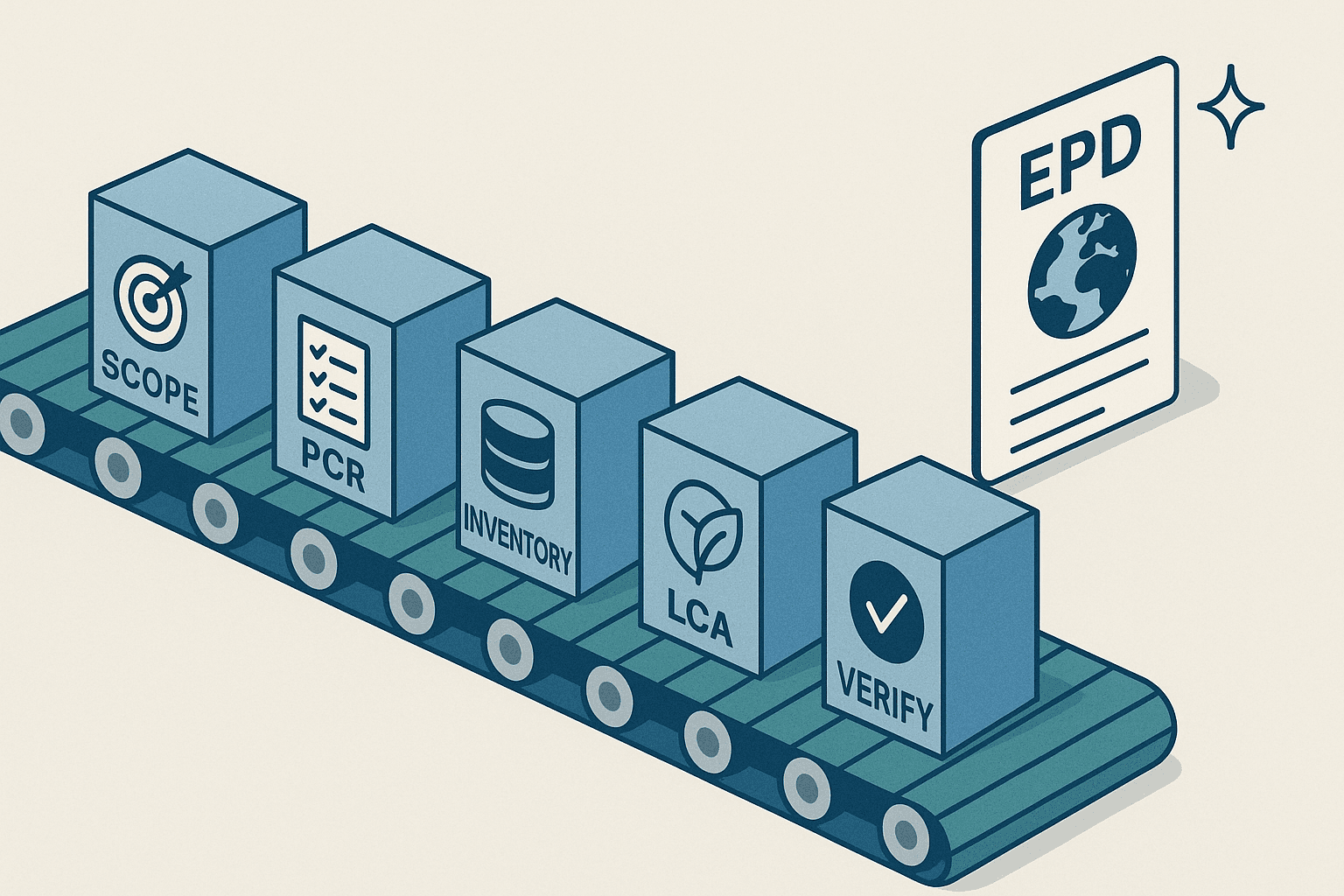
Pilots flop when they try to mirror the whole enterprise or, worse, when they only impress one function. A focused pilot earns trust by proving a repeatable path from messy plant data to published, third‑party verified EPDs that sales can actually use. Keep the lens tight and the story broad.
Scope that signals ambition without scaring Finance
Pick one anchor region and one adjacent. For a company active in Europe, the United States, and Japan, start in the region with the clearest near‑term sales upside, then shadow a second region in read‑only mode to de‑risk global scale. Limit the pilot to one business unit and two to three factories so stakeholders see depth, not noise.
Right‑size the user group
Eight to fifteen named users is enough to cover the moves from data pull to publication without turning the pilot into IT support. Include one decision maker who signs off on resources, one product owner per line, one plant lead per factory, and a verifier liaison. More users rarely equals more insight. It usually equals more meetings.
Pick product lines that represent real revenue
Choose two or three lines that reflect different manufacturing routes and customer segments. If one line uses batch processing and another is continuous, you will pressure test data collection and modeling in ways that generalize. Avoid fringe SKUs that will never see an RFP with an EPD box.
Include sustainability and regulatory teams from day one
Sustainability frames scope, boundaries, and datasets. Regulatory and quality control hold the keys to auditable records. Give each a clear RACI so decisions do not ping‑pong. When both are at the table, verifiers move faster and publication does not get stuck on a late surprise.
Deliverables that leadership can count
Set outputs that translate to pipeline and compliance. A sharp set looks like this:
- Two product‑specific EPDs ready for publication with a named program operator
- A backlog and schedule covering one year of catalog coverage, prioritized by revenue and bid activity
- A reusable data pack per plant that captures meters, bills, and transport routes in a verifier‑friendly format
- A governance memo that defines PCR choices and renewal triggers
Where relevant, reference the common 5‑year EPD validity window so renewals are budgeted into the roadmap, not treated as surprise spend (EPD International, 2025) (EPD International, 2025).
Terms that lower internal risk
Work with Legal and Procurement on language that keeps champions safe. Useful levers include a pilot‑only subscription term with a defined step‑up path, a mid‑pilot off‑ramp tied to objective deliverables, and regional access that can be extended by issuing additional seats rather than renegotiating core terms. Price out change requests in a rate card, not in emails that get lost.
Global access and regional realities
Plan for operator and standard nuance. Many European declarations follow EN 15804, while North America often aligns to ISO 14025 frameworks through local operators. Japan’s EcoLeaf program is well known to local specifiers. Configure templates and verification workflows per region so one pilot does not bake in rework later.
Timelines anchored to the rules of the game
Most construction EPDs in Europe follow EN 15804 and require production data representative of at least 12 months, which should shape the pilot schedule and the definition of done for data readiness. Teams can begin with the most recent full year and add a prospective record for new lines where allowed by the operator, then update once 12 months have accumulated (CEN EN 15804+A2, 2019). EPD validity commonly spans 5 years, so set a renewal horizon in month 54 to protect sales continuity (EPD International, 2025) (EPD International, 2025).
Compliance drivers that keep momentum
Large EU companies are now subject to CSRD, drawing finance and sustainability closer together. CSRD reporting applies to entities meeting at least two of these thresholds 250 employees, 40 million euro net turnover, or 20 million euro in total assets, which makes traceable, plant‑level data a board topic rather than a side project (European Commission, 2025) (European Commission, 2025). Tie the pilot’s data model to this reality so expansion unlocks more than marketing claims.
Data collection that does not hijack your best people
Insist on white‑glove data capture. The right partner pre‑builds request packets for utilities, transport, and materials, then chases confirmations without making engineers babysit spreadsheets. Short, structured intake beats sprawling portals. If subject matter experts only need to review and approve, they will actually participate and you will recieve cleaner data.
Verification and operator alignment
Publish with a program operator suited to the target market and PCR. Agree in advance on the verifier, data cutoffs, and versioning rules so there is no last‑mile scramble. The pilot should demonstrate a clear path to third‑party verified output, since draft PDFs that never reach a registry help no one.
From pilot to production without a reboot
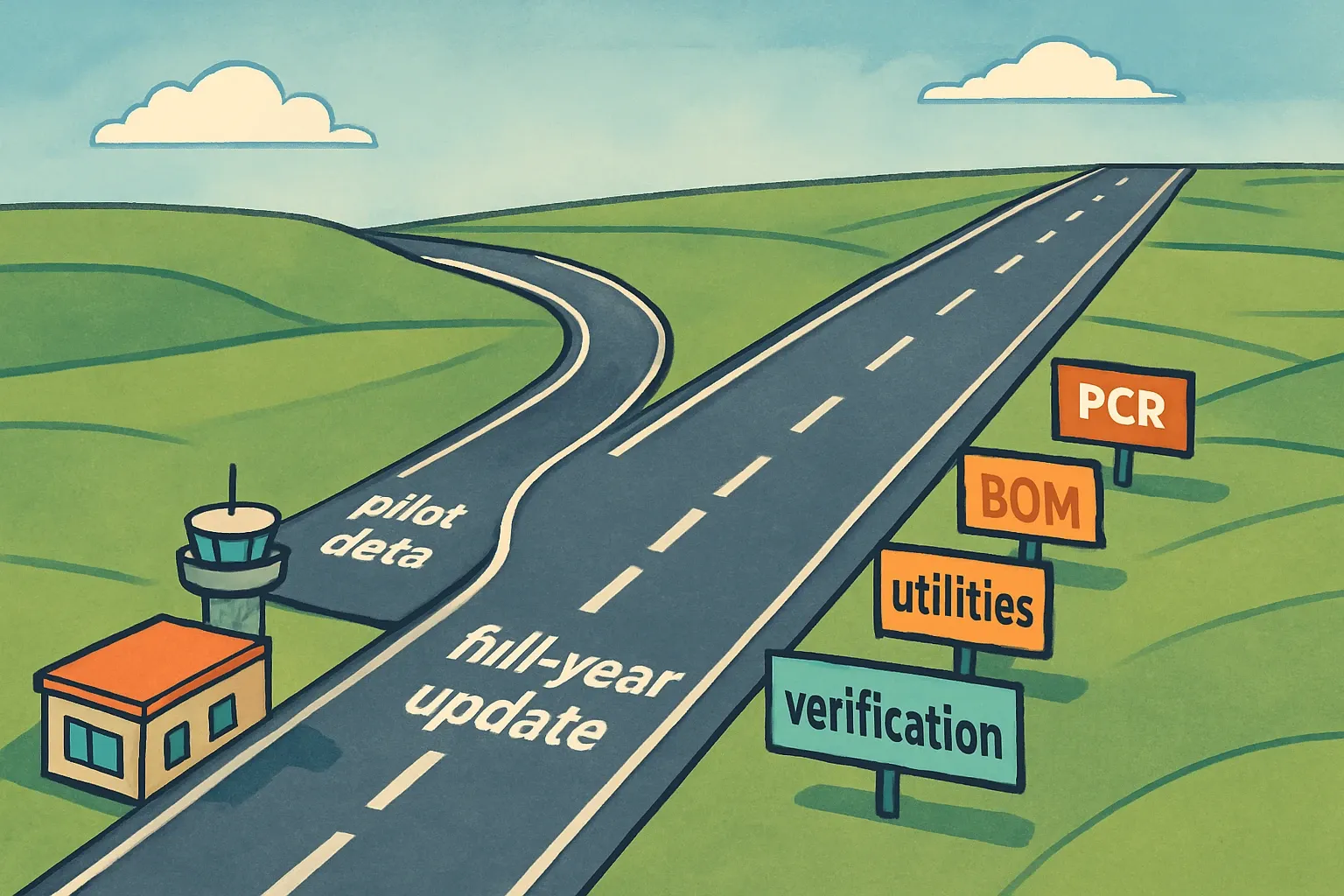
Finish with a short readiness gate. Confirm that data models, access controls, and operator relationships scale to the next region and product tier. Lock in a 90‑day expansion plan that adds plants and catalog coverage without new contracts or workflow rewrites. That is how a modest pilot turns into a durable EPD engine your teams can trust.