What an EPD actually is
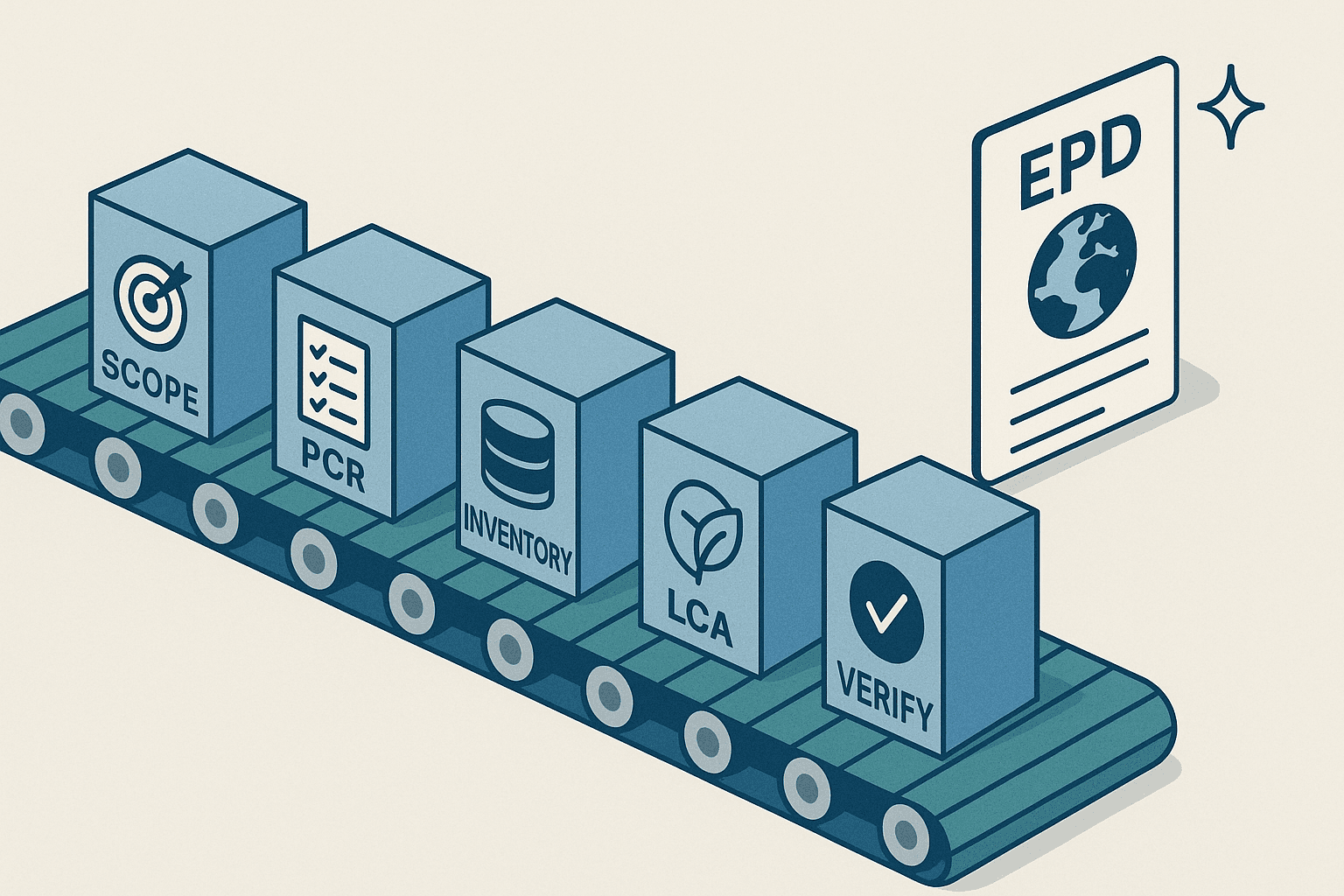
An EPD translates a life cycle assessment into a standardized report that buyers can trust. For construction, the rules are set by ISO 14025 and EN 15804, which define the scope, the impact indicators, and the format so apples really compare with apples.
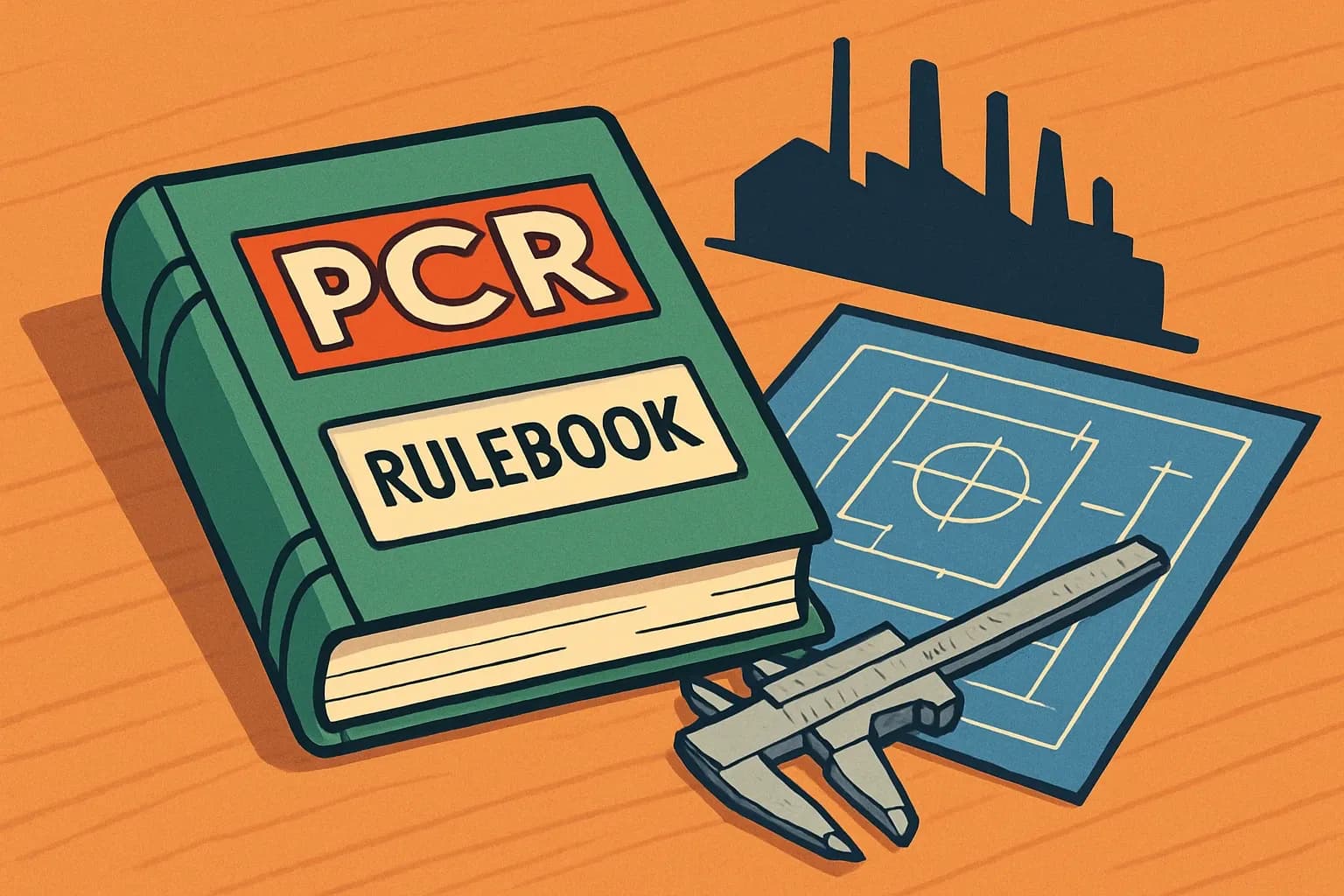
Think of the PCR as the rulebook of Monopoly. Ignore it and the game falls apart. Follow it and the scoreboard makes sense across brands and plants.
Where EPDs matter right now
Specifiers use EPDs to avoid conservative default values during carbon accounting. Without a product‑specific EPD, many tools assume higher impacts, which quietly pushes a product out of consideration. LEED v5 is moving the market with a formal ratification date of March 28, 2025 and a five‑year development cycle tied to a 2025 release that signals long term stability for materials credits (USGBC, 2025) (USGBC, 2025). Registration for LEED v4 and v4.1 closes on June 30, 2026 which sets a clear transition window for material strategies that rely on EPDs (USGBC, 2025) (USGBC, 2025).
Types of construction EPDs, in plain English
- Industry‑average EPDs report typical impacts for a category. They help you show up in models but rarely differentiate a product.
- Product‑specific EPDs are based on your factory data. These usually carry more weight in rating systems and in owner requirements.
- Product‑group EPDs bundle similar SKUs. Useful when performance and bill of materials are close.
- Project‑specific EPDs adjust a base EPD to a particular job’s quantities or transport. Handy when the GC asks for a tailored number.
Scope that buyers expect to see
At minimum, construction EPDs report A1 to A3, the product stage from raw material to finished goods at the plant. Many categories also model A4 transport and A5 installation, and disposal stages C1 to C4. Your rulebook is the PCR selected, so scope is never guesswork.
Ready to streamline your EPD process?
Follow us on LinkedIn for insights that help you publish compliant EPDs and win more projects.
Validity and refresh cycles you can plan around
Most construction EPDs are valid for five years. That is written plainly by leading program operators, for example IBU’s guidance that an EPD is valid for five years and then requires an update (IBU, 2024) (IBU, 2024). PCRs themselves generally expire every five years and must be reviewed, which is why selecting a well supported PCR matters for long term maintenance (UL Solutions, 2024) (UL Solutions, 2024).
Picking the right PCR without drama
Start by surveying what your closest competitors used. If multiple PCRs exist, weigh three things. 1 the expiry date, 2 regional recognition, 3 alignment with how your product is sold and installed. A good partner will map the MasterFormat section your customers specify under, then match to a PCR that your buyers already see on submittals.
Program operators, simplified
Publishing is done through a program operator such as IBU in Europe, UL Solutions, or the International EPD System. The choice affects process, timeline, and where your PDF and machine‑readable data live. Mutual recognition exists in parts of the ecosystem, which reduces duplicate verifications for multinational portfolios, yet local nuances still apply.
Data you will actually need
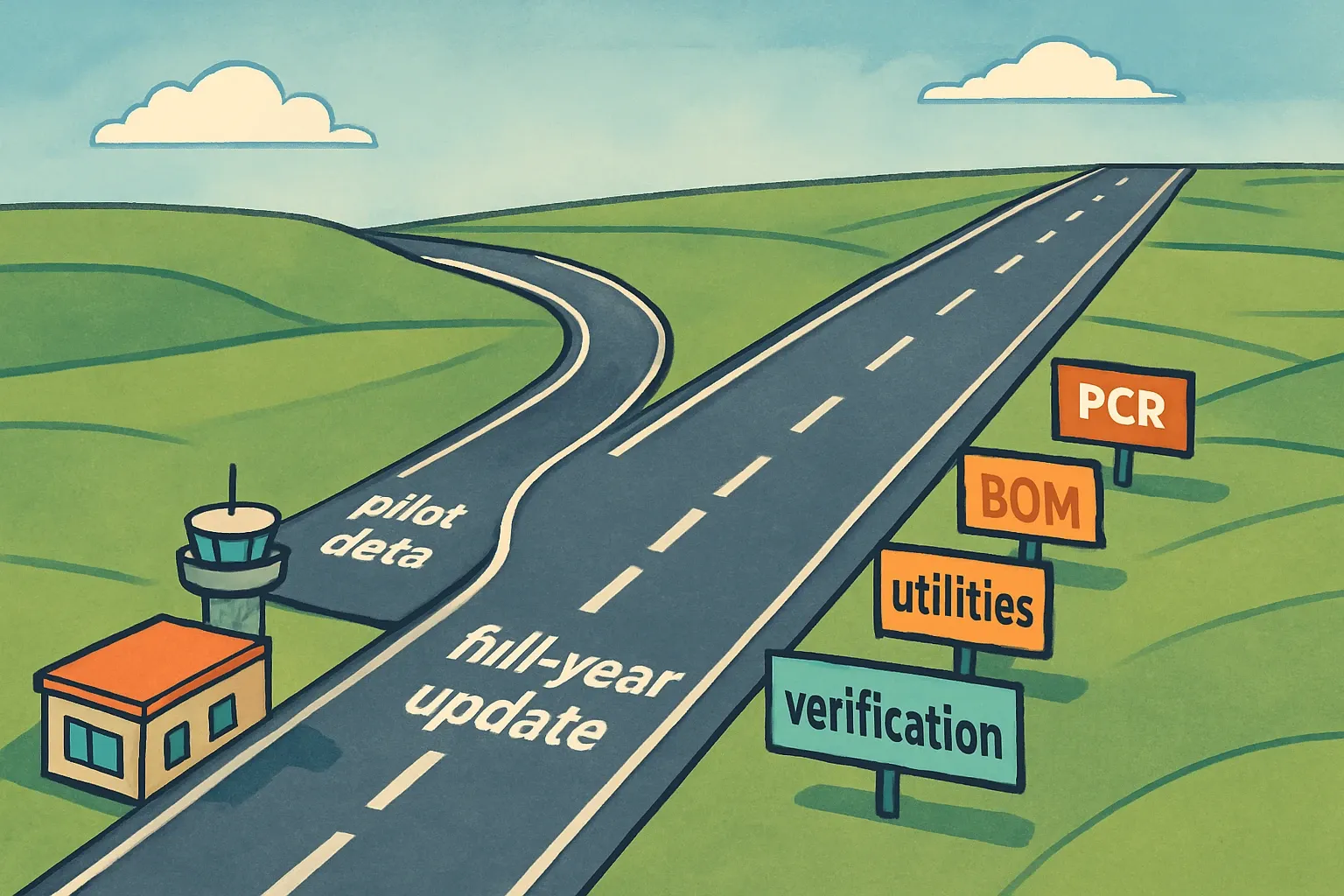
Plan for one reference year that includes production volumes, energy and fuel by meter, purchased materials with suppliers, packaging, scrap and waste, water, and outbound transport. For a brand new line, a prospective EPD may start with at least a few months of data then be updated once a full year exists. Define facility boundaries early so no one is chasing utility bills two days before verification.
Quality and verification
Third‑party verification is non‑negotiable. Reviewers check conformance to the PCR, the LCA model, and the report itself. Several operators note typical validity as five years and that verification timelines span weeks depending on data quality which means clean inputs save real time on the back end (IBU, 2024) (IBU, 2024).
Timeline expectations without the hand‑waving
Internal data work is the long pole, not the LCA modeling. Teams that centralize bills of materials, meters, and shipping records hit predictable schedules. EPDs can be produced far faster when the heavy lifting of cross‑plant data collection is managed for you rather than left to already stretched plant and product leads.
Building the smallest EPD set that wins bids
Start with the SKUs that drive margin and repeat specs. Cover each major formulation and each plant that materially changes impacts. Add A4 details when freight is a big slice. If you sell into public projects with Buy Clean style procurement, publish early for the categories that trigger EPD requirements to avoid last minute substitutions.
Comparison caution that protects your brand
EPDs enable comparisons only within the same PCR and declared scope. If a competitor’s EPD uses a different PCR or excludes modules you include, call that out in submittals. Protect your story by keeping your EPDs away from the cliff edge of expiry, buyers notice when a document is weeks from timing out.
What to look for in an EPD partner
Two things pay off. First, white‑glove data collection that chases and organizes your evidence so engineers and plant leads stay focused on making product. Second, experience with construction PCRs and operators so the report clears verification first time. Speed, ease, quality, completeness. Everything else is decoration.
The landscape, boiled down
If you were searching epd for construction products, here is the short answer. Use a recognized PCR, model the right modules, publish with a reputable operator, and keep validity on a five‑year rhythm backed by a maintenance plan. LEED v5 is now on a clear timetable which makes EPDs an even safer bet for specifications through the second half of this decade (USGBC, 2025) (USGBC, 2025). Do the fundamentals well and your product gets chosen for what it is, not because a default database guessed too high. That is definately worth it.