What the circular economy actually means
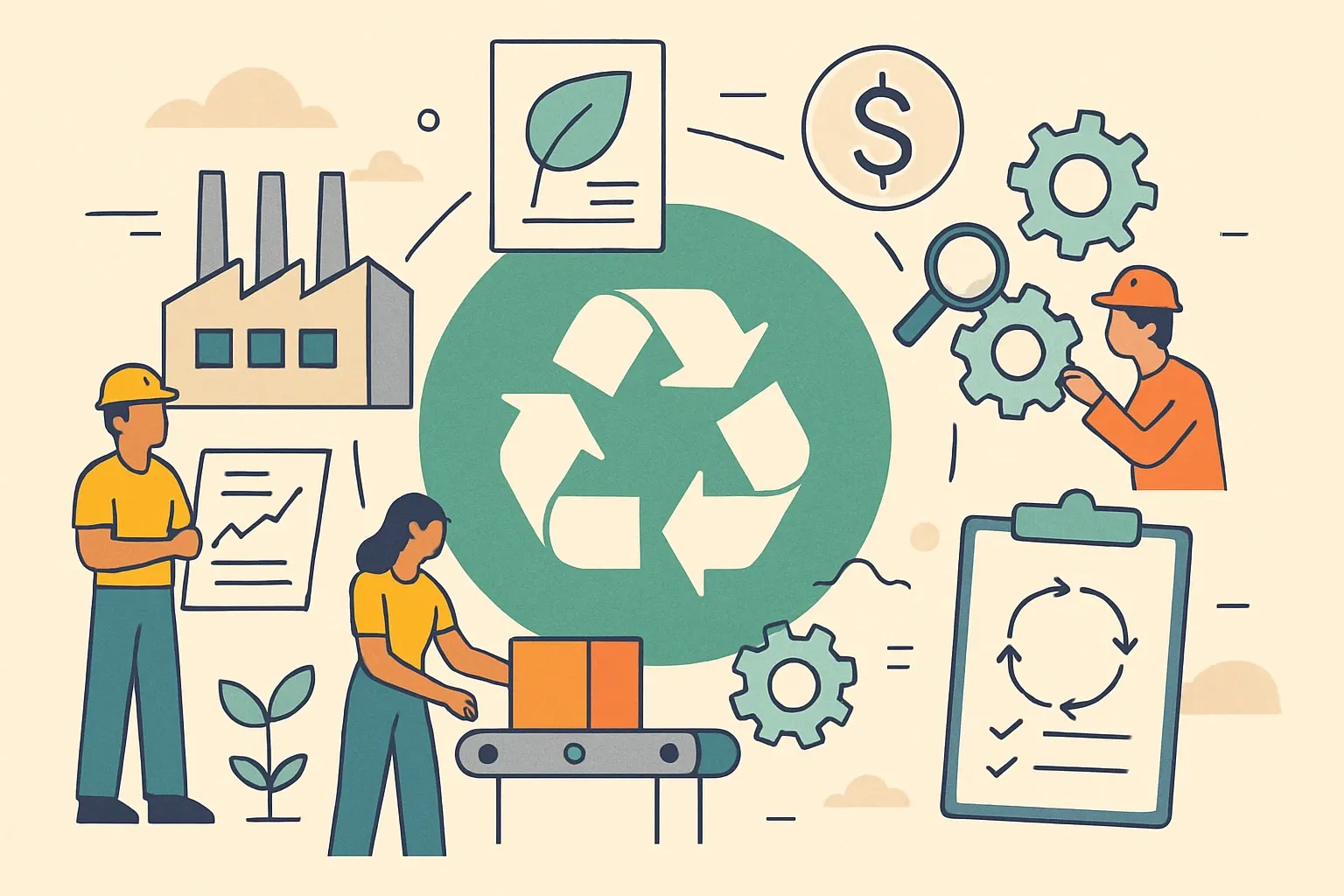
A circular economy keeps materials at their highest value through many lives. Think of it like a pit crew for products, where repair, remanufacture, and recycling are the quick tire changes that get materials back on track. For manufacturers, the play is to narrow material use, slow replacement, and cycle inputs back in.
Why it matters to construction manufacturers now
Procurement teams want quantifiable, third party verified data, not promises. LEED v5 is steering the market toward whole life carbon and product transparency, so EPDs become a default filter rather than a nice to have. When a product lacks an EPD, project teams often must assume higher impacts, which lowers the chance of getting specified at parity on price.
The EPD link, where circularity shows up in LCAs
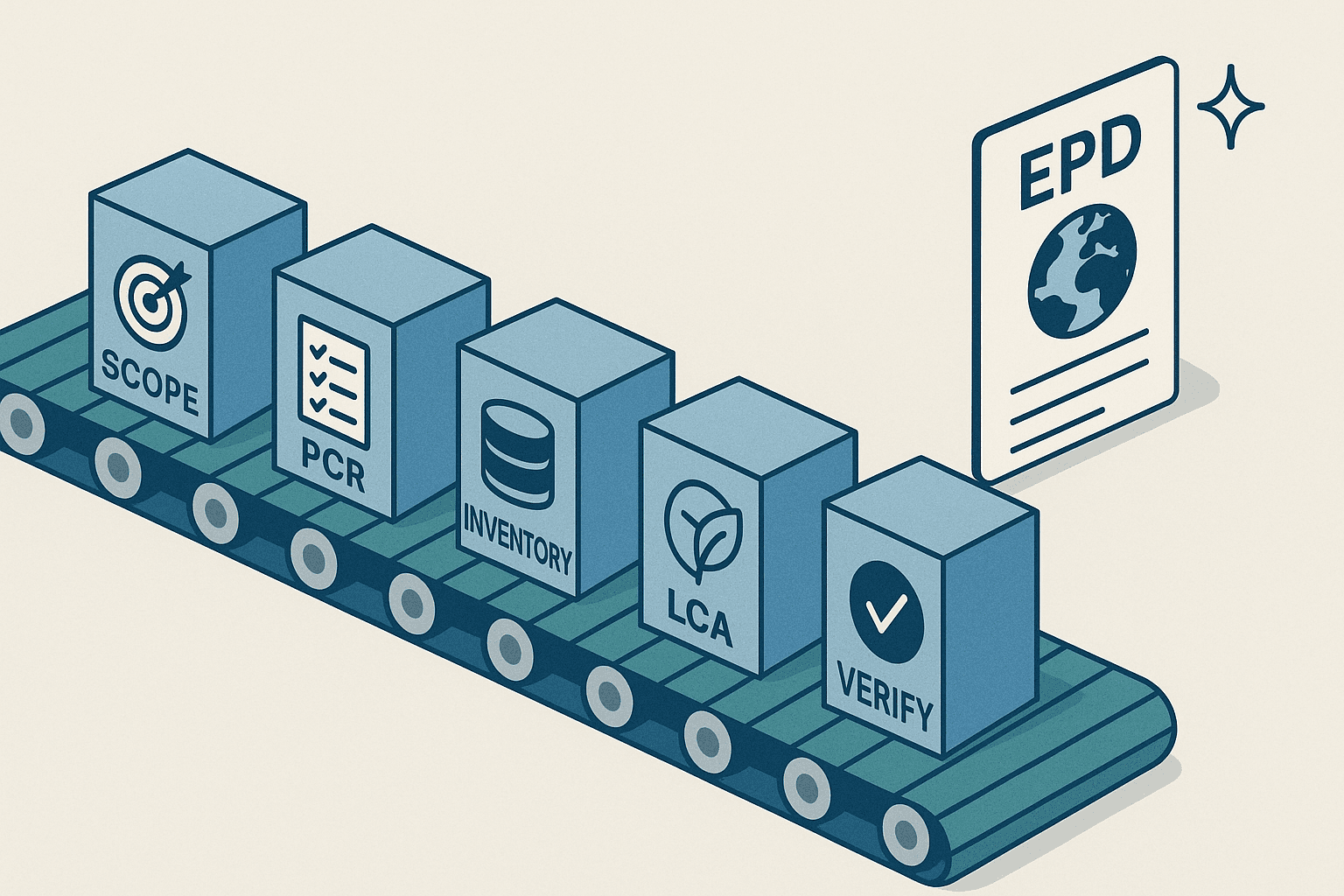
EPDs report modules that track impacts from cradle to end of life, and they can account for design choices like high recycled content, easy disassembly, and realistic take back rates. Under EN 15804 A2, Module D captures benefits beyond the system boundary when materials are recovered and substitute primary production, which is the accounting backbone for circular claims. The result is not just a better story, it is a better number on the page the estimator reads.
Credible numbers to keep in view
The global economy is only about 7.2% circular, which signals a large runway for material recovery and secondary feedstock markets (Circle Economy, 2024). Secondary aluminium typically needs about 5% of the energy required for primary production, which is why clean scrap flows and alloy control matter so much for EPD gains (IEA Aluminium, 2024). Cement and concrete are under pressure, with the cement sector responsible for roughly 7% of energy related CO2 emissions, so designing for clinker efficient mixes and high quality reclaimed aggregates is commercially relevant (IEA Cement, 2024).
Want to enhance your EPD strategy in a circular economy?
Follow us on LinkedIn for insights that help you unlock market opportunities and win more projects.
Data to collect once, then reuse everywhere
What gets measured moves faster through LCA and EPD reviews. Capture these items at the source, then update on a cadence that matches your reference year.
- Verified recycled content certificates by batch and supplier, including alloy or grade details.
- Scrap generation, internal re melt rates, and external scrap sales with moisture and contamination notes.
- Take back volumes, re use yields, and quality specs for inbound recovered material.
- Disassembly minutes per unit, fastener types, and mono material shares.
- Transport legs for inbound materials and outbound returns, with actual mode and distances.
Circular design moves that pay back
Design for repair with replaceable wear parts and standard fasteners that basic tools can handle. Favor mono material assemblies or clearly separable layers so disassembly takes minutes, not hours. Publish clear material IDs and treatment guidance on the product or a QR tag, a tiny step that prevents downcycling later.
- Target recylced content where it does not compromise performance, document it to the lot.
- Write refurbishment procedures into manuals so service teams choose repair over replace.
- Pilot take back in one region with tight quality control, then scale.
Picking an EPD partner that accelerates circular progress
Look for a team that collects data directly from operations, since that is where circular performance lives. They should benchmark PCR options used by peers, model realistic end of life scenarios, and be comfortable publishing with multiple program operators in the US and EU. Most important, they remove the heavy data lift from engineering and plant leaders so those teams keep the line running while the paperwork moves.
From idea to spec, close the loop on paper and in practice
Circularity earns trust when the numbers match the promise. Bring operations data into the LCA, publish the EPD, and let procurement teams see the recovery pathways that keep value in the system. The sooner that is visible, the fewer bids fall through invisible cracks.