The EPD provider landscape, decoded
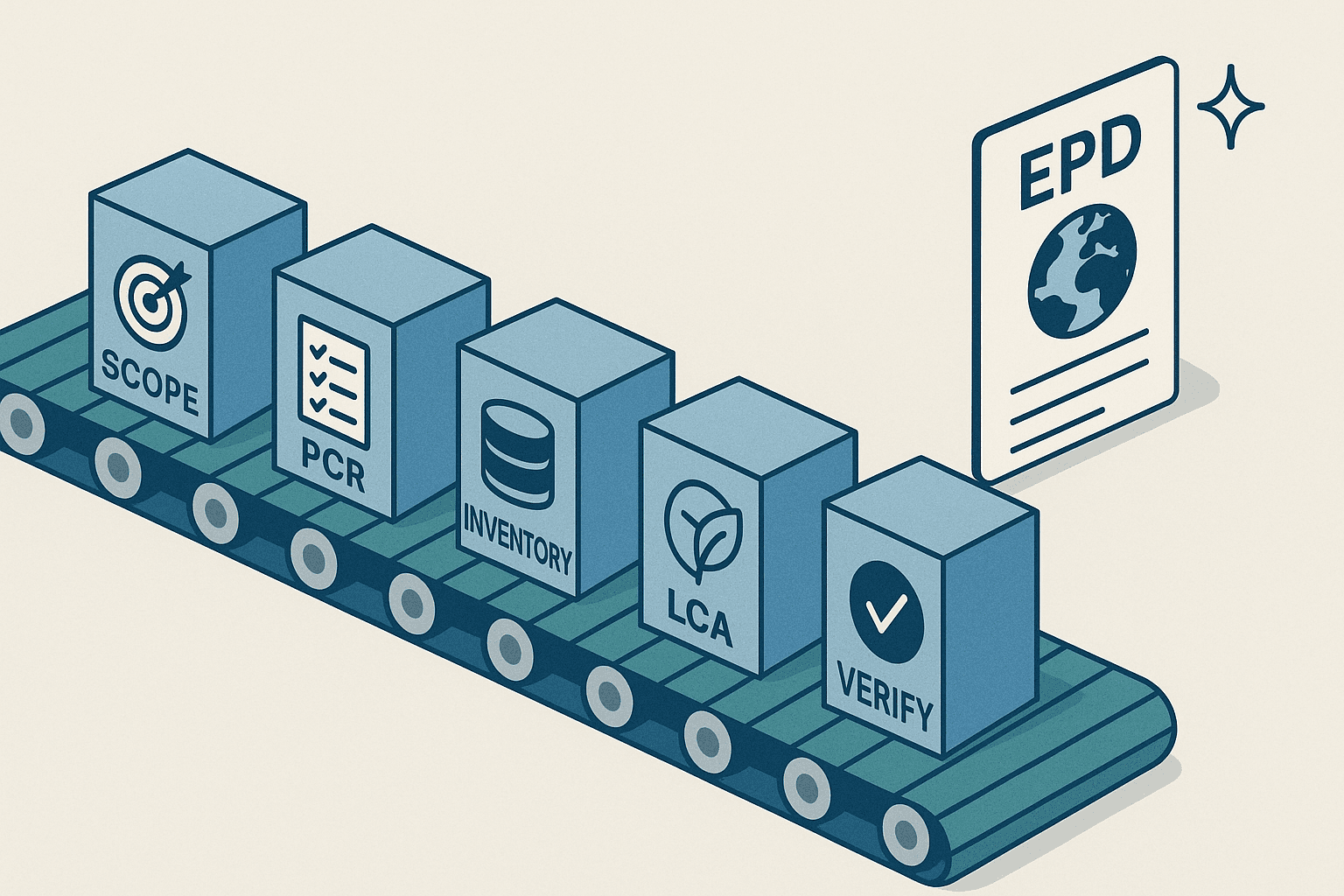
“EPD provider” usually means one of three roles. An LCA practitioner models your product and writes the technical report. A program operator publishes the declaration and governs rules. An independent verifier checks conformity before publication. Some firms combine roles and others stay in one lane. What you need is orchestration that keeps all three moving in lock‑step.
Standards and PCRs are the rulebook
Two standards shape almost everything: ISO 14025 sets Type III EPD principles, and EN 15804 defines construction‑product requirements. The Product Category Rule (PCR) is the sport‑specific playbook. Good partners benchmark the PCR used by competitors, check its revision window, and confirm the operator that will publish. That alignment avoids preventable rework and delays.
Validity, renewals, and the timing trap
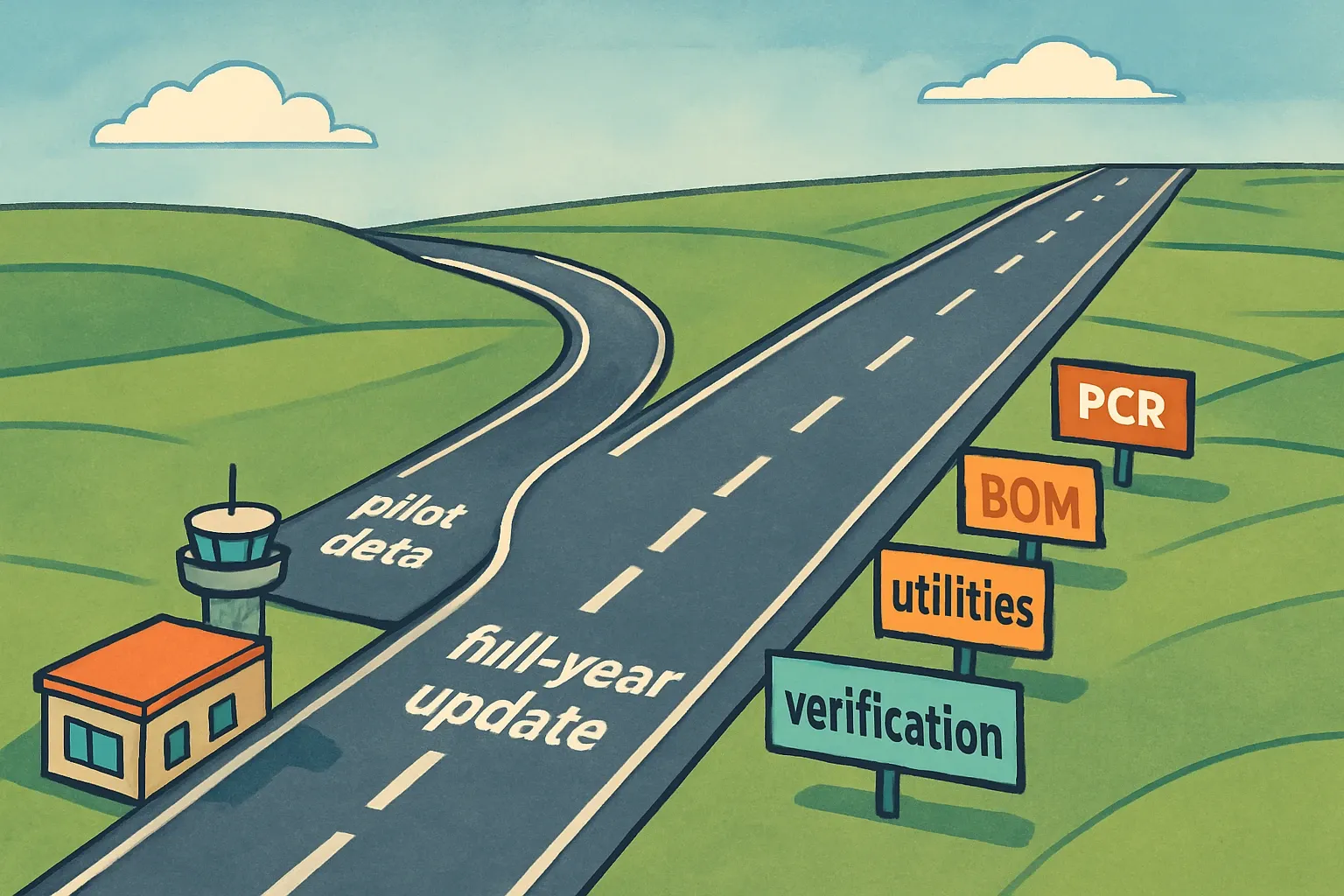
Most EPDs are valid for five years, then require an update. That is stated plainly by leading operators like IBU and EPD International (IBU, 2024) (EPD International FAQ, 2024). Plan your renewal backward from critical bid seasons so you don’t expire mid‑pipeline. If your PCR updates during that window, expect method changes and additional disclosures rather than a simple copy‑paste.
What changed with EN 15804+A2
A2 expands the required impact reporting to 13 core indicators, with six additional indicators used in project reports. That is a big jump from the older seven and it changes comparability across versions (Nordic Council of Ministers, 2024). Providers must evidence how they handle characterization factor updates and the four GWP splits so your carbon story stays consistent across SKUs.
Data collection is the real schedule driver
An EPD lives or dies on primary data quality. The provider you want will map meters and meters to product, reconcile mass balance, and pre‑flight utility invoices, waste manifests, and transport lanes before a single impact result is shown. Think film production: the audit‑ready “shoot” is fast when the location scouting and permits are meticulous. Sloppy prep? Retakes.
Want to streamline your EPD process?
Follow us on LinkedIn for insights that help you select the right EPD provider and unlock commercial benefits for your projects.
Program operator choice, without drama
Publishing with Smart EPD in the U.S. or IBU in Europe both works for construction markets. What matters is operator fit for your PCR, geographic recognition, and digital outputs for databases buyers actually use. Ask for XML or ILCD‑ready exports and ECO Platform alignment. LEED v5 is now ratified, so expect specifiers to lean harder on verified product data in submittals (USGBC, 2025) (USGBC LEED v5, 2025).
Verification depth and independence
Third‑party verification is not a rubber stamp. Expect sampling of bills of materials, cross‑checks of allocation logic, and PCR conformance notes. You should see an audit trail from plant data to declared values. If a provider cannot show their pre‑verification checklist, the risk rolls downhill to your launch timeline.
Capacity, fees, and the verifier bottleneck
Verifier scarcity is real. IBU has publicly noted rising verifier costs and set a new verification fee of €2,700 effective September 1, 2025 after increases of roughly 40 percent in recent years (IBU, 2025). That is a market signal to plan slots early and avoid rush scenarios that inflate internal effort.
The commercial lens specifiers use
On projects that track embodied carbon, products without product‑specific EPDs force teams to apply conservative default factors. That creates a penalty that quietly pushes those products off shortlists. Having a current, verified EPD keeps you in play so you compete on performance and availability rather than price alone. One mid‑sized project win often repays the credential quickly.
Shortlist questions that separate signal from noise
- Which PCR will you use and why is it the best fit for my competitive set?
- How do you collect and QA plant‑level data across multiple sites without overloading our team?
- What is your pre‑verification checklist and how do you prevent last‑minute nonconformities?
- Can you model families and variants together so renewals scale, not multiply?
- Which program operator will publish and what digital outputs do we recieve beyond the PDF?
- How will you manage renewal timing against PCR changes and our bid calendar?
A practical way to choose
Pick the EPD service provider that proves mastery of three things in one plan. First, ruthless data choreography that frees operations and R&D. Second, PCR fluency that avoids method surprises. Third, verifiable outputs ready for operator publication and database ingestion. Get those right and the rest is logistics. The result feels simple because the hard work is handled. That is how EPDs start pulling revenue, not attention.