The headline goals, in plain English
Wisconsin set a target for all electricity consumed in‑state to be 100 percent carbon‑free by 2050. That is the north star shaping public investment and procurement choices (OSCE, 2025) (OSCE, 2025). Utilities are projected to cut emissions 72 percent by 2030, which keeps buyers focused on operational and embodied carbon together (WIGOV, 2025) (WIGOV, 2025).
Why this touches material suppliers now
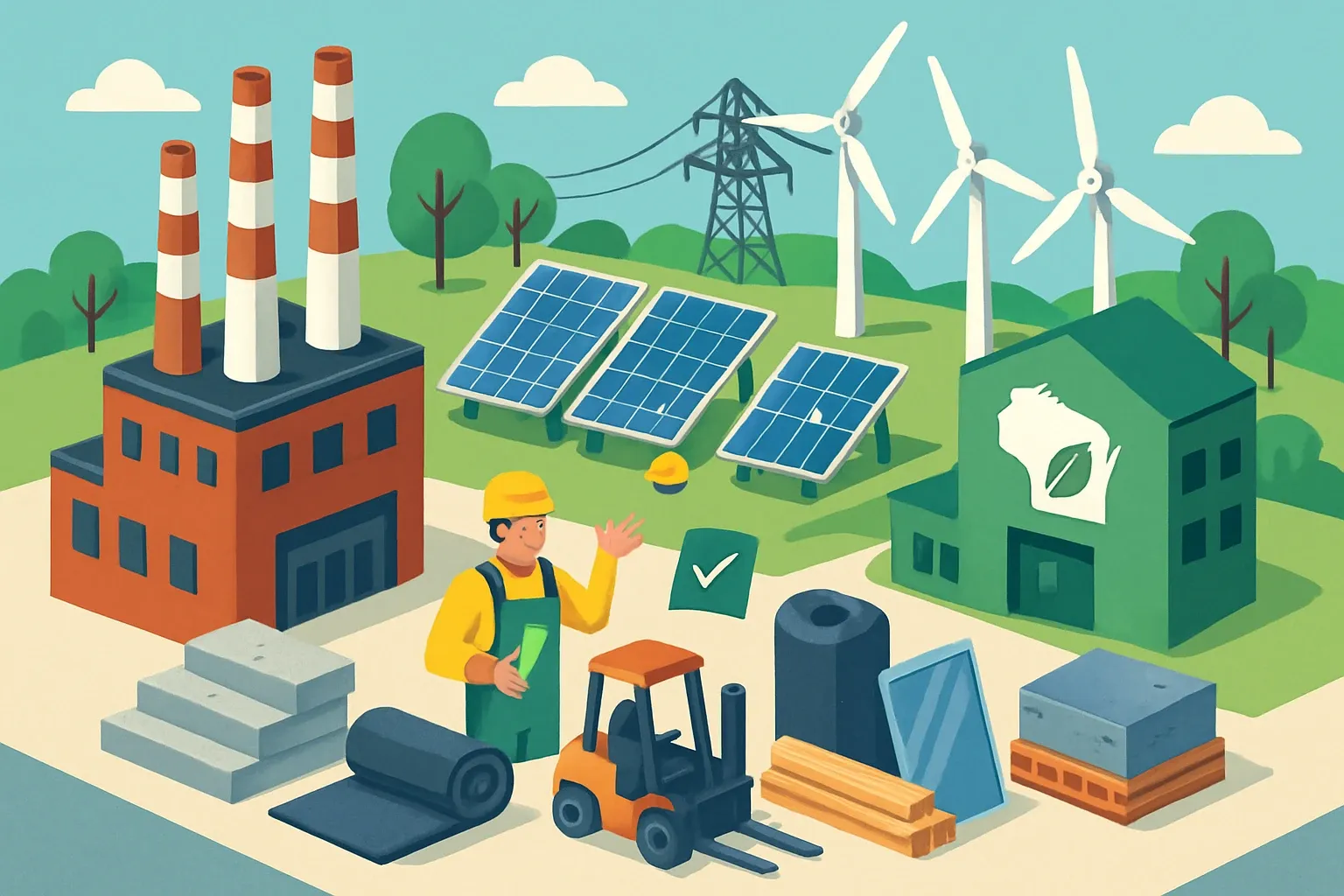
The plan explicitly calls for modernizing buildings and industry, including developing low‑carbon building materials procurement policies. For transportation, the state DOT secured about $31.9 million to pilot low‑carbon construction materials and set contract benchmarks, which means verifiable carbon numbers will be requested on submittals (FHWA, 2024) (FHWA, 2024). That verification is typically an EPD with facility‑specific data.
Follow the money and the metrics
Wisconsin launched Home Efficiency Rebates and Home Electrification and Appliance Rebates first in the nation, with over $2 million already paid to households, a signal that state programs are operational even as federal funding landscapes shift (WIGOV, 2025). The Public Service Commission has also advanced large clean‑energy builds, including a 1300 MW solar project paired with 300 MW storage, which will pressure building loads to get cleaner upstream and downstream (WIGOV, 2025).
Grid capacity is catching up
Transmission additions like the 102‑mile Cardinal‑Hickory Creek line increase renewable deliverability into Dane County and beyond, improving reliability for electrified sites that specify lower‑carbon products (AP, 2024). When owners believe the grid can carry more clean power, they look next at materials, and they ask for third‑party numbers.
What procurement pilots really check
Pilots under the Low Carbon Transportation Materials program reward provable, below‑baseline global warming potential for concrete and asphalt. Expect requests for mix‑level or plant‑level EPDs that disclose A1 to A3 impacts, cement content, and SCM substitutions, and for asphalt, RAP and binder details. If thresholds are set, submittals without product‑specific EPDs often default to conservative assumptions that make bids less competitive.
Navigating compliance in a changing landscape?
Follow us on LinkedIn for insights that help you stay ahead in winning projects and improving your ROI.
EPDs: the fastest path to stay in the spec
An EPD is not a trophy, it’s the scorecard that removes penalties in carbon‑accounted projects. For many public owners, a current, third‑party verified, product‑specific EPD is the difference between being considered or being cost‑adjusted out. Most buyers do not split hairs on whether your EPD is 9 or 21 months old within its validity window, they want dependabilty and compliance.
Picking PCRs without drama
A PCR is the rulebook of Monopoly, ignore it and the game falls apart. Choose the PCR your competitors already use when one exists, check expiry dates, and align with a program operator accepted by your target owners. If your category lacks a specific PCR, a general construction materials PCR can be a pragmatic bridge while industry‑specific rules mature.
A Wisconsin‑ready EPD action list
- Triage SKUs that touch public work first, especially concrete, asphalt, structural steel, rebar, insulation, glass, and wood.
- Lock a clean reference year and gather electricity, fuel, inputs, scrap, waste, and transport data by facility.
- Align mixes and formulations to likely bid thresholds, then test plant‑specific EPDs against regional baselines.
- Map which owners may require project‑specific bills of materials tied to EPDs, then prep submittal templates.
- Build a renewal calendar so nothing expires within an active pursuit window, and recieve alerts 6 months ahead.
Watchlist for 2026 bids
Expect more RFP language tying award points to EPD‑reported GWP, plus optional alternates for lower‑carbon mixes. Building code updates that favor electrification and efficiency will shift operational demand, while state pilots continue to refine embodied‑carbon benchmarks. If thresholds tighten, documented improvements like clinker substitution, optimized aggregate gradation, or biomass‑derived binders can preserve margins.
Bottom line for Wisconsin manufacturers
The plan’s direction is stable even as national policy winds shift. Public owners are moving from promises to proof, and EPDs are the fastest way to show credible reductions without rewriting your whole process. Move early, standardize data collection, and publish where your buyers look. That is how you keep your product specified more often and shorten bid cycles.
(Goals for 2050 and plan overview sourced from the Wisconsin Office of Sustainability and Clean Energy, 2025) (OSCE, 2025). Utility emissions projection, largest solar project and rebate totals from the Governor’s Office 2025 progress update (WIGOV, 2025) (WIGOV, 2025). Low‑carbon materials grant amount from FHWA’s 2024 awards list (FHWA, 2024) (FHWA, 2024). Transmission line completion from Associated Press 2024 (AP, 2024).)}} continuous adjustments may apply as agencies update guidance.