EO 20-01 in plain English
EO 20-01 tells state agencies to choose lower‑emissions options whenever workable and cost‑effective, to design new state‑owned buildings to be zero energy or zero energy‑capable, and to consider net‑embodied carbon in those designs. It also folds environmental purchasing and toxics reduction into everyday procurement decisions.
Think of it as Washington’s operating system for cleaner state projects. It sets the tone that specifications will favor verifiable environmental data, not promises.
Why that points straight at EPDs
Embodied carbon is the lion’s share of a product’s climate story before it reaches the site. Agencies measuring it need third‑party verified numbers, which is exactly what an EPD provides. Manufacturing construction materials accounts for about 11% of annual global greenhouse gas emissions, which is why policy attention is locked here (US EPA, 2024) (US EPA, 2024).
The companion law that makes it concrete
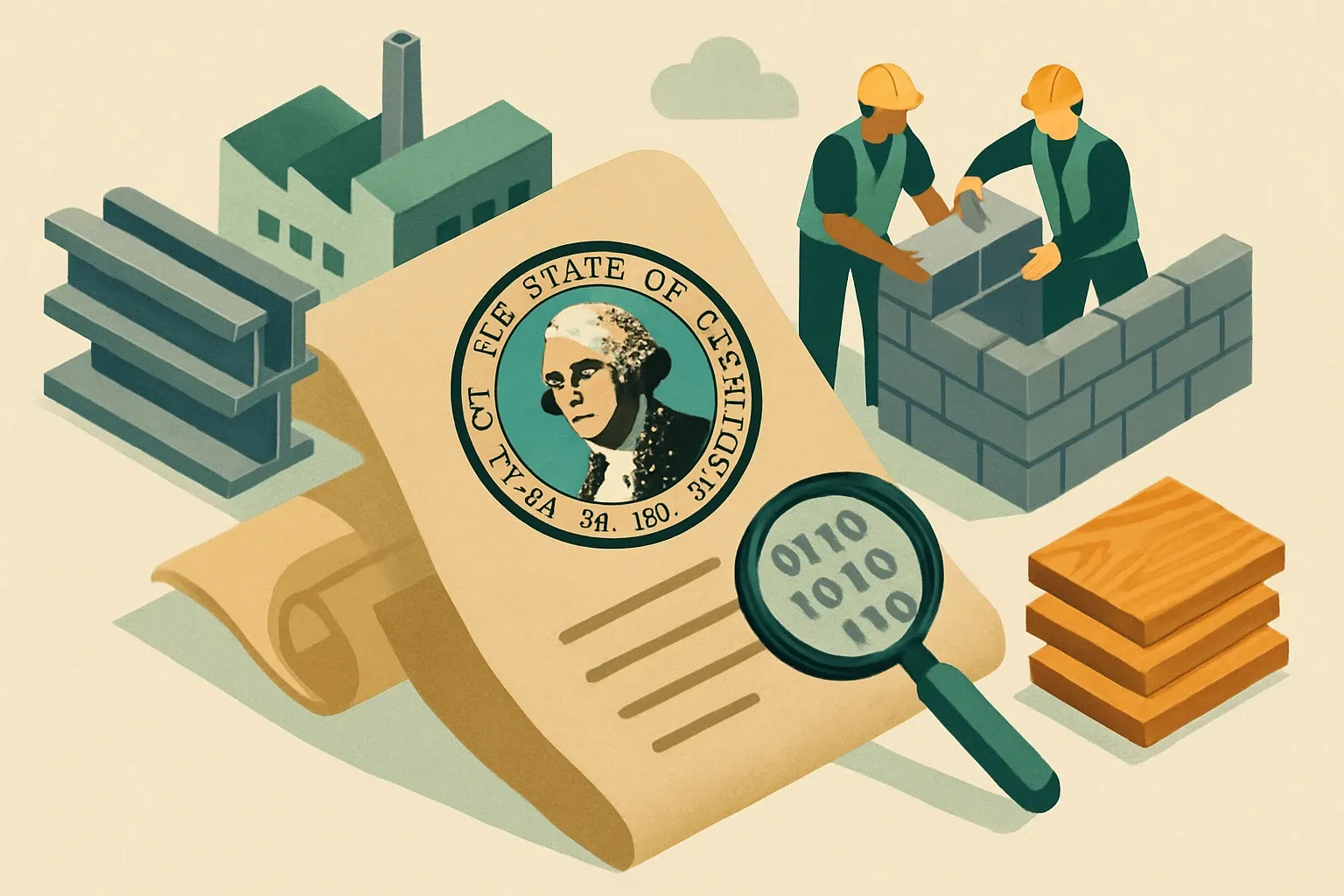
Washington’s 2024 Buy Clean and Buy Fair law requires reporting for covered materials on state building projects and sets dates that drive submittals. For new construction contracts on projects larger than 100,000 gross square feet, reporting begins July 1, 2025. It expands to all covered projects on July 1, 2027. On those projects, contractors must provide a current EPD covering at least 90% of the cost of each covered product category used, along with other basic supplier details (2ESHB 1282 Final Bill Report, 2024) (2ESHB 1282 Final Bill Report, 2024).
Covered products are structural concrete, reinforcing steel, structural steel, and engineered wood. The state’s public database will ingest and publish reported GWP values, so clarity and completeness matter.
Ready to navigate new environmental regulations?
Follow us on LinkedIn for updates that help you stay compliant and win more tenders.
What bidders will likely be asked for
On Washington state projects, expect specifications and submittal portals to ask for:
- A current, third‑party verified, product‑specific or supply‑chain‑specific EPD that matches what is actually supplied.
- Basic facility information and manufacturer location aligned to the EPD’s declared unit and scope.
- Any available HPD for the product, plus simple supplier conduct disclosures when requested.
Treat this like TSA PreCheck for materials. Clean files glide through. Mismatches trigger extra screening that eats bid time.
How to prepare quickly without chaos
Start with a fast gap scan. Map your products against the covered categories, then stack‑rank by Washington sales potential and project size. Pick the right PCR, confirm reference year data, and align plant utility, fuels, and allocation methods with that PCR’s rules.
Choose a partner that handles white‑glove data wrangling across plants, ERP, and suppliers so your engineers stay focused on production instead of chasing utility bills. We advocate for publishing with a program operator that fits your market plans, whether Smart EPD, IBU, or others.
Watch the calendar signals
The clean‑operations drumbeat will not quiet down. Beyond EO 20-01 and BCBF, the Clean Buildings Performance Standard sets energy compliance deadlines for large existing buildings, which keeps agencies focused on performance and cost of carbon. Tier 1 reporting milestones hit June 1, 2026 for buildings over 220,000 square feet and June 1, 2027 for buildings over 90,000 square feet (WA Commerce CBPS, 2025) (WA Commerce CBPS, 2025). Different policy, same direction of travel.
Turn it into a revenue play
EPDs are not just compliance. They are the pass that lets your product compete on performance instead of unit price alone when embodied‑carbon accounting is required. Organized suppliers shorten submittal cycles and reduce substitution risk. That is how specs stick.
Bottom line for Washington suppliers
EO 20-01 sets the expectation that state projects will pick lower‑emissions options and factor embodied carbon. The 2024 law adds dates and a reporting gate that favors manufacturers with clean, project‑ready EPDs. Get your data house in order now. It is definately easier to win when your paperwork is already doing the talking.