What the order actually does
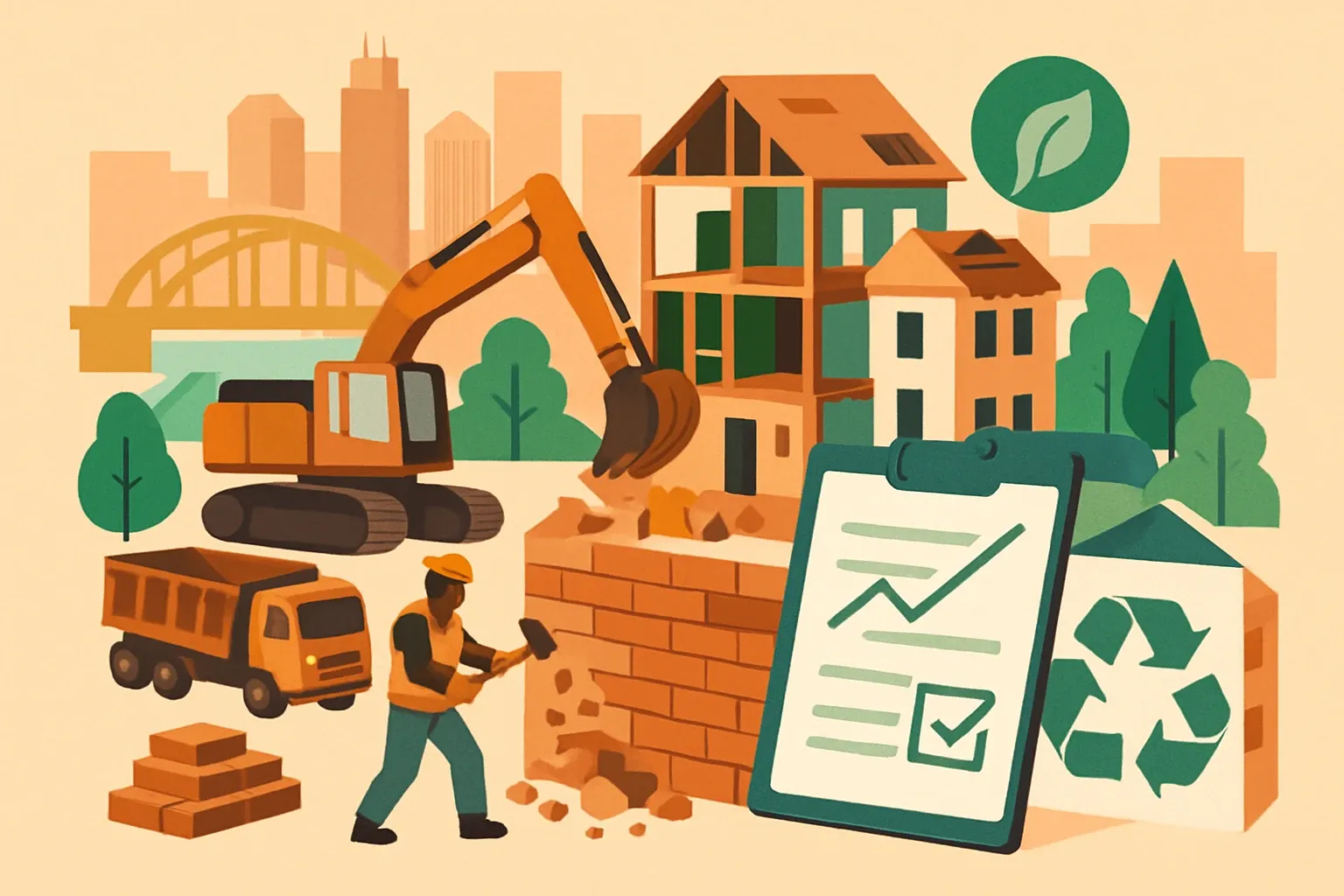
In April 2021, Pittsburgh issued an executive order to pilot deconstruction on City‑owned buildings and to set recovery standards on City‑funded demolitions. The goal is to salvage materials, cut landfill use, and build local jobs. It also created a Deconstruction Action Council and directed departments to embed community engagement and reuse into workflows.
Scope and where manufacturers feel it
This is not a blanket rule for private projects. It targets City assets and City‑funded work, which means municipal RFPs and capital programs will increasingly favor reuse plans and low‑carbon materials. If you supply into civic buildings, schools, or City-backed housing, expect tighter submittals.
Why Pittsburgh cares, in one chart’s worth of facts
The United States generated about 600 million tons of construction and demolition debris in 2018, and over 90 percent of that came from demolition rather than new construction (US EPA, 2025) (US EPA, 2025). Pittsburgh is also chasing a 90 percent diversion goal on the road to Zero Waste by 2030, which puts reuse and recycling at center stage (City of Pittsburgh Zero Waste, 2025) (City of Pittsburgh Zero Waste, 2025).
What deconstruction means for specs
Deconstruction turns buildings into material banks. Salvaged brick, structural lumber, fixtures, and doors re-enter the market, while only non‑recoverable fractions head to landfill. Cities that adopted similar rules have built steady pipelines of reclaimed stock. Portland reports 702 structures deconstructed since 2016 which normalized salvage in bids and retail supply chains (Portland Bureau of Planning and Sustainability, 2025) (Portland BPS, 2025).
Navigating new environmental regulations in construction?
Follow us on LinkedIn for updates on compliance that can help you win more tenders.
Where EPDs come in
EPDs are the proof points for new materials that sit next to reclaimed components. When a spec package pairs reused doors with new gypsum or coatings, the new items need verified EPDs to keep project carbon under budget. Without them, teams default to conservative assumptions that make a product look worse on paper even if reality is kinder.
Practical implications for manufacturers
Expect more RFP language asking for deconstruction‑friendly packaging, take‑back options, and product EPDs tied to current PCRs. Sales cycles will include carbon checks alongside price and lead time. QA will be asked to confirm whether recycled content streams are post‑consumer or pre‑consumer and how that shows up in the LCA model.
Speed matters more than ever
Municipal timelines move fast once funding is locked. Showing up with product‑specific EPDs for your top SKUs means you clear submittals quickly and avoid last‑minute substitutions. The data lift is real, but offloading the collection and wrangling lets engineering focus on production rather than chasing utility bills and batch sheets. That saves alot of headache.
A simple prep list
- Prioritize SKUs most likely to appear on civic work, then confirm PCR fit and operator.
- Map bill of materials to suppliers and utilities for a clean reference year, including transport.
- Pre‑write a one‑page carbon narrative for bids that pairs your EPD results with any reuse or take‑back offers.
What not to overread
The order does not ban demolition outright, and it does not force private owners to deconstruct. It signals where public money is headed, and that signal is strong enough to influence material choices on mixed‑funding projects and neighborhood pilots.
Closing thought
Pittsburgh is writing a reuse‑first playbook that rewards verified data. Line up your EPDs now, keep PCRs current, and be ready to sit comfortably beside salvaged materials when the next City spec drops.