What LEED Zero Carbon actually measures
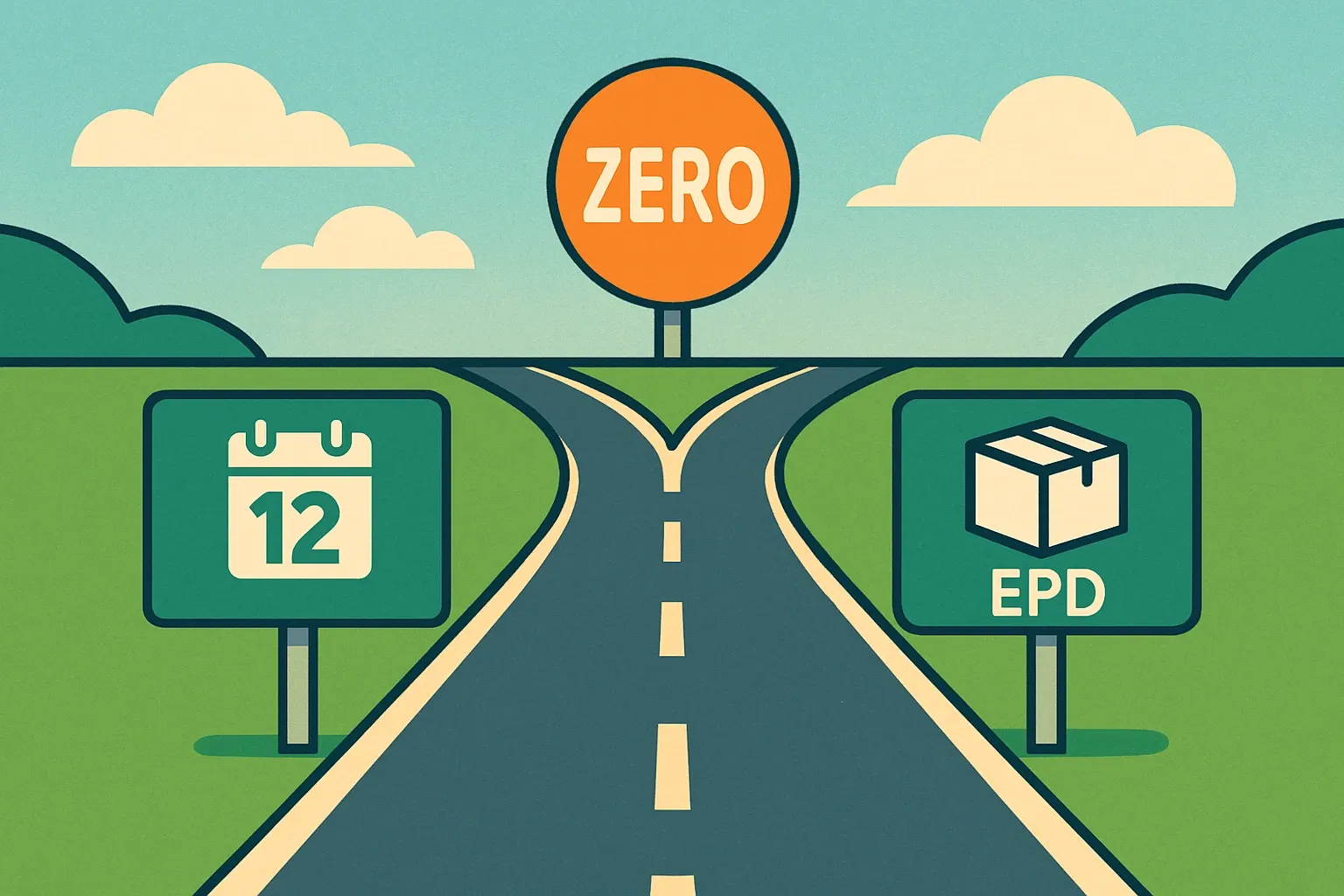
LEED Zero Carbon verifies that a building’s operational greenhouse gas emissions total net zero over a continuous 12‑month period. The certificate is valid for three years, after which the project must demonstrate performance again to keep the status, a bit like renewing a passport (USGBC, 2025) (USGBC, 2025).
The current program focuses on operational carbon from energy use. A draft update published alongside LEED v5 O+M strengthens expectations for onsite combustion, refrigerants, transportation, and nods to embodied carbon. Teams still need 12 months of data, then they document a CO2e balance of zero.
How LEED v5 shifts the landscape
LEED v5, ratified by USGBC members on March 28, 2025, moves materials from simple disclosure toward measured decarbonization, while keeping performance at the center for operations (USGBC, 2025) (USGBC, 2025). For manufacturers that means two lanes. Help owners run low‑carbon buildings today, and prove your products reduce embodied impacts across the bill of materials.
Think of it like a two‑album release. LEED Zero Carbon is the live performance recording over a year of operations. LEED v5 materials credits are the studio tracks where your EPDs and optimizations get mixed, mastered, and scored.
Where EPDs count for points right now
Most projects still lean on LEED v4.1 materials pathways during the transition to v5. Under the MR credit for Environmental Product Declarations, Option 1 awards a point when the team uses at least 20 qualifying products from five manufacturers. A product‑specific Type III EPD with external review counts as 1.5 products toward that tally (USGBC, 2024) (USGBC, 2024).
This math matters. One well prepared EPD can pull more than its weight, especially in divisions where the project buys many line items. It is the quickest bridge between your documentation and the project’s scoreboard.
LEED Zero Carbon and materials, the practical link
LEED Zero Carbon does not award points for your EPD directly. It does shape owner priorities. A team chasing zero operational carbon will watch embodied carbon like a hawk to avoid undercutting their public narrative. Product‑specific EPDs with clear A1 to A3 GWP let them pick low‑carbon options without resorting to rough database estimates that can penalize you.
If the draft update to LEED Zero Carbon becomes official, projects will face tighter expectations around combustion and refrigerants, plus clearer expectations for transport and embodied impacts. Your EPDs are the simplest way to show you are already aligned.
Navigating LEED Zero Carbon requirements?
Follow us on LinkedIn for updates that help you stay compliant and competitive in your projects.
What manufacturers can do now
Publish product‑specific Type III EPDs that follow EN 15804 or ISO 21930, cover at least cradle‑to‑gate, and include transparent assumptions. If your product family spans variants, plan the SKUs and product groupings so the EPDs map cleanly to how contractors buy and submittals flow.
Pressure‑test your data trail. Owners pursuing zero will ask for defensible numbers, not marketing lines. A good LCA partner will handle the data wrangling across utilities, materials, and waste, then guide you to the most relevant PCR so your declaration aligns with what competitors use.
Picking the right PCR and program operator
PCRs are the rulebooks. In most categories you will choose an existing, widely used PCR so specifiers can compare apples to apples. A savvy partner checks which PCR your rivals follow, when that PCR expires, and which program operator fits the markets you sell into.
Operator agnosticism helps. Many owners are comfortable with Smart EPD in the U.S. and IBU in Europe, but what matters most is that the document is independently verified and easy to find in submittals.
Reduce your GWP without stalling production
Small, verified shifts often move the needle. Capture and report recycled content correctly, tighten scrap loops, optimize fuel mixes in thermal steps, and pick electricity contracts that prove emissions factors at the plant level. Then reflect those changes in the next EPD update so project teams can count the improvement.
If you pilot a lower‑carbon variant, publish a separate EPD so it can be specified intentionally. Bundling everything into one average can hide your best progress.
Timelines and coordination that actually work
LEED Zero Carbon needs 12 months of metered performance on the owner’s side, which means early material choices must be ready long before occupancy. Build your EPD schedule backward from bid dates and long‑lead items, not from marketing campaign windows. Bring sales, product, and operations to one table so data collection does not bottleneck on a single spreadsheet.
Your LCA partner should provide white‑glove project management, from supplier requests to utility bill pulls, so engineers do not spend evenings chasing decimals they did not create. Busy teams appreciate when they do not have to recieve ten different templates.
A quick reality check on incentives
Policy is moving fast in 2025, and some federal programs shifted this year. LEED remains owner driven. That is good news for manufacturers, because LEED points and a credible decarbonization story travel across borders and project types even when incentives wobble.
The takeaway for product teams
If a project is aiming for LEED Zero Carbon, treat your EPDs as the open book that lets them buy decarbonization with confidence. Use v4.1’s familiar math to deliver points today, and build toward v5’s deeper embodied‑carbon expectations. Keep the documents crisp, verified, and searchable, then let the quality of your data close the distance between your plant and the spec sheet.