Why averages are failing bids
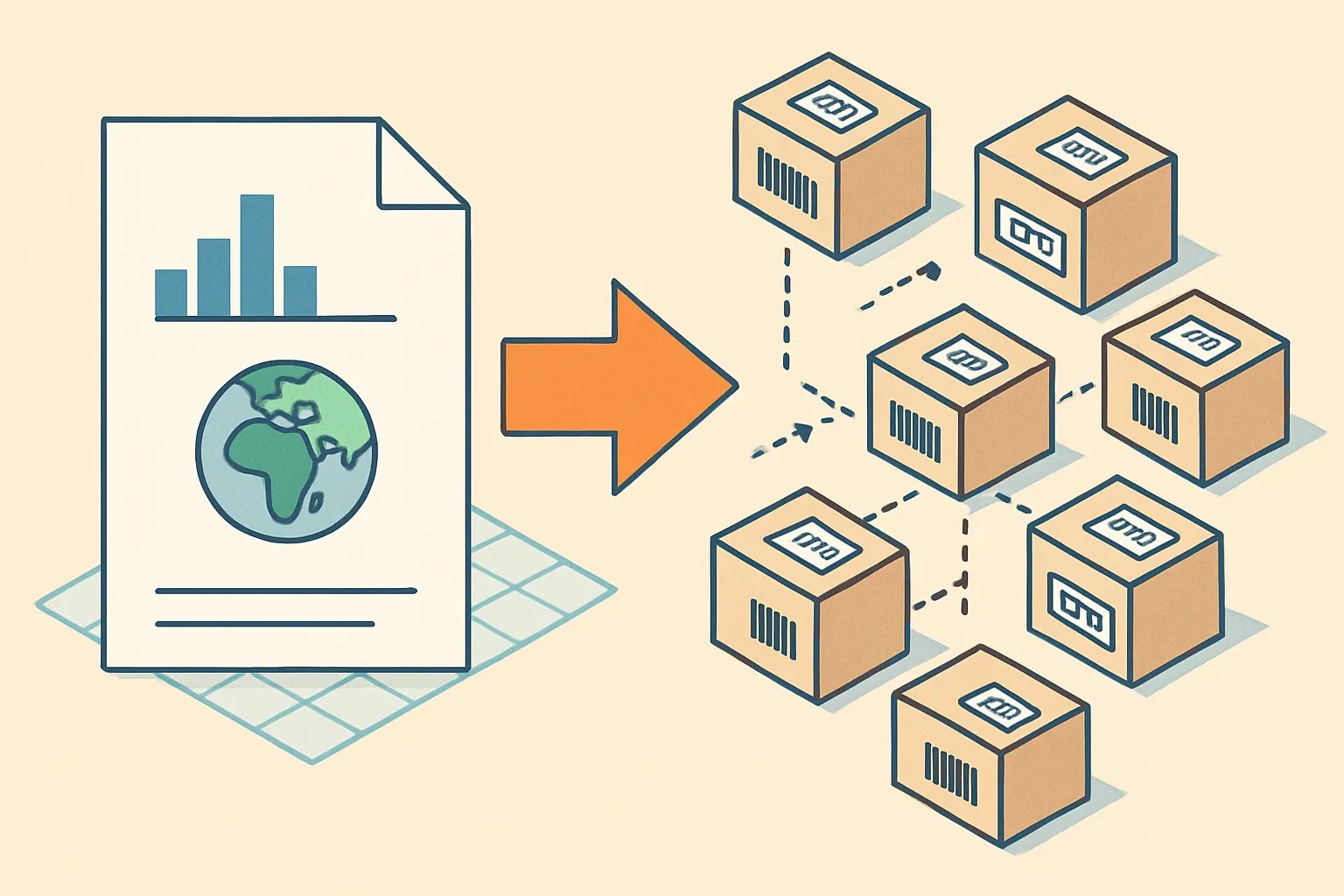
Facility-specific rules are now common. California’s Buy Clean program requires EPDs that represent a single plant or disclose impacts plant by plant, and it rejects industry averages as non compliant ([DGS, 2025](https://www.dgs.ca.gov/PD/Resources/Page-Content/Procurement-Division-Resources-List-Folder/Buy-Clean-California-Act)). Limits are reviewed every three years starting in 2025, so the bar will tighten over time ([Caltrans, 2025](https://epd.dot.ca.gov/help/faq-bcca)). The practical outcome is simple. Generic EPDs miss specs when thresholds bite.
What CPR and CARB really change
Europe’s revised Construction Products Regulation bakes environmental data into the same system as CE marking and rolls in Digital Product Passports, raising the expectation that product facts are machine readable and traceable at scale (Council of the EU, 2024). In California, AB 2446 directs a 20 percent net reduction in embodied carbon by 2030 and 40 percent by 2035, pushing granular measurement and real reductions, not just labels ([CARB, 2024](https://carbstage.arb.ca.gov/es/our-work/programs/embodied-carbon)).
The goal: one model, many SKUs
Think of your LCA like a Lego set. One core build, many snap-on bricks. The core covers materials, energy, yield, and transport. Bricks encode SKU attributes such as dimensions, facers, coatings, and foam densities. When a salesperson configures a product, the model assembles the right bricks and returns an impact result that can be verified.
Start with a reference unit that maps to reality
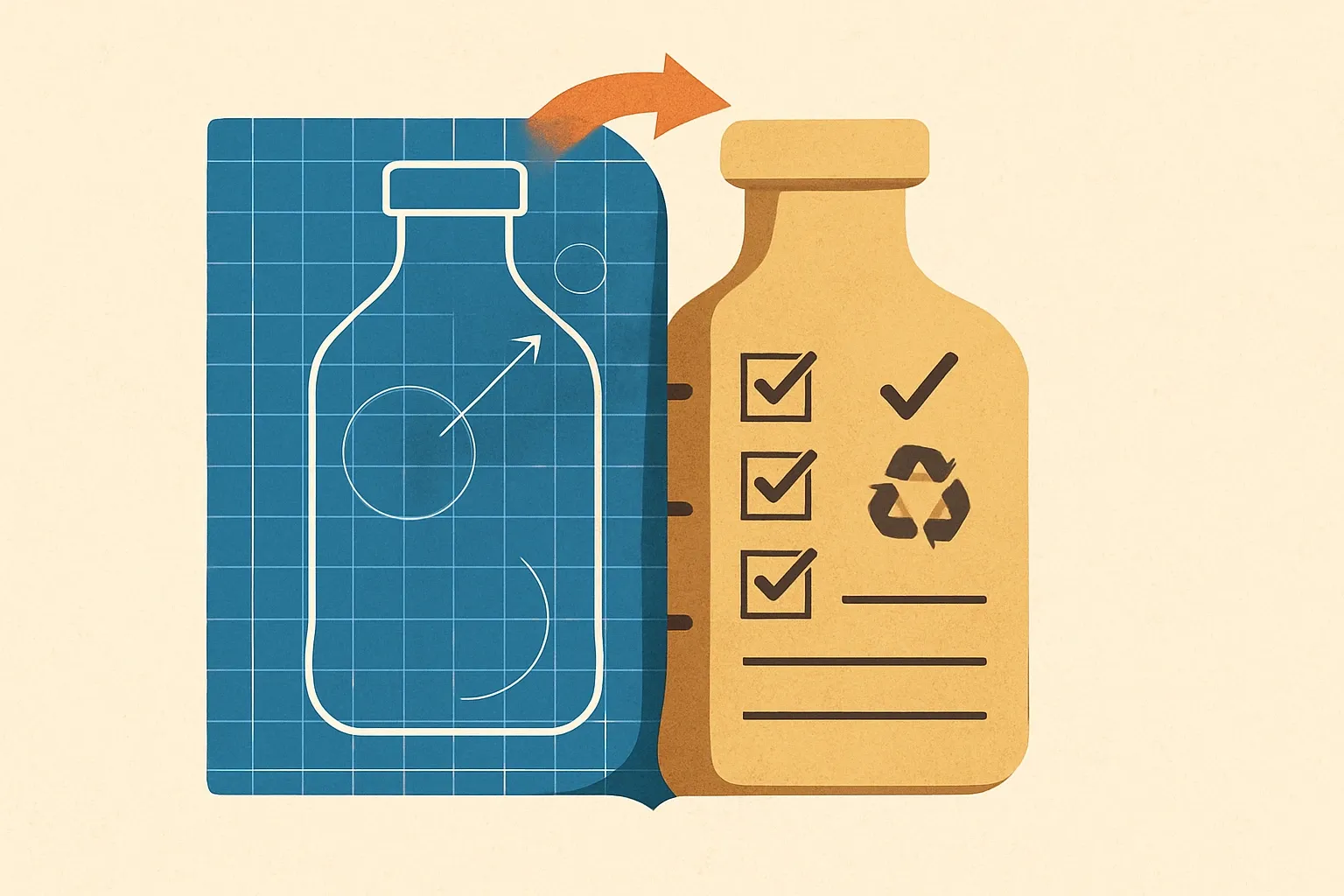
Pick a declared unit your buyers actually ask for. For boards this might be per square meter at a stated thickness. For sealants it may be per kilogram. Build a reference bill of materials, then define transformation rules that translate SKU fields into BOM deltas. If a facer changes, the adhesive layer and cure energy probably change too.
Want to stay ahead in the era of SKU-level EPDs?
Follow us on LinkedIn for insights that help you navigate new regulations and unlock compliance-driven business opportunities.
Model facilities as first‑class citizens
Create facility profiles with grid mix, fuels, scrap, water, packaging, and in‑plant logistics. Tie each SKU to an allowed facility set. When the plant changes, the inventory and A1 to A3 emission factors update. This is how you answer the classic question, which plant is cleanest for this exact product and ship‑to.
Parametric rules that fit how products are sold
Turn common options into functions. Thickness scales core mass with non‑linear trim loss. Color changes pigment and coating loads. Fire‑rated facers trigger a different lamination recipe. Write the rules once, then let the configurator compute impacts at runtime. It feels like Spotify’s playback speed control for LCA.
Verification without chaos
Publish one product‑specific EPD per family with a parameter table that shows declared ranges and named options. Supplement with appendices for plant deltas where your program operator allows it. For high‑volume SKUs, mint stand‑alone EPDs that reuse the same verified model and datasets. Keep a sampling plan so auditors can trace three SKUs back to raw tickets in minutes.
Data plumbing that does not slow you down
Pull SKU attributes from PIM or ERP, not spreadsheets. Store plant utility data in a structured schema with time periods and meters. Freeze a reference year and tag every dataset with that period. Build an approvals queue so changes to recipes or suppliers cannot silently propagate to published numbers. This is boring plumbing that saves you in a crunch.
Outputs that scale
You do not need thousands of static PDFs. Produce a concise, verified PDF for submittals, then a machine‑readable record that maps SKU to facility and parameters for portals and DPP. California agencies and EU buyers will expect both narrative and data payloads. Your sales team will appreciate a single link that always shows the current, compliant result.
A 90 day starter plan
Week 1 to 2. Pick families and a reference unit, list options, list facilities. Week 3 to 6. Build the parametric model, wire data sources, run first plant deltas. Week 7 to 10. Verification prep and pilot EPDs. Week 11 to 13. Roll to more families and stand‑up a simple configurator for sales. It is not easy, but it is definately doable.
The payoff most teams underestimate
When customers ask for the exact SKU at the exact plant, you can answer in hours, not weeks. That keeps bids moving and avoids last‑minute swaps when limits tighten every few years ([Caltrans, 2025](https://epd.dot.ca.gov/help/faq-bcca)). More important, your reductions program speaks in real numbers that line up with AB 2446 and the CPR’s digital workflow, so compliance and commercial momentum grow together.