Start with the data, not the features
An environmental platform should inventory exactly what it ingests. That usually means operational data from plants, supplier and logistics records, utility bills, and limited user account details to run the workspace. Treat these as distinct classes with different rules, and document retention and deletion up front.
Privacy risk drops fast when PII is optional, minimized, and isolated from production LCA datasets. Think of it like a bento box, not a stew. Keep HR or CRM identifiers out of model inputs unless absolutely necessary, and log every cross‑box movement.
Map roles to GDPR in plain language
Identify the controller and the processor for each processing activity. Use a data processing agreement that lists purposes, categories, retention, and subprocessors, and attach technical and organizational measures that are specific, not generic. If you rely on legitimate interests, record the balancing test. If you profile users, keep it explainable and opt‑out capable.
Penalties can bite. GDPR allows fines up to 20 million euros or 4 percent of worldwide annual turnover, whichever is higher (GDPR Article 83, 2016).
EU data residency and lawful transfers you can defend
Default to EU hosting for production data and backups. When data must cross borders, use one of the EU‑approved routes. Many companies rely on the EU‑US Data Privacy Framework, adopted on 10 July 2023, which enables transfers to certified US entities, with SCCs as a fallback when needed (European Commission, 2025). Combine that with encryption in transit and at rest, key rotation, and if possible customer‑managed keys stored in the EU.
If you face German public buyers, expect questions about extraterritorial access risks and key custody. Split secrets, hold KMS in an EU sovereign region, and keep audit logs immutable for the periods your contracts require.
The German lens that speeds approvals
Two names matter in German reviews. BSI C5 is the cloud control catalogue that public buyers recognize. C5:2020 attestation, alongside ISO 27001, remains the common reference for cloud services in Germany (BSI C5:2020, 2020). The BSI Minimum Standard on using external cloud services sets expectations for transparency, auditability, and roles, current version 2.1 from December 2022 (BSI Minimum Standard Cloud v2.1, 2022).
If your platform supports public projects, show a short crosswalk from your controls to IT‑Grundschutz modules for access control, logging, and incident response. That one‑pager often unlocks the next meeting.
Want to navigate EU EPD regulations more efficiently?
Follow us on LinkedIn for insights that help you streamline compliance and unlock new project opportunities.
Where AI in EPD workflows sits under the EU AI Act
Most EPD and LCA use cases are assistive. Think document parsing, data checks, and calculation support. These are typically limited‑risk, which triggers transparency and logging duties rather than the full high‑risk regime. The AI Act entered into force on 1 August 2024, with prohibited practices and AI literacy duties applying from 2 February 2025, obligations for general‑purpose AI from 2 August 2025, and most remaining rules from 2 August 2026. High‑risk AI embedded in regulated products follows by 2 August 2027 (European Commission, 2025).
Non‑compliance penalties for the AI Act reach up to 35 million euros or 7 percent of global turnover for banned practices, and up to 15 million euros or 3 percent for other key obligations (Better Regulation, 2025).
AI governance that calms legal teams
Document the models in use, what they do, and the guardrails. Do not train foundation models on customer data without explicit, revocable consent. Keep a model register, prompt and output logs, and a change‑control process for prompts, embeddings, or calculators that affect results. Provide administrators with switches to disable specific AI features for sensitive projects or buyers.
When AI flags a gap or suggests a value, require a human confirmation before anything hits a declaration. That is good science, and very good compliance.
Security controls checklist for EPD and LCA platforms
- Single sign‑on, role‑based access, and least‑privilege workspaces by product line and plant
- EU region hosting, encryption in transit and at rest, optional customer‑managed keys
- Segregated tenant storage, background jobs that run seperately from interactive user sessions
- Immutable audit logs for data edits, calculations, model prompts, and exports
- Vulnerability management with monthly patch cadences and third‑party pen tests
- Supplier data labeling, pseudonymization where possible, and clear export redaction settings
- Data retention policies tied to contract or regulation, with self‑service deletion
A data flow that passes security review
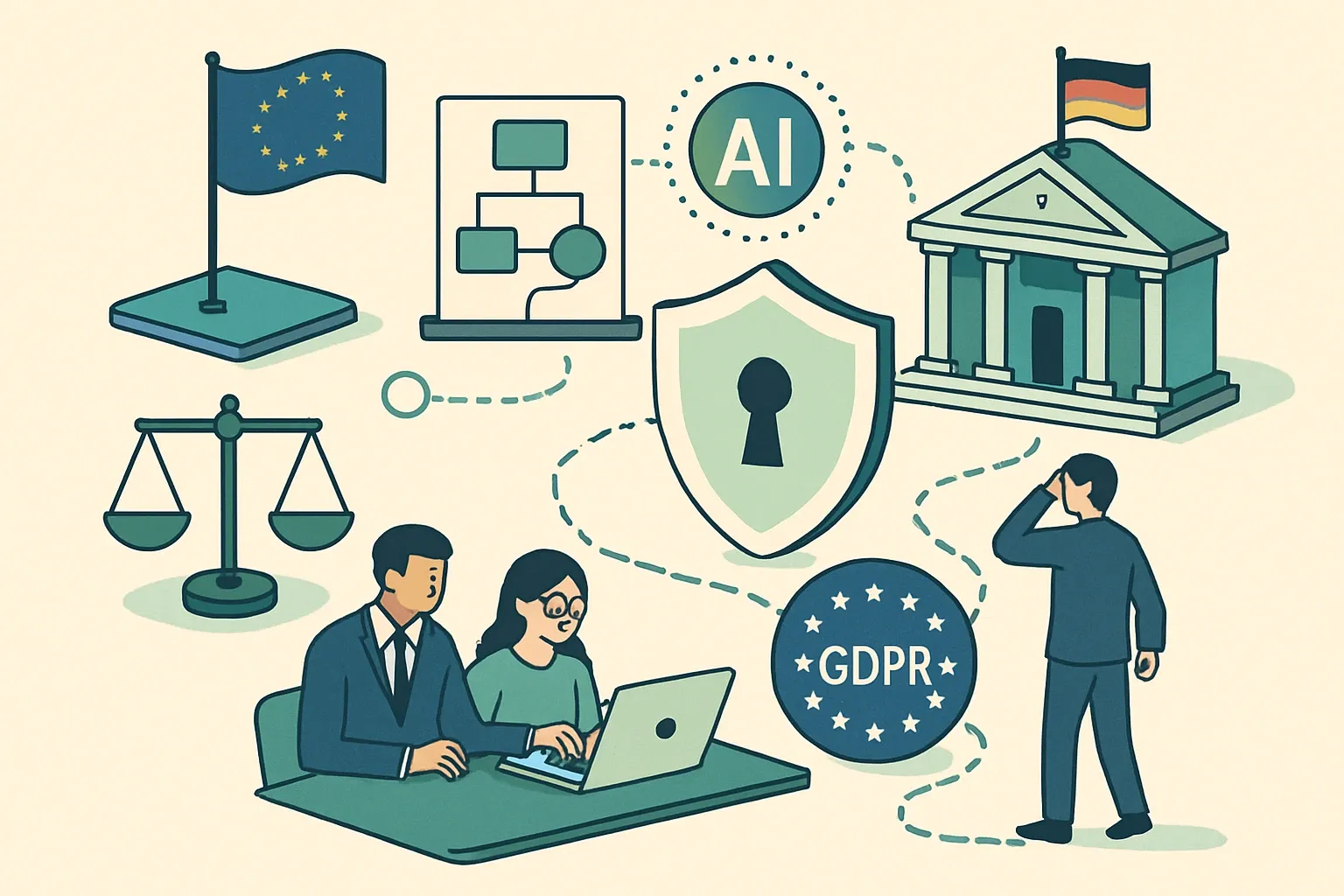
Keep the ingestion path boring. Source systems push files or API payloads into a private EU bucket. A controlled service parses and validates records, strips nonessential identifiers, and stores normalized data in an EU database. AI services read only the minimum fields through a scoped API, return suggestions, and never write directly to the system of record. Users accept or reject suggestions, and the decision is logged with timestamp, user, and reason.
Procurement‑ready artifacts that save weeks
- ISO 27001 certificate and statement of applicability, plus recent SOC 2 Type II if available
- C5 audit report or at least a gap‑analysis to C5 controls with a remediation timeline
- DPA with annexed TOMs, list of subprocessors, and SCCs or DPF participation details
- Records of Processing Activities and a DPIA template for common EPD use cases
- AI model register, model cards, and a simple mapping of obligations to AI Act articles with current status and owners
- Data‑flow diagram and log retention schedule aligned to customer policy
Why this matters for specs and sales
Fast IT sign‑off keeps sustainability work on the revenue path. With clear GDPR roles, German‑ready cloud controls, and pragmatic AI governance, an EPD platform can move from security questionnaire to pilot in weeks, not quarters. We recommend bringing this article’s checklist to the kickoff, then letting the LCA quality speak for itself once the gates are open.
Citations used for numeric facts only: GDPR fines cap (GDPR Article 83, 2016). EU‑US transfer adequacy July 10, 2023 (European Commission, 2025). AI Act timeline milestones 2024 to 2027 (European Commission, 2025). AI Act penalty tiers up to 35 million euros or 7 percent (Better Regulation, 2025).