What EU Green Public Procurement actually is
Green Public Procurement is the EU’s guidance for buying goods, services, and works with lower environmental impact. It is voluntary at EU level, yet widely embedded in local and national tenders through technical specifications, award criteria, and contract clauses. If a tender says Most Economically Advantageous Tender, expect sustainability scoring to carry real weight.
Where it appears in real tenders
Above EU thresholds, tenders are published on TED, the EU’s Tenders Electronic Daily. For 2024 to 2025, common thresholds are €5,538,000 for works and €143,000 or €221,000 for supplies and services depending on the contracting authority, with €443,000 in utilities, exclusive of VAT (European Commission thresholds, 2024). Below those values, GPP-style requirements still show up on national or regional portals.
How EPDs and LCAs plug into GPP
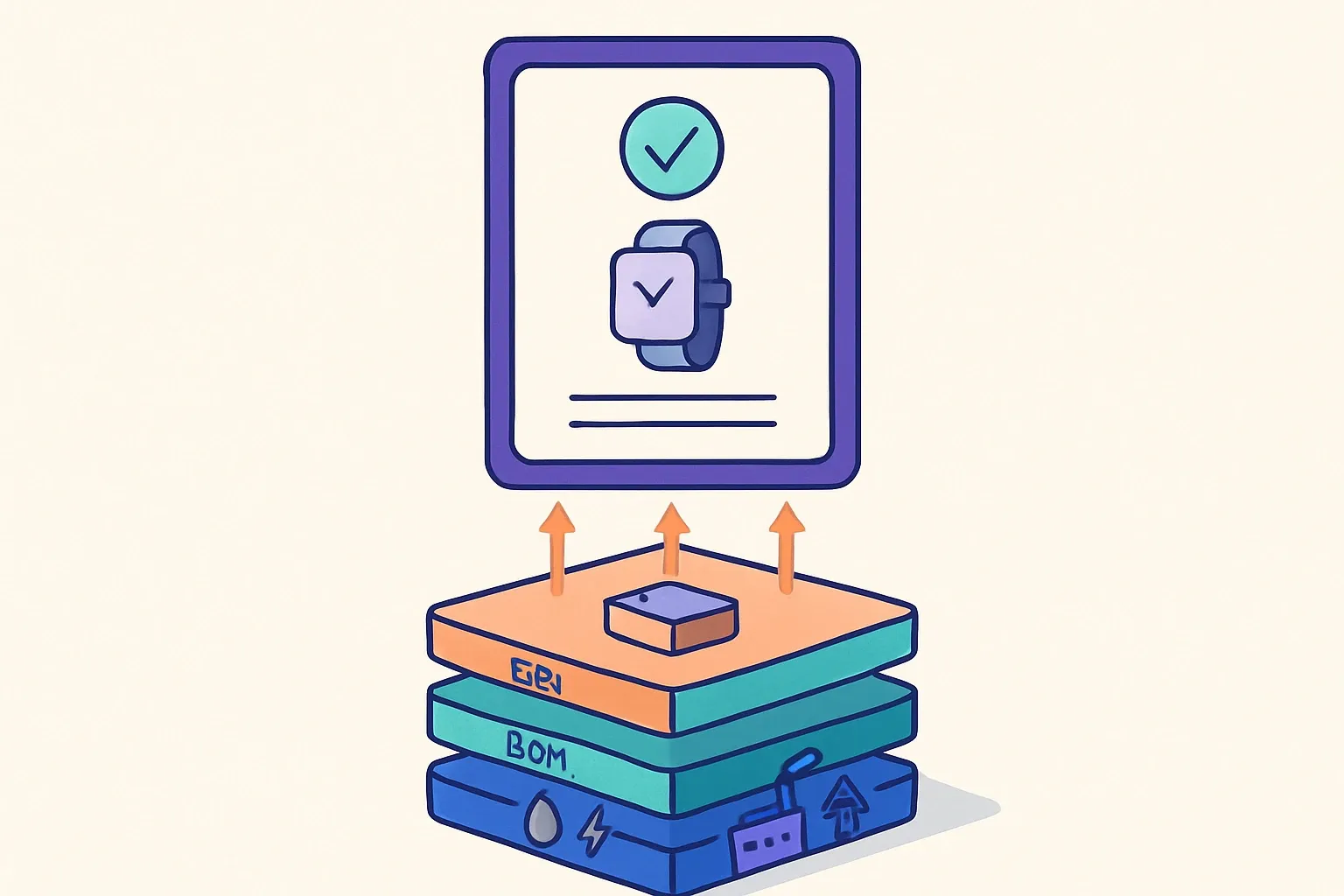
In construction, contracting authorities increasingly reference EN 15804 +A2 product‑specific EPDs as objective evidence. Building‑level policy is moving in the same direction. Under the recast Energy Performance of Buildings Directive, whole‑life Global Warming Potential must be disclosed using the Level(s) method from 2028 for new buildings over 1,000 m² and from 2030 for all new buildings (BUILD UP, 2025). This alignment makes EPDs the easiest bridge between product data and building‑level carbon reporting.
What documentation buyers typically ask for
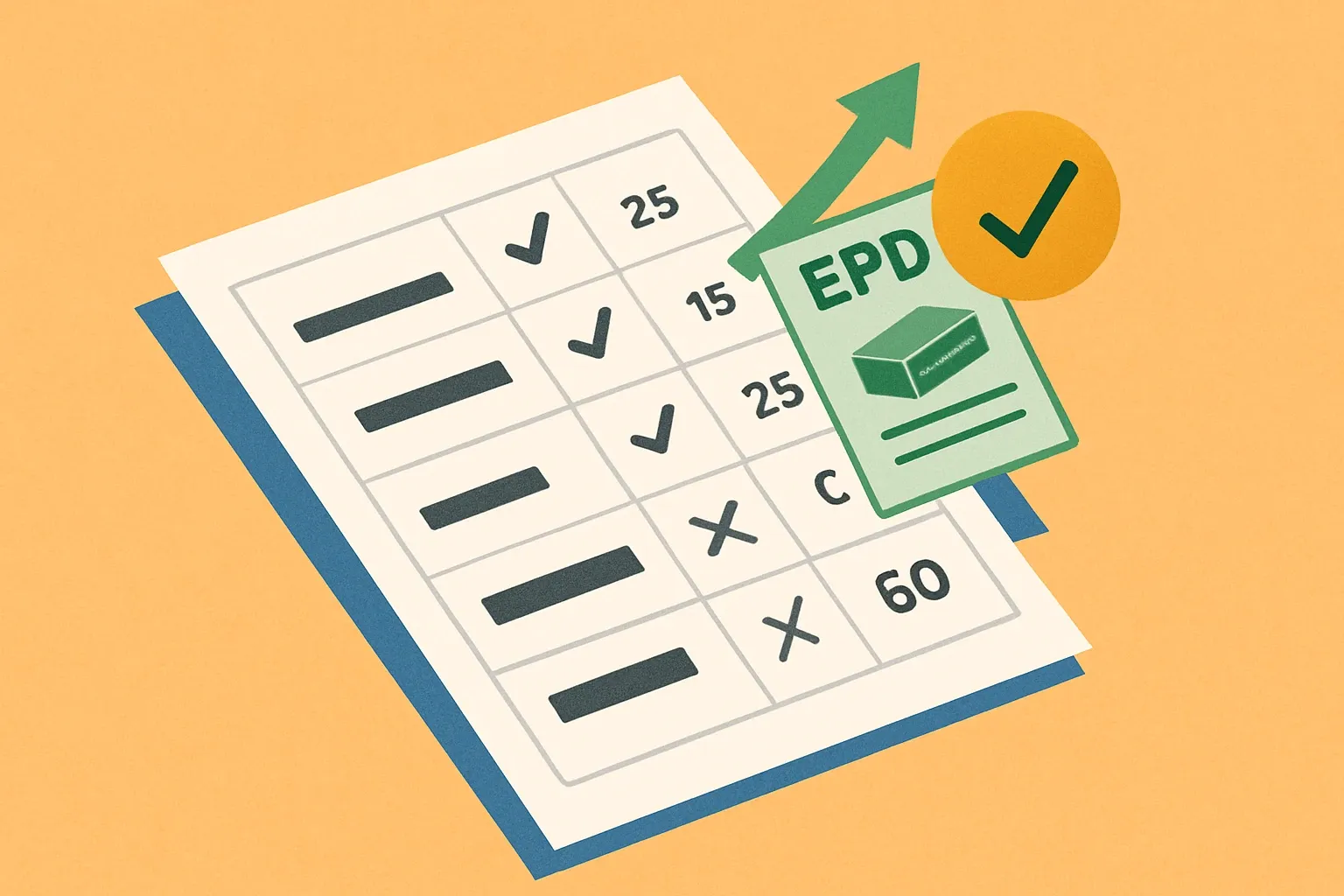
- Product‑specific EPD to EN 15804 +A2, third‑party verified, with declared unit and modules clearly stated.
- CE Declaration of Performance where the Construction Products Regulation applies.
- Safety and restricted substances disclosures to match tender compliance checks.
- Evidence for any ecolabels or recycled content claims, if those appear as award criterai.
Navigating EU Green Public Procurement for Success?
Follow us on LinkedIn for updates that help you stay compliant and win more tenders.
Why it matters commercially
Public procurement equals scale. Over 250,000 EU public authorities purchase every year, together worth about €2 trillion, near 13.6–15% of EU GDP (European Commission PPDS, 2024; European Commission, 2025). EU procurement rules directly govern as much as a quarter of that spend, averaging €616 billion annually, so meeting green criteria changes outcomes at meaningful volume (European Commission evaluation, 2025). If your product lacks a credible EPD, the buyer often must use pessimistic default carbon data, which is like starting a race in sand.
What “GPP criteria” look like for materials
Expect one or more of the following levers. Technical specs may require low‑emission binders or verified recycled content. Award criteria may score lower embodied carbon per declared unit, often evidenced by an EN 15804 +A2 EPD. Contract clauses can require take‑back schemes or waste minimization plans. None of this requires reinventing your product line, but it does require verified numbers.
Picking the right proof
A PCR is the rulebook of Monopoly, ignore it and the game falls apart. For construction products, EN 15804 +A2 sets the common language across Europe. Program operators like IBU or EPD International publish the declaration after independent review. What matters in bids is clarity, current verification, and alignment to the PCR your competitors use.
Fast path to readiness
Treat one year of plant data as your anchor, then fill in upstream datasets with recognized secondary sources. Map your portfolio to applicable PCRs before modeling. Decide where a product‑specific EPD creates the biggest tender uplift, usually high‑volume lines in categories frequently procured by the public sector. Choose a partner who can handle the internal data chase, since the slowest part is rarely the modeling, it is collecting reliable numbers from different teams. Publish where your buyers expect to find the EPD.
Pitfalls that quietly cost points
Using an outdated A1‑based EPD when tenders ask for +A2 is a common own goal. Mixing declared units across similar products confuses evaluators. Skipping transport assumptions or end‑of‑life scenarios reduces comparability. Submitting EPD PDFs without machine‑readable data slows building‑level assessments that now feed into Level(s) and EPBD reporting.
A quick sanity check on market size
If public buyers move even a small share of their budgets toward lower‑carbon products, the revenue shift is not small. The Commission notes that a one percent efficiency gain in EU procurement would save around €20 billion per year, which signals the scale at play even without new money (European Commission, 2024). EPDs give your line a fair shot at that pie by making environmetal performance legible in minutes, not meetings.
Bringing it together
EU GPP is not a niche policy. It is the wording many buyers lean on to justify greener choices inside strict procurement law. For manufacturers, the move is simple. Get product‑specific, +A2‑compliant EPDs for the lines that face public tenders most often. Keep the data current, make verification straightforward, and mirror the language used in GPP criteria. That is how your product stops being a good idea and starts being the easy choice.